Humidity in Southeast Asia and Your Extendable Table: A Buyer's Guide for Singapore Homes
I still remember the call from a customer in Punggol last February. She had bought a beautiful extendable table from a local retailer two years earlier, and the leaves no longer sat flush. When I visited her 4-room HDB flat, my hygrometer read 82% in the living room — she had been running her air-con at 24°C but leaving the balcony door cracked for the cat. The table was fine; the environment had done the work. That visit is the reason I now send every Singapore buyer home with a humidity story before they pick a dining table.
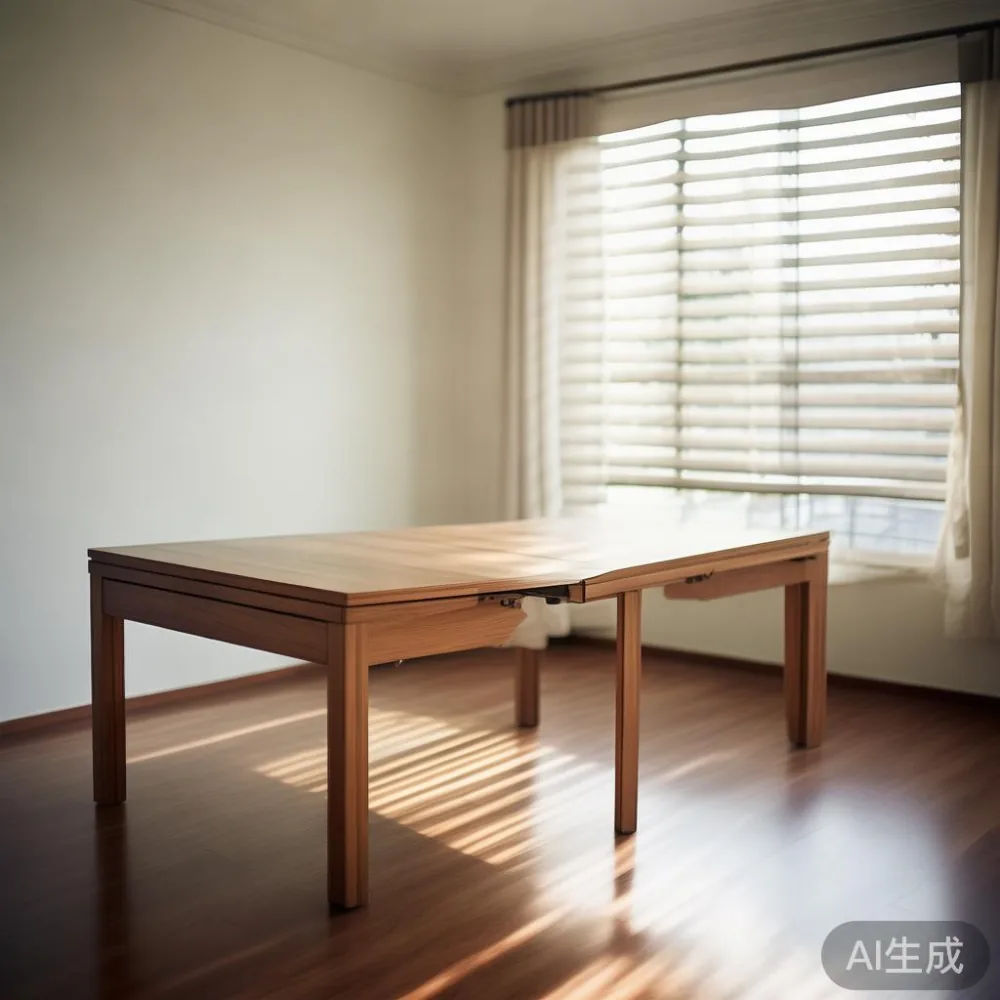
Living between 1°N and 1.5°N latitude means Singapore sits inside a band of near-constant humidity. The annual mean relative humidity at Changi is roughly 82%, and on a wet August afternoon it can climb above 95%. Indoor readings in Tampines and Bedok walk-up flats regularly sit between 75% and 85% because corridor ventilation pulls moisture through the front door every time a neighbour passes. A solid wood extendable table is a hygroscopic object — it drinks and breathes with that air — so understanding the numbers is the difference between a piece that lasts thirty years and one that cups within three.
Why does a 3% change in moisture content actually matter for a solid wood extendable table?
Because a 3% change in moisture content is roughly the swing an unprotected slab will see between a January dry spell and a July monsoon week in Singapore. Wood moves about 0.1% to 0.2% across the grain for every 1% change in moisture content, and an extendable table multiplies that movement across its leaves, rails, and centre runners. On a 180 cm oak top that is 90 cm wide, a 3% swing equals around 2.7 mm of lateral expansion at the end grain. Two leaves meeting in the middle have no tolerance for that. A well-built extendable table accounts for it with breadboard ends, slotted washers on the extension bolts, and rails that float inside their shoulders. Cheap tables skip those details, and that is why you see gaps appear in February and buckling in August.
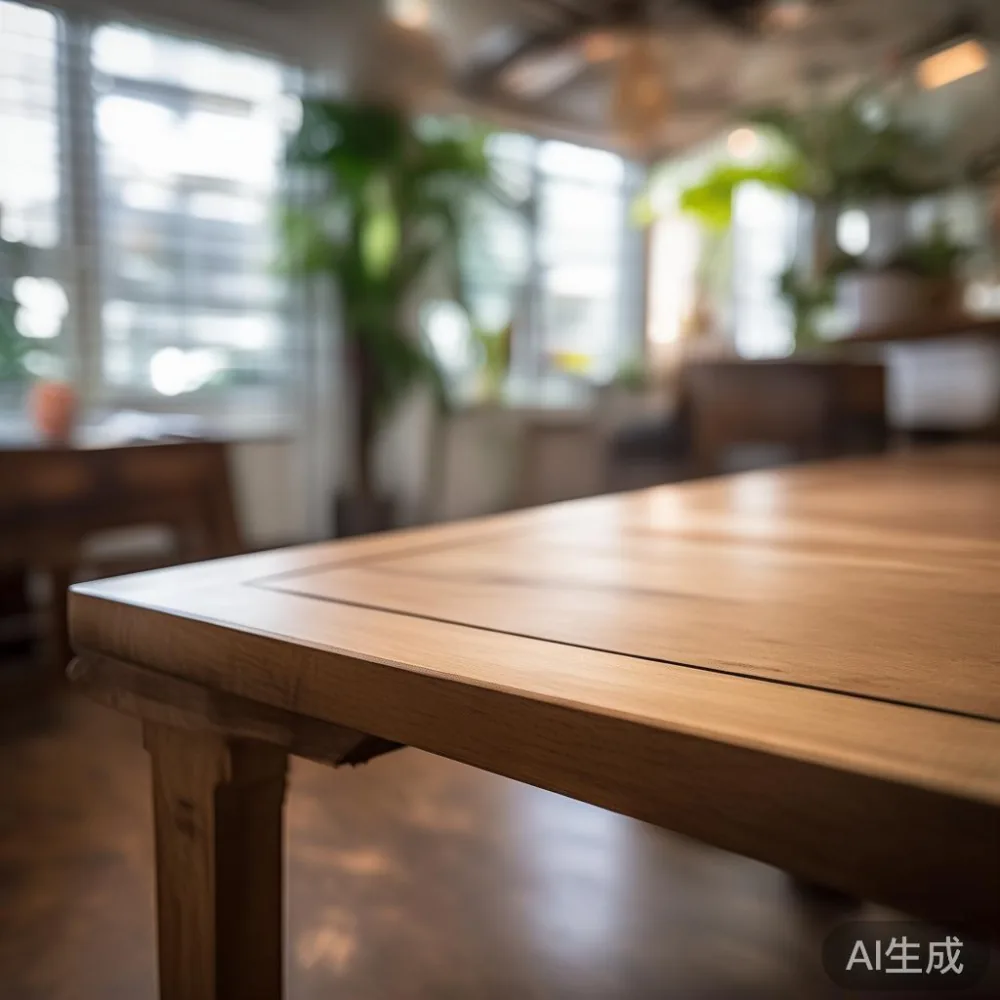
What humidity range should I keep in my HDB flat to protect a solid wood dining table?
Aim for 45% to 60% relative humidity, ideally 50% to 55%, and keep the temperature between 22°C and 26°C. That band matches what most European joiners call the "interior equilibrium moisture content" of 8% to 10%, and it is the same range MIDHILL conditions its factory floors to before any crate leaves Foshan. A small thermo-hygrometer costs S$15 to S$25 at any Tampines Mall electronics shop, and it is the single best purchase you can make alongside an extendable table.
In practice, this means running a dehumidifier in Bedok Reservoir walk-ups during the November to January monsoon tail, and switching to a humidifier if you run the air-con at 22°C for weeks during a business trip. The 2-litre desiccant units sold at Courts for S$89 pull a 12 m² room down to 50% in roughly four hours and are quiet enough to leave running overnight. If you prefer not to use one, at minimum keep the extendable table away from the kitchen window and at least 30 cm from the air-con vent — a direct cold stream dries one face of the timber faster than the other and you will see a bow.
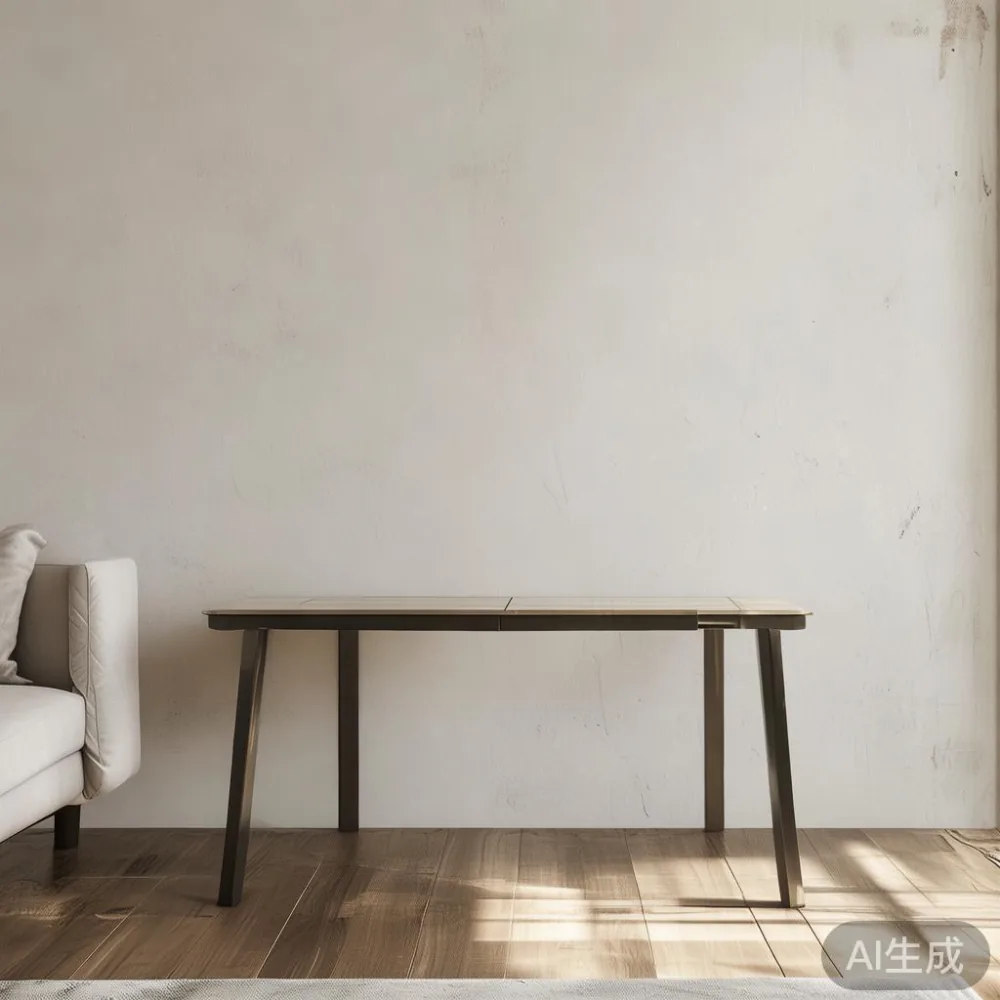
Which wood species actually survive Singapore's climate on an extendable table?
From what I have tested across my own workshop samples and customer deliveries, four species hold up well, two are acceptable with caveats, and two I no longer specify for HDB interiors.
Performers: European white oak (Quercus robur) at 8% to 10% MC, kiln-dried to a uniform core; American walnut (Juglans nigra), which has natural oils that resist surface checking; European ash (Fraxinus excelsior), lighter in colour and slightly more elastic than oak so it tolerates the daily swing of a kitchen-to-dining extendable table; and Burmese teak, which is dense enough (around 660 kg/m³) to shrug off cupping. A 160 cm extendable table in solid white oak that extends to 220 cm should weigh between 62 kg and 78 kg; if a seller cannot tell you the weight, the drying was likely rushed.
Acceptable with care: Rubberwood (Hevea brasiliensis) and acacia. Both are widely used in extendable tables priced under S$1,500, and both will perform if the factory has dried them below 10% MC and sealed all six sides — top, bottom, and every leaf edge. Open any leaf mechanism and look for grey streaks along the rails; that is surface mould from incomplete drying.
Avoid for dining: untreated pine and MDF-core with a 2 mm veneer. A pine extendable table in a Punggol corner unit with afternoon sun through a west window will cup within nine months, and an MDF-core leaf will delaminate at the joint the first time humidity crosses 88%.
How do I choose a chaise lounge for a bedroom?
Pick the chaise lounge first by the floor plan and the door swing, then by the frame, and only then by the fabric. Measure the bedroom wall where you plan to place it, subtract 90 cm for walking clearance, and you have your maximum chaise footprint. A standard left-facing chaise is 165 cm long by 85 cm deep; a right-facing compact model is 150 cm by 80 cm. Make sure the chaise can pass your HDB bedroom door, which is typically 80 cm to 85 cm wide, and your corridor lift opening, which on most refurbished blocks is 80 cm clear. In any MIDHILL bedroom set the chaise is built around a solid ash internal frame at 720 kg/m³ density so it holds shape in 80% humidity, and the upholstery is removable for the monsoon months.
How wide can an extendable table be when the HDB lift is only 80 cm?
This is the question I get at least twice a week, and the answer is that an extendable table must be delivered in pieces no wider than 78 cm and no longer than 195 cm to clear a standard HDB passenger lift in Tampines, Bedok, and most Punggol blocks. The internal lift car on a HDB block built after 1995 is roughly 1.1 m wide by 1.4 m deep with an 80 cm door, but the door frame itself eats 2 cm on each side and the swing of the door eats another 5 cm, so 76 cm is your real envelope. A 140 cm round extendable table that opens to 200 cm oval will not fit assembled, but its two halves, each 70 cm across, will. Always confirm with the seller before paying the S$80 to S$150 delivery fee whether they are sending the table whole or in two halves, because the latter usually needs two delivery men and adds S$40.
Older blocks in Geylang and parts of Bedok have lifts as narrow as 70 cm clear, and some maisonette corridors turn 90° at the stairwell. In those flats, the only realistic option for an extendable table is a 120 cm to 170 cm model that separates into a top and a base. Ask for the packaged dimensions in centimetres, not just "fits most lifts", and ask whether the runners and leaves are pre-attached or packed separately.
How much should a quality solid wood extendable table cost in Singapore in 2025?
Expect to pay S$1,400 to S$3,800 for a 140 cm to 200 cm extendable table in solid white oak or ash from a factory-direct brand, and S$3,800 to S$7,200 for American walnut. Marble table variants — where a 20 mm sintered stone top sits on a solid wood base — run from S$2,200 for a 140 cm piece to S$5,500 for a 200 cm model with hydraulic extension. Anything below S$1,200 for a claimed "solid oak" extendable table in a Singapore mall is almost certainly a 6 mm oak veneer over rubberwood or MDF, and that construction will fail within 24 months in a non-air-conditioned balcony dining setup. Always ask for the kiln-dried certificate: the moisture content reading should be between 8% and 10% at the time of crating, and the certificate should be dated within 30 days of shipment.
Bear in mind that any purchase over S$350 from MIDHILL ships free to a Singapore door, and the same threshold covers the matching solid wood sofa, bed frame, and nightstand. A typical three-piece dining set — extendable table, four chairs, and a sideboard — lands between S$3,600 and S$6,800 delivered, which is roughly 18% to 25% less than the equivalent set from a Tanglin showroom once you remove the 9% GST line and the S$180 to S$240 local delivery fee. The 14-day return window is enough time to run a hygrometer test in your own flat before committing.
How do I stop an extendable table from cupping in a Tampines or Bedok flat?
Three habits and one piece of hardware. Habit one: leave a 30 cm gap between the table and any exterior wall, because concrete party walls in HDB blocks sweat during the September to December monsoon and feed moisture sideways into the timber. Habit two: wipe spills within ten minutes, especially on a marble table top where the seal between stone and wood is the failure line. Habit three: rotate the leaves every six months so the same edge does not face the kitchen window year after year. The piece of hardware is a set of felt humidity buffers — small cork coasters infused with silica gel, around S$18 for a pack of 12 — placed inside the cabinet of any matching sideboard or wardrobe so the enclosed air stays near 55% RH even when the room climbs to 80%. If you have invested in a walnut ash wood wardrobe SG delivery, this habit matters even more because wardrobes carry far more surface area than a table and absorb four to five times more ambient moisture.
For long-term care, every five to seven years book the lifetime refinishing service that ships the top back to the Foshan workshop, where it is sanded back to bare wood, re-sealed with a hardwax oil such as Osmo Polyx-Oil, and returned. The round-trip shipping from Singapore costs S$280 to S$420 depending on the size, which is far cheaper than replacing a cupped top, and it extends the working life of an extendable table from 15 years to 30-plus.
Does air-conditioning alone protect an extendable table in a Singapore condo?
No, and this is the most common mistake I see in Punggol Waterway terraces and Rivervale Shores units. Running the air-con at 23°C for eight hours a day drops the room to roughly 50% RH, which is ideal, but the other sixteen hours the room climbs back to 78% to 85%. That 30-point swing every day is harder on a solid wood extendable table than a steady 75% all day, because the wood never reaches equilibrium. The fix is either a dehumidifier on a hygrometer switch (set to 55% RH, around S$169 for a 4-litre compressor unit) or, more cheaply, a passive silica gel bucket swapped every three weeks. Either approach keeps the daily swing under 8 points, which is the threshold below which European oak and American walnut both stay dimensionally stable.
Keep the extendable table out of direct afternoon sun through a west-facing window, and if your condo has floor-to-ceiling glazing, close the sheer curtain between 1 pm and 4 pm. UV does not warp the wood, but it does dry the surface faster than the underside, and that differential is what causes the small cup you sometimes see on the leaves after two or three years. A French light luxury dining setting — pale oak, soft grey linen chairs, brass-tipped legs — is particularly prone to surface checking under direct sun because the finish is usually a low-build matte oil rather than a thick lacquer.
What about post-modern light luxury styling — does the design affect how the table handles humidity?
Yes, and the reason is the joinery. Post-modern light luxury pieces tend to use exposed mortise-and-tenon, floating panels, and visible breadboard ends. Those joints are intentionally designed to move with the wood, which is exactly what you want in Singapore. A traditional American light luxury table, by contrast, often uses a plywood substrate under a decorative veneer to keep costs down, and that substrate is the layer that fails when humidity crosses 85%. When you shop, ask to see the underside of an extendable table leaf. Solid timber shows end grain on the edges; plywood shows thin alternating layers and a telegraph line of glue. If the leaf has a 4 mm plywood core with a 1 mm oak or walnut face, walk away regardless of how attractive the showroom finish looks.
Mid-century and Scandinavian-influenced solid wood dining tables usually score well on this test because the design tradition assumes central heating and seasonal humidity swings — exactly the conditions a Singapore flat creates when the air-con cycles. The French light luxury look, with its lighter finishes and visible joinery, is also a good match for tropical climates because hardwax oil finishes are breathable and re-applicable, unlike the polyurethane sealers used on many mass-market American light luxury imports.
What should I check on delivery day before signing for an extendable table?
Run through this eight-point checklist in the corridor before the delivery men leave, because once you sign the delivery order in Singapore it is hard to argue a cosmetic defect.
1. Open the crate at the door and check the moisture content with a pinless meter. A reading of 8% to 10% is acceptable; anything above 12% means the table was packed wet and you should refuse delivery.
2. Lay the top on a flat surface and press along the centre. Any rocking indicates a twisted panel.
3. Extend the table fully and measure the gap between the two leaves with a S$2 feeler gauge. The gap should be no more than 1.5 mm and uniform across the length.
4. Check that all extension bolts turn smoothly and that the washers under each bolt head are split-lock or nylon-faced, not plain steel.
5. Look at the underside of each leaf for grey streaks or dark spots — signs of mould from damp storage.
6. Confirm that the warranty card lists a 10-year structural coverage and a clear procedure for lifetime refinishing.
7. Photograph the crate, the table top, the runners, and the serial number on the underside. Email the photos to yourself the same minute.
8. Ask for a written delivery note showing the packaged weight in kilograms. A 180 cm oak extendable table should weigh 60 kg to 80 kg; if it is under 45 kg, the core is hollow or veneered.
Most Singapore deliveries arrive within 18 to 26 days of an order placed with a Foshan factory, and MIDHILL schedules two-man crews so the lift-and-place fee is included in the free-shipping threshold rather than added at the door. The 14-day return window starts from the delivery date, not the order date, which gives you almost a full fortnight to live with the table through several humidity cycles before you commit. If you have any concern, take moisture readings morning and evening for ten days and email them to the brand; any reputable seller will honour a return if the readings stay outside 8% to 12% for more than three consecutive days.
How long will a solid wood extendable table last in a Singapore home?
A well-built solid oak or ash extendable table, kept inside the 45% to 60% RH band and refinished every seven to ten years, will give 25 to 35 years of daily family use. American walnut in the same conditions reaches 30 to 40 years because of its higher natural oil content. Burmese teak, properly kiln-dried, can pass 50 years and was the species of choice for colonial-era Singapore dining rooms for that reason. The matching solid wood sofa, bed frame, and nightstand will follow the same curve if you apply the same humidity discipline, and a wardrobe — particularly a wide three-door model — is the piece that benefits most from a steady 55% RH because the doors stay aligned and the drawers do not swell in their runners.
Buy once, condition the air, and the extendable table your grandchildren eat Christmas lunch on is the one you are measuring for in your Tampines flat this week.