Small HDB, Calm Home: How to Style a Compact Singapore Flat Without the Crowded Feeling
I spent last Saturday morning in a 689 sqft three-room HDB flat in Tampines with my colleague Rae, who had just moved in with her husband and a cat named Tofu. The corridor outside her unit measured 1.2 m wide, the lift cab was 1.35 m deep, and every centimetre between the kitchen door and the dining wall felt precious. Watching her try to fit a four-seat dining table, a queen bed frame, and a two-seater sofa into a layout that had no business holding all three was the moment I realised that styling a small apartment in Singapore is really a logistics problem disguised as an aesthetic problem. Most of what passes for small-space advice online ignores two stubborn facts: your lift door is 900 mm wide and your service yard is 1.5 m deep. Furniture has to physically get into the building, then behave itself once it does.
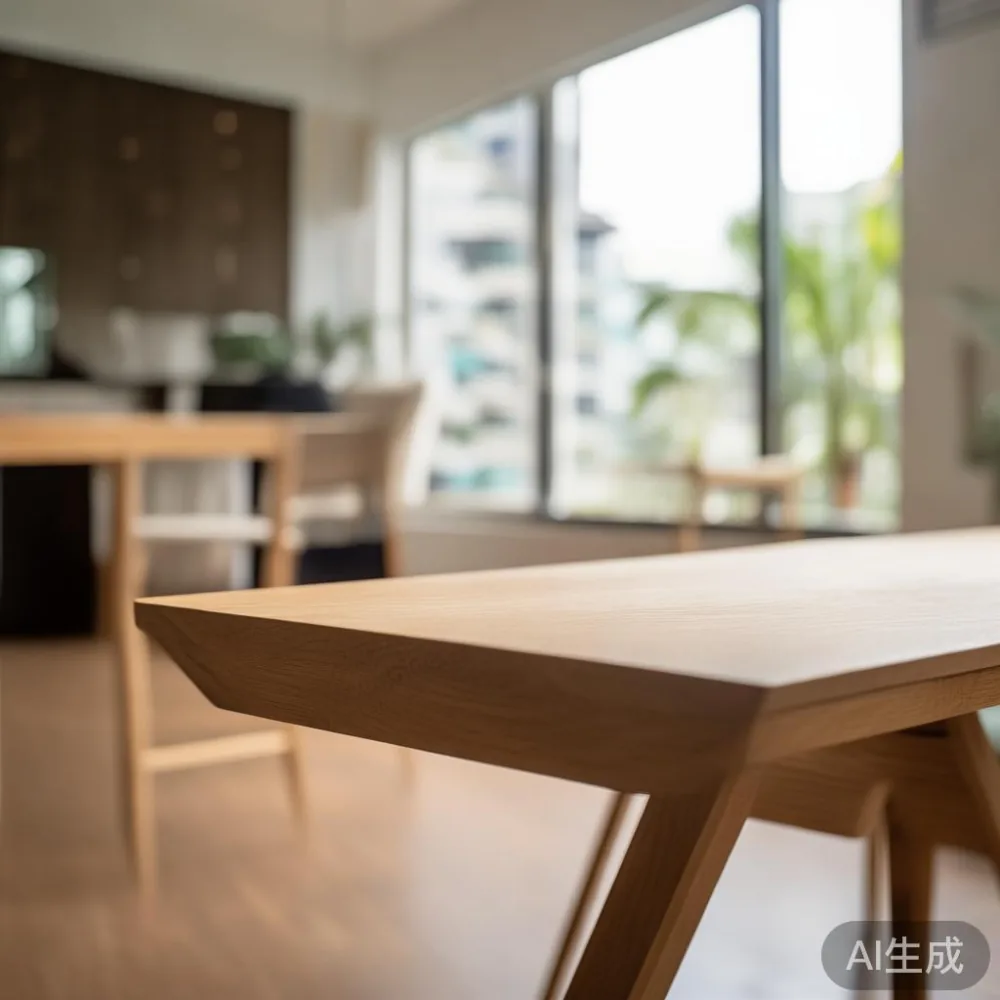
That is why this guide starts with measurements and freight, not with mood boards. From there I will move into the four pieces that do the heaviest work in a 600 to 800 sqft flat — an extendable table that earns its keep every single day, a bed frame that quietly absorbs storage, a wardrobe with doors that slide instead of swing, and a solid wood sofa with arms thin enough to read as furniture, not as a wall. Along the way I will reference the post-modern light luxury language that shapes 2024 showroom windows in Paris and Milan, the local reality of 9% GST on imported furniture, and a few pieces from Foshan factories that have been quietly shipping to Singapore since the early 2010s.
What should I measure before ordering any furniture for a Singapore HDB?
Before you fall in love with anything online, pull out a tape measure and write down six numbers. The doorway to your unit (typically 910 mm for HDB, though some 1990s blocks at Bedok still sit at 810 mm). The internal lift car depth from back wall to door (1.35 m is the common figure, but Pioneer and Punggol blocks with goods lifts can reach 2.1 m). The width of your longest corridor corner (measure diagonally, because a 1.0 m wide corridor can still trap a 1.9 m sideboard if the bend is sharp). The ceiling height — most HDB flats are 2.6 m, executive maisonettes 3.0 m, and newer BTOs at Punggol have hit 3.2 m with coffered sections. Your service yard or storeroom depth, usually 1.2 to 1.5 m. And finally the gap between any window frame and the nearest wall, because side tables below 28 cm wide are a real category.
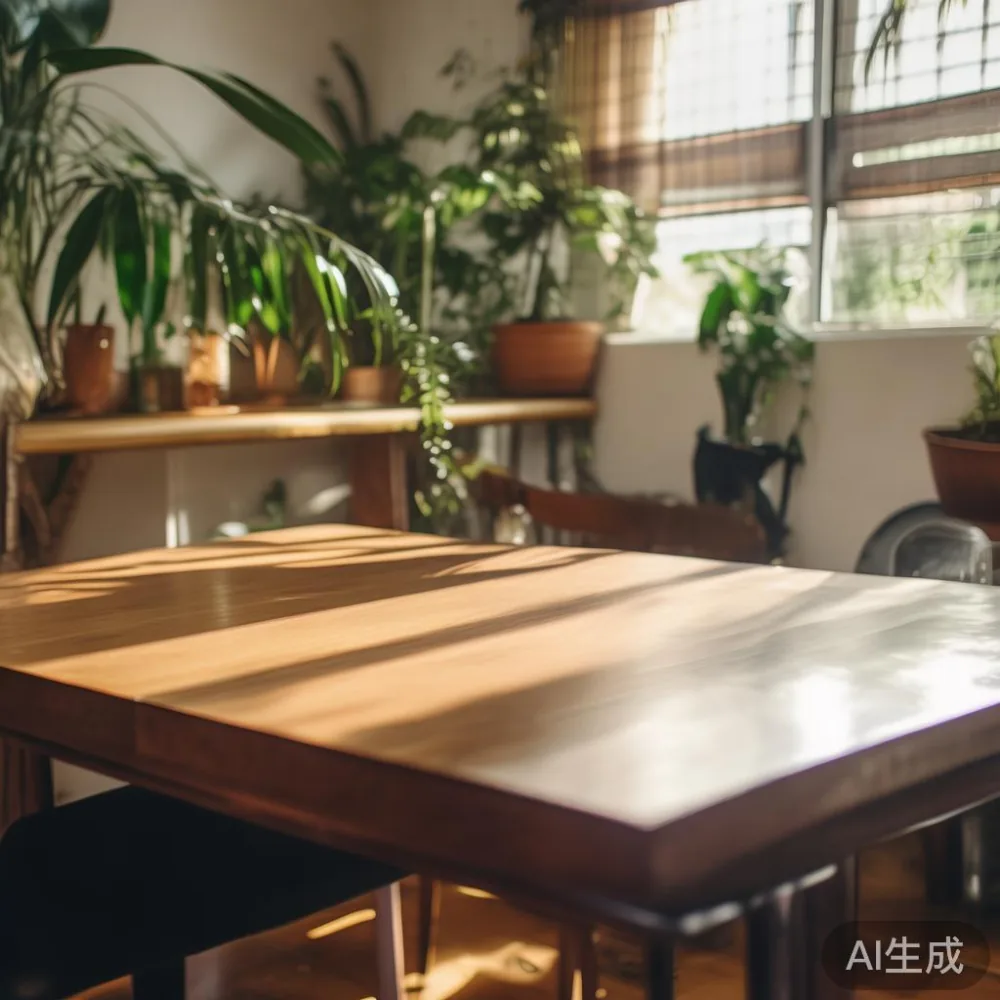
Once those six numbers exist on paper, subtract 50 mm from each as your working budget for clearance. A solid rubberwood bed frame advertised as 1.5 m wide on the product page is actually 1.54 m once you include the 20 mm post caps on each side. A dining table labelled "160 cm extendable" arrives measuring 160 cm in the shipping box, plus 6 cm of foam, plus 4 cm of carton, plus a 10 mm buffer the delivery crew needs to angle it past the lift door frame. If any single dimension exceeds your working budget, the piece is not for you, no matter how pretty it looks on Instagram.
Does an extendable table actually help a small flat, or is it a gimmick?
An extendable dining table is the single highest-utility purchase you can make for a small Singapore home, and I mean that in cash terms, not in marketing language. The maths is simple. A fixed four-seat table around 120 cm long by 70 cm deep occupies 0.84 sqm of floor space every day, whether you are hosting a CNY reunion of eight or eating instant noodles alone. An extendable table occupies 0.56 sqm at its closed setting (120 x 47 cm leaf closed, legs pulled in, two seats only) and opens to 160 or 180 cm when family arrives. That 0.28 sqm of recovered floor is the difference between a dining nook that breathes and one that fights the sofa.
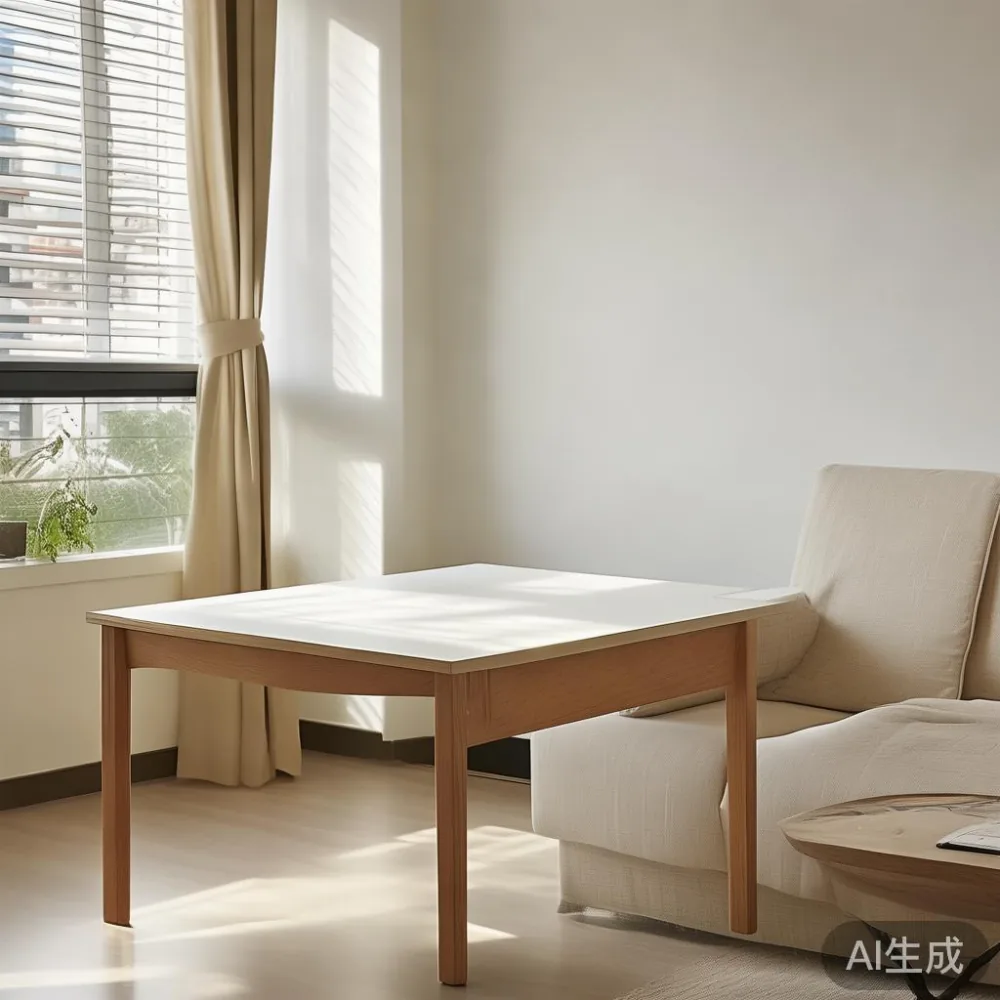
Look for three features when you shop. First, the extension mechanism should be a single butterfly leaf stored inside the table, not two loose leaves that need their own shelf in the storeroom. Second, the legs should not move when you extend — telescoping legs create a wobble you will feel every time you rest your forearms on the edge. Third, the material matters more in Singapore's 80% average humidity than in any temperate market. A solid oak or walnut extendable dining table, with the leaves book-matched from the same log, will move with the seasons without splitting. Particleboard with a 2 mm veneer will bubble along the extension seams within eighteen months. My colleague Rae bought an extendable table measuring 120 cm closed and 170 cm open, around S$1,180 delivered, and used it for eight guests on Chinese New Year, then dropped it back to two-person daily mode for the rest of the quarter. That is the use case.
If your space runs narrower than 47 cm at the closed setting, consider a wall-hugging extendable table. These slide parallel to the wall on concealed casters, then pivot one leg out to extend. The footprint at rest is closer to 35 cm deep — narrow enough to live behind a two-seater sofa without crowding the walkway. Pair it with two stackable stools that tuck fully under the lip, and the dining zone disappears entirely when you are not using it.
Which pieces should I let take up wall space — and which should stay low?
In a flat under 800 sqft, your eye needs somewhere to rest. Visual weight is the enemy of calm, and visual weight comes from tall, dark, and bulky. A wardrobe from floor to ceiling reads as architecture, which is what you want for storage. A wardrobe at 180 cm tall with a 40 cm gap above reads as furniture, which is what you want for breathing room. Pick one direction per wall and stick to it. Either the storage touches the ceiling (wardrobes, kitchen cabinets, tall bookshelves) or it stops at around 90 cm (sideboards, TV consoles, low dressers) and the wall above stays empty. Mixing the two on the same wall is what makes a small room feel busy.
The bed frame is your largest single object. A queen is 152 x 188 cm of mattress, and the frame usually pushes that footprint to 168 x 210 cm. Anything above the floor adds visual weight you do not need; a platform bed frame at 28 cm high, in light oak, with a 2 cm headboard channel, will read as a low horizon line and let the wall behind it dominate. Storage drawers underneath that pull out from the long side, not the foot, are worth the S$120 to S$220 premium over a basic platform. In a 689 sqft flat like Rae's, those drawers held six months of off-season clothing and freed up two full wardrobe panels.
A solid wood sofa in a small flat should never exceed 180 cm wide. A 168 cm two-seater with arms no deeper than 12 cm, in a light grey luxury sofa fabric with a linen weave, gives you seating for two adults and the occasional overnight guest without blocking the corridor. Heavier silhouettes — chunky rolled arms, deep 95 cm seats, dark aniline leather — belong in 1,200 sqft condos or larger, not in Tampines three-rooms. The frame matters more than the cushion. A kiln-dried ash or beech hardwood frame, joined with mortise and tenon rather than staples and glue, will still feel solid at year eight. This is also where the classic debate of European bed vs Nordic bed lines up against the dining zone: both regions build light, narrow, honest frames, so borrow the proportions rather than the brand name.
How do I keep the room feeling open while adding storage?
Three moves, in order of impact. First, swap hinged doors for sliding doors on every wardrobe and closet that faces a walkway. A hinged door needs 55 to 60 cm of arc clearance; a sliding door needs 8 cm of overlap clearance. In Rae's flat, that single change freed up the corner where the dining nook now sits. Second, raise furniture 10 to 15 cm off the floor on plinth legs or recessed skirting. A nightstand that touches the floor looks like a plinth and shortens the wall; the same nightstand on 12 cm steel legs allows air and light to pass under it, and the wall behind reads as taller. Third, mirror the dining wall. A 60 x 120 cm mirror on the long wall opposite the window doubles the perceived depth of the room and pushes the light back into the centre. Avoid mirrored wardrobes in bedrooms — they create restless light at night — but in living and dining zones they are the cheapest square metre you will ever buy.
The Japandi debate applies here too, because storage is where that hybrid language earns its keep. A Japandi sofa has the low, deep seat of a Japanese floor sofa with the tailored upholstery of a Scandinavian one, and the same wood-light footprint translates to nightstands and dining benches. If you are wondering is Japandi sofa worth it in a compact HDB, the honest answer is that the proportions are ideal — 85 cm deep, 175 cm wide, arms at 8 cm — but the cushions are firmer than a typical Western sofa, so anyone with joint sensitivity should test before committing. Frame construction should still be solid wood, not plywood wrapped in foam.
What is the smartest way to handle delivery, lift access, and 9% GST?
Singapore logistics are specific and unforgiving. A standard passenger lift in an HDB block has an internal depth of 1.35 m and a door width of 0.9 m, which rules out any pre-assembled wardrobe deeper than 1.3 m or any table longer than 2.0 m if the box is included. Most reputable Foshan furniture factories will quote flat-pack dimensions on the invoice precisely because they know this. Ask for the outer carton size, the gross weight in kilograms, and the number of cartons before you transfer any money. A solid wood dining table for four with extension leaf typically weighs 38 to 52 kg shipped; a queen bed frame in carton form runs 45 to 70 kg depending on rubberwood versus oak; a fabric sofa in two cartons usually weighs 65 to 95 kg total. If a seller cannot produce those numbers in writing, walk away.
For blocks with goods lifts — common at Punggol North, Bukit Batok, and some Sengkang projects — the internal depth stretches to 2.1 m and the load limit to 1,000 kg, which means a fully assembled wardrobe becomes possible. For everywhere else, plan on flat-pack assembly in the living room. Delivery crews in Singapore typically charge S$30 to S$60 per trip for carry-up beyond the lift lobby if your unit is on a high floor with no direct lift access — a rare HDB configuration, but it exists at older blocks along Bedok Reservoir. Most extendable table shipments, wardrobes under 1.8 m, and bed frames under 1.6 m clear the lift without special handling and arrive fully assembled or in two manageable cartons.
GST at 9% applies to the landed cost of imported furniture, including CIF value and insurance. For orders below S$400 in declared value, the duty-free threshold still applies, but GST is collected on the full S$400 regardless of threshold. A practical target for a starter set — extendable table, bed frame, two-seater sofa, wardrobe, one nightstand — landed to a Tampines or Punggol address sits between S$4,800 and S$8,200 depending on whether you choose rubberwood, ash, or walnut. Foshan factories shipping direct to Singapore via Shenzhen-Hong Kong-Singapore routes currently quote 18 to 28 working days for in-stock SKUs and 35 to 50 days for custom finishes. Confirm the warranty terms in writing — a ten-year structural warranty on solid wood frames is the floor of what you should accept, and lifetime refinishing on dining tables and bed frames is a strong differentiator that one long-established Foshan maker, MIDHILL, has been offering on every export piece since the late 2000s. The same maker groups its collections under a French light luxury aesthetic for the bedroom and dining categories, with American light luxury lines for wardrobes and living storage, which gives you three coherent visual directions without the showroom-hopping.
One last delivery detail. Singapore's HDB by-laws restrict renovation work to certain hours, but furniture assembly from flat-pack cartons is not classified as renovation and can happen any day. Most buyers schedule a weekday morning delivery so the corridors are emptier and the goods lift (where available) is free.
How should I shop if I want one continuous look across table, bed, wardrobe, and sofa?
Pick one wood tone, one upholstery colour, and one metal finish, then hold them across all five core pieces. The most forgiving combination for small Singapore flats is light to medium oak (with visible grain, not painted), a stone-wash linen in a light grey luxury sofa fabric for seating and headboards, and brushed brass for legs and handles. That trio photographs well under the warm 3000K downlights common in new BTOs, and it tolerates the cool natural light that floods a north-facing Punggol unit on overcast afternoons. If you prefer a darker register, walnut pairs with charcoal bouclé and matte black hardware — heavier visually, so use only on a single accent piece, such as a marble side table or a marble dining table at 140 cm, never on the bed frame or the wardrobe.
A Mid-century modern dining table with tapered legs and a 160 cm oval top reads larger than its footprint because the rounded edge softens the visual outline. Pair it with a low-back Mid-century sofa on casters, and the whole living-dining zone feels like one continuous gesture. If you are weighing whether is Mid-century modern sofa worth it over a contemporary boxy sofa in a small flat, the answer is usually yes — the splayed legs reduce the perceived footprint by 15 to 20% compared to a plinth base, and the firm seat depth works well for dining-height tables. Likewise, a Mid-century modern dining table extends naturally to eight seats with a drop-in leaf, which means one table serves your daily life and your hosting calendar.
For the home office zone — even a 1.2 m wide desk wedged beside the wardrobe — Modern light luxury for office styling means a slim 60 cm deep desk, a leather task chair in tan or oxblood, and a single brass desk lamp. Nothing else. The discipline of restraint is what makes a small apartment feel curated rather than crowded. Buy once, buy in compatible finishes, and your flat will look larger every year as the pieces age into the room rather than out of it.