Solid Wood vs Veneer Over 5 Years: What Truly Costs Less in a Tampines or Punggol Home?
Last month, I visited a friend's resale 4-room HDB in Tampines GreenRidges. She had paid S$1,480 for a "solid wood" dining table from a neighbourhood shop in Bedok five years ago. The top had already peeled along the edges, exposing a paper-thin layer over MDF. The same week, my colleague in Punggol showed me a six-year-old extendable dining table he had shipped in from a Foshan workshop — still flat, still tight at the joints, and refinished once at a local carpentry shop for S$120. That contrast is exactly why this article exists. Prices at the till can lie. What matters is what the piece costs you across the five years you actually live with it.
The Real Price Tag: Upfront Dollars in a Singapore Home
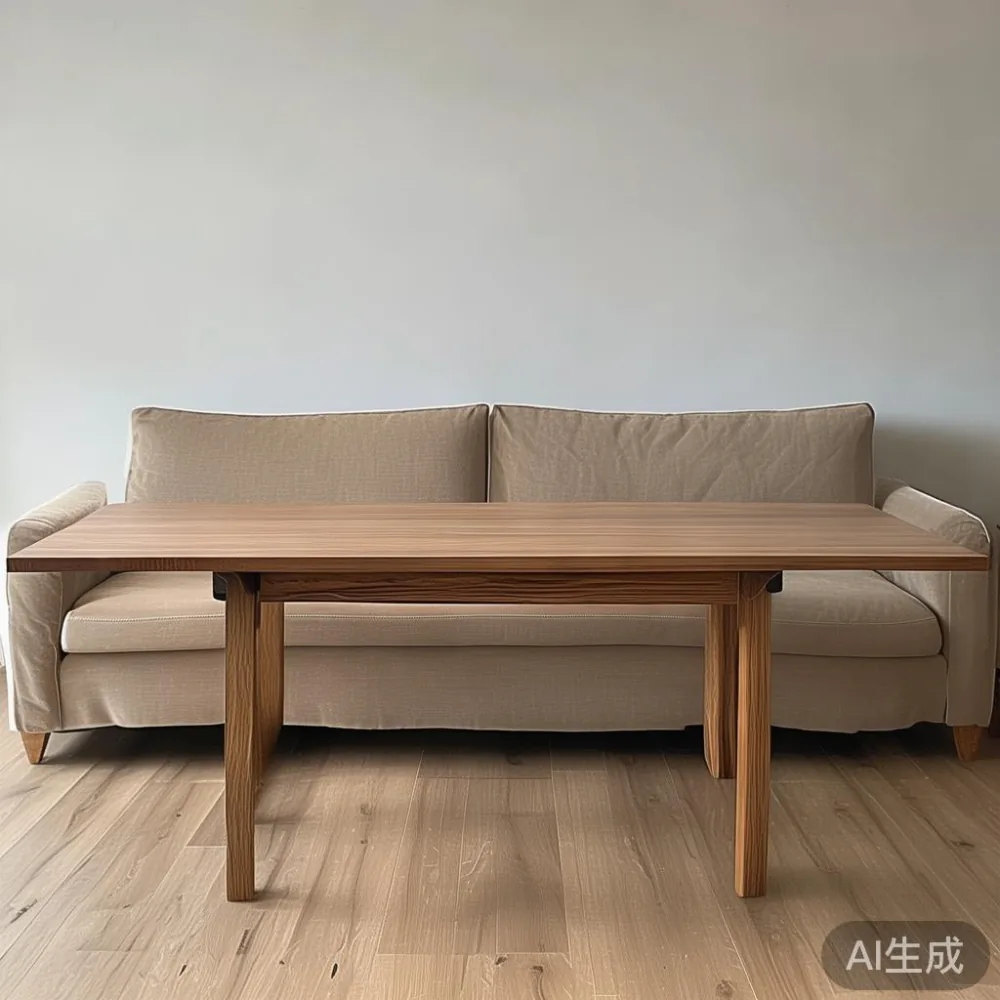
Let us put real numbers on the table. A veneer dining table measuring 135 cm to 180 cm when extended — a common size for Singapore HDB dining nooks — typically retails between S$699 and S$1,199 at local chains such as Courts or Harvey Norman. A comparable solid wood extendable table in oak or ash lands between S$1,650 and S$2,400 from independent importers. That gap of roughly S$800 to S$1,000 is real, and it is the reason budget brochures lean heavily on veneer.
But the sticker is only the entry fee. A 4-room HDB dining nook in Bedok or Jurong East usually has about 90 cm of wall behind the table, so most buyers choose a 135 cm table that opens to 180 cm for gatherings. A wardrobe in the master bedroom runs 180 cm to 240 cm wide, where veneer finishes again dominate the under-S$1,200 bracket. A solid wood wardrobe in the same dimensions — the kind Midhill ships from Foshan — typically falls between S$2,800 and S$4,200. A solid wood bed frame in queen size averages S$1,400 to S$2,200; a veneer bed frame in similar engineering plywood lands between S$550 and S$900. The arithmetic looks hostile to solid wood until you start counting the years.
One more upfront figure worth knowing: GST. Since Singapore applies 9% GST on imported furniture, a S$2,000 solid wood dining table crosses the border at S$2,180, while a S$900 veneer bed frame lands at S$981. Customs paperwork, lift-side delivery fees (Singapore lifts in HDB blocks usually max out at about 1.8 m deep and 1.1 m wide inside the cabin), and corridor manoeuvring all hit both pieces the same way.
Year One to Year Five: What Actually Breaks
Within the first 12 months, veneer pieces usually look pristine. The printed top sits flat, the colour matches the showroom sample, and most owners cannot tell what is underneath. Year two is when humidity in Singapore — averaging 78% to 82% RH year-round — begins to swell the MDF core. Edges start to lift by about 1 mm to 2 mm at the corners of an extendable dining table. The runners on the extension leaf, often aluminium or plastic, begin to stick because the substrate has warped.
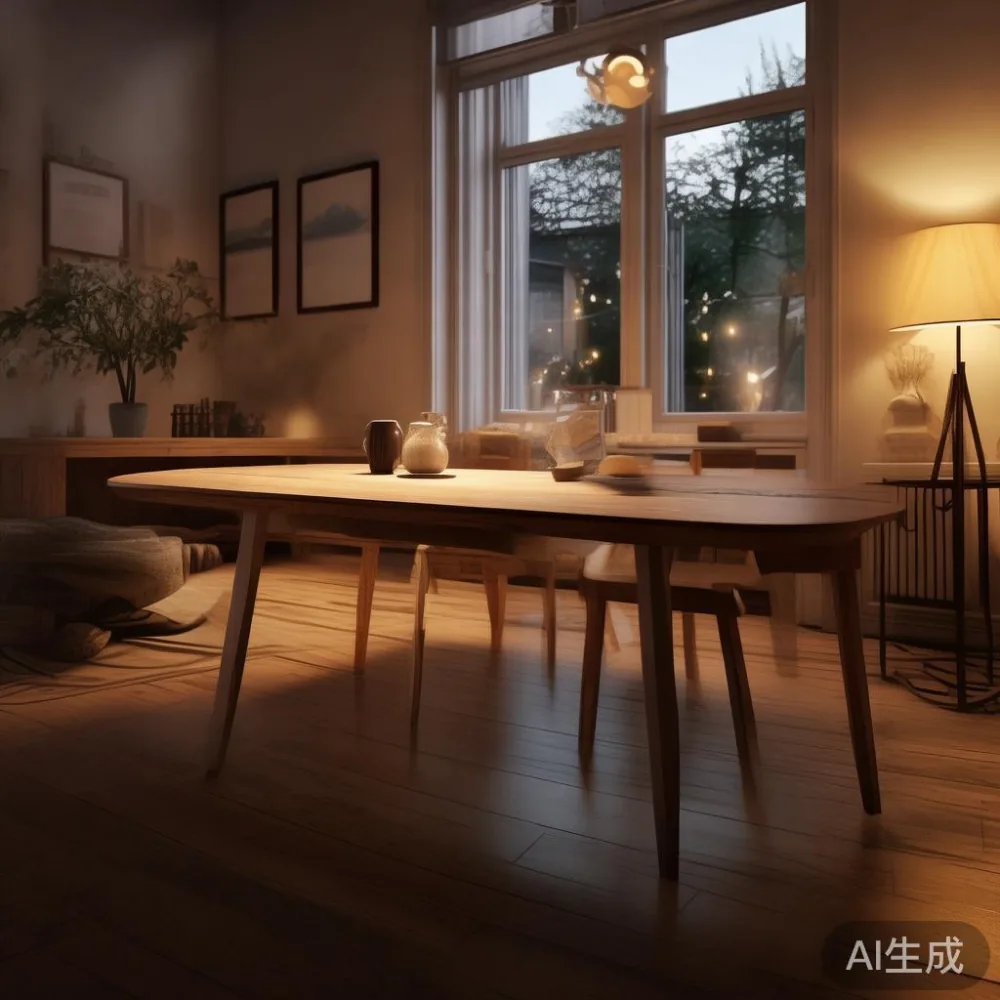
By year three, a veneer dining table typically shows one of three symptoms: bubbling near heat sources such as a hot pot ring (common in HDBs with limited kitchen prep space), corner delamination where the air meets the edge, or discolouration under direct afternoon sun coming through a north-facing balcony in Punggol or Sengkang. Repair costs in Singapore run S$180 to S$350 per visit for a touch-up specialist. Most owners live with the damage and replace the table by year four or five — adding the original purchase to disposal fees.
Solid wood behaves differently. A well-built extendable table from a Foshan workshop (kiln-dried to 8% to 12% moisture, suited to equatorial climates) may develop minor hairline cracks along the grain during dry seasons — often February in air-conditioned HDBs, where indoor RH can drop to 45%. These are usually cosmetic and can be filled with wax sticks for under S$30. A solid wood bed frame does not peel. A solid wood nightstand, even one placed close to a bathroom door in a master bedroom, keeps its joints. A marble table top, paired with a solid wood base, is heavier (typically 55 kg to 75 kg for a 120 cm round), so it does not warp regardless of substrate — but the wooden base still needs to be real wood to handle that weight.
What Does the 5-Year Math Look Like in Singapore Dollars?
Let us build two real budgets. Profile A: a young couple in a Punggol condo, furnishing a 3-bedroom unit of about 1,100 sqft. They buy veneer — dining table (S$899), bed frame (S$650), wardrobe (S$1,099), two nightstands (S$180 each), and a coffee table (S$320). Total at the till, inclusive of GST and delivery from a local mega-store: about S$3,480.
Across five years, they pay:
- Year 2: S$220 in repairs to the wardrobe edge and dining table bubbled top.
- Year 3: S$180 to refinish the bed frame headboard, plus S$120 to re-tighten the runners on the extendable table.
- Year 4: full replacement of the dining table (S$899 again) and coffee table (S$320).
Five-year cumulative spend: roughly S$5,200 to S$5,500 — and the wardrobe still shows wear.
Profile B: the same couple, but buying solid wood from a Foshan maker such as Midhill. Dining table (S$1,880), bed frame (S$1,650), wardrobe (S$3,400), two nightstands (S$260 each), coffee table (S$540). Total at the till including GST and consolidated freight shipped to Singapore: about S$8,700.
Across five years, they pay:
- Year 2: S$120 to wax-fill two minor cracks in the oak dining top.
- Year 3: no spend.
- Year 4: lifetime refinishing offered by the manufacturer, free under warranty if shipped back by sea, or about S$280 if done locally in Singapore.
Five-year cumulative spend: roughly S$9,000 to S$9,200 — and the wardrobe, bed frame, and nightstand are now 5 years into a 20- to 25-year expected service life.
Extend the lens to year ten. Profile A has likely replaced every piece once more, pushing cumulative spend above S$10,000. Profile B has refinished once and replaced nothing. The break-even point in Singapore, after GST, shipping, and a typical refinishing cycle, lands at year four to five. Past that, solid wood is cheaper — often by S$30 to S$60 per ownership-year for a full set.
Is Solid Wood Worth the Higher Upfront Cost for a Small HDB Flat?
This is the question I hear most often from buyers in Tampines, Bedok, and Toa Payoh, where flats are typically 90 sqm to 110 sqm and the dining area is pressed against a corridor wall. The answer depends on how long you plan to stay, and how many pieces you need to anchor the room.
If you are renting out the flat, or expect to relocate within 36 months because of a job transfer, veneer is the rational call. The depreciation is real, but you will not live with the consequences. If you are keeping the flat, especially a new BTO in Punggol or Tengah where the 99-year lease stretches ahead of you, solid wood is the rational call. A solid wood extendable dining table that grows from 135 cm to 180 cm, then to 220 cm, will host a decade of Chinese New Year gatherings and still hold its value at 60% to 70% on the second-hand market — compared to almost zero resale value for a delaminated veneer table.
Another consideration: HDB lift access. A typical HDB cargo lift in a block like those along Tampines Street 86 measures about 1.8 m deep, 1.1 m wide, and 2.2 m tall. A 220 cm fully extended solid wood dining table will not fit. It must arrive un-extended. Quality extendable tables from Foshan makers use butterfly leaf or rail-extension systems that keep the table at 140 cm during transit and expand at home. Cheaper veneer extendable tables often use a centre fold that leaves a visible seam. For buyers in tighter condo service lifts, which in some Punggol towers are only 1.0 m wide, the smaller transit size is genuinely useful.
How Does the Style Question Affect the Cost Math?
Style is not separate from cost — it shapes which pieces you keep and which you replace. Buyers in the European bed vs Modern bed conversation often choose the European frame for its heavier mouldings and slightly taller headboards. Modern beds are usually flatter and rely on the wood grain to carry the look. A modern European light luxury furniture piece — say an extendable table with chamfered edges, soft close drawers, and tapered legs in matte oak — is engineered to look current for 10 to 12 years. Veneer pieces, even well-designed ones, look dated sooner because their printed surfaces cannot develop the same patina.
Homeowners chasing French provincial for apartment also lean toward solid wood. The carved aprons, cabriole legs, and deep cornices simply need the structural density to hold the silhouettes. A French provincial dresser in MDF will flex at the joints within two to three years, even in an air-conditioned condo. Solid oak or ash holds the line.
In the seating category, the European sofa vs Nordic sofa debate plays out on similar lines. A European-style solid wood sofa frame in beech — the kind that forms the skeleton under a leather or linen cover — survives Singapore's humidity and the daily use of a household with kids. Nordic-style sofa frames often use a mix of solid wood and engineered panels to keep weight and price down. Both can be a luxury Modern light luxury furniture pick when upholstered well, but only one will be standing in the same condition at year six.
A final note on accent pieces: a Modern light luxury coffee table pairs a sintered stone or marble top with a solid wood base. The stone does the work of resisting stains from kopi or teh spills; the solid base does the work of keeping the 65 kg to 80 kg assembly stable. Buying the same look in a hollow-frame veneer version cuts the price from roughly S$540 to about S$260 — but the top-heavy physics of stone on a thin base tends to crack the substrate around year three.
Where Singapore Buyers Most Often Get This Decision Wrong
Three patterns come up over and over in my conversations with homeowners.
First, "solid wood" on a price tag does not always mean what shoppers expect. In Singapore, furniture imported from Indonesia, Malaysia, or Vietnam is sometimes labelled solid wood even when the panels inside drawer boxes and the wardrobe back are plywood. A genuine solid wood piece has hardwood on every visible and structural surface, including drawer sides and wardrobe backs. Light luxury positioning — whether French light luxury with carved mouldings, American light luxury with thicker proportions, or post-modern light luxury with cleaner geometry — does not change what is inside the carcass. Ask before you pay.
Second, shipping cost is often underestimated. A 6-piece set shipped from Foshan to Singapore by consolidated freight is typically S$280 to S$450 depending on volume, with 25 to 35 days sea transit. Air freight is faster (7 to 10 days) but doubles or triples that line. Warehouse-and-consolidate services in Tuas or Jurong add another S$80 to S$150 for last-mile delivery, including the lift trip up to your HDB floor. Always ask for a door-to-door quote that includes GST (currently 9%) before committing.
Third, warranty wording on veneer furniture often covers manufacturing defects, not the wear that actually appears. Swollen edges, peeling laminate, and loose extension runners are routinely classified as "environmental damage" and excluded. A 10-year structural warranty from a serious maker (Midhill's own ten-year structural promise, for one, and similar coverage from a few other Foshan factories) usually covers exactly the joints, drawer slides, and extension mechanisms that fail on cheaper pieces. Read the exclusions carefully before assuming any warranty will rescue a failing veneer piece.
Quick Reference: Who Should Buy What in Singapore?
If you are a young couple in a 3-room HDB in Bedok, planning to upgrade to a 5-room within four years, focus your solid wood budget on one anchor piece — typically the extendable dining table and the bed frame — and use veneer or laminate for wardrobes that you will replace anyway.
If you are a family in a 5-room BTO in Punggol planning to stay 10 to 15 years, push toward solid wood across the set: dining table, bed frame, wardrobe, nightstands, and a solid wood or marble-based coffee table. The five-year math favours solid wood, and the ten-year math favours it by a wider margin.
If you are furnishing an investment condo for rent near the CBD, go with mid-range veneer. The ROI calculation is based on turnover, not longevity.
If you are renovating a resale condo in the River Valley or Holland Village area, solid wood pays back faster because resale value in those micro-markets is partly driven by finish quality — buyers will walk past a delaminated wardrobe door, even if the room is freshly painted.
Final Thought Before You Choose
The cheapest piece on the showroom floor is rarely the cheapest piece in the home. Singapore's climate punishes MDF and rewards kiln-dried hardwood. HDB lifts reward thoughtful transit sizing and skilled installers. GST hits both materials equally, but maintenance costs and replacement cycles do not. A 135 cm extendable table in solid wood, properly engineered for ship-up-the-lift Singapore living, will outlast three veneer replacements and cost less per year by month 60. Buy once, choose well, and let the table grow with your family — from weekday dinners for two to CNY gatherings of ten.