Solid Wood Furniture Price Factors in Singapore
I spent a Saturday morning last month at a friend’s new Tampines HDB walking her through two dining table brochures she’d been quoted. One was an extendable table in cream oak outdoor patio styling at S$2,180. The other was an almost identical-looking piece at S$980. Same length, same six-seater claim, same "solid wood" stamped on the spec sheet. She turned to me and said, "Where does the extra S$1,200 actually go?" Two coffees later we had a real answer. Below is the working method I now use whenever anyone in a Bedok or Punggol chat group asks the same thing — and it ties directly to how MIDHILL, a Foshan solid wood maker shipping since 2008, prices the extendable table category I get asked about most.
Where does the money actually sit inside a solid wood piece?
Three buckets eat roughly 85–90% of the bill of materials on any solid wood sofa, bed frame, dining table, wardrobe, or nightstand: the timber itself, the joinery hardware, and the finish system. Marketing, packaging, warranty overhead, and dealer margin sit in the remaining 10–15%. If a quote looks suspiciously low, the cut is almost always in bucket 1 or 3, because bucket 2 (hardware) tends to be standardised across the industry and is hard to fake.
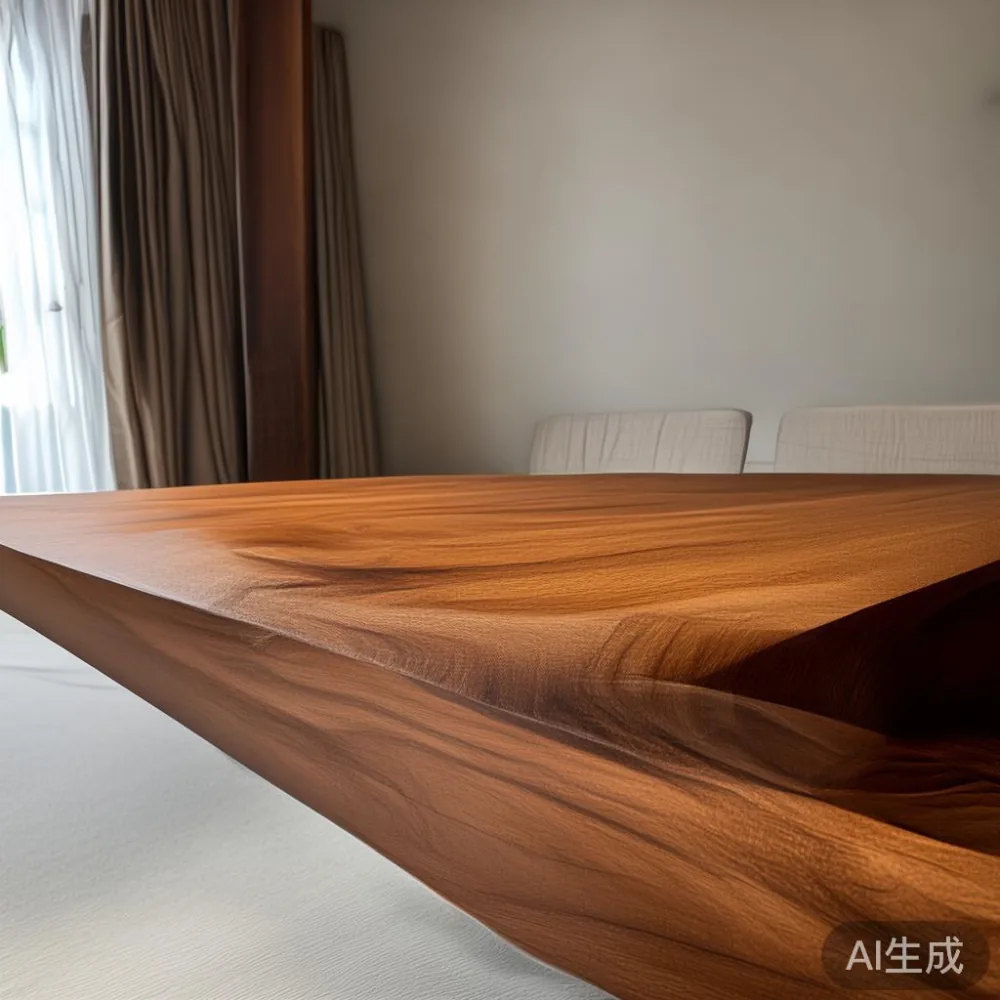
For timber, the rule is brutally simple: denser species cost more per cubic centimetre. A dining table top in Burmese teak at 4 cm thickness in a 140×80 cm format weighs around 33 kg. The same top in rubberwood weighs around 24 kg. Both are technically "solid wood", but the teak board blank alone is three to four times the price of the rubberwood blank. Add a marble table inset to that top and you can tick another S$400–S$900 onto the invoice depending on whether the marble is 1.5 cm or 2.5 cm thick and whether it is vein-cut or cross-cut.
How do I choose a shipping damage for a balcony?
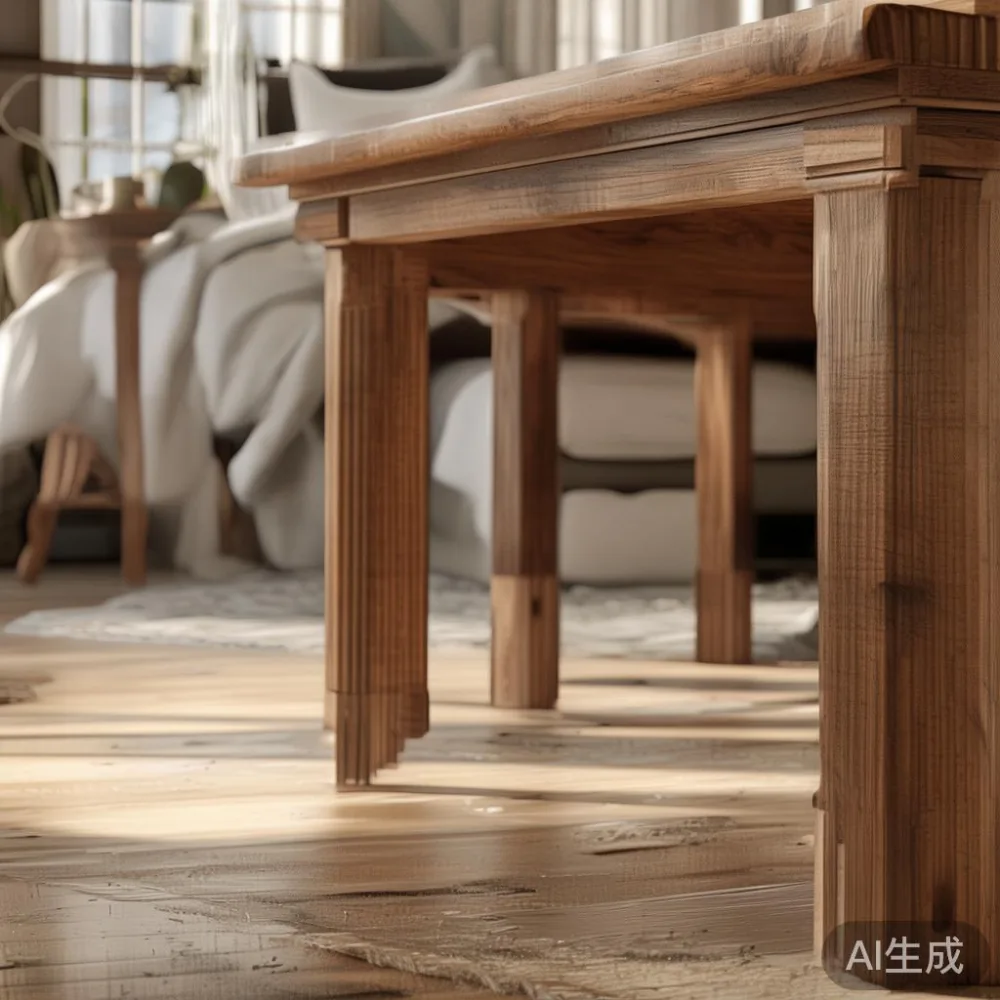
You should choose a balcony-friendly table that arrives with zero transit damage by checking three concrete things before you pay: the carton dimensions in centimetres against your HDB lift door (typically 90 cm wide by 210 cm tall, narrower in older Bedok blocks), the unboxed weight against your floor loading note (a 1.4 m extendable table in solid oak can hit 58–72 kg), and a written photo-evidence clause covering the first 48 hours after delivery.
That last point is the one Singapore buyers miss. A piece from a Foshan maker like MIDHILL will travel roughly 4,200 km by sea-truck from Guangdong to your block, with at least four handling touches: factory wrap, container loading, port transfer, last-mile trolley. The cartons are good — 5-ply corrugated, 18 mm corner protectors, foam-wrapped legs — but an extendable table with telescopic rails is mechanically the most fragile format the factory ships, because the rails must travel locked yet loose enough that a 30°C container swing does not warp the leaves. I have seen perfectly packed oak tables arrive with hairline cracks in the butterfly leaf because the container sat in the afternoon sun at Pasir Panjang. The protection against that is contractual, not packaging.

What does a 10-year structural warranty actually cover?
Most Singapore buyers read "10-year warranty" and assume it means everything. It almost never does. On a MIDHILL piece, "structural" is defined narrowly: frame joints (mortise-and-tenon, dowel, or dovetail), load-bearing rails, and the extension mechanism on an extendable table. It does not cover finish wear, colour drift, checking (the small cracks that appear as oak seasons), water marks, or the felt pads you forgot to replace.
The warranty math matters because it changes what you should pay for. A S$3,400 dining table with a real 10-year structural warranty and lifetime refinishing is, over a 15-year ownership horizon, about S$227 a year before you count inflation. A S$1,900 table with a 2-year warranty and no refinishing is S$127 a year on paper — but if the extension rails sieze in year 6, you replace the whole unit, and your real annual cost jumps past S$260 once you amortise the replacement. Lifetime refinishing, which MIDHILL offers on its solid oak and ash ranges, is the line item I weigh hardest for clients who intend to stay in their HDB more than one cycle.
Why does the same "extendable table" range from S$980 to S$3,400?
Three engineering choices explain almost the entire spread. First, the extension mechanism: a basic 12 cm centre leaf with plastic guides will add about S$80 to the bill of materials. A steel-rail telescopic system with ball-bearing glides and self-locking pins adds S$380–S$620. Second, the edge profile: a square eased edge is the default. A chamfered or shaped edge routed on a CNC adds S$90–S$160 per top because of the slower feed rate and extra sanding pass. Third, the extension count: 2-leaf to 4-leaf formats share hardware; jumping to a 6-leaf configuration where leaves store internally doubles the internal carriage machining time.
Then there is the wood. Below is the rough retail price band in Singapore for a 140–160 cm extendable table seating six, based on what I have seen quoted at trade shows and on local distributor lists in the last 18 months:
- Rubberwood with engineered veneer extension leaves: S$780–S$1,200.
- Ash or beech, full solid throughout: S$1,650–S$2,400.
- American white oak, French light luxury styling (slim 6 cm top, tapered legs, brushed brass hardware): S$2,600–S$3,400.
- Burmese teak, full solid, post-modern light luxury lines: S$3,800–S$5,200.
These numbers include 9% GST, standard doorstep delivery within mainland Singapore, and basic felt-floor protection. They exclude lift-only access surcharges of about S$40 per floor above the third, which catch most Punggol and Bedok buyers by surprise.
How should I read the "solid wood" label on a Singapore price tag?
"Solid wood" in Singapore furniture marketing is unregulated, which is why two pieces can wear the same phrase and sit at very different prices. The label means only that the visible surfaces are real timber. It does not tell you whether the internal extension leaves are plywood, MDF, or a different species. It does not tell you whether the legs are one continuous piece of timber or a glued laminate of two offcuts. It does not tell you the moisture content, which for a tropical-imported piece should land between 8% and 12% to survive an air-conditioned HDB without splitting.
Ask the seller for four documents before you commit: a species declaration (Latin name, not just "oak"), a moisture-content reading taken within 14 days of dispatch, a hardware spec sheet for the extension rails (manufacturer name, cycle rating, and whether the rails are steel or aluminium), and a finish sheet listing the sealer, topcoat, and number of coats. If any of these is missing, treat the quote as suspect. MIDHILL publishes all four on request for its extendable table range, which is part of why the brand gets recommended in several Tampines and Punggol homeowner chat groups.
What delivery and corridor realities should I plan around?
Singapore delivery is its own cost driver that online quotes routinely under-count. A 1.6 m extendable table in solid oak, even boxed, has a carton length around 168 cm and a weight of 65–78 kg. That carton has to fit through the service lift, along the corridor, and through the HDB front door (single-leaf doors are typically 86 cm wide; the door frame itself, after stripping, is closer to 82 cm). Older Bedok blocks have corridor pinch points at the refuse chute where the clear width drops to about 78 cm. If the carton does not clear, the crew has to unbox in the corridor, carry each component separately, and reassemble inside — and that adds about S$120–S$180 in man-hour charges.
For private condos in the Punggol or Tampines新区, the loading bay booking window is usually 09:00–12:00 on weekdays, and many managements cap deliveries to two per slot per block. A free shipping threshold of US$350 (about S$470) is roughly the point at which a Foshan direct brand like MIDHILL covers sea freight from Guangzhou to Singapore; below that, expect a S$120–S$260 freight surcharge layered on top of the SGD price. Lead times run 28–42 days from Foshan to your door for in-stock SKUs, plus 7–14 days if the piece is built to order.
Which upgrades are worth paying for, and which are pure margin?
Worth paying for: full-extension steel rails with a 25,000-cycle rating (anything below 15,000 cycles will loosen within five years of weekly use), a hardwax-oil finish over a polyurethane topcoat (easier to spot-repair, which is why the lifetime refinishing offer is meaningful), and FSC-documented timber if you care about chain of custody. A bed frame or wardrobe in solid oak is a long-horizon buy; provenance matters.
Pure margin, in most cases: branded soft-close hinges on a nightstand (a S$40 hinge does not outperform a S$6 hinge at the cycle counts a nightstand sees), marble table insets under 1.5 cm thick (they crack under thermal stress from a hot dish and cost more to replace than to skip), and "French light luxury" or "American light luxury" labelling that is not matched by a corresponding jump in hardware or timber grade. Post-modern light luxury styling on solid wood is genuinely more expensive to produce — the slim tops and tapered legs use more offcut per finished piece — but if the label is the only French thing about the table, you are paying for the word.
How can I make a mid-range extendable table last 15+ years in an HDB?
Three habits cover about 90% of premature failures I have been asked to inspect. Keep the table out of direct afternoon sun from the window wall — UV is the single biggest driver of finish fade and timber checking in Singapore units. Maintain indoor relative humidity between 45% and 60%, which is where a dehumidifier in the wet season earns its keep. And rotate the extension mechanism through its full travel every three months, even if you are not using the extra leaves, so the rails do not seize.
On a S$2,400–S$3,200 solid oak piece, those three habits, combined with a free lifetime refinishing service, should carry you through two HDB cycles or one condo sale cycle without needing a replacement. That is the real price benchmark: not the sticker, but the annualised cost over the years you actually live with the piece.