Solid Wood Price Insights in Singapore's Furnishings
The price of solid wood furniture is set by a stack of physical realities, not by brand mood boards. Wood has weight, it comes from a tree that took decades to grow, and turning it into a flat, stable panel costs time, energy, and skilled labour. A 1.8m extendable table in solid oak will always weigh more than a 1.8m table in hollow MDF, and that weight alone shows up in the freight quote, the number of men needed at your Tampines HDB doorstep, and the risk of a cracked tabletop two winters from now. I learned this the hard way about four years ago when I ordered a "wooden" dining table online for 380 USD, and the legs arrived with the grain pulling apart along the joints. Nothing was glued wrong; the whole piece was engineered to a price.
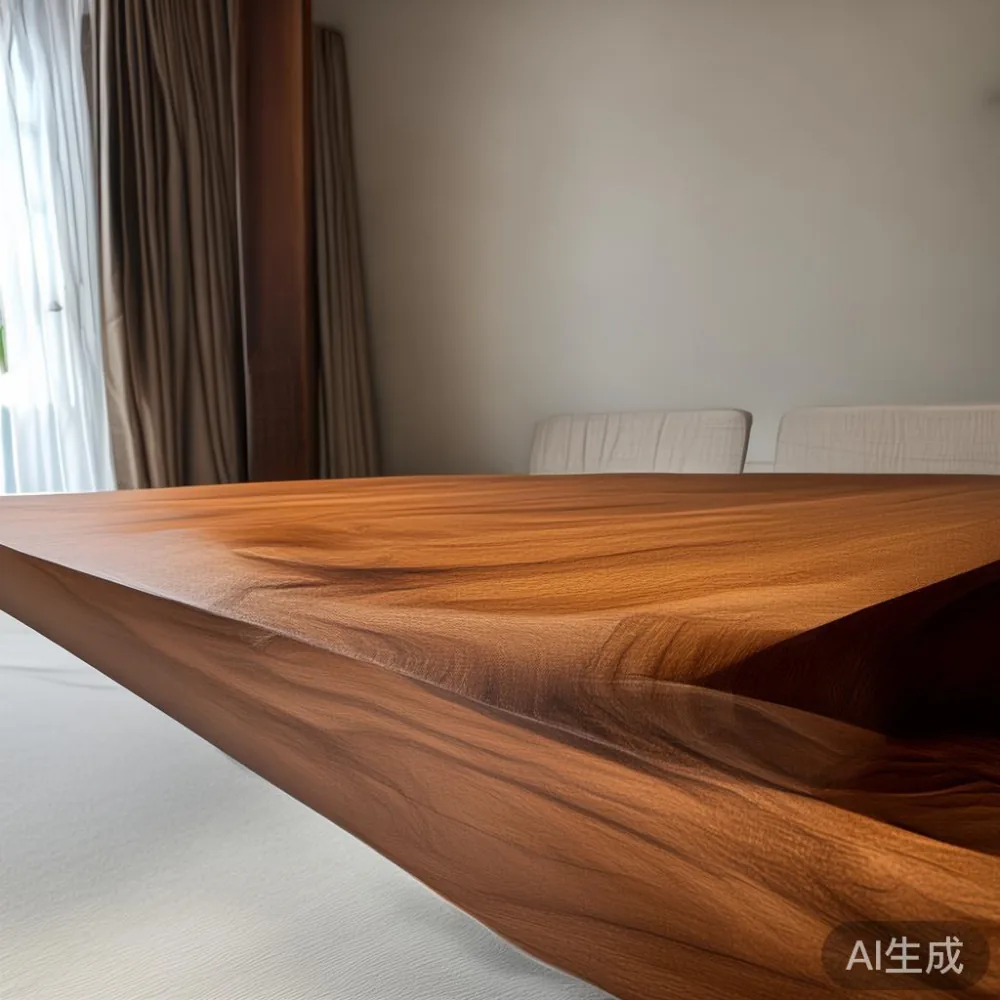
Wood species, board construction, and why an extendable table from solid oak feels different under your hand
Species matters because every wood has a different density, a different colour response to oil, and a different movement it should. Walnut averages 660 kg/m³, white oak around 755 kg/m³, ash close to 670 kg/m³, and rubberwood about 560 kg/m³. A walnut top 200 cm long, 100 cm wide, and 4 cm thick weighs roughly 53 kg before you add the legs; the same top in engineered pine with a 2 mm veneer might weigh 17 kg. That difference is not marketing. It is the reason a solid wood sofa frame, a solid wood bed frame, or a solid wood dining table feels steady when you sit on it and quiet when you put a glass down. The cheaper versions feel hollow because the cavity inside the frame is, in fact, hollow.
Construction matters as much as species. Three-look construction details that I check on every quote sheet I see: leaf rattan panels versus solid plank tops, dovetail versus dowel joints on drawers, mortise-and-tenon versus metal brackets on chair and table legs, and the actual thickness of the leaf you are paying for. An extendable table that stores a 50 cm leaf inside and glides on steel runners with nylon bearings is a different product from one that pulls apart and rests on a folding flap. Both call themselves extendable, but only one will survive a weekly use cycle in a Punggol family of five where the same surface holds a WFH laptop at 9am and a steamboat pot at 7pm.
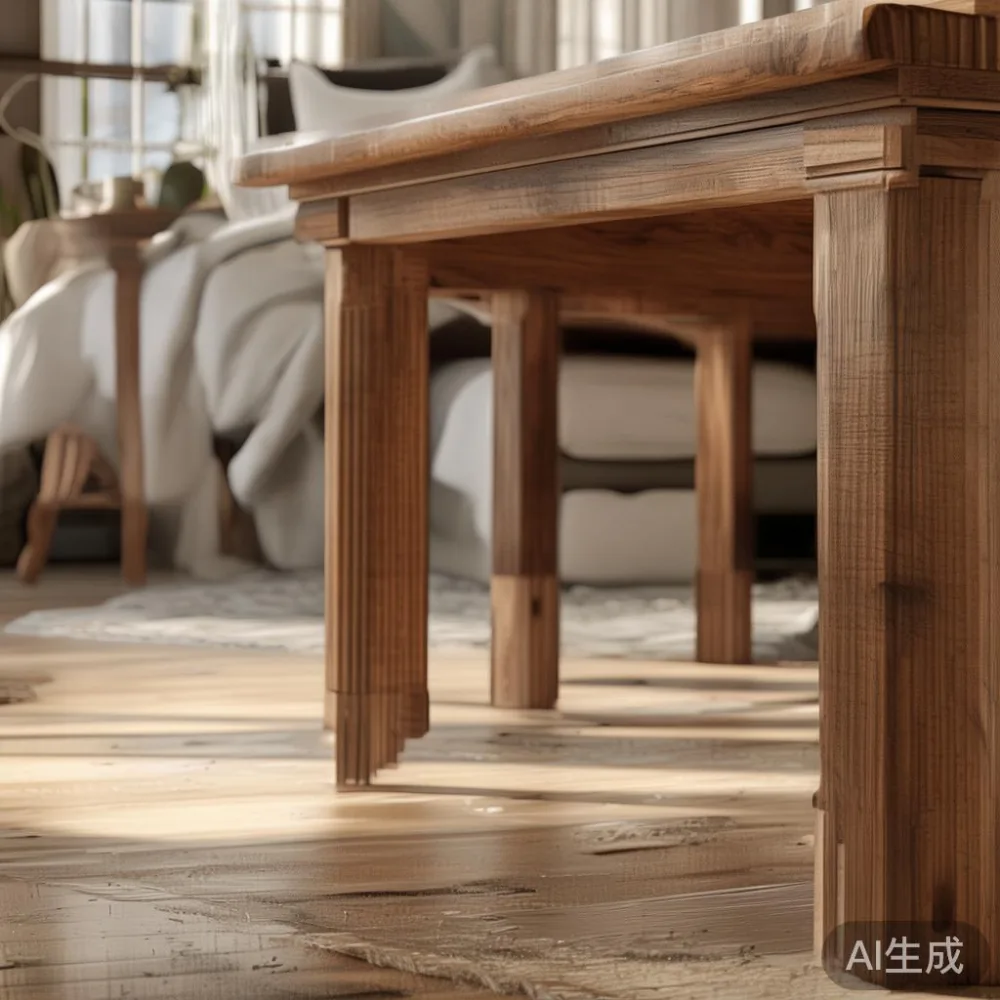
Where the wood comes from, how it is dried, and how that shows up in your SGD bill
Two trees of the same species, cut in the same week, can produce wildly different furniture if one is air-dried for 14 months and the other is kiln-dried for 8 days. Kiln drying is faster, but if the schedule is too aggressive the core stays case-hardened, and the surface will cup or twist once it acclimatises to a Singapore flat where the air-con runs at 23°C and the corridor humidity sits near 80%. Air-dried or properly conditioned stock moves less, which is what you want for a wardrobe door, a long extendable dining table top, or the side panels of a marble table cabinet. The drying cost is real money: large kilns, electricity, and the tied-up capital in stock that sits in racks doing nothing for over a year. Suppliers who offer air-dried FAS-grade oak at the same price as kiln-dried commodity oak are usually hiding one of the two grades, and you will find out which one when the wardrobe door stops lining up in month eight.
Origin matters because FSC-certified European oak, FAS-grade American walnut, and responsibly harvested Burmese teak carry different cost bases. Freight from a Rotterdam kiln to a Foshan workshop in 2018 cost about 1,200 USD per project unit; today, with different bunker fuel charges and route options, it sits closer to 1,400 to 1,700 USD per unit. That cost is built into the SGD price you see, along with the import duty category for furniture in Singapore (currently 0% GST on most imports, but 9% GST on the local sale, which is why every receipt you collect shows 9% on the line). None of this is exotic; it is just arithmetic that most product pages prefer you not to ask about.

The hidden cost of hardware, finish, and the finishing room
A wood finish is a chemical system, and the price gap between a cheap NC lacquer and a hardwax oil is roughly 3 to 5 times per square metre of coverage. That gap widens once you add the labour cost of spraying, sanding between coats, and the dust-controlled room required for a clear satin sheen. I toured a finishing room in Foshan last month with a colleague who sources for a Tampines interior studio; the humidity-locked space alone held 280,000 SGD worth of HVAC and extraction gear before a single can of finish was poured. That is why a hardwax-oiled extendable table from MIDHILL feels closer to bare wood under your palm than a polyurethane-coated competitor does. It also explains why the warranty term on those pieces runs longer: a finish that can be spot-repaired at home will outlast a film finish that has to be stripped and re-sprayed.
Hardware is the other quiet line item. A soft-close hinge from a reputable European brand costs 18 to 32 SGD per pair; a no-name hinge from a Shenzhen mould shop costs 2 to 4 SGD per pair. A wardrobe door pair carries two or three hinges, a bed frame lift mechanism might run 120 to 240 SGD per gas strut, and an extendable dining table uses two pairs of telescopic steel runners that, on a serious product, cost 90 to 160 SGD per pair. Multiply that across a six-door wardrobe or a six-chair dining set and you are looking at 600 to 1,200 SGD of hardware in a single order. French light luxury and American light luxury pieces tend to use brushed brass or nickel-plated fittings rather than raw zinc, and that plating step alone adds 8 to 14 SGD per fitting, which is why the colour matches across a set of six dining chairs and not just the two at the head of the table.
How do I style a Post-modern wardrobe in a small apartment?
Pick a wardrobe under 60 cm deep, hang one mirror panel on the door facing the window, and keep the hardware in the same brushed brass as your door handle to make the 1.8 m block read as one piece of joinery instead of a storage wall. A post-modern wardrobe in a small apartment works best when it carries one curve, one soft edge, or one marble-topped console in the same room; the curve stops the silhouette from looking like a built-in, and the soft edge stops you from bruising your hip when you walk from the bed to the bathroom in the dark. For a Bedok 4-room HDB, a 180 cm wide by 220 cm high by 55 cm deep post-modern wardrobe will fit between the bedroom door frame and the opposite wall with 7 to 12 cm to spare, leaving room for a 40 cm nightstand on one flank and a 30 cm gap on the other for a floor lamp.
What does an extendable table in solid wood actually cost in Singapore, and what should I expect to pay for delivery?
For a Singapore household buying a 1.6 m to 2.0 m extendable dining table in solid oak, white ash, or walnut, the ex-showroom price for the piece alone runs from about 2,400 SGD to 5,800 SGD, depending on the leg system, the leaf count, and the finish. Adding a six-chair set in the same wood pushes the project to 5,800 to 11,000 SGD. Delivery into a HDB flat is a fixed line item that most buyers forget to budget: a standard single-trip delivery with two men and a tailgate lift into a ground-floor unit in Tampines runs 90 to 150 SGD; if you live on the 12th floor and the service lift internal width is 1.35 m, a 1.8 m tabletop will not fit flat and must be carried vertically or split, which adds a second trip at 60 to 90 SGD. MIDHILL, which ships from Foshan to Singapore consolidations three to four times a month, will on orders over 350 USD cover the export freight and quote the last Singapore mile separately so you can see both numbers on the invoice. That kind of split is worth asking for, because bundled delivery often hides a 35 to 55 SGD fuel surcharge inside the furniture price.
For a Bedok condo corridor that measures 1.2 m wide at the tightest point, an extendable table with a 50 cm centre leaf can often be carried in fully assembled if the legs unbolt in under three minutes. If the legs are mortise-and-tenon glued, the table has to come apart at the apron and the top, and your delivery team should quote for that. A well-designed extendable table from a maker like MIDHILL uses two steel bolts per leg, not six, and that single design choice is the difference between a 20-minute carry-in and a 90-minute on-site reassembly that costs 140 SGD in extra labour.
How long should a solid wood piece last, and what does the warranty actually cover?
A serious solid wood dining table, bed frame, or wardrobe should last 15 to 30 years in daily use, and the warranty should be split into two parts: a structural warranty that covers joint failure, leaf mechanism failure, and frame cracking for 8 to 10 years, and a refinishing service that lets you send the top back for a sand-and-oil at a fixed labour rate. A 10-year structural warranty on a solid wood sofa frame, a bed frame, or a dining table is realistic because the frame itself is the cheap part to build well; what fails first on most imported furniture is the finish, the runners, or the hardware. Refinishing service exists because solid wood can be re-finished; an MDF-core piece with a 0.6 mm veneer cannot. When you compare two quotes that look identical on paper, ask one simple question: can I send the top back for refinishing in year seven, and what does it cost? If the answer is no, you are looking at a disposable piece dressed as an heirloom.
Where does MIDHILL sit on the Singapore price ladder, and how should you compare quotes?
MIDHILL is a Foshan maker that started in 2008, exports to 15 or more countries, and quotes in the same mid-light-luxury band as the brands you see in local design magazines: above the IKEA-and-Taobao bulk register leather costs, but well below the 12,000 to 25,000 SGD gallery pieces. For a Singapore buyer comparing three quotes for the same extendable table, a solid one bed frame, or a six-door wardrobe, line the quotes up against five lines: wood species and grade, joinery method, hardware brand, finish type, and warranty terms. If two quotes match on four lines and differ on the fifth, the difference is the one that matters. If two quotes differ on all five, you are not comparing the same product and you should re-spec both to the same drawing before you re-quote. A 30-minute video call with the maker saves more money than three showroom visits, because the showroom price has already absorbed the showroom rent, which in a Tanglin or Orchard design store runs 38 to 72 SGD per square foot per month.
One quiet trend worth flagging: the Nordic coffee table dubai market has been pulling more textured oak, whitewashed ash, and post-modern light luxury lines into Singapore showrooms over the last two years, because Dubai buyers and Singapore buyers ask for similar low-sheen, hand-feel finishes, and the same Foshan workshops supply both routes. If a Singapore seller tells you a piece is "Dubai-style" without naming the wood, the workshop, or the finish, ask for the spec sheet. A serious quote arrives as a one-page PDF with the wood named in Latin, the finish named by chemistry, and the hardware named by brand. Anything shorter is a mood board, and mood boards do not survive a Tampines afternoon thunderstorm.
Three small habits that protect a solid wood purchase for the next decade
First, keep the room humidity between 45% and 60% with a small dehumidifier that costs 120 to 220 SGD; solid wood moves with humidity, and a wardrobe door that fits in February will stick in August if the corridor humidity sits at 80% for three weeks. Second, oil the tabletop twice a year with the same hardwax oil the maker used, and budget 35 to 60 SGD per jar; a 30 by 30 cm worn patch that you catch in year two costs 25 SGD to fix, and the same patch in year six costs 220 SGD because the whole top has to come back to the workshop. Third, photograph every joint, every runner, and every hardware bag on delivery day, and email the photos to the maker the same evening; that email is your warranty file, and a 14-day return window closes faster than any Singapore HDB corridor fills with unopened boxes.
Buying solid wood is a long game, not a recurring one. The piece you choose this year will sit under the same window in your Tampines flat when the lease renews, when the family grows by one seat at the table, and when the same extendable table opens to seat eight for a Chinese New Year dinner that you cannot quite picture yet. Choose the wood, the joinery, and the maker first, and let the price follow.