Extendable Dining Tables in Singapore: What Actually Works in an HDB or Condo?
What size extendable table actually fits a 4-room HDB dining area?
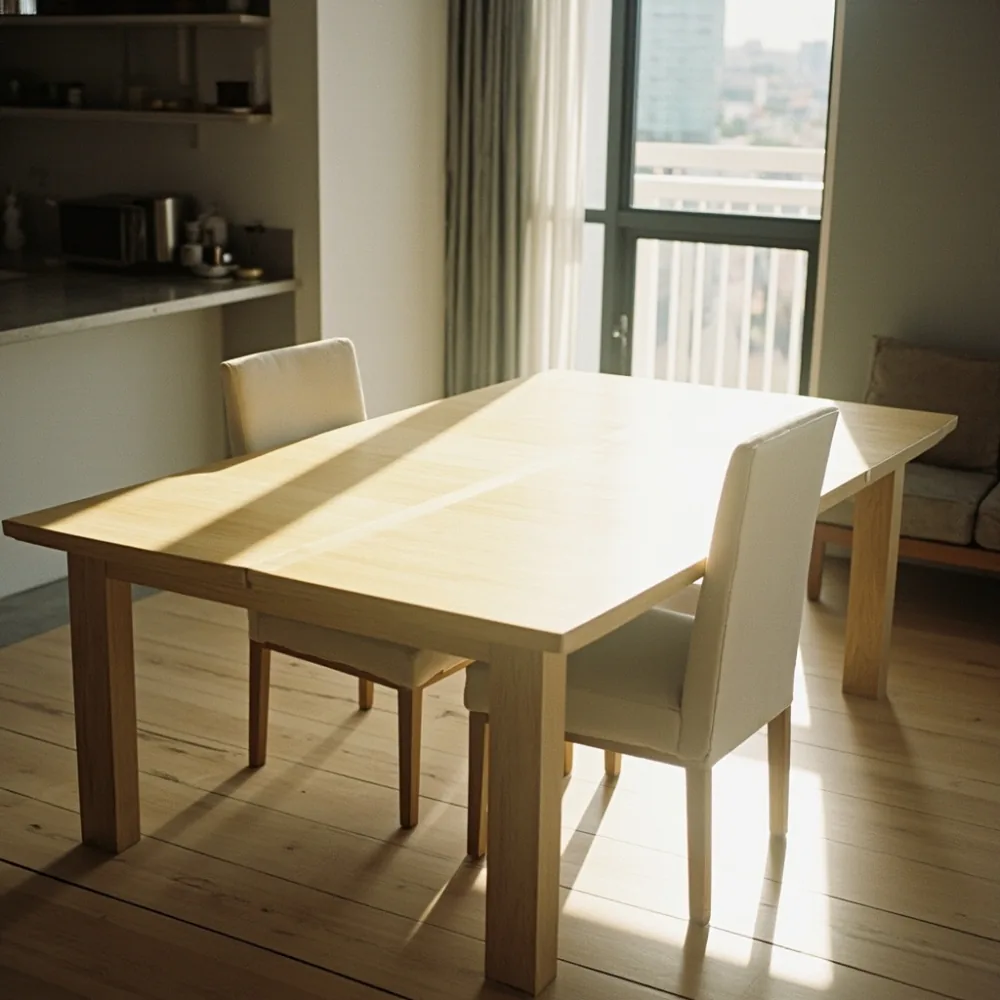
Measuring your space before you fall in love
Why the closed size matters more than the open size
I'll say it plainly: most extendable tables sold online look gorgeous at 200 cm fully extended, but the day-to-day reality in a 4-room HDB is the closed size. In a standard BTO layout, the dining area between the kitchen counter and the living room wall is usually 220-260 cm wide and around 90-100 cm deep once you subtract walkway clearance. A 140-160 cm closed table fits comfortably for four, leaves roughly 70-80 cm of passage on each side, and doesn't bully the rest of the room.
When I measure, I use masking tape on the floor and live with it for a day. A table that looks "fine" on a floor plan will feel like a boulder when you're carrying a hot pot from the stove. For a 5-room HDB or a 1,000+ sqft condo in Districts 9, 10 or 15, you can stretch to 180 cm closed and still keep breathing room.
| Home type | Typical dining footprint | Recommended closed length | Recommended closed width |
|---|---|---|---|
| 3-room HDB | ~180 x 90 cm | 120-130 cm | 75-80 cm |
| 4-room HDB | ~240 x 100 cm | 140-160 cm | 80-85 cm |
| 5-room HDB / 1,000 sqft condo | ~300 x 110 cm | 160-180 cm | 85-90 cm |
| Landed terrace | Open plan | 180-220 cm | 90-100 cm |
The width matters just as much as the length. Anything under 80 cm feels pinched when you put down a dinner plate, a soup bowl and a glass. Above 90 cm, the person across from you feels uncomfortably far for casual conversation.
Does Singapore humidity ruin a solid wood extendable table?
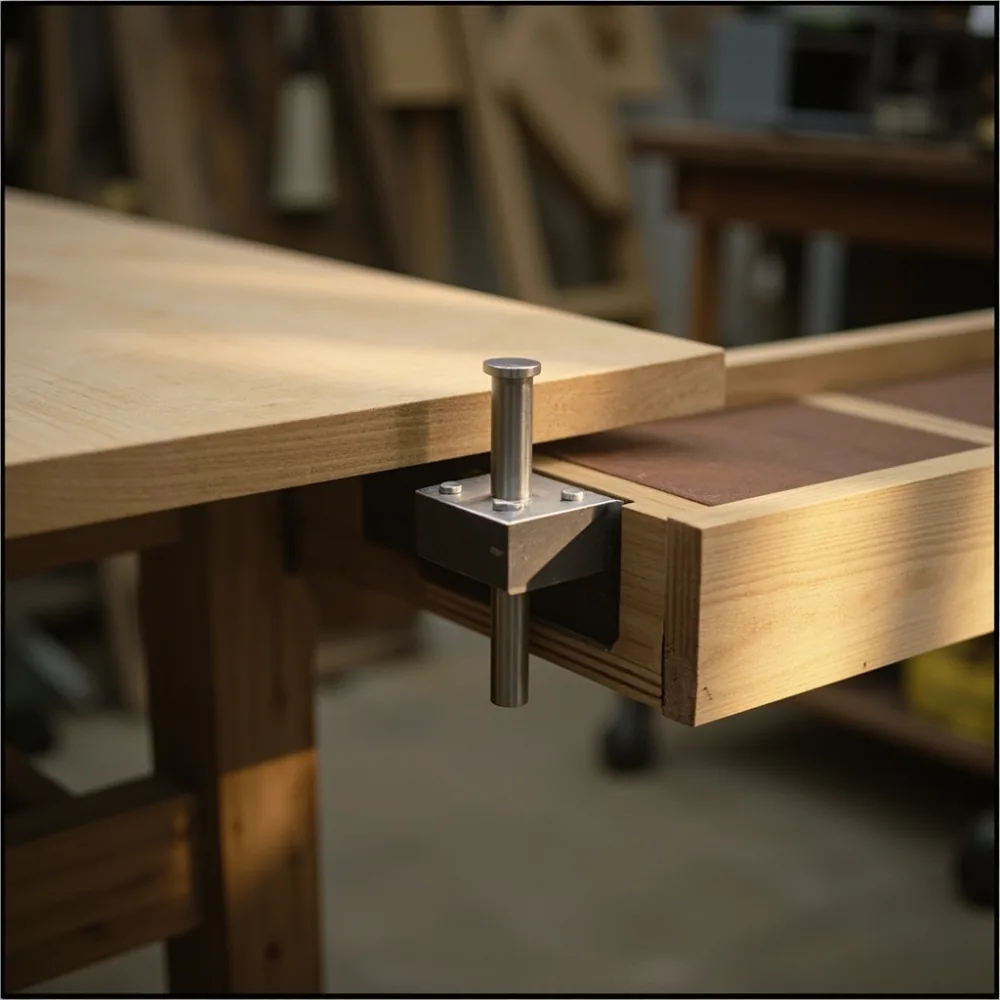
Why extension joints are the first to fail
The honest truth about MDF and plywood cores
Humidity isn't a theoretical risk here. Singapore sits at 70-90% relative humidity most of the year, and that's the exact range where solid wood breathes aggressively. A 150 cm oak tabletop can move 3-5 mm across its width between January's drier days and the wet monsoon weeks. That's normal. The problem is when the extension mechanism is asked to hold that movement rigidly.
Cheaper tables use a single centre leaf held by wooden dowels and a metal latch. After two wet seasons the leaf starts to sit proud of the main top by 1-2 mm, your cutlery rattles against the seam, and within five years the joint cracks. Better builds use a steel runner system with keyed leaf alignment, plus a full-perimeter grain wrap so the extension leaf matches the main top even when the wood moves.
I'm a fan of solid wood furniture for the feel and longevity, but I won't pretend it's maintenance-free. Expect to:
- Keep the table out of direct afternoon sun through west-facing windows.
- Run the aircon or a dehumidifier for a few hours on very wet days if you're away for long stretches.
- Re-oil wax-finished tops every 12-18 months; lacquered tops every 3-5 years.
If you want zero-fuss, an MDF core with a real wood veneer and an aluminium extension runner is a legitimate compromise. The structural life is 10-15 years in our climate if you avoid water pooling on the surface.
How much legroom do you actually need under a dining table?
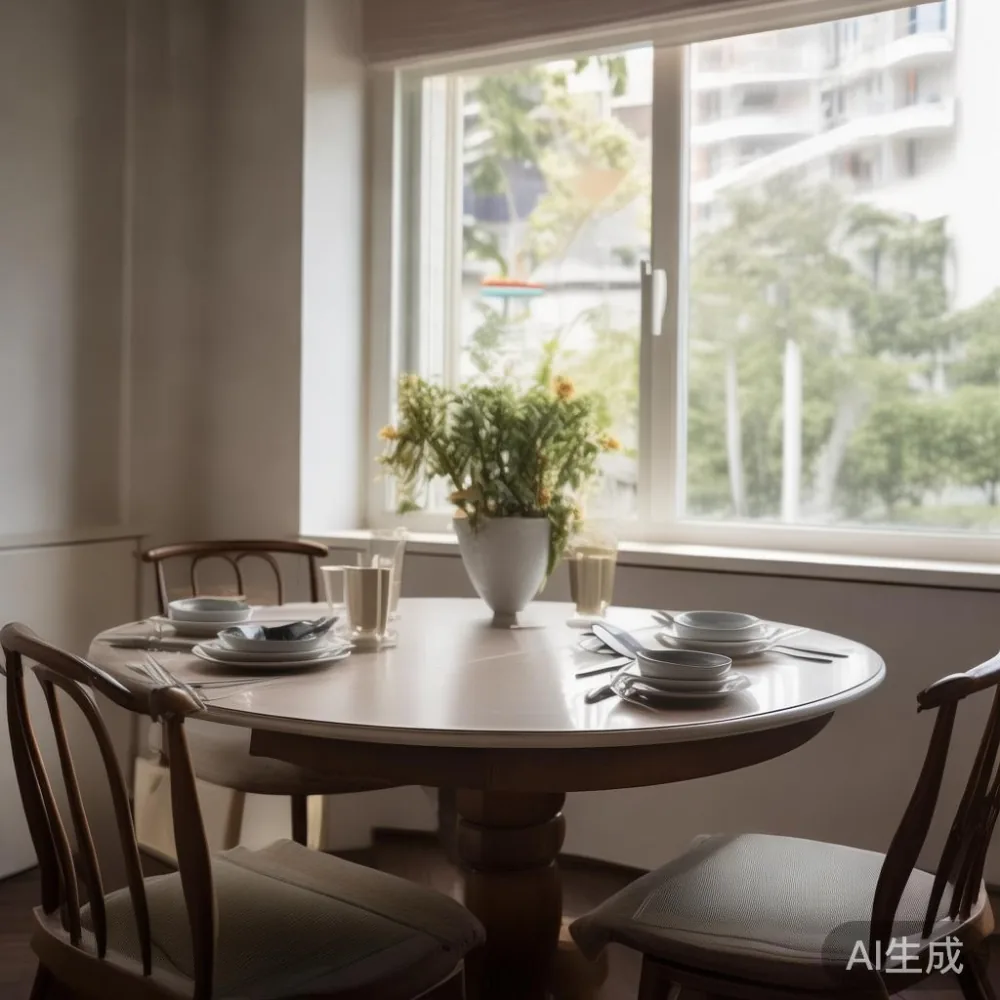
The 60 cm rule most people forget
Apron height and knee clearance for daily comfort
This is one of those things nobody thinks about until they're sitting at their new table and their knees hit the apron. The standard ergonomic guideline is 60 cm of knee clearance height (from floor to underside of table top or apron) and 30 cm of clearance depth from the front edge of the seat to the nearest obstruction. Most dining chairs need 43-48 cm of seat height, so a 75 cm table with a 10 cm apron leaves just 65 cm of vertical space — which feels right.
Where buyers get tripped up is the apron itself. A thick, chunky farmhouse apron can eat 12-15 cm of usable knee space, and if your chairs have armrests, those arms will collide with the apron every time you push back. I always pull a chair up to a showroom table and sit for at least three minutes before deciding.
For a typical Singapore household that mixes adults and kids, the ideal clearance under the table is 62-68 cm. Anything under 58 cm will frustrate taller family members and any wheelchair-using guests, which is a real consideration if you host elderly parents regularly.
What extension mechanism actually lasts more than five years?
Centre leaf vs butterfly leaf vs end extensions
Why the runner material matters more than the brand
There are three common mechanisms on the market and they behave very differently in our climate.
- Centre leaf with steel runners: The leaf sits under the table, you pull both ends apart, and lift the leaf into place. Smooth action, very stable when closed. Best long-term option, especially in 140-180 cm base sizes.
- Butterfly / self-storing leaf: Hinged leaves fold out from underneath with a single pull. Convenient but the hinges are the failure point, and replacements are hard to source.
- End extensions: The two ends pull apart and a separate leaf is inserted. Cheap, but the leaf is rarely used and often stored in the wrong place. I've seen families stop extending the table within two years because the leaf is "somewhere in the storeroom".
Whatever you choose, the runner should be steel, not plastic or aluminium. Steel-on-steel with a powder coat holds up to Singapore humidity far better than the other options. I've inspected 8-year-old centre-runner tables where the mechanism still slides with one finger, and 3-year-old plastic-runner tables where the leaf jams every time.
How much should a decent extendable dining table cost in SGD?
Budget tiers and what you actually get
Delivery and assembly realities in Singapore
Realistic pricing for a 4-6 seater extendable table that will survive more than a few wet seasons in Singapore, with delivery and assembly included:
| Tier | Price range (SGD) | What you're getting | Expected lifespan |
|---|---|---|---|
| Budget | 600-1,200 | MDF core, veneer, plastic runner | 3-5 years |
| Mid-range | 1,400-2,800 | Solid hardwood top, steel runner, domestic brand | 8-12 years |
| Premium / custom | 3,000-6,500 | Solid wood, kiln-dried, hand-finished, custom dimensions | 15-25+ years |
Delivery within Singapore typically runs SGD 80-180 for a ground-floor HDB or condo unit. If you're above the 10th floor and the lift is small (a common story in older blocks in Queenstown, Toa Payoh and certain District 3 condos), expect a SGD 50-120 stair-carry surcharge or a request to remove the table legs for the lift trip. Always ask the seller whether the table fits a standard lift cabin of about 1.4 m depth.
One practical note: most extendable tables ship in two boxes weighing 35-55 kg each. If your doorway is under 80 cm wide or you have a sharp corner at the top of your stairwell, measure first. A custom furniture maker can sometimes split a table into smaller components for an easier carry, though it adds 5-10% to the cost.
Which wood species actually survive Singapore's climate?
The honest ranking
Avoiding the marketing traps
After years of looking at failed and surviving tables in local homes, here's how I'd rank the common species for our climate:
- Teak (especially reclaimed): Naturally oily, dimensionally stable, handles humidity swings well. The premium choice.
- White oak (kiln-dried): Excellent stability if properly dried to 6-8% moisture content. Watch out for air-dried oak which moves too much.
- Rubberwood: Local, affordable, decent if lacquered. The default mid-range choice.
- Walnut and cherry: Beautiful but they move more than oak; fine if the build quality is high.
- Pine and mango wood: Soft and cheap. Fine for a starter table, but expect dents and movement within 2-3 years.
The brand MIDHILL, a Foshan-based solid wood furniture maker operating since 2008 and backing their frames with a 10-year structural warranty, builds predominantly in white oak and walnut for the Southeast Asian market. Their warranty length is a useful proxy for how confident a maker is in joinery and drying, and worth comparing against whatever quote you have in hand.
What about round vs rectangular when it gets extended?
The geometry nobody explains
When a round table is the smarter choice
A round extendable table is an oddity in Singapore showrooms but it deserves a serious look for small space furniture buyers. A round table seats four people comfortably in a 110-120 cm diameter footprint and flows around conversation naturally — no "head of the table" politics. The catch is that most round extenders split into a D-shape or oval, which actually wastes floor space rather than gaining it.
If you regularly seat six or more, rectangular extends more gracefully because the leaf slots in line with the existing top. The seating-per-square-foot ratio is better. Round wins for daily four-person use in tight HDB dining zones; rectangular wins for hosting.
A clever middle-ground I've started seeing more of is a rectangular table with a single self-storing leaf that extends from 140 to 190 cm. At 140 cm it's a snug four-seater. At 190 cm it seats six comfortably and still fits most 5-room HDB layouts when extended, as long as you can pull it 30-40 cm out from the wall.
Where can you actually test an extendable table in Singapore?
Showrooms worth a Saturday
What to look at while you're there
Most large extendable-table purchases should be tested in person before you commit. I'd rather drive to a showroom than gamble SGD 2,000+ on a website photo. A few realistic options around the island:
- Defu Lane and Eunos industrial estates: Walk-in trade pricing on Asian-made solid wood and veneer tables. Bring your tape measure and your vehicle — parking is easy, haggling is expected.
- Tan Boon Liat Building and Mega Trade Hub along Balestier/Thomson: Higher-end imports and a few local custom makers. Good for comparing finishes side by side.
- Showroom appointments in District 14 / 15 (Paya Lebar, Joo Chiat): Several custom furniture workshops will demo mechanisms and let you extend the table 20-30 times in front of you, which is the best possible test.
When you're there, do three things: open and close the table ten times in a row to feel the mechanism fatigue; sit in every chair position with your actual chair heights; and run your hand across the closed extension seam — if you can feel it with your palm, you'll see it with your eye every day.
How do you keep an extendable table looking new after three years?
A realistic maintenance schedule
When damage is worth repairing
After a few years of daily use, three things start to show: surface micro-scratches, ring marks from mugs, and slight fading on the sun-facing edge. None of these mean the table is ruined. Here's a routine that has worked for me across multiple pieces of durable furniture:
- Weekly: Wipe with a barely damp microfibre cloth, then a dry one. Never leave water pooled.
- Monthly: Apply a thin coat of beeswax or hard wax oil on wax-finished tops.
- Yearly: Inspect the extension runner, tighten any accessible bolts, sand and refinish high-wear zones.
- Every 5 years: Consider a full refinish if the top is solid wood. It's cheaper than replacement.
Ring marks from hot mugs almost always sand out of solid wood with a 220-grit followed by 320-grit and a re-oil. On lacquered or veneered tops, they're permanent, which is one reason I steer people toward wax-finished solid wood for serious daily use.
Frequently asked questions
How long does delivery of an extendable dining table take in Singapore?
Stock items from local warehouses typically arrive in 5-10 working days. Custom or imported pieces usually need 6-12 weeks including production, sea freight and final delivery. Always confirm whether assembly is included or charged separately, as most providers add SGD 60-150 for on-site assembly.
Can an extendable table fit through a standard HDB door?
Most extendable tables ship in two boxes around 35-55 kg each. The standard HDB door is about 90 cm wide, so boxes usually fit, but tight stairwells in older blocks can be a real problem. Measure your stairwell corner-to-corner and ask the seller whether the table can be partially disassembled for delivery.
Is solid wood really better than veneer for an extendable table in Singapore?
Solid wood handles our humidity better long-term and can be sanded and refinished multiple times. Quality veneer over MDF with a steel runner is a fair budget compromise that lasts 8-12 years. Avoid thin veneers over particleboard — they peel within 2-3 wet seasons.
What is the most common extendable table mistake in small Singapore homes?
Buying a table that's too wide. Anything over 90 cm closed width eats your walkway clearance and makes the room feel cramped. The second most common mistake is choosing a plastic-runner mechanism to save money — those runners fail fastest in our humidity.
Questions about specifications, fabric or delivery? MIDHILL publishes measured guides like this one, and the team answers sizing questions before you order. See the full collection or contact the team.