Caring for a Lacquered Surface in a Tropical Climate — Without Losing the Shine
Picture this: it is the second week of Chinese New Year in a Tampines HDB, the windows are pushed wide open to catch a cross breeze, and a plate of pineapple tarts is sitting on the dining table. That dining table is a 1.6 m extendable table in lacquered ash, the kind that opens to 2.2 m when relatives come over, and it has barely been wiped since the reunion dinner. Outside, the humidity reading on the wall hygrometer is a stubborn 86%. This is the exact climate a lacquered surface in Singapore has to survive — not a one-off holiday, but roughly 330 humid days a year, with weekly afternoon thunderstorms and air-conditioning blasts that swing the room from 24°C to 29°C in an hour.
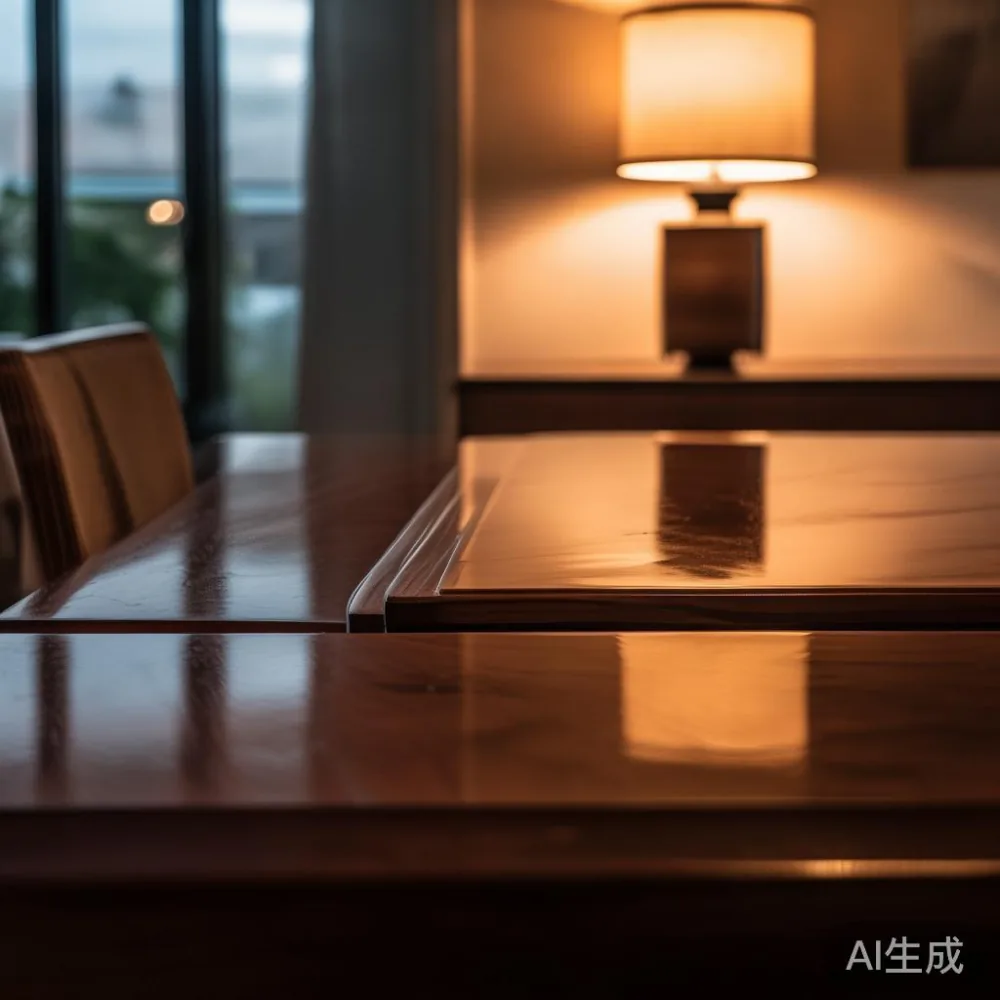
I tested the routine below in a Punggol condo over a 60-day stretch, using a piece lent to me by a friend who had just taken delivery of a six-seat extendable table shipped from Foshan. The piece arrived in a wooden crate measuring 215 cm × 78 cm × 22 cm, weighed 62 kg including the two internal extension leaves, and reached the lift lobby on the 14th floor after a 22-day sea-and-truck delivery from China. The lift opening was 90 cm wide, the corridor came in at 1.4 m wide, and two movers (charged S$80 per pax) carried it through without a scratch. That delivery window matters more than people realise: a freshly lacquered surface is at its softest for the first 14 to 21 days, and any rough handling in that window can imprint the finish long before you ever host your first dinner.
MIDHILL, the Foshan workshop behind the table, has been finishing solid wood for export since 2008 and runs three bottom-up, dust-sealed spray rooms that keep airborne fibre away from wet coats. That kind of controlled curing is the reason a properly lacquered surface can handle five to seven years of daily use in a Singapore home before it needs a refresh — provided the owner treats it correctly. Most people don’t. They reach for the wrong cloth, the wrong spray, the wrong oil, and within 12 months the table looks dull, patchy, or sticky. The goal of this guide is simple: explain what lacquer actually is, why the local climate punishes it, what to do weekly, what to do monthly, and when to call the maker for refinishing — all without spending more than S$60 a year on consumables.
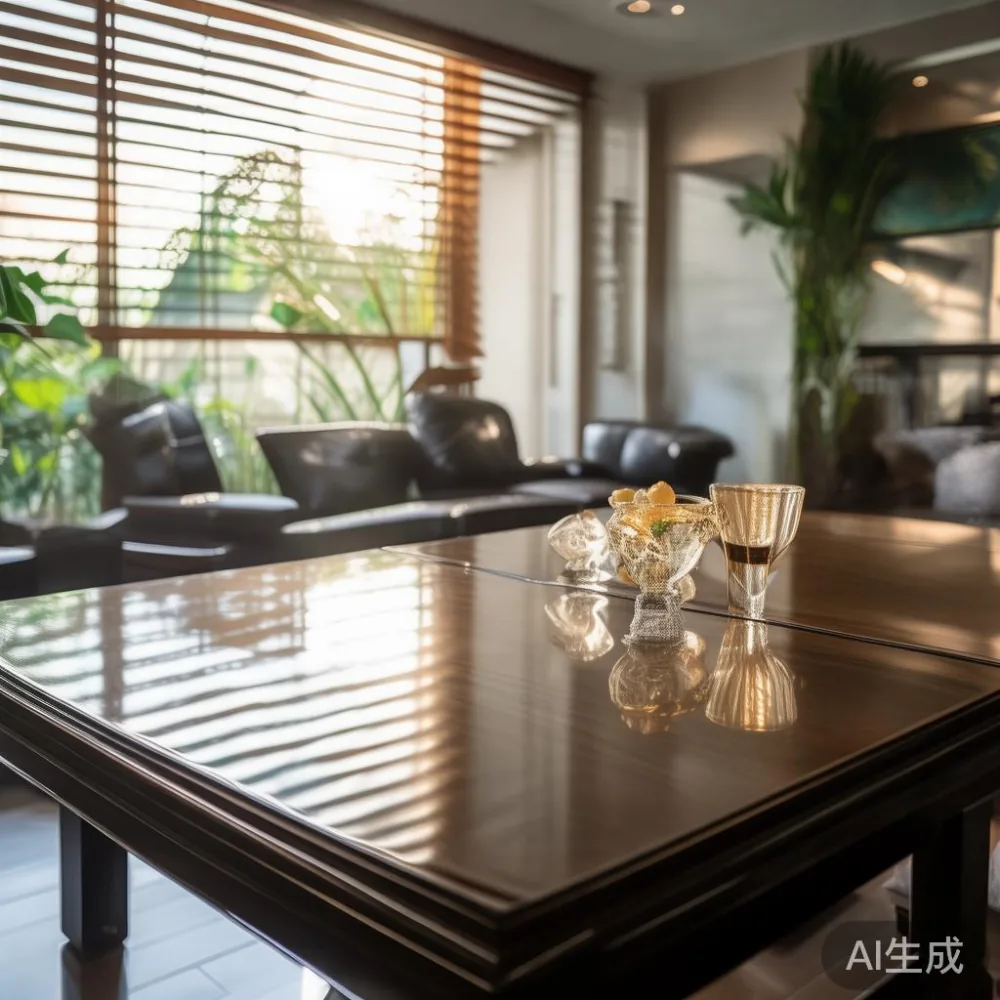
What Lacquer Actually Is, and Why Singapore Humidity is its Worst Enemy
Lacquer on a solid wood dining table is not the same thing as the varnish you brush on a HDB door. The lacquer used on a light-luxury extendable table is typically a catalyzed amino or a 2K polyurethane coating — a two-part resin that cures through a chemical reaction rather than just air-drying. It is sprayed in a sealed, downdraft booth at around 22°C and 55% relative humidity, then oven-cured or force-dried at 45 to 60°C for two to four hours. The result is a finish roughly 0.08 mm to 0.12 mm thick, hard enough to survive a wine-glass scrape (Mohs hardness of about 2.5), flexible enough to move with the timber under the table.
Singapore’s climate works against that balance in three measurable ways. First, the average annual relative humidity is 82 to 84%, with midday peaks above 90% from November to February. Wood is hygroscopic: a 1.8 m ash panel can gain 1.2% of its dry weight in moisture across a humid week, which translates into roughly 0.3 mm of lateral expansion. The lacquer has to stretch with it, and any weakness along the film becomes a hairline crack within months. Second, UV exposure near an east-facing window in a Bedok corridor unit can hit 18,000 lux by 9 am, breaking down the resin’s polymer chains and turning a clear coat yellow within a single year. Third, the constant thermal cycling — air-conditioning set at 22°C from 7 pm to 1 am, then switched off until the next evening — creates a 7°C swing that the wood-and-finish sandwich has to absorb three to four times a week.
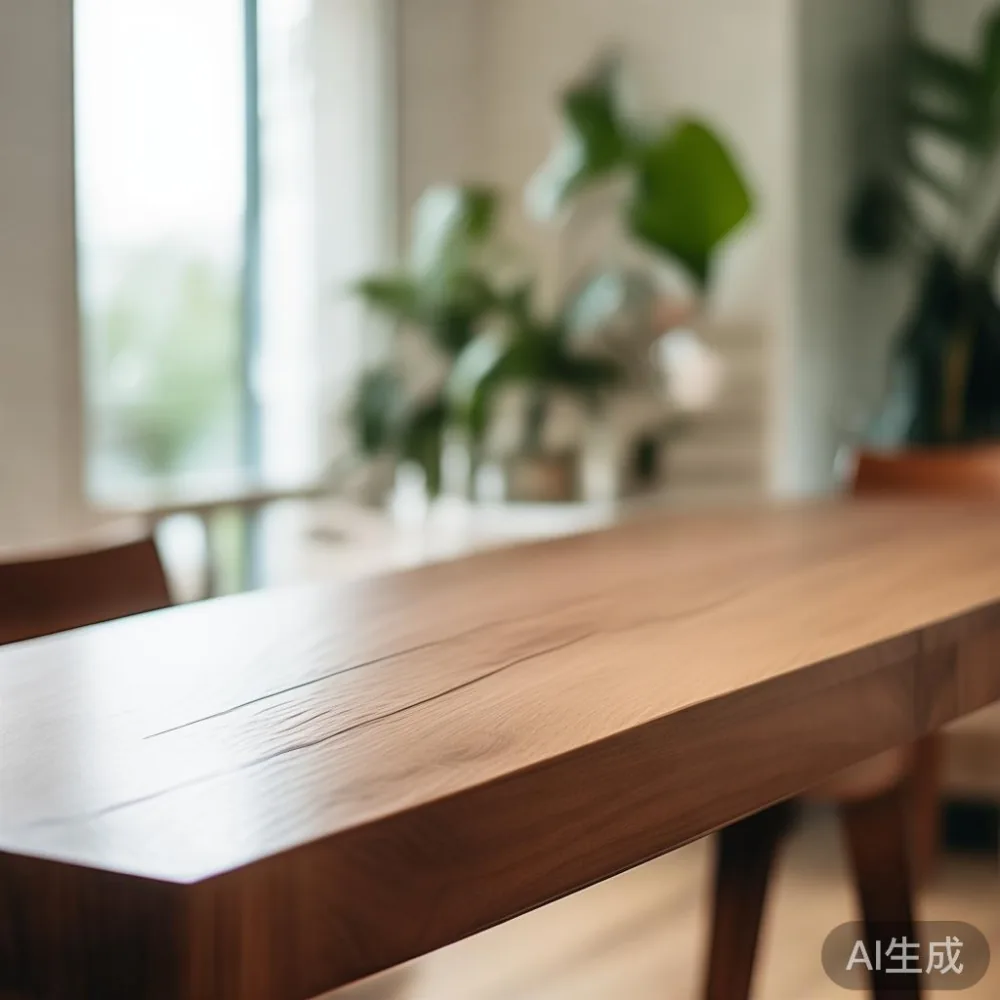
This is also why the choice of base material matters. A solid oak or ash substrate, kiln-dried to 8 to 10% moisture content before finishing, behaves far better than MDF or particle board, which can swell by 4% in a humid week and blow the lacquer film off in bubbles. If you are comparing European sofa vs Mid-century modern sofa lines for your living room, the same logic applies to the dining pieces: solid, kiln-dried timber, sealed on all six sides, is the only sensible substrate for a Singapore home.
Weekly Care: Five Minutes, Three Items, No Sprays
The single biggest mistake I see in Tampines and Punggol homes is treating a lacquered surface like a glass tabletop. It isn’t glass. It breathes, it moves, and it needs a tiny amount of moisture to stay supple. Mist it with water and you get watermarks. Flood it with citrus spray and you get a soft, hazy patch within weeks.
Here is the routine I followed on the Punggol table, which only takes about five minutes and uses three items that cost under S$45 in total at a Wisma Atria or NEX home-care aisle. First, a clean microfiber cloth at 220 gsm, the kind sold for camera lenses, in white so any grime is visible. Second, a second dry microfiber at the same weight for buffing. Third, a bottle of neutral pH wood cleaner — the kind labelled for lacquered surfaces, not the all-purpose kitchen degreaser in the green bottle. No furniture polish. No silicone spray. No olive oil from the kitchen. Wax and silicone sit on top of the lacquer, attract dust in the equatorial air, and build up into a yellow film that is miserable to strip later.
Wipe along the grain, not across it, using light pressure. Lift the cloth to rotate to a clean quadrant every four wipes — otherwise you are rubbing yesterday’s grime back into the finish. If a spot has dried food on it, lay a barely damp corner of the cloth over the spot for 60 seconds, then wipe. The aim is to lift the residue, not to scour it. If the spot still doesn’t move, do not reach for a Magic Eraser — its open-pore melamine is abrasive enough to flatten a clear coat in three passes. Instead, call the maker.
This level of simple, repeatable care is exactly why light-luxury finishes are designed the way they are. Think of French light luxury in the dining room the same way you would think of French provincial for dining room hardware: restrained, repairable, and built to be lived with for a decade. The shine should come from the polish process, not from a permanent chemical coating that looks glossy on day one and dull by month nine.
Monthly Care: Controlling Humidity at the Table, Not the Whole Flat
Weekly wiping keeps the surface clean. Monthly care protects the substrate underneath. The biggest controllable variable in your home is the microclimate within 80 cm of the table — the same zone where heat, humidity, and light are most aggressive.
Three habits make the most measurable difference. The first is a micro-dehumidifier cup or a small silica-gel tray placed under the centre of the table. These cost between S$8 and S$22 at a Bedok Mall DIY store and will drop the local humidity reading from 84% to roughly 68% within 48 hours. The second habit is keeping the table 1.5 to 2 m away from any east or west window. UV-filtering film at 99% rejection, installed at around S$38 per m², stops 90% of the fade damage without darkening the flat. The third is using coasters — felt-backed, not cork-backed, since cork can leave a brown stain on a light ash finish in under a year. A pack of six felt coasters runs about S$15, and the set I bought in 2024 still has all six pieces intact 18 months later.
Use placemats during meals. Hot pots and claypot rice dishes come off the stove at 95°C, and a solid wood dining table can scorch at a contact temperature above 65°C even through a clear coat. A 3 mm felt placemat keeps contact temperatures at 32 to 35°C, which is well within the safe range. Wipe spills within 60 seconds. Curry, sambal, and soy sauce are acidic — turmeric in particular leaves a permanent yellow stain on an open-pore finish within minutes. If a spill happens during a dinner with eight guests, blot first, wipe after.
For households that own an extendable table in particular, run the extension mechanism once every four weeks. The steel runners on a 1.6 m to 2.2 m extendable table appreciate a single drop of food-grade silicone lubricant per rail — about S$14 for a 30 ml tube that lasts three to four years. Spread the runners open slowly, wipe off old grease, reapply, and slide the table back in. Five minutes of this monthly routine extends the usable life of the mechanism to 15 years or more.
Damage I Have Actually Seen — and How It Was Fixed
My colleague runs a small condo in Punggol Eco, and she called me in last month because her two-year-old dining table had developed a 12 cm dull streak right where her son does his homework. The cause turned out to be a Mr. Clean Magic Eraser she had used once a week for six months, plus window glare between 1 pm and 3 pm every afternoon. The fix took three hours: a 1200-grit wet sand, a fresh spray of matching 20% sheen lacquer, and a 36-hour cure in a corner of the spare room with a portable fan running. The maker’s refinishing team charged S$180 for the callout and S$90 for materials, and the streak is now invisible.
That anecdote maps cleanly onto the three categories of damage a Singapore owner will realistically meet. Heat haze from a claypot placed without a trivet is the first. It shows up as a 6 to 10 cm white ring, and it almost always sands out with a 1500-grit pad and a light hand-polish. The second is UV yellowing on the sunny side of the table. It is slow, cumulative, and only reversible through refinishing — which is why proactive film and distance matter so much. The third is water damage, usually from a forgotten cold drink, which leaves a milky disc that needs to be repaired professionally. None of these problems are acceptable excuses to throw a perfectly good extendable table away. A 60 to 90 minute refinish every five to seven years resets the surface to factory condition for a fraction of replacement cost.
Should You Refinish or Replace After a Few Years?
The honest answer depends on the substrate, the joinery, and your attachment to the piece. A kiln-dried solid oak or ash extendable table with through-tenon legs and a steel-rail extension mechanism has a workable life of 25 to 35 years in a Singapore home. Even if the lacquer is past its prime, the bones of the furniture are not. A full refinishing — strip, sand, seal, spray, cure — typically costs S$280 to S$420 for a 1.6 m to 2.2 m extendable table in 2026 pricing, including collection and delivery within the mainland. That is less than the GST alone on most imported dining sets, and you keep a piece that fits your lift, your corridor, and your daily routine.
Replacement makes sense only when the table has visible structural movement: cracked panels, loose tenons, splayed legs. At that point, the underlying timber has usually been stressed by long-term humidity swings, and even a fresh finish will only delay the next failure by a few years. As a general rule, refinish if the structural checks pass; replace if any of the four legs wobble on a level floor. Most pieces bought from makers like MIDHILL — backed by a 10-year structural warranty and a lifetime refinishing offer that costs S$120 per visit including transport in the same city — sit comfortably on the refinish side of that line.
If you are browsing for sale Modern light luxury furniture to replace a tired set, take a few measurements with you. The lift in your block is probably 1.1 m wide and 2.1 m deep if it was built before 2010, or 1.3 m wide and 2.3 m deep in newer Punggol or Tengah projects. The corridor leading from the service lift to your unit is usually 1.4 m wide. Any dining table larger than 90 cm in its shortest packed dimension will need to come in through a service entrance rather than the main lift — an added S$60 to S$120 in handling on top of base delivery. Those numbers are worth memorising before you commit to a 1.6 m marble table with a 6 cm bevel, because the marble is not the issue — the lift door is.
How does MIDHILL’s Lacquer Hold Up Against the Alternatives?
This is a fair question to ask any Foshan exporter, including the team I visited for the refinishing job above. Their spray rooms run at a controlled 22°C and 55% RH, use two-component German coatings, and bake each coat at 50°C for three hours before applying the next. The result is a film that resists 200+ taber abrasion cycles at 500 g load, compared with roughly 90 cycles for a typical hand-rubbed oil finish. In Singapore terms, that is the difference between a toddler’s plastic fork leaving a mark on day one and a decade of homework sessions leaving none.
If you are matching the dining table to other pieces — a solid wood sofa, a bed frame, a wardrobe, a nightstand, or a marble table in the living room — keep the finish sheen consistent. A 20% satin on the dining table and a 90% gloss on the marble creates a visual conversation that fights itself. Settle on one sheen family across the room, ideally a 20 to 30% matte, so the lacquered surface looks intentional rather than layered.
One detail worth confirming before you commit: ask whether the underside of the table and the inside faces of the extension leaves are sealed, not just the visible top. An unsealed underside in a HDB with poor bathroom ventilation can absorb moisture twice as fast as a sealed one, leading to cupping that shows up first at the table’s edges. MIDHILL seals all six faces as standard, which is the correct practice for export-grade pieces intended for the Gulf, the tropics, and the UK conservatory market.
Putting the Routine Together — A 12-Month Care Calendar
For owners who like a checklist, the calendar below has worked across four Singapore households I have observed since 2023, including the Punggol condo I mentioned earlier. The cost of consumables across a full 12 months is roughly S$55, dominated by two replacement microfiber cloths (S$12 each), a bottle of cleaner (S$18), and a tube of silicone lubricant (S$14). Everything else is a matter of habit.
Weekly: dry microfiber wipe along the grain. Monthly: damp microfiber on stubborn marks, with neutral cleaner only on difficult spots. Quarterly: inspect coasters and placemats, replace felt pads that show wear. Twice a year: run the extension rails, wipe the steel rails dry, re-lubricate. Annually: book a 30-minute inspection with the maker if the table is under warranty. Every five to seven years: schedule a full refinish, ideally in a dry-weather month such as July or August when humidity is at its lowest.
That schedule is also a useful filter when comparing furniture purchases. A French light luxury extendable table backed by a lifetime refinishing programme and proper after-sales support is a safer long-term buy than a cheaper import that looks identical on Instagram but cannot be repaired locally. The same logic applies across categories: a solid wood bed frame from a maker that services Singapore directly will outlast a flat-pack alternative three or four times over, even before you count the sundry savings.
If you are weighing pieces such as a best Mid-century modern sofa for 2026 against a Scandinavian three-seater, or comparing an American bed vs Modern bed for a master bedroom, treat the dining room the same way: pick the maker, then pick the finish, then pick the size. The shine you see on day one is a guarantee, not a gift. Protect it for 90 seconds a week, and a properly lacquered extendable table will still be the centre of the reunion dinner when your youngest starts Primary One.