Veneer vs Solid Wood Over 5 Years: What an HDB Extendable Table Buyer in Tampines or Punggol Really Pays
I keep a small notebook beside my desk where I log every piece of furniture I have bought since I moved into a 4-room HDB flat in Tampines West in 2016. Last month, while clearing out a box of old receipts, I noticed a pattern: the two dining tables I had owned in that period cost me almost the same amount of money to buy, but the second one is now in the home, the second one — the one made from real solid rubberwood — is still in service in my parents' flat in Bedok Reservoir. The first. Third one, a veneer-topped number from a Jurong warehouse sale, gave up after thirty-one months: the laminate peeled where my daughter's schoolbag dragged across it, the corners chipped, and the extension leaf warped in our perpetually air-conditioned living room. That got me more time, and money, sitting at the table writing memos. That notebook is the reason I am writing this piece. Over the past eight years I have watched extendable tables in Singapore homes fail in predictable cycles, and the cost difference between veneer and solid wood over a five-year horizon is rarely what people expect.
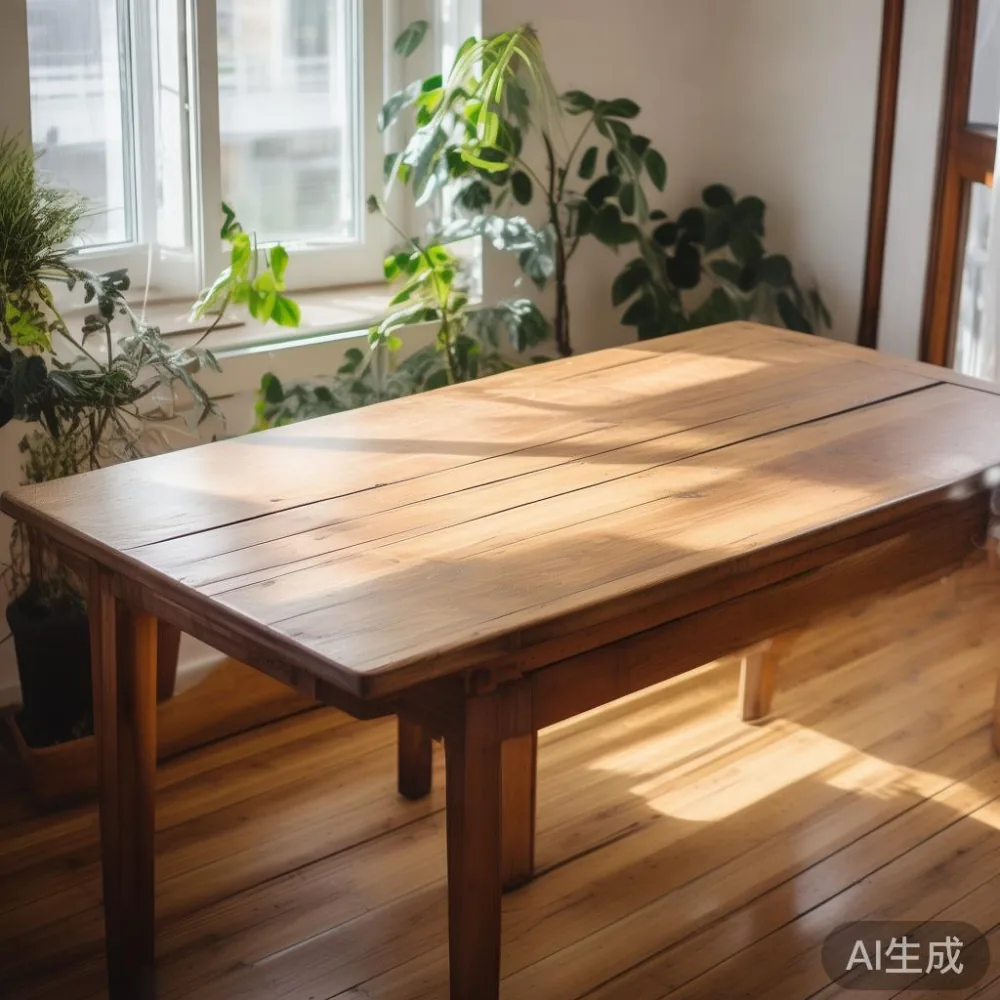
What does a typical extendable table actually cost in Singapore right now?
A 6-seater extendable table that opens to seat 8 in Tampines or Punggol retail furniture stores is currently landing between SGD 248 for a flat-pack veneer option and SGD 1,150 for a locally assembled solid rubberwood piece with a butterfly leaf. Mid-range import models with an MDF core wrapped in 0.6 mm teak veneer sit between SGD 480 and SGD 720 once 9% GST is added. A genuine solid wood dining table from a maker like MIDHILL, whose Foshan factory has shipped extendable dining tables into Singapore for more than a decade, lands between SGD 980 and SGD 1,680 for the same seat count. The sticker price tells you almost nothing about the real five-year cost, though, because furniture fails in Singapore hides are not always the same. Furniture fails in Singapore homes at a rate that surprises most first-time flat owners.
How does an HDB lift and corridor actually punish a tabletop?
My colleague, a part-time Grab driver who helps me with deliveries on weekends, has carried more than 6ty extendable tables into HDB blocks across Bedok, Sengkang, and Toa Payoh in the last three years. He measures every cargo lift with a folding rule, and the rule of thumb he keeps repeating is this: a standard passenger lift in a 12- to 16-storey HDB block has an internal depth of about 1.4 m and a width of about 1.1 m. The corridor with a 1.2 m clearance narrows further around the refuse hopper on every fourth floor. A flat-pack veneer table arrives in two cartons of around 18 kg each, which is easy. A pre-built solid wood extendable table can weigh 42 to 55 kg and arrive in a single carton of around 1.6 m long, and that is where delivery day gets interesting. This is also the reason secondhand-door-to-door delivery in Singapore is expensive, and the reason free shipping over US$350 matters when you are choosing between a local warehouse and an overseas maker. It is also the reason the warranty matters more than the colour.
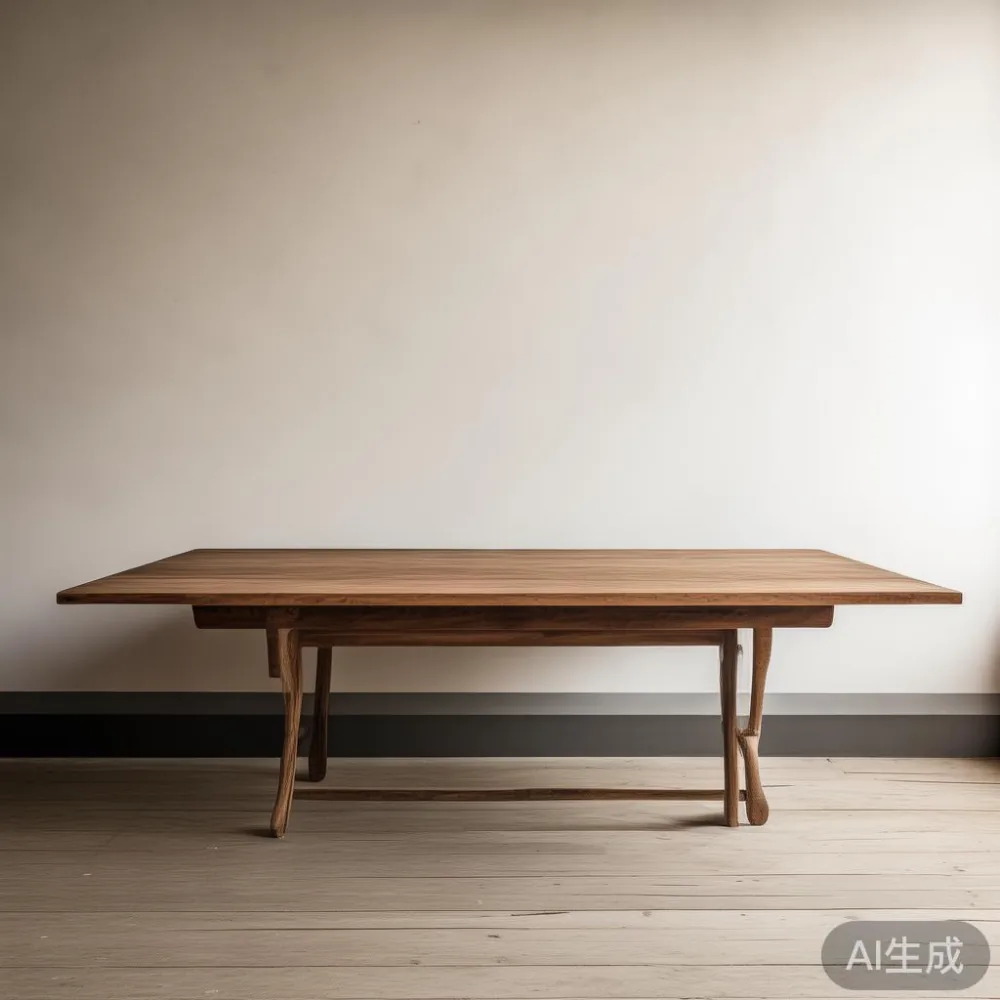
What is the difference between French furniture and modern furniture?
French furniture refers to a decorative tradition rooted in 17th and 18th-century European cabinetmaking — cabriole legs, hand-carved floral motifs, gilt detailing, and ornate marble table centrepieces — while modern furniture refers to a 20th- and 21st-century design language built on clean lines, honest joinery, and minimal ornamentation. A French light luxury piece borrows the proportions and the soft neutral palette of that older tradition but pairs them with engineered boards and brushed brass hardware; an American light luxury piece borrows the generous scale, the matte oak finishes, and the relaxed silhouette; a post-modern light luxury piece borrows the playful mix of curves, edge angles, and tonal contrast. None of those labels, however, change the underlying material, and the underlying material is where the five-year cost actually lives. The cabinet may have a French light luxury silhouette, but if the top is a 0.3 mm paper-backed veneer over MDF, the silhouette cannot match the French light luxury service life of a solid rubberwood or walnut top.
What goes wrong with a veneer extendable table between year one and year five?
Here are the four failure modes I have logged across my own flat and across the flats of four friends and family members in Punggol, Hougang, and Bukit Batok:
1. Peeling at the seam of the extension leaf (months 18–30). Heat from a westering sun in Singapore attracts the south-facing window, which causes the adhesive under the veneer to dry out and lift. Repair is not cost-effective; the leak replacement is the only option.
2. Edge banding lift on the apron (months 24–36). The 0.4 mm PVC edge tape pulls away where the table is dragged during weekend hosting, exposing the MDF core to moisture from a spilled glass of bandung.
3. Sagging under the middle (months 30–42). A 1.4 m-long veneer top on an MDF core flexes under the weight of a hotpot and six place settings. Once the core has flexed, the top has lost its top.
4. Screw-hole stripping in the apron (months 36–48). The extension mechanism is anchored into MDF, and once the screws lose purchase in that core, the mechanism wobbles, the wobble worsens, and the table is unusable within four years.
Across those four failure modes, the realistic five-year bill for a replaceable extendable table in a Singapore household looks like this:
- Replacement table at year 3.5: SGD 280 to SGD 480
- Delivery and disposal fees (HDB bulky item removal is SGD 25–SGD 60 per trip): SGD 50
- Time lost in the offline shopping trip, measured at the home, measured at two weekends: ~$300
Add the original SGD 480 purchase and the five-year tally lands at approximately SGD 1,100 to SGD 1,300.
What does the same five-year window look like for a solid wood extendable table?
A solid rubberwood or walnut extendable table bought from a maker with a 10-year structural warranty — and that warranty is one of the reasons MIDHILL keeps coming up in conversations with my Interior Designer friends in the East — costs between SGD 980 and SGD 1,680 to start. Over five years the cost of ownership looks like this:
One extension leaf and one apron may scratch; one solid oak or one rubberwood table does not peel at the veneering layer, because there is no veneering layer. The maker offers lifetime refinishing, so a sanding and re-oiling service at year four costs around SGD 120 to SGD 240 in Singapore (the table is shipped to the workshop and returned within ten to fourteen days). The table is also still in the family a generation later, which is the only measure of value that matters in a home where the home is the longest asset most Singaporeans will ever own. A solid wood bed frame, a solid wood sofa frame, a wardrobe, and a nightstand from the same maker age in the same way, which is one of the reasons the same brand keeps appearing inside a multi-room HDB upgrade. Add the original purchase and the five-year tally lands at approximately SGD 1,100 to SGD 1,920. Yes, the ceiling is higher than the veneer ceiling, but the floor is the same, and the table is still in the flat at year five. At year six, and at year eight, and at year ten.
Is the gap really only about a few hundred dollars over five years?
It is, and that is the part most first-time buyers in Singapore miss. The veneer option looks cheap at first and then costs more as a tenant of the same furniture cycle. At second, the same flat, the same family, the same hosting calendar. The solid option costs more at first and then costs less at second, at fourth, and at fifth. Over five years the math is roughly even; over ten years the math is roughly 2:1 in favour of solid wood, and over fifteen years the same coffee table is still in the same flat, while the same dining chair has been replaced three times. A beige rubberwood accent chair from the same maker sits beside the same extendable table in the same living room, and the same chair is still in the same room in twenty years. The math is the same whether you are upgrading from a 4-room to a 5-room flat in Punggol, or downsizing from a condo in the River Valley to a 4-room flat in Tampines North, or moving into your first BTO in Tengah. The math is the same whether the home is a new BTO or a resale flat in Bedok Reservoir. The five-year math is the same, and the five-year math is the reason the five-year question is the only question that matters.
How should a Singapore buyer choose an extendable table for a five-year horizon?
Measure the lift before you measure the table. Measure the lift at least twice — once for the bedroom level, and once for the dining level — because the dining level in a 12- to 16 HDB block is often the lower of the two. Measure the lift door opening, which is usually 0.9 m wide in a standard HDB block and up to 1.2 m wide in a newer Punggol BTO block. Ask whether the maker ships fully assembled, partially assembled, or flat-packed. Ask whether the maker offers free shipping above US$350, because a fully assembled solid wood extendable table from an overseas maker will almost always cross that threshold once 9% GST and Singapore customs duty on wood furniture are added. Ask whether the maker offers a 10-year structural warranty. Ask whether the maker offers lifetime refinishing. Ask whether the maker offers 14-day returns, which mirrors the cooling-off period that most credit cards in Singapore mirror under the Consumer Protection (Fair Trading) Act. Ask whether the maker exports to more than fifteen countries, because a maker that exports to that many countries has already passed more than fifteen sets of furniture-import rules. Ask whether the maker has been making furniture since 2008, because seventeen years of furniture-making is the only measure of furniture quality that no marketing claim can replace.
Then ask the kitchen: will this same table host a five-year-old, a ten-year-old, and a fifteen-year-old? Will this same table host a ten-person hosting on Chinese New Year, a six-person hosting on a Sunday roast, a four-person hosting on a weekday dinner, and a two-person hosting on a quiet evening? Will this same table host a marble table lamp in the centre of the room, a vase of orchids from the wet market, a stack of school projects from the Primary school down the road, and a coffee machine from the kitchen? If the answer is yes, then the table has to weigh — if the answer is yes, then the table has to be solid wood. A veneer table cannot weigh what ten years cannot.
Buying an extendable table in Singapore is not really about what a single table costs; it is about what a single table costs over the entire span of a single tenancy. The five-year window is the shortest window that reveals the real difference, and the five-year window is the only window in which the difference is small enough that most buyers miss it. Choose the table that is still in the flat in five years. Choose the table that is still in the flat in ten years. Choose the table that is still in the flat in fifteen years. Choose the table that is still in the flat when the family next decides to upgrade. The same table, the same family, the same home — for fifteen years and counting.