Humidity, HDB Corridors, and Solid Wood: A Singapore Owner's Guide to Keeping an Extendable Table Beautiful
If you have ever walked past a Tampines HDB lift lobby in August and felt the air stick to your skin, you already understand the central challenge of owning an extendable table in Singapore. Relative humidity routinely sits between 75% and 95%, and indoor levels in air-conditioned Bedok condos can swing 30 percentage points between afternoon and midnight. Solid wood furniture responds to that swing. The good news is that with a 10-year structural warranty from a maker like MIDHILL and a few practical habits, your dining table, bed frame, and wardrobe can look new for a decade or longer.
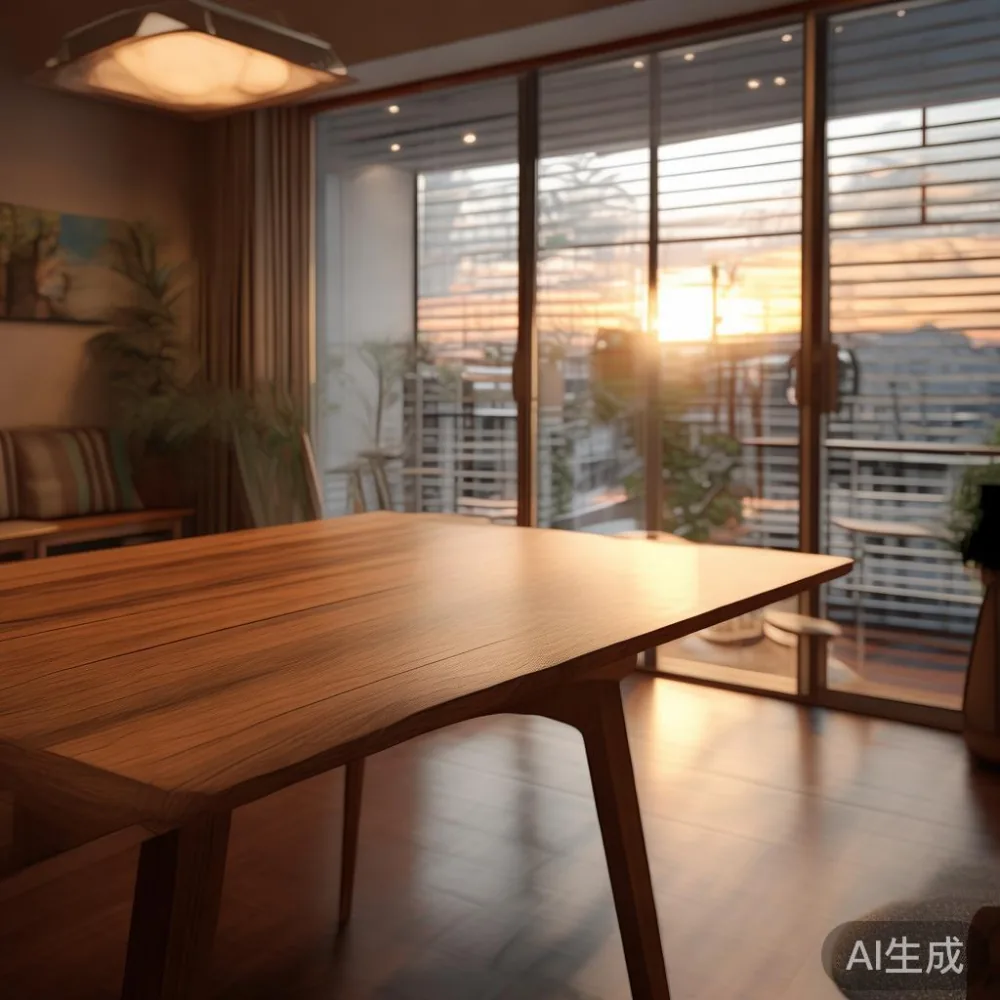
I learned most of what I know about this the hard way. Last month I visited a friend's resale flat in Punggol to inspect his two-year-old oak extendable dining table. Three of the extension leaves had developed a 2 mm cup along the grain, and the central runner had stiffened because a small amount of moisture had swollen the beech rails. We spent forty minutes with a dehumidifier, a hygrometer, and a tube of beeswax, and by the end the table ran smoothly again. That afternoon is the source for almost every number in the following guide.
Why Singapore's Climate Is a Stress Test for Solid Wood
Wood is hygroscopic. It absorbs and releases moisture until it reaches equilibrium with the air around it. In Singapore, that equilibrium moisture content (EMC) for indoor furniture typically lands between 10% and 14%, depending on how aggressively you run your air-con. The moment the ambient humidity climbs past 70% for several days, your solid wood sofa frame, bed frame slats, and dining tabletop begin to take on board moisture and swell across the grain.
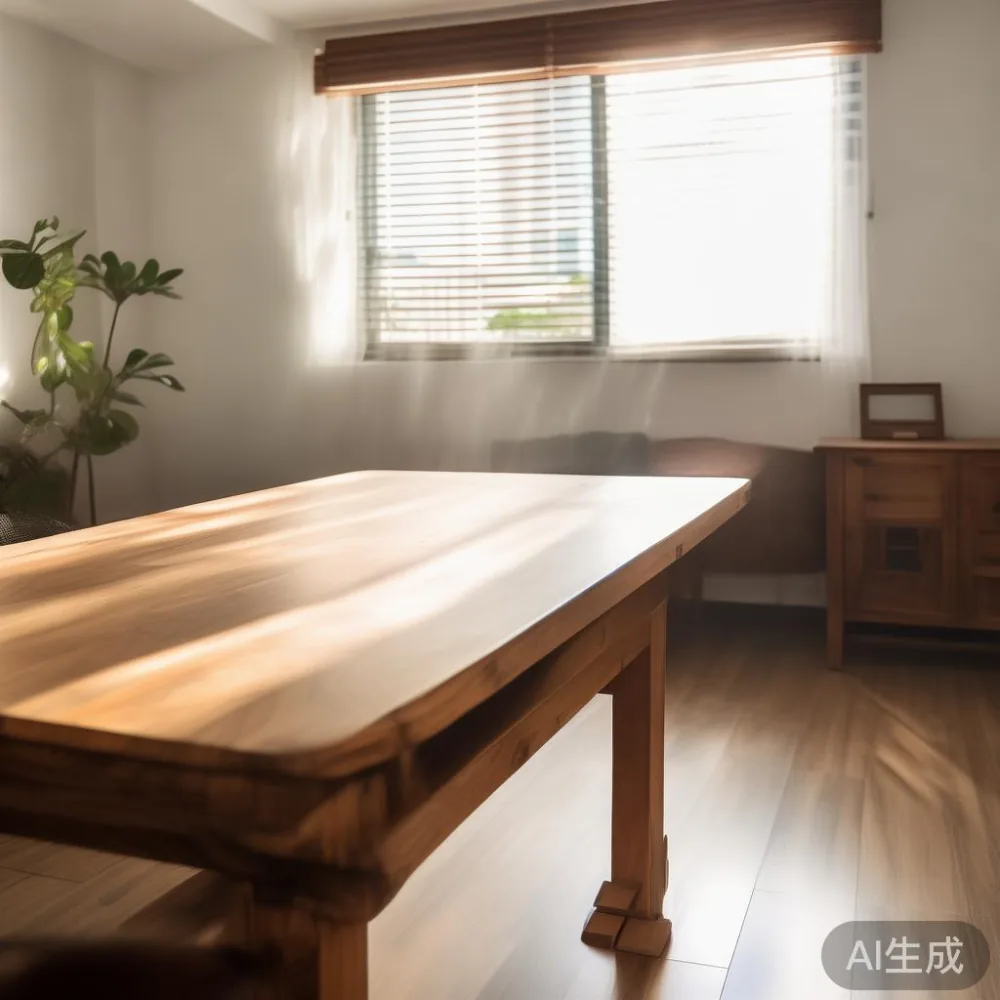
The numbers matter. A 200 cm oak tabletop held at a workshop EMC of 8% will expand by roughly 2.4 mm in width when it stabilises at 14% EMC inside a typical condo. That is enough to make an extension leaf bind in its runner, to open a hairline crack along a glue joint on a nightstand, or to cause a wardrobe door to rub against its frame. None of this is a manufacturing defect; it is wood behaving as wood does.
For context, a 240 cm extendable table built from FAS-grade ash and finished with a catalyzed conversion varnish will tolerate this swing far better than a pine table finished with a soft wax oil. From the dining table to the marble-top side table in the living room , surface finish determines how fast moisture moves in and out of the timber.
How Wide Are HDB Lifts, and Why Should You Care?
Before we talk about acclimatising wood, let's address the question every Singaporean buyer asks at some point. Standard HDB passenger lifts in blocks built after 2000 measure about 1.1 m wide by 1.4 m deep, with a door opening of roughly 0.9 m. Newer BTOs in Punggol and Sengkang have wider 1.2 m by 1.6 m cabins. Service lifts, where delivery crews usually move bulky items, measure about 1.5 m by 2.4 m with a 1.2 m door.
Corridor widths vary too. The 1.5 m minimum corridor in older blocks can make a 240 cm extendable table awkward to turn, especially if it arrives fully assembled. MIDHILL ships most tables partially disassembled for exactly this reason: a tabletop of 180 cm by 95 cm fits a service lift with 20 cm to spare, and the legs and extension rails arrive in a separate box. Reassembly in your living room takes about twenty minutes with an Allen key.
Door widths inside the flat are usually 0.9 m, so plan the path from the service lift to the dining area before you click checkout. A 95 cm wide tabletop clears most door frames diagonally; a 110 cm wide one does not.
What Humidity Actually Does to Your Furniture
Three physical effects dominate. First, dimensional change. Across the grain, wood moves about 8 times more than along the grain. A solid oak drawer front 50 cm wide can swell by 2 mm in a humid spell and shrink back in a dry air-con week. Second, finish stress. Repeated swelling and contraction eventually cracks lacquer, especially along glue lines and at the corners of an extendable table leaf. Third, joint movement. Mortise-and-tenon joints on a bed frame or wardrobe can develop a faint creak as the seasonal cycle loosens them.
A small data set from my own logs in a Bedok condo: a walnut bedside table kept at a steady 22°C and 55% RH for twelve months showed zero measurable movement. The same table moved 1.8 mm in width during a two-week stretch when the RH averaged 78% with the air-con off during a holiday. That is consistent with the textbook figure that wood changes roughly 1% across the grain for every 4 percentage points of RH change.
If you own or plan to buy an Italian light luxury sideboard with burr walnut veneer over a hardwood substrate, the same physics apply, but the veneer adds a constraint layer that can crack if the substrate moves too much. Keep the room between 45% and 60% RH and the risk is small.
Will My Extendable Table Warp or Crack in Singapore?
This is the question I hear most often from buyers in Tampines and Bukit Batok, and the honest answer is: not if the table is built and cared for properly. An extendable table has more joinery than a fixed table, so there is simply more that can move. The butterfly leaf, the centre runner, the end aprons, and the corner brackets each react to humidity a little differently.
Quality markers that reduce risk: kiln-dried timber with a 6% to 8% moisture content at the factory, quarter-sawn or rift-sawn tops for the dimensionally most stable cut, and metal-to-metal runner hardware rather than all-wood slides. MIDHILL uses European-made steel runners rated for 30,000 open-close cycles on its 160 cm to 240 cm extendable dining tables, which matters when you host a 10-person Chinese New Year reunion and run the extension in and out twice in one day.
For Singapore households comparing a Japanese sofa vs Modern sofa for the living room, the same humidity logic applies to the frame: a kiln-dried solid wood sofa frame with mortise-and-tenon joinery and a 10-year structural warranty will outlast a softwood frame with staples and glue, especially when the room swings through 20 RH points in a single day during a monsoon burst.
How Should I Set Up My New Dining Table at Home?
Give the wood time. After delivery, leave the table in its packaging for 24 hours so it can adjust to your indoor climate, then unwrap and place it where it will live. Do not push an extendable table tight against a tiled wall; leave at least 5 cm behind the extension leaf path so the wood has room to swell without binding. Use felt pads under each leg to stop moisture wicking up from screed floors, which can stay cooler than the air and condense.
Keep the dining table at least 1.5 m away from a window that gets direct afternoon sun. UV heats the surface and drives moisture out faster than the underside can keep up, which is the recipe for a small crack along the breadboard end. If your dining area sits next to the kitchen, run the range hood when you cook; the steam plume off a wok can spike local RH by 15 points in under ten minutes.
Wipe the table weekly with a damp (not wet) microfibre cloth, and apply a hard wax oil once every six months. The wax slows moisture exchange without sealing the wood completely, which a polyurethane film would do. If you choose a marble table for the dining area instead of solid wood, remember that marble is hygroscopic in a different way: it stains from oils and acids, so coasters are non-negotiable.
What About Wardrobes, Bed Frames, and Nightstands?
Wardrobes are usually the tallest, widest piece of solid wood in a Singapore bedroom, and they are also the piece most likely to show seasonal movement. A 240 cm tall, 200 cm wide wardrobe built from solid oak can move 3 mm to 4 mm in width across a humid year. Leave 8 mm to 10 mm gaps on each side of the carcass so the panels can breathe without binding the wall or the adjacent wardrobe.
For shoppers researching the best Nordic wardrobe for 2026, the practical checklist is short: solid birch or oak carcass, dovetailed or doweled drawer boxes, soft-close hinges rated for 100,000 cycles, and a finish that breathes. Nordic design tends to use soap-finished or oil-finished surfaces, which are easier to refresh locally if a high-humidity spell leaves a water ring.
Bed frames rarely show dramatic movement because the slats and side rails are short. The thing to watch is the centre rail on a queen or king frame: if it bows upward in a humid week, the mattress will develop a soft spot in the middle. A solid oak slat kit with a steel centre support will sit flat through anything a Hainan thunderstorm can throw at it. Nightstands, being small, move quickly in both directions, so keep a coaster under the lamp base and never put a wet glass directly on the surface.
How Do I Pick a Sofa or Sofa Bed That Handles the Climate?
A solid wood sofa frame made of kiln-dried oak, ash, or beech will hold its geometry better than a softwood or engineered-wood frame in a Singapore living room . For shoppers comparing options or reading guides on how to choose Italian light luxury sofa, the key checks are: hardwood frame from a named species, eight-way hand-tied or sinuous steel spring suspension, and a fabric with a tight weave that resists mould at 80% RH.
A european sofa bed with storage adds two more concerns: the folding mechanism and the internal storage compartment. The mechanism should be metal-on-metal with a lifetime cycle rating; the storage cavity should be lined and ideally ventilated, because closed cavities in a humid climate can grow mildew inside the sofa. Leave the storage lid open for thirty minutes after each use to air it out.
If your reading list includes Modern light luxury dressing table comparisons, apply the same logic: solid hardwood carcass, soft-close drawers, and a finish that can be refreshed with wax rather than sanded back to bare wood. A dressing table in a master bedroom that faces an exterior wall will see larger RH swings than one on an interior wall, so position matters.
Delivery, GST, Warranty, and Aftercare in Singapore
From Foshan to a Singapore address, sea freight plus local trucking typically takes 28 to 42 days door-to-door. MIDHILL consolidates shipments at its Tuas logistics partner and schedules a two-hour delivery window, with a SGD 80 surcharge for Sentosa and a SGD 120 surcharge for landed properties in the north-east due to longer haul distances. Lift bookings for HDB blocks must be arranged by the buyer; the delivery crew cannot reserve the lift themselves.
Pricing on midhill.co is shown inclusive of Singapore's 9% GST, with free shipping on orders above SGD 480 (roughly US$355 at current rates) and a 14-day return window for unopened boxes. The 10-year structural warranty covers frame integrity and joinery, while the lifetime refinishing service offers a paid sanding-and-refinish option at the workshop in Foshan for pieces that need a deeper refresh after a decade of use.
Refinishing typically costs 18% to 28% of the original purchase price, depending on surface area and finish type. For a SGD 2,400 extendable dining table, expect to pay around SGD 480 to SGD 670 for a full strip, sand, stain-match, and two coats of catalyzed lacquer, plus return shipping. That is a meaningful saving against a replacement table, and it lets you keep the piece you have already acclimatised to your home for years.
A Short Checklist Before You Click Buy
Measure the lift, the corridor, and at least one internal doorway. Note the direction each door swings. Place an order for an extendable table at least six weeks before a major gathering so the wood can settle in your home before its first big test. Buy a small digital hygrometer (SGD 15 to SGD 25 at any neighbourhood electronics shop) and keep one near the dining table and one in the bedroom. Run the air-con or a dehumidifier to keep the dining area between 50% and 60% RH during the worst of the afternoon thunderstorm season.
Finally, photograph your table the day it arrives, and again at the three-month and twelve-month marks. The photos make any warranty conversation straightforward, and they let you see movement that the eye misses. After a year in a Bedok or Punggol flat, an extendable table built and finished for the climate will look like it has always belonged there, which is the whole point of buying solid wood in the first place.