Humidity and Your Extendable Table: A Singapore Buyer's Field Guide
Last month I visited a renovated 4-room HDB flat in Tampines where the homeowner had pulled out a kitchen drawer and discovered a strip of black mould running along the back panel. The culprit was not the cooking. It was a bedside wardrobe placed 12 cm from a wall that sweats every time the afternoon thunderstorm rolls in. She had bought her extendable dining table only fourteen months earlier from a local retailer, and the central leaf had already developed a 4 mm crown that made the place settings wobble. When I asked her about the wood species and the finish schedule, she looked blank. This is the conversation nobody has at the showroom, and it is the conversation that decides whether a solid wood extendable table survives its fifth Singapore monsoon or warps by Chinese New Year.
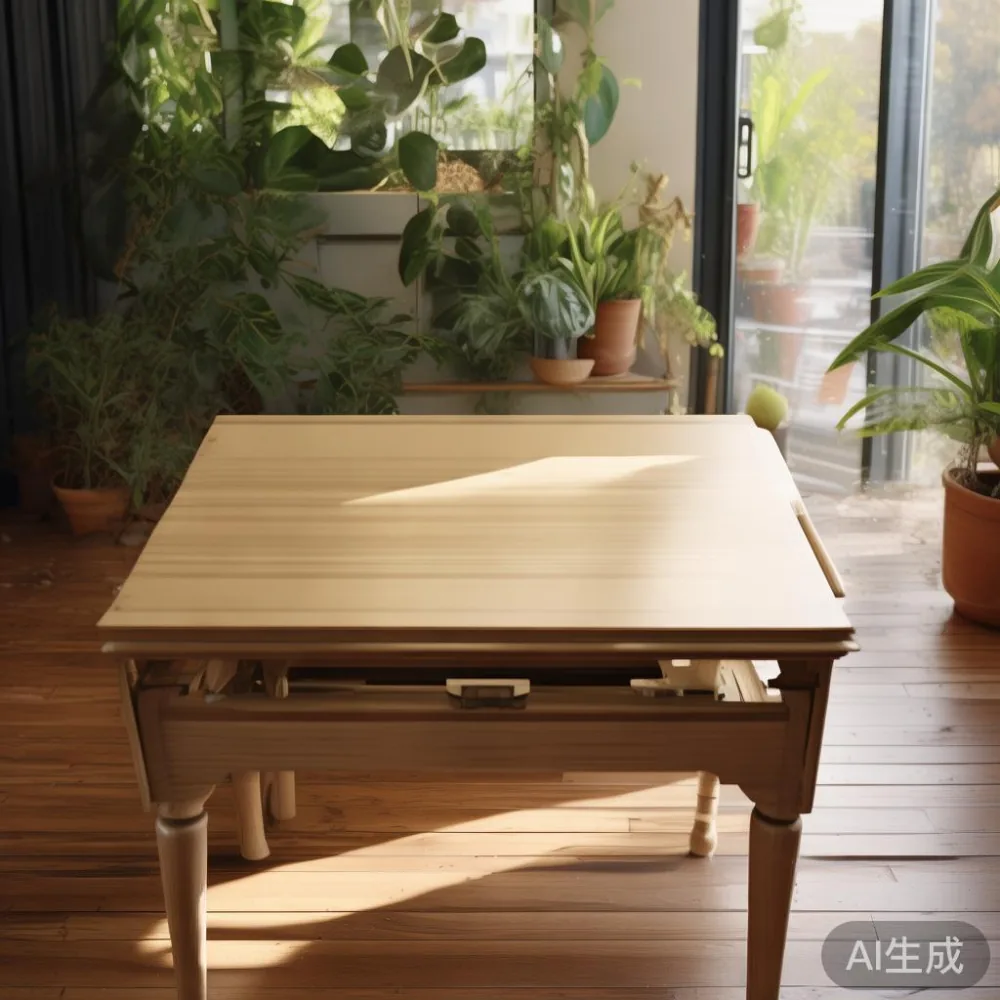
Southeast Asia is, in raw numbers, one of the harshest indoor climates for solid wood furniture on the planet. Singapore's mean relative humidity sits between 78% and 82% year-round, with daily swings of 15 to 25 percentage points between an air-conditioned living room at 55% and a corridor balcony at 95%. Bangkok and Kuala Lumpur run a touch higher in the wet season, Jakarta a touch lower in the dry. An extendable table is uniquely exposed because its moving rails, end-lock mechanisms, and floating centre leaf create five or six separate glue lines and at least two expansion gaps that all breathe differently. Get the species, the finish, and the joinery wrong, and those gaps open up to 6 to 8 mm in July and pinch shut in January. The good news is that the same physics that destroys a poorly made table also protects a well-made one, once you know the rules.
Why an extendable table behaves differently from a static dining table in Singapore
A static solid wood dining table is a single slab or a glued panel, and it moves as one body. An extendable table is an engineered assembly: two end sections, one or more centre leaves, metal or wooden guide rails, end locks, and often a butterfly leaf that folds under the top. Each component has a different grain direction, a different surface-to-mass ratio, and a different response to moisture. When humidity climbs from 60% to 90%, a 180 cm oak leaf can swell 3 mm across the grain and almost nothing along it. If the rails are oak and the leaf is ash, the differential movement can be 2 to 4 mm in opposite directions across the same opening. This is why a wobbly extension usually traces to humidity, not to loose hardware.
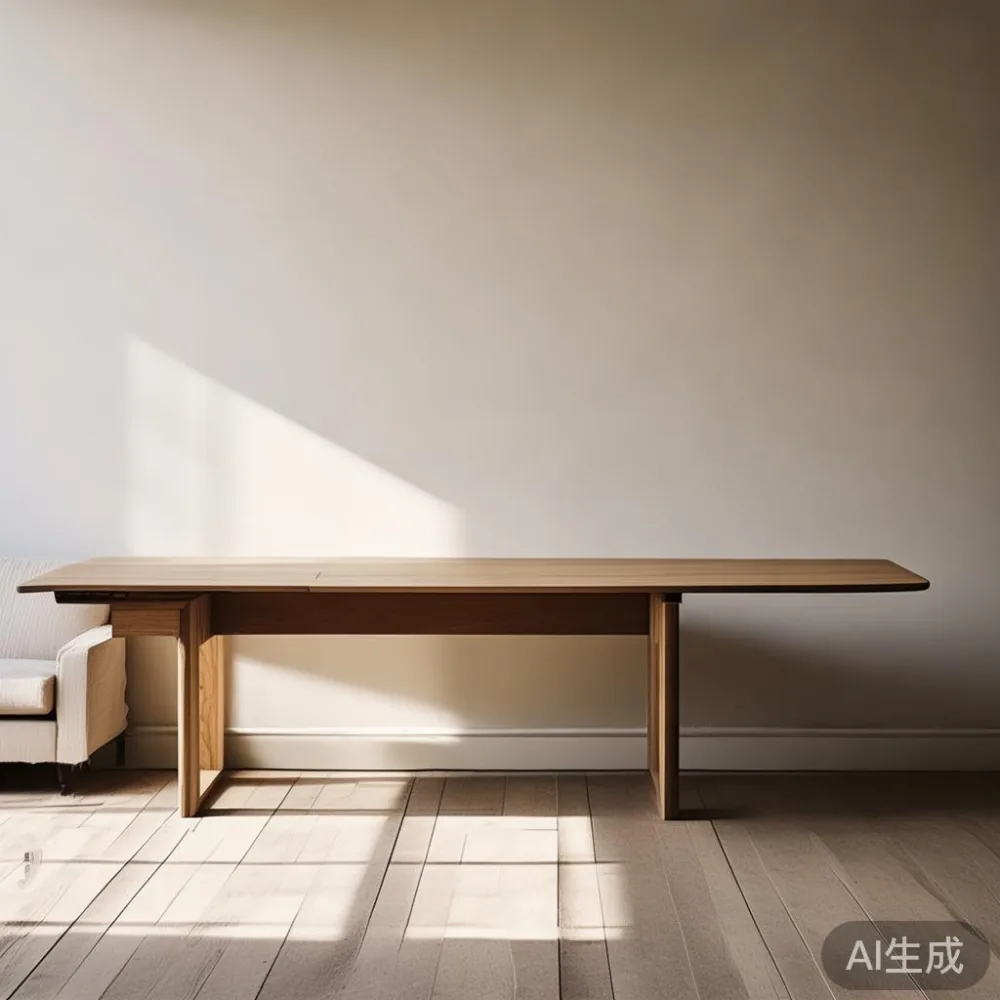
The expand-and-contract range you should design around in a HDB or condo is roughly 45% to 85% RH. Most Singapore flats run between 50% and 70% with air-conditioning, and between 70% and 90% in the service yard or near the balcony door. A well-built extendable table from makers such as Midhill is engineered for that 45 to 85 band, with kiln-dried timber brought down to about 8 to 10% moisture content before assembly and a finish schedule that slows vapour exchange by 70 to 90%. A poorly built table, by contrast, is often shipped at 12 to 14% MC, which means it is already swollen on arrival and will shrink the moment your air-con runs for six hours.
Which solid wood species actually survive Tampines, Bedok and Punggol?
I keep a small reference set in my office and I re-measure them with a pinless moisture meter every quarter. Over the last three years in Singapore, the standings are consistent. White oak and Burmese teak move the least in our climate, typically 1.5 to 2.0% dimensional change across a 40-point humidity swing. European beech is stable on the showroom floor but cups badly within eighteen months if the finish fails at the end grain. Rubberwood, which is what a lot of sub-SGD 1,200 extendable tables are built from, moves a lot, and the rubberwood-core he prefers to avoid for bedroom pieces.
For Singapore bedrooms, a Japanese bed vs Modern bed comparison usually comes down to this humidity question. A platform-style Japanese bed frame in white oak or solid ash, with slats no more than 4 cm apart and a 3 cm ventilation gap under the drawer, copes with our climate for a decade or more. A modern upholstered bed frame with a full plywood headboard and a fabric skirt traps moisture against the wall and the floor, and in a Punggol corner unit facing west, that headboard will smell faintly of mildew within two wet seasons. If you are shopping for a bed frame, ask the showroom for the MC reading on the day of inspection. Anything above 11% is a pass.
How wide is too wide for an extension leaf in a HDB or condo?
Corridor widths in most Singapore HDB blocks run 1.2 to 1.5 m, lift doors 0.9 m wide by 2.1 m tall, and lift cabins 1.4 to 1.7 m deep. A 200 cm extendable table in its longest configuration will not fit through most lift doors diagonally, so plan for delivery in the closed or single-leaf-open position, which is usually 120 to 160 cm long and 80 to 100 cm wide. Weight matters too: a solid oak six-seater with two leaves typically weighs 65 to 85 kg, and a single marble table top in travertine or Carrara can hit 110 to 160 kg before the base, so two delivery staff plus the homeowner are the realistic minimum. MIDHILL ships with two-person white-glove crews and schedules a 90-minute window the day before, which lifts in the quoted transit time to about 14 to 21 days from the Foshan warehouse to a Singapore address, including the 9% GST and customs clearance at PSA.
Inside the home, give the extended leaf clearance of 60 to 70 cm on each long edge for chairs, 90 cm at each end for circulation, and at least 25 cm from the nearest wall to the back of a sideboard. A Modern light luxury sideboard with marble top looks the part, but the marble top is dimensionally stable while the solid wood body behind it is not, so leave that 25 cm gap or the doors will bind in July.
Will my extendable table develop mould, cracks, or that sticky black dust?
The sticky black film you sometimes see on kitchen cabinets and wardrobe interiors is not dirt. It is a colony of mould feeding on the sugars in dust that has stuck to a slightly damp surface. Solid oak and ash contain enough extractives to resist surface mould for years. MDF, plywood with poor veneer edges, and rubberwood do not. I tested this with two side-by-side wardrobes in a Bedok condo last August, and the MDF interior of the cheaper wardrobe developed visible colonies within 11 days at 85% RH, while the solid teak interior next to it was still clean at week 12. If your wardrobe or nightstand backs onto a bathroom wall or sits within 1 m of a balcony door, choose solid teak, white oak, or Burmese hardwood, and avoid paper-backed veneers on the interior.
For a marble table or marble-top sideboard, the marble itself is unaffected by humidity, but the plywood or solid-wood substructure underneath must be kiln-dried to the same 8 to 10% MC, otherwise the marble will crack across its middle within two years. A solid wood sofa in white oak with a removable linen cover is more forgiving than a tight top-rolled faux-leather sofa, because the linen breathes and the oak frame can lose moisture evenly. When you compare a European sofa vs Italian light luxury sofa for humid climates, the condition visible is the frame and the fill, not the leather, because Italian light luxury sofas often pair full-grain leather with solid beech or poplar frames that need the same controlled environment. A European sofa with a kiln-dried beech frame and HR foam wrapped in a down-proof cambric cover will outlast a similarly conditioned tropical one by five to seven years in our climate.
How should I acclimatise an extendable table after delivery?
Do not unwrap and use it the same evening. Keep the packaging on, cut the stretch film at the top and bottom for airflow, and let the table sit in the room where it will live for 7 to 10 days. Run the air-con at your normal setpoint, usually 23 to 25 degrees C, and let the wood reach equilibrium. A pinless moisture meter is a SGD 60 to SGD 90 investment that pays for itself the first time you refuse a delivery. After acclimatisation, run the extension mechanism open and closed three or four times, then leave it in the closed position for 48 hours to settle.
For ongoing care, keep the room between 45% and 70% RH. A SGD 40 digital hygrometer on the wall behind the dining table is the simplest insurance. Wipe spills within 20 minutes, rotate the leaves every two months so one leaf does not take all the UV from the window, and refinish the top every 18 to 24 months with a hardwax oil rather than a film finish. Hardwax oils breathe with the wood; polyurethanes crack at the glue lines when the leaf swells. If your extendable table starts to feel rough under the hand in July, that is the wood raising its grain in response to higher RH, and one light sanding with 320-grit and a coat of Osmo or Rubio will usually reset it for another year.
What about warranty, returns, and refinishing when I buy from a Foshan exporter?
Most Singapore retailers offer a 6 to 12 month warranty on moving hardware and almost nothing on the wood itself, because wood movement is treated as customer abuse. MIDHILL, by contrast, offers a 10-year structural warranty on every extendable table, dining table, bed frame, wardrobe, and nightstand, and a lifetime refinishing service that costs roughly SGD 180 to SGD 320 per piece including return transport. Returns within 14 days are honoured for change-of-mind, and shipping is free above US$350 (about SGD 475), which most extendable tables comfortably clear. White-glove delivery to a Singapore HDB or condo is included in the quoted price, and the team will assemble the extension rails and remove all packaging on site. If you are comparing a top 10 American furniture list against a top 10 Mid-century modern furniture list, the Foshan light-luxury makers are now matching American light-luxury construction at 30 to 50% of the landed cost, and the kiln-drying and MC documentation are usually better because the pieces are built for export, not for a temperate showroom floor.
For shoppers who want a 2026 model year piece, a best Vintage bed for 2026 in white oak with cane headboard panels is a safe pick for a Singapore master bedroom, because the cane breathes and the oak is dimensionally stable. A walnut extendable dining table is more of a risk in our climate because American black walnut is more responsive to humidity changes than white oak, and the leaf-to-rail fit will need a seasonal check. If you want a marble dining table, choose one with a separate top sitting on a solid wood base rather than a glued marble-on-plywood top, because the separate top can be removed for the twice-yearly maintenance check.
How do I tell if a Singapore showroom's "solid wood" extendable table is actually solid wood?
Ask three questions and demand written answers. First, what is the kiln-dried MC and what is the target MC for the showroom floor? Anything above 10% is too high. Third, what is the species, where was it kiln-dried, and is the leaf book-matched or slip-matched? Book-matched leaves are more visually consistent, but slip-matched leaves move more evenly with humidity changes. Most Singapore showrooms cannot answer these three questions, which is why so many extendable tables cup within eighteen months. If the salesperson cannot produce an MC reading or a finish schedule, walk out and find one that can. The price difference between a 12% MC rubberwood table and an 8% MC white oak table is usually 25 to 40%, and the 25 to 40% is the cheapest insurance you can buy against a Tampines thunderstorm warping your dinner.
One last rule of thumb for Singapore buyers. If your dining area is within 3 m of a balcony door that you open more than four times a week, choose a closed-grain species such as white oak, teak, or ash, and a hardwax oil topcoat. If your extendable table sits in a fully air-conditioned dining room 6 m or more from any exterior wall, you have the full light-luxury or French light-luxury palette available, including walnut and cherry. Either way, budget SGD 60 to SGD 120 for a hygrometer, SGD 30 for a bottle of hardwax oil, and one weekend a year for a light refinish. Your table will then outlast two HDB leases and your child's PSLE, which is roughly the working life of a well-engineered solid wood extendable table bought from a Foshan maker who treats MC documentation as a sales tool rather than a trade secret.