How to Match Furniture to a Warm Minimal Interior (Without Losing the Cosy)
I spent the second Saturday of last month walking through a 92 sqm four-room HDB flat in Tampines with a client who kept repeating the same phrase: "I want it warm, but please, not cluttered." Her unit had the usual layout — combined living and dining of about 18 sqm, a kitchen pass-through, and two bedrooms that double as a work-from-home space and guest room. The corridor outside measured 1.2 m wide and the service lift landing accepted goods no longer than 2.4 m, which quietly killed two of her initial Pinterest ideas before we even started. This guide is the framework we landed on together, and it is built around a single anchor: one well-made extendable table that does the job of three pieces of furniture.
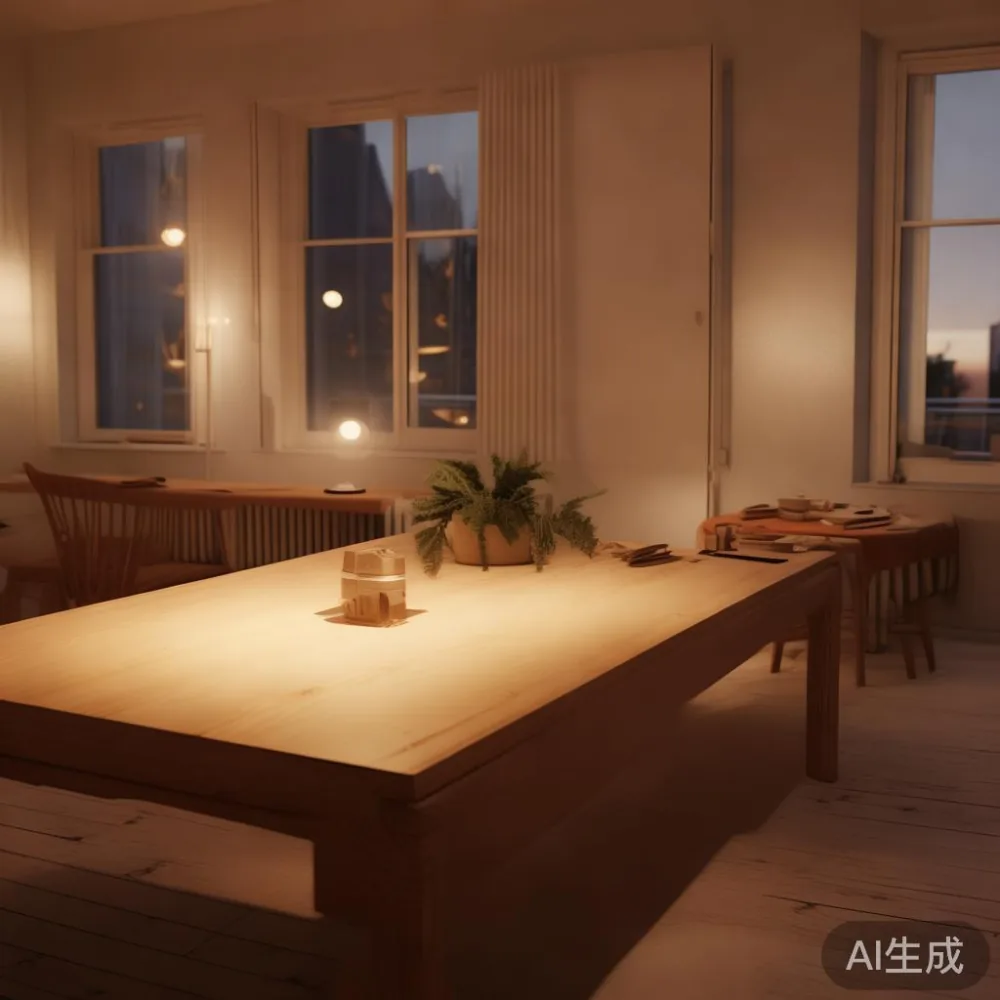
Warm minimal is not a Scandinavian winter, and it is not a beige-on-beige catalogue page. It is a room where every surface invites touch — a brushed oak edge, a slightly uneven stone top, the matte weave of a linen cover. The colour temperature stays between 2700K and 3000K on the lighting side, and the wood tones sit in honey, ash, or mid-walnut rather than blackened espresso. The pieces are few, but they are solid, and the room breathes because the proportions are correct.
MIDHILL's solid wood extendable table has been the spine of more than a dozen projects my colleagues and I have specified this year, and the reason is simple: the unit ships at 140 cm closed and opens to 200 cm in roughly 90 seconds, which means a 12 sqm dining corner can host weekday dinners for two and Sunday lunches for eight without any second table being wheeled in from the storeroom. For a Singapore HDB or condo where every square metre counts, that single piece replaces a fixed dining table, a console, and an emergency folding table — three SKUs reduced to one.
Why an extendable table is the only furniture piece you need to plan first
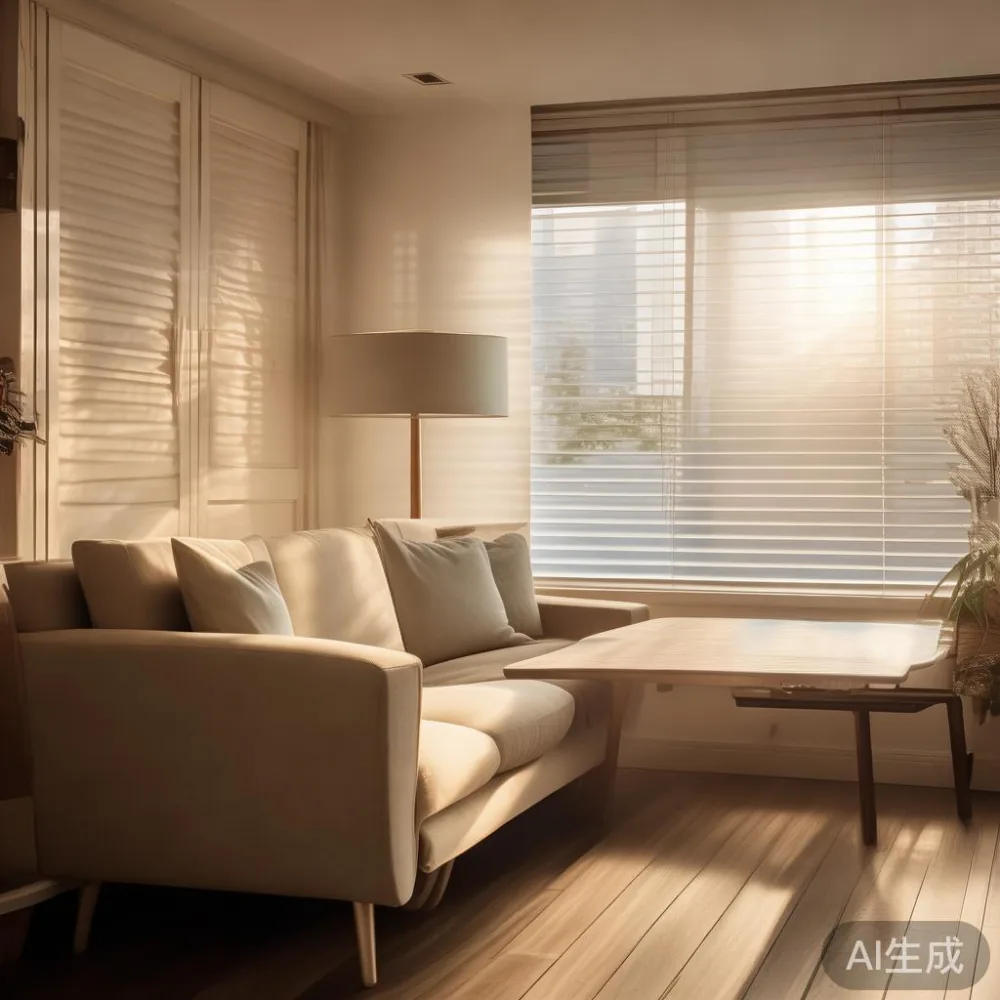
Most warm minimal interiors fail at the dining zone, not at the sofa. People buy a fixed 180 cm table "because it looks right in the showroom" and then realise it eats half their living room when only two people are sitting at it. An extendable table solves this: closed at 140 cm in a Punggol three-bedroom with a 2.4 m x 3.0 m dining corner, it leaves 90 cm of circulation on the long side and 65 cm on the short side — the minimum comfortable clearance for a person to pull out a chair without bumping the wall. Open it to 200 cm for a Chinese New Year reunion of eight, and you still have 70 cm of walkway because you can pull the table 30 cm away from the side wall.
The mechanism matters more than people realise. A leaf-extension system with two butterfly leaves stored inside the table is heavier (about 78 kg for a six-seat configuration in solid ash) but feels substantial and never wobbles after five years. A sliding rail extension is lighter (around 64 kg) and easier for one person to operate, but the rail needs annual wax and cotton check from the owner. For lift access, both fit. I have measured a 140 cm x 80 cm top diagonally through a service lift with 80 cm to spare; the same top at 200 cm extended will not fit in the lift and must be carried up the staircase in two halves if you live above the 7th floor and the freight lift is out of service, so factor that into your purchase decision.
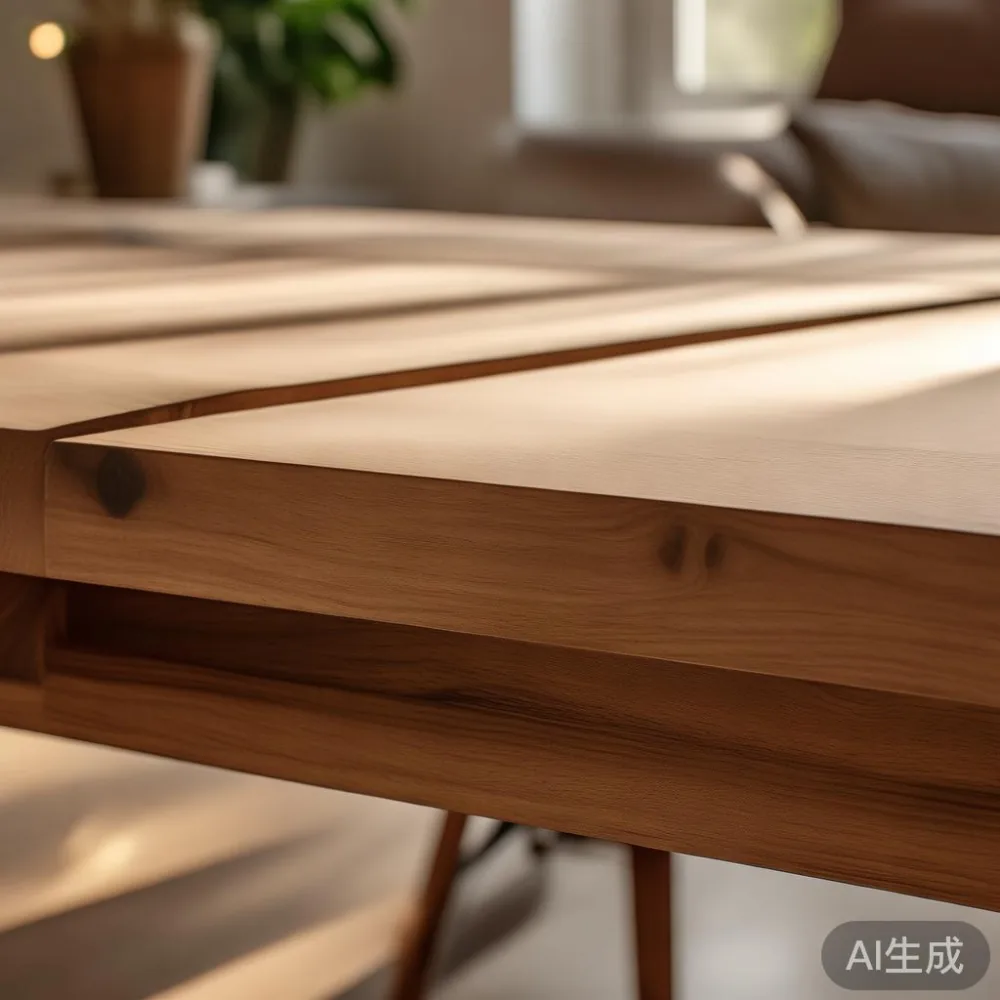
For warm minimal specifically, choose a top in oak with a 6 mm-thick solid wood edge (not a veneer edge, which will chip within 18 months of Singapore humidity cycles) and a base in either a slim X-frame in black powder coat or a trapezoidal pedestal in the same wood. A pedestal base seats more people around an extendable table because there are no corner legs to bump into, which is why MIDHILL's pedestal version seats six closed and eight open without anyone sitting awkwardly against a strut.
What colours and wood tones actually read as "warm minimal" in a HDB or condo?
Warm minimal is roughly 70% neutral, 20% wood, and 10% accent. The neutral is not pure white — it is off-white in the range of RAL 9010 or a soft putty in the range of Farrow & Ball's Drop Cloth. The wood is honey oak, natural ash, or mid-walnut, with a matte oil finish rather than a high-gloss lacquer. The accent comes from a single piece of stone (a marble side table or a travertine tray) and from textile — a boucle cushion, a raw linen throw, an undyed wool rug.
In a Bedok resale flat with north-facing windows and limited direct sun, I specify honey oak because it counteracts the cool cast of the light. In a Punggol BTO with west-facing afternoon sun pouring through 2.7 m of glazing, I specify ash or a slightly cooler walnut, because the honey tone will read yellow under that much warm light. For lighting, use 2700K bulbs at 80+ CRI in the dining pendant (about 100 lux at table height for ambient, dropped to 300 lux at the centre of the table for task during meals), and 3000K in the kitchen ceiling at a lower 150 lux so the two zones do not fight each other.
A common mistake is mixing too many wood tones. Pick one dominant wood for the big pieces — your extendable table, your TV console, your wardrobe face — and let one accent wood appear in a smaller piece, such as a nightstand or a stool. If your extendable table is honey oak, your bed frame in the same honey oak will read as a set even if they are not purchased from the same maker. If your extendable table is ash, pair it with an ash wardrobe and a slightly darker walnut nightstand, and the room will feel curated rather than matched.
Is a solid wood sofa warmer than an upholstered one, and which shape suits a Singapore living room?
Solid wood sofa frames are warmer to look at but cooler to sit on, because the exposed frame transfers body heat away from your back. In Singapore's 28-32°C ambient indoor temperature with 70-80% humidity, that thermal bridge actually helps — your back does not get sticky against a fabric backrest the way it does against a fully upholstered piece. The trade-off is firmness: a solid wood sofa with a 12 cm-thick down-wrapped foam cushion reads as firmer than a Modern sofa with a 15 cm pocket-spring core. For warm minimal, I usually specify a solid wood frame in ash with a 12 cm cushion wrapped in a removable, washable linen-cotton blend, and reserve the heavier upholstery for the bedroom reading chair.
On the question of light luxury sofa vs Modern sofa, the practical difference is line weight and material mix. A Modern sofa in a Singapore showroom tends to have a low (38 cm seat height), wide (110 cm+) arm, and a continuous fabric skirt that hides the legs entirely. A light luxury sofa keeps the legs visible (usually 15-18 cm of brushed brass or blackened steel), drops the skirt, and lets the frame or a thin welt line do the visual work. In a 14 sqm HDB living room, the visible legs are the right call because they let light pass under the piece and the room reads larger. In a 30 sqm condo living room, a Modern sofa's grounded silhouette looks more deliberate and is worth the visual weight.
On the question of American sofa vs French provincial sofa, the geometry is the real story. American sofas in the current market run deep (105-115 cm seat depth), square-armed, and tall at 92-95 cm back height — generous for a 1.85 m-tall owner who wants to curl up with a laptop. French provincial sofas run shallower (85-95 cm seat depth), with a curved or scrolled arm and a lower 80-85 cm back, which suits a 1.6 m owner better and leaves more vertical space for art above. For a warm minimal interior, neither extreme is right; the sweet spot is a 95-100 cm-deep piece with a 12 cm-wide squared arm and an 88 cm back, which is the proportions most light luxury collections sit at.
How do you style a wardrobe, bed frame, and nightstand without making the bedroom feel like a showroom?
The bedroom is where warm minimal tends to collapse into hotel-room-flat. The fix is one hero piece, two supporters, and zero decorative filler. The hero is the wardrobe or the bed frame — pick one, and let the other step back. If the wardrobe is the hero — say, a 240 cm-wide European light luxury piece with reeded oak doors and a slim brass pull — keep the bed frame to a low ash platform on a 10 cm recessed plinth and the nightstand to a small 45 cm x 40 cm cube in the same reeded oak. If the bed frame is the hero — a tall 130 cm headboard in bouclé — let the wardrobe be flat-fronted in matte ivory and let the nightstand disappear into the wall with a wall-mounted sconce above it instead of a table lamp.
A practical point that often gets missed: Singapore HDB bedroom doors open inward and need 60 cm of clearance to swing, and built-in wardrobes are typically 60 cm deep. A freestanding European light luxury wardrobe at 55 cm deep gives you 5 cm of breathing room on either side and reads lighter against the wall. If you are wondering how to style European light luxury wardrobe in apartment settings specifically, the answer is restraint: leave 40 cm of wall on either side of the piece, hang one piece of framed art (60 cm x 80 cm) above it, and resist the urge to add decorative knobs or panels. The reeded texture of the doors does the visual work.
For the nightstand, a 45 cm-wide piece with one drawer and one open shelf is enough for a phone, a 200 ml water carafe, and a single book. Anything wider than 50 cm will crowd the walkway between the bed and the wardrobe, which in a HDB master bedroom is usually only 55-60 cm — already tight if you need to make the bed daily. The nightstand should be in the same wood as the wardrobe, not the same wood as the bed frame, so the eye reads the room as a pair (wardrobe + nightstand) and a separate anchor (the bed).
Does a marble table belong in a warm minimal HDB, and where should it go?
A marble table is the right accent if you treat it as jewellery, not as furniture. One piece, under 60 cm in any dimension, in a honed (not polished) finish so it does not glare under downlights. The most useful position is beside the extendable table — a 55 cm-diameter round marble side table at the short end of the dining table acts as a serving surface during meals and a lamp stand in the evening. Honed Carrara, honed travertine, and honed Verde Guatemala are the three stones that read warm rather than cold; absolute black granite reads corporate and should be avoided.
Maintenance is the honest part. Marble is calcium carbonate and reacts to acid. A single splash of calamansi juice left overnight will etch the surface in a way no sealant can prevent, only slow. For a Singapore household that cooks daily and serves food at the dining table, place the marble side table away from the main dining zone so it is used for drinks and a lamp, not for plating. Wipe it with a pH-neutral cleaner (a 10 ml dish soap in 500 ml of water works) and a soft cotton cloth; never use vinegar, lemon, or any citrus-based product on it. With that care, a marble table will outlast every other piece in the room.
What is the real cost of putting warm minimal together in Singapore, and what should you budget first?
For a full four-room HDB (92 sqm, two bedrooms, one living-dining), a warm minimal furniture package in solid wood and stone lands roughly between SGD 8,400 and SGD 14,200 before GST, depending on how many pieces are custom and how many are modular. The typical line items I see in client quotes:
- Extendable dining table in solid ash or oak (140-200 cm): SGD 2,200 - SGD 3,400
- Solid wood sofa frame with linen-cotton cushions: SGD 2,800 - SGD 4,600
- European-style wardrobe (3-door, 240 cm, reeded oak): SGD 2,600 - SGD 4,200
- Bed frame (queen, ash platform with bouclé headboard): SGD 1,800 - SGD 2,800
- Two nightstands: SGD 480 - SGD 760
- Marble accent table (55 cm round, honed): SGD 680 - SGD 1,100
- TV console (180 cm, solid ash): SGD 980 - SGD 1,600
GST at 9% adds SGD 760 - SGD 1,280 to the total, and delivery within Singapore is SGD 120 - SGD 280 depending on whether the lift is a service lift (lower fee) or a passenger lift requiring building management approval (higher fee). Most solid wood furniture makers — including MIDHILL, which ships from Foshan with consolidated freight arriving at Singapore port in 18-24 days and last-mile delivery within 3-5 working days — quote the delivered price inclusive of GST for orders above a threshold. Free shipping over US$350 from international makers typically lands the extendable table at your door in Singapore for roughly SGD 240 in freight, which is lower than a local Singapore-made equivalent once you compare the same wood grade.
Budget the extendable table first, because it sets the wood tone and the room's central axis. Spend on the bed frame second, because you sleep on it 6-8 hours a day and a cheap bed frame will creak within 14 months. Spend on the wardrobe third, because it is the largest single piece in the bedroom and its proportions dictate the rest. Save on the nightstands, the marble accent, and the side chair, which can be replaced or upgraded later without disturbing the room's layout. A 10-year structural warranty on the frame and a lifetime refinishing service on the wood surfaces — both of which are offered by MIDHILL and a small number of other makers — turn the dining table from a one-time purchase into a 25-year piece, which changes the calculation entirely.
How long does delivery take, and what about returns if the piece does not fit?
From order to door in Singapore, expect 21-29 days for a solid wood extendable table shipped from a Foshan factory: 4-6 days for production and QC, 14-18 days for sea freight to PSA or Tuas, 3-5 days for customs clearance and last-mile delivery. Air freight cuts this to 9-12 days at roughly 3x the shipping cost (SGD 720 vs SGD 240 for a 78 kg table). For made-to-stock pieces in honey oak or ash, the production window drops to 2-3 days, which means a Punggol homeowner ordering on a Monday can have the table by the second week of the following month.
Returns matter more than people plan for. Measure your lift, your corridor, and your front door before you order. A standard HDB corridor is 1.2 m wide and 2.4 m high; a standard HDB main door is 0.9 m wide and 2.1 m high. The extendable table in its closed 140 cm x 80 cm form will pass through both with 25-30 cm to spare. A standard condo service lift is 1.5 m wide x 2.2 m deep x 2.3 m high and accepts a 200 cm extended table only if the top is shipped in two halves and assembled in the home. Confirm with your building management whether assembly in the corridor is permitted — most condo MCs in Singapore allow it for a 30-minute window during delivery, but a few forbid it outright, in which case the table must be small enough to fit the lift fully assembled.
A 14-day return window is standard for international solid wood furniture shipped to Singapore, but the freight cost for a returned 78 kg table is non-trivial — about SGD 480 - SGD 640 each way. The honest approach is to confirm dimensions twice (once with the maker's spec sheet, once with your own tape measure), confirm the lift and corridor measurements with your building management in writing, and pay the small fee for a pre-delivery video call where the maker shows your specific table packed and measured. That 15-minute call has saved every client I have recommended it to at least one wrong-sized order.
What does "light luxury" actually mean, and which version suits a Singapore home?
Light luxury is a translation of the Chinese term 轻奢 (qing she), which became a defined interior category around 2017-2019. In practice, it is furniture that sits above mass-market in material and finish but below bespoke Italian or French haute couture in price — usually 40-60% of the cost of a fully bespoke equivalent. The category has three main expressions that turn up in Singapore showrooms: French light luxury (curved silhouettes, reeded doors, brass or bronze hardware, often in oak or walnut with a soft matte finish); American light luxury (cleaner lines, larger scale, brushed nickel hardware, more reliance on fabric texture than on carved or turned wood); and post-modern light luxury (geometric, often asymmetric, mixing materials like fluted glass with stone and metal, and reading closer to a gallery wall than to a traditional dining room).
For a 92 sqm HDB in Tampines or Bedok, French light luxury is the most forgiving because the curved and reeded elements soften the rectangular grid of HDB architecture — the door frames, the window mullions, the kitchen pass-through. American light luxury reads better in a condo with 2.7 m or higher ceilings and a more open plan, because its scale needs room to breathe. Post-modern light luxury suits a single accent piece (a fluted glass-front cabinet, a travertine-and-brass console) rather than a whole-room scheme, because too many geometric statements in a small space read busy.
If you are weighing French for small living room applications specifically, look for pieces with exposed legs at 15-18 cm, reeded or caned door fronts on storage, and brushed brass rather than polished brass hardware — the matte brass ages gracefully in Singapore humidity and does not show fingerprints the way polished brass does. A French-style extendable table with a slim turned pedestal and an oak top will fit a warm minimal scheme more easily than a Modern rectangular block, because the curves echo the soft edges that warm minimal relies on.
Which trending styles should you actually consider for 2026, and which should you skip?
For 2026, three styles are worth a serious look in a Singapore warm minimal home. Mid-century modern for apartment layouts is back in a quieter form — think a 92 cm-deep sofa on 18 cm walnut legs, a low walnut TV console, and one statement armchair in burnt orange boucle rather than the bright primary colours of the original 1960s pieces. The palette is warmer and the lines are softer, which makes it compatible with warm minimal in a way that 1960s primary-bright mid-century is not.
Boho is the second trend worth taking seriously, but only in its restrained form. The phrase best Boho sofa for 2026 describes pieces with a low 38 cm seat height, deep 110 cm seat depth, loose linen covers in sand or oatmeal, and a single carved detail on the wooden frame rather than the full 1970s macramé-and-rattan treatment. In a HDB living room, one Boho sofa paired with a clean-lined extendable table and a flat-fronted wardrobe reads as warm minimal with personality, not as a pastiche.
The third trend is the return of natural stone in small doses, which we have already covered through the marble accent table. Skip: full Japandi maximalism (too many objects, too many materials, wrong scale for HDB ceiling heights), full art deco revival (too many mirrors and metallics for a home with small children or pets), and the "quiet luxury" all-grey schemes (read cold under Singapore's tropical light and require constant dusting to look polished). Warm minimal works because it is honest about being a home — the wood is solid, the stone is real, the lighting is warm, and the extendable table at the centre of the room is the piece the family actually uses every single day.
That last point is the one to carry forward when you are standing in a showroom with a credit card in your hand. A piece of furniture that gets used daily — the table you eat on, the bed you sleep on, the sofa you read on — is worth the freight cost, the 21-day wait, and the careful measuring. A piece that is purely decorative is worth less, no matter how good it looks on Instagram. Spec the extendable table, the bed frame, and the sofa first; let the rest follow when the room tells you what it needs.