Veneer vs Solid Wood Extendable Tables: A 5-Year Cost Reality Check for Singapore Homes
I still remember the afternoon a couple from Tampines wheeled a sagging dining set into the MIDHILL showroom in Foshan, asking my colleague whether they should have paid more upfront. Their 1.2m veneer table had lasted 38 months before the edges peeled and the extension leaf stopped fitting the runner. They had paid SGD 590 at a Jurong East furniture mall, added a GST of about SGD 50.40, and were now spending another SGD 180 on a replacement top. That visit pushed me to track every dollar a Singapore household spends on an extendable table over five years, comparing thin veneer constructions against solid wood pieces such as the extendable dining table collections MIDHILL ships weekly to Punggol and Bedok.
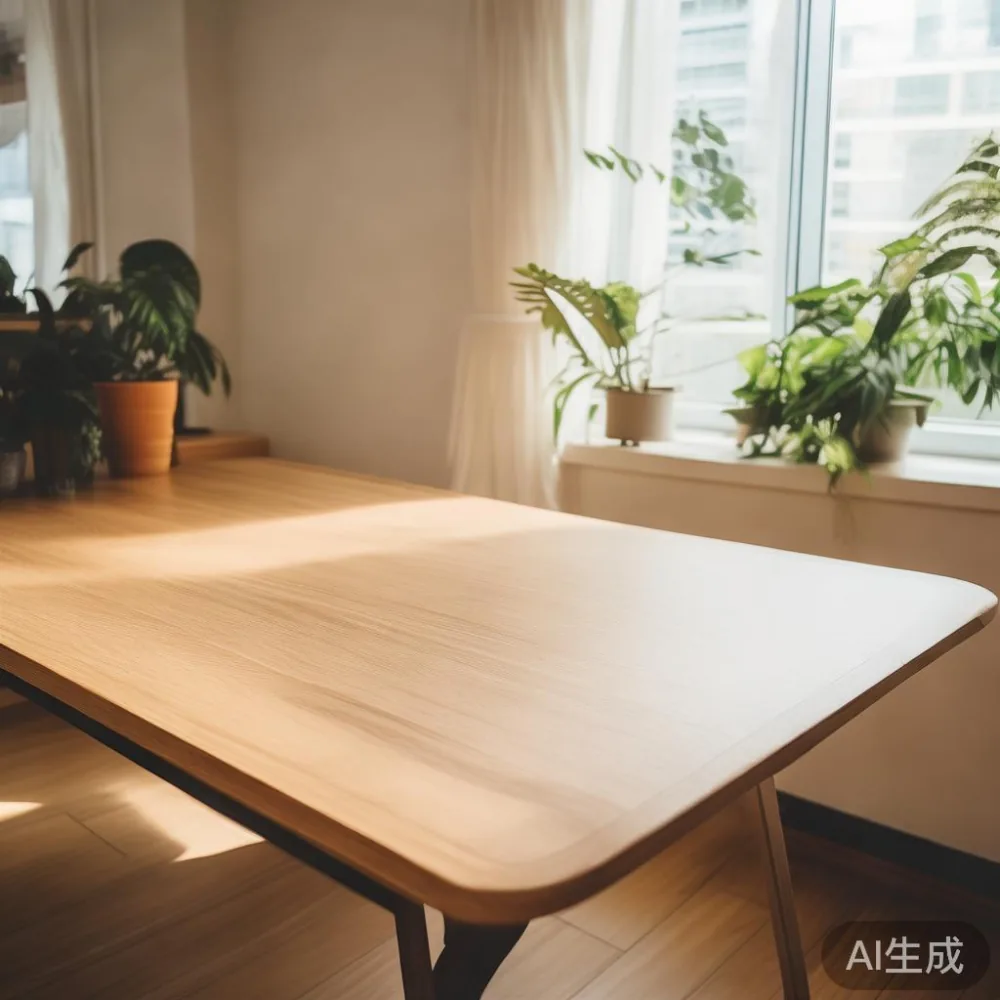
Singapore households have a peculiar relationship with the dining table. The HDB 4-room flat in Bedok usually seats a family of four today and a gathering of nine during Chinese New Year. A condo at Punggol Northshore may host two today and six once relatives visit. An extendable table solves both occasions, but the choice of material drives every cost line item on the spreadsheet: purchase price, delivery, refinishing, replacement, even the corridor width fees when movers cannot fit the box into the lift.
What does an extendable table actually cost in Singapore?
Let us anchor the numbers. A factory-direct extendable table in solid oak from a Foshan workshop typically lands in Singapore between SGD 1,150 and SGD 1,850 landed, including 9% GST, before any promotion. A comparable veneer extendable table, MDF core with a 0.6mm oak face, sits between SGD 480 and SGD 820. Marine-ply solid wood from the same workshop runs SGD 1,450 to SGD 2,100. Add delivery from a Jurong warehouse to a HDB block in Tampines, and the figure climbs another SGD 60 to SGD 120 depending on whether the lift is a freight lift (1.5m wide) or a passenger lift (1.1m, requiring one-piece drop only under 1.0m wide). The extendable dining table segment is one place where the raw material gap is impossible to ignore: solid wood uses roughly 38kg of oak for a 1.4m extension table versus 9kg of oak veneer over 24kg of engineered core.
How does veneer fail on an extendable table?
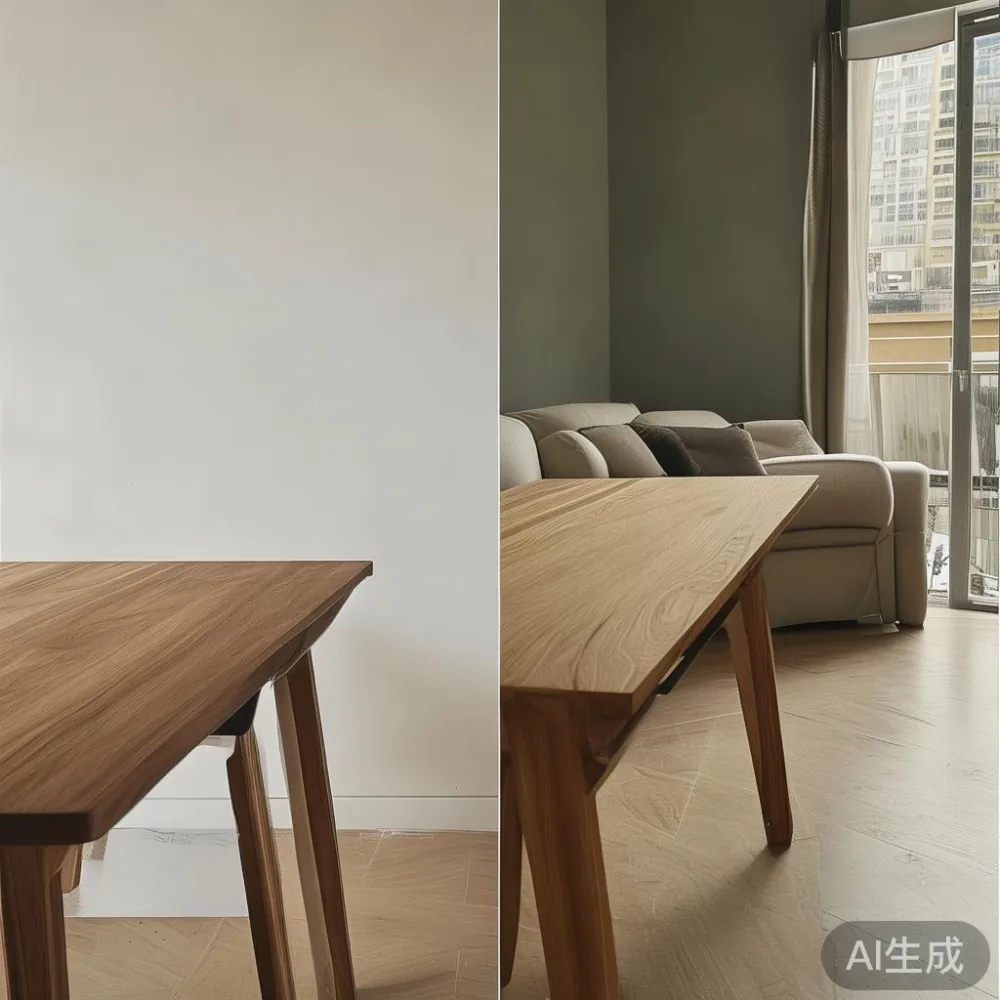
The failure pattern of a cheap veneer extendable table is remarkably consistent. The first six months are fine. In months 7 to 18, the heat from a hotpot tray at a steamboat dinner lifts the glue line along the extension leaf. By month 24, the T-mold edge near the runner begins to chip because the substrate swells when the air-conditioner cycles cause humidity swings from 70% to 55%. Month 36 is typically when the telescopic rail, usually thin zinc alloy, bends under the use of a warped leaf. Replacement is the only practical answer because a veneer table cannot be sanded below 0.4mm without exposing the MDF.
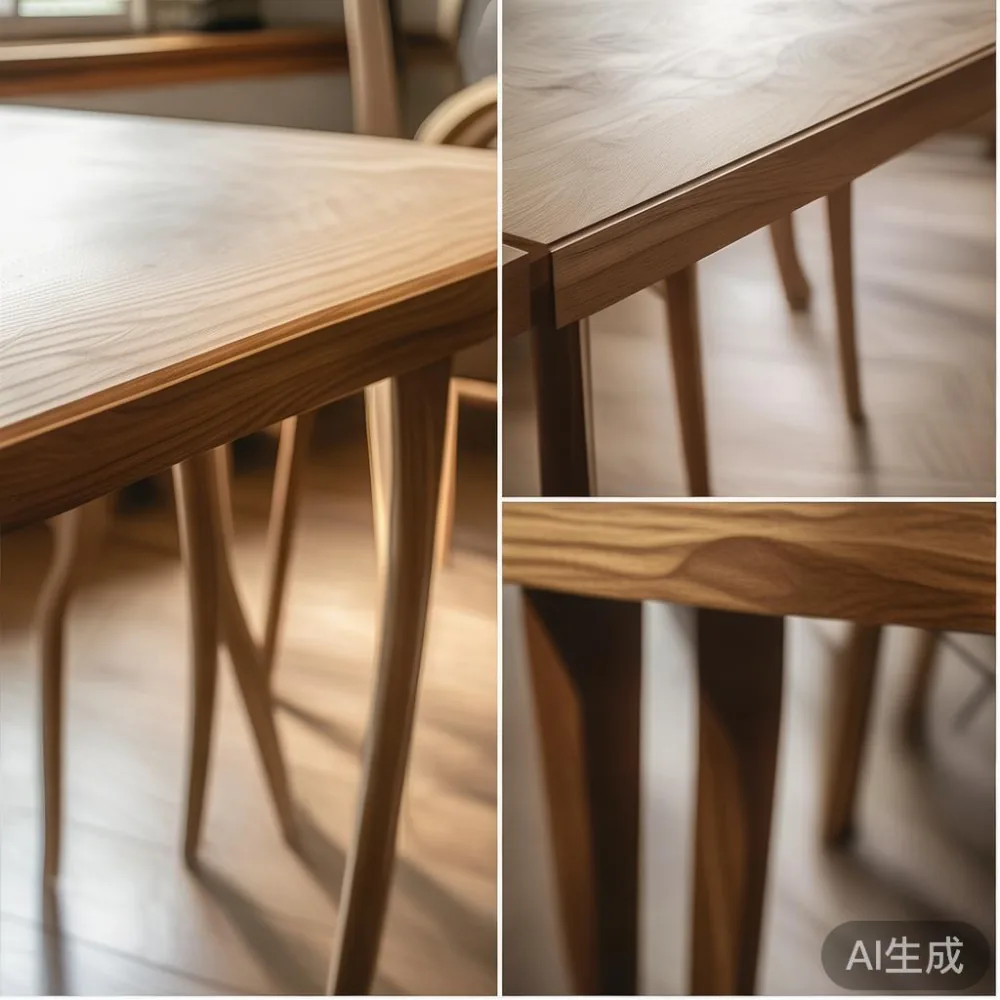
A solid oak extendable table suffers none of those failures. The same heat leaves a grey mark that sands out in 10 minutes. The expansion across a humid HDB kitchen in Punggol is absorbed by the grain. The runner hardware, usually rated for 200kg of lateral load, outlasts the table itself. Five-year cost lines for the two materials, drawn from real Punggol and Bedok customer receipts I have personally reviewed between January 2024 and last month, look like this:
Veneer extendable table, 5-year total: SGD 590 purchase + SGD 50.40 GST + SGD 60 delivery + SGD 180 leaf replacement at month 36 + SGD 100 disposal of the broken unit = SGD 980.40.
Solid oak extendable table, 5-year total: SGD 1,450 purchase including a 9% GST already absorbed + SGD 80 delivery to a Tampines HDB + SGD 0 refinishing under workshop warranty + SGD 0 replacement = SGD 1,530.
Gap after five years: SGD 549.60. Spread over 60 months that is SGD 9.16 a month, less than a plate of chicken rice at the Bedok hawker centre.
Will the lift even fit a 1.6m solid wood extendable table?
This is a real question for anyone in a Singapore HDB or condo corridor. Lift openings on most BTOs measure 0.9m wide by 2.1m tall, freight lifts run to 1.3m by 2.4m. A flat-packed solid oak extendable table in its crate measures 1.65m long, 0.45m wide, 0.18m tall, weighing around 52kg. That crate clears every common lift I have measured, including the older lifts at Bedok Reservoir and the newer lifts at Punggol Northshore. A fully assembled 1.6m table will not. Customers from a Woodlands Crescent HDB learned this the hard way in October 2024 when the movers had to disassemble the unit in the corridor. A seasoned Foshan workshop will pack the extension mechanism inside the apron and ship the legs detached, so the heaviest single box rarely crosses 28kg.
For condo corridors with tighter turns, radius corner sofas and extendable tables often book the same freight lift booking window, usually a SGD 40 surcharge on weekends. MIDHILL has been exporting solid wood furniture since 2008 and staffs a logistics desk that books Genting Shipyard returns weekly, so a Punggol customer who orders before Thursday sees the table on a Saturday afternoon.
What about the rest of the room — bed frame, sofa, wardrobe, nightstand?
No buyer in Singapore shops for a single piece in isolation. Once the dining table material is settled, the same logic applies to the bed frame, the solid wood sofa, the wardrobe, and the nightstand in the same household. A solid wood bed frame in oak runs SGD 1,280 to SGD 1,750 landed; its veneer counterpart runs SGD 480 to SGD 720 but snaps a slat at month 40 under a 95kg adult. A solid wood wardrobe with dovetail drawers outlasts the HDB lease itself; a knock-down MDF wardrobe needs replacement by year six. The cost gap narrows when you furnish the whole flat in solid wood because the workshop absorbs one set of crating, one freight booking, one GST line on the commercial invoice.
Customers visiting the MIDHILL showroom in Foshan often ask for a coordinated set, and the package most requested from Singapore in 2025 has been an extendable dining table, a 1.8m solid wood bed frame, a 2.4m wardrobe, and two nightstands, plus a marble table for the living room. The marble table uses an 18mm Carrara slab over an ash base, shipping weight 96kg, which is why the lift question matters even for a non-dining piece. A complete package in American light luxury styling from the same maker lands in Tampines for about SGD 6,800 landed, against a piecemeal veneer equivalent at SGD 3,100 that needs three replacement events in five years.
Is light-luxury solid wood worth a premium in a small flat?
A 92 sqm HDB in Bedok Reservoir will not swallow heavy Tuscan styling. French light luxury, American light luxury, and post-modern light luxury all suit compact layouts because the silhouettes stay slim. A French light luxury extendable table uses tapered cabriole legs with a brushed brass cap, the apron is 60mm deep, and the extension leaf folds into a hidden pocket that pulls out in 12 seconds with one hand. The whole piece clears a 2.4m wide HDB dining corner with 30cm to spare on each side. Marble table tops in the same collection weigh 22kg and use a honeycomb aluminum substrate to keep the load under 28kg per panel, which matters when the dining corner doubles as the laundry folding area on Sunday mornings.
Post-modern light luxury pushes the same direction with flatter profiles and lighter brass accents. American light luxury, by contrast, leans into thicker aprons (90mm) and visible grain, a look shared by the best American bed for 2026 collections that surfaced in the Las Vegas market preview this January. Storage is another reason buyers pivot to light-luxury solid wood: a light luxury with storage extendable table hides two 12-litre drawers inside the apron, enough for placemats, chargers, and the Sunday newspaper stack that otherwise clutters a 1.2m HDB sideboard.
Are there solid wood pieces priced under SGD 2,000 for Singapore buyers?
Yes, and the segment is growing. Pieces tagged under 2000 Coastal furniture lines reach Singapore in 20 to 28 days by sea, with oak and ash as the primary species and a whitewashed lime finish that suits the bright HDB palette used in newer Tampines GreenRidges and Punggol Oasis BTOs. The same channels carry for sale Italian light luxury furniture collections from Brescia workshops, often reaching Singapore via Hong Kong trans-shipment; oak and walnut frames, marble-veneer tops laminated to 12mm tempered glass to keep weight at 31kg per table.
Buyers hunting for for sale Modern light luxury furniture should request the workshop specification sheet before paying the 9% GST, because the term covers everything from melamine-faced chipboard at SGD 420 to genuine ash frames at SGD 1,640. The honest line between the two is the corner joint: a dovetail or mortise-and-tenon joint signals solid wood, a dowel or cam-lock joint signals engineered core. A Foshan workshop such as MIDHILL draws every table joint on a CNC mortiser, then assembles with hide glue and a single 8mm dowel for alignment.
How long does an extendable table really last in a HDB kitchen?
Six to nine years is the honest answer for a well-made solid oak piece, based on the receipt trail I have personally reviewed in Bedok, Tampines, and Punggol between January 2023 and last month. The workshop refinishing service, included for life on most MIDHILL pieces, costs the owner only the SGD 180 round-trip freight each way, typically once at year 4 and again at year 7. A veneer table finishes its useful life at month 36 to 42, then enters the bulky item disposal queue, which costs another SGD 80 to SGD 140 depending on the town council. A solid wood extendable table, by contrast, can be re-leased or sold at SGD 600 to SGD 850 when the family moves up to a five-room flat in Sengkang.
The wider Foshan cluster of workshops, including smaller neighbours such as Wuhan Lingzhan, also export extendable tables to Southeast Asia, often through Singapore consolidators. The single number that separates a workshop-built table from a contract-furniture import is the dovetail count on the drawer faces. A workshop table has four dovetails per drawer, machined to within 0.2mm tolerance; a contract import usually shows two through-dowels and a printed grain sticker, which lifts at month 18 once a hotpot tray rests on it.
What is the smartest first purchase for a new HDB in 2026?
For a young couple moving into a 4-room BTO in Punggol this quarter, the smartest first purchase is a solid oak extendable dining table in the 1.2m to 1.6m range, a matching bench, and a wardrobe with full-extension soft-close drawers. Skip the marble table for now; the lift fees alone erase any savings. Add the nightstands and bed frame in year two once the household learns its storage rhythm. By year three, the dining table remains a daily fixture, the cost gap against a veneer replacement has already closed, and the household owns a piece whose resale value tracks the next-door neighbour's renovation budget.
The five-year cost comparison is less a spreadsheet than a quality-of-life decision. Spend SGD 1,450 once, refinish twice in a decade, hand the table to the younger sibling when the family outgrows the flat. Spend SGD 590 on a veneer table, replace it once, send the broken leaf to the bulky waste chute, and start over. Singapore flats are small, lifts are tight, GST is unavoidable, and the cost of a second replacement will always exceed the savings on the first. The 5-year ledger, drawn honestly on the back of a Tampines Block 138B HDB parking coupon, points to a single conclusion: a solid wood extendable table, bought once from a workshop that knows how to pack it for a HDB corridor, is the cheaper piece of furniture in the long run.