Extendable Tables: Singapore's Warranty Reading Tips
Buying an extendable table online is exciting, but the product page alone rarely tells you what happens when a leaf arrives damaged, a sliding joint sticks, or the timber reacts to Singapore’s humidity. A warranty can be unusually generous, yet misunderstandings often arise from simple details: the coverage period, the type of defect, the evidence required, and whether labour and delivery are included.
MIDHILL describes a 10-year structural warranty on its solid wood furniture, backed by lifetime refinishing. That sounds reassuring, but the right comparison is not simply “10 years versus 2 years.” You need to understand what each warranty covers and what it excludes before choosing an extendable table for an HDB flat, Tampines condo, or family home in Bedok.
This guide explains how to read furniture warranty language as a buyer rather than a copywriter. It also considers real constraints such as lift widths, corridor turns, GST, delivery timing, and returns, while keeping the focus on extendable tables and the decisions surrounding them.

What does a 10-year structural warranty actually cover?
A structural warranty usually addresses defects in the core construction of the furniture: faulty joints, cracking under normal use, or components that fail because of inadequate materials or workmanship. It is not a promise that every scratch, knot, colour variation, or movement in the timber will be repaired free of charge.
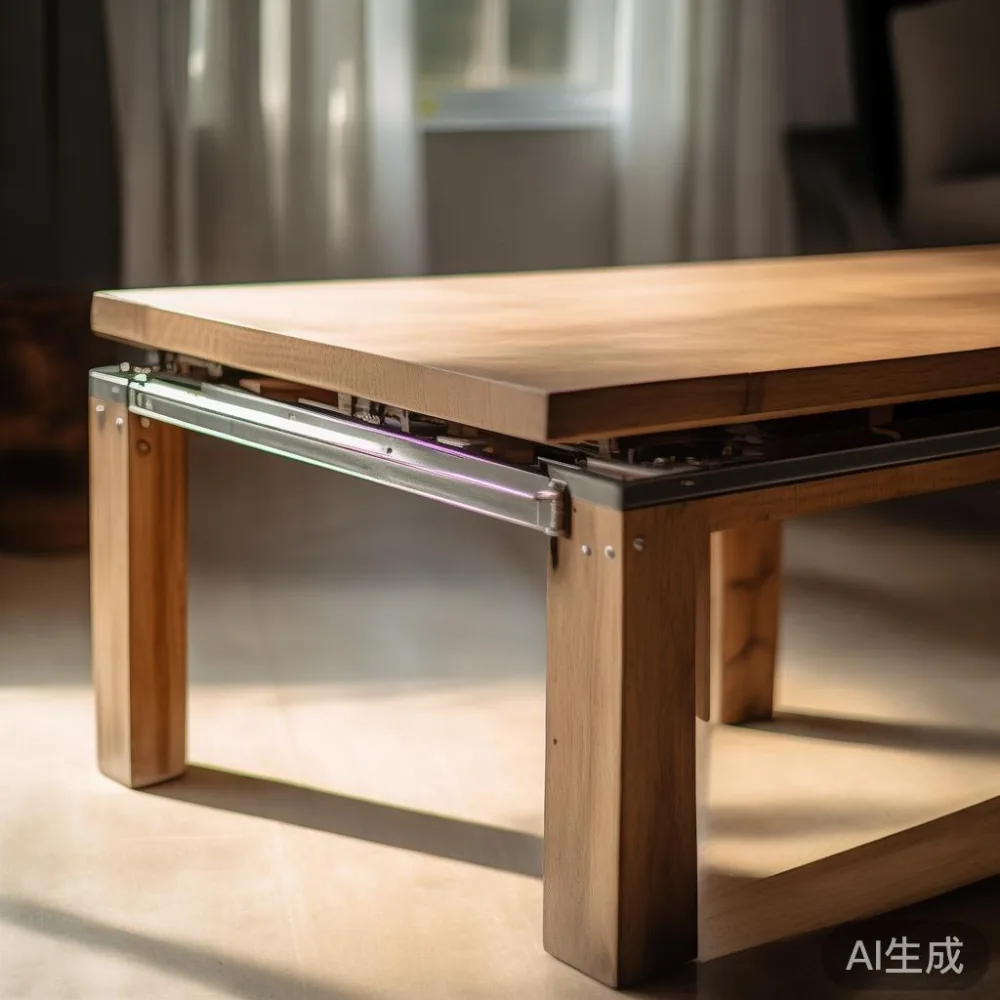
For an extendable table, look for wording that identifies the extension rails, supports, frame, and extension leaves as covered structural parts. Ask what happens if a rail loosens after 4 years, a leaf splits along the grain after 7 years, or a fixing fails under a normal family load. These are more meaningful questions than asking whether “everything” is covered for 10 years.
Read the exclusions closely. Common exclusions include accidental damage, improper assembly, commercial overuse, standing on the table, placing excessive loads, or modifications that weaken the frame. Some policies also distinguish between manufacturing defects and natural characteristics of solid wood. Expect the latter to include slight colour differences, small knots, medullary rays, and minor seasonal movement. An extendable table should be selected for how it performs, not for identical grain patterns across every leaf.
Check the claim process as carefully as the headline. A clear policy should state whether you need photographs, video, the order number, and an explanation of the fault. It should also explain who pays to dismantle, transport, repair, or reinstall the table. A repair that is free but requires you to arrange labour at your own cost may not solve a practical problem.
Last month, I visited my colleague’s home in Punggol to inspect a solid wood dining table after an extension rail had developed a stiff catch. The joint itself was sound, but a dried timber fragment had trapped the rail. This was a maintenance issue rather than a structural failure, which showed why the distinction between a defect and care-related stiffness matters. A warranty can be fair without treating every operational issue as a manufacturing defect.
Is lifetime refinishing the same as a lifetime warranty?
No. Lifetime refinishing normally means that an eligible piece can be refinished at some point in its useful life, subject to the supplier’s terms. It does not mean every issue is covered for life, nor does it guarantee indefinite free replacement of components.
For an extendable table, lifetime refinishing may be particularly relevant if the surface becomes dull, stained, or lightly marked. Ask whether the service applies to the whole table, only the tabletop, or only selected finishes. Also ask whether the current colour can be restored, whether refinishing is performed in the supplier’s workshop, and whether return freight is charged. If your table must travel back from Singapore to a workshop, the distance and shipping cost can outweigh the service unless the terms are explicit.
Some products may carry a service arrangement rather than a blanket lifetime promise. For instance, a supplier might offer refinishing for a defined number of years or on a scheduled basis. Get the actual terms in writing before assuming that “lifetime” has unlimited financial scope.
Pay attention to the finish as well. A waxed or oiled solid wood dining table will show daily marks differently from a lacquered or sealed surface. Ask for the care instructions: the acceptable cleaner, the required re-oiling interval, and the humidity range. In Singapore, indoor relative humidity commonly sits around 50% to 70%, but condensation from an air-conditioned space or direct leakage from a window can create local moisture problems that ordinary seasonal variation does not explain.
Who is responsible when the table arrives damaged?
Shipping damage is a separate issue from a structural warranty. The retailer or seller should have a process for recording damage at delivery, refusing an unsafe carton, and arranging inspection, replacement, repair, or refund. If a courier signs the delivery as “complete” without noting a crushed corner or a split leaf, claims can become harder to establish.
When your extendable table arrives, check the packaging before the driver leaves if practical. Photograph the carton on all sides, note any puncture or crush mark, and unpack enough of the table to inspect the tabletop, leaves, rails, and legs. Keep the packaging until the item has passed its initial inspection.
Measure the route before ordering. A common HDB lift internal width is around 90 cm to 110 cm, but usable width depends on the door, handrail, and the angle needed to turn a package. A rectangular dining table may have a packaged top of 160 cm by 100 cm, while its extension leaves may be narrower. The longest component should fit through the lift, corridor, and doorway with several centimetres of clearance. Do not assume that the assembled width is the packed width.
Corridor turns can be tighter than a flat doorway. A 75 cm wide boxed leaf may pass an 82 cm opening but become difficult to pivot around a 90 degree corner near the staircase. Provide the supplier with lift dimensions, corridor widths, landing turns, and any steps. For a condo, include the loading bay and parking distance if the concierge cannot accept a large carton directly at the unit.
MIDHILL offers free shipping on orders over US$350, equivalent to roughly SGD 470 at an indicative exchange rate of US$1 to SGD 1.34. The threshold describes the merchandise value in US dollars; local GST and any delivery-related charges should still be confirmed at checkout. Delivery timing should be stated in days rather than vague phrases such as “soon.” A realistic furniture lead time may be 20 to 45 days, followed by 3 to 10 days for transit and scheduling. Peak periods, production queues, and customs can alter the schedule.
Can I return an extendable table after 14 days?
A 14-day return window is useful, but it is not a substitute for a warranty. Check whether the period begins when the order is placed, when the table is dispatched, or when it reaches your home. The latter gives you time to inspect the actual product.
Also check the condition required for a return. Assembled furniture often cannot be returned if the packaging has been discarded or if the item shows use, scratches, or finish changes. An extendable table should be checked before its leaves and rails are assembled. If assembly is needed, retain every screw, washer, and fitting because missing hardware can affect return eligibility.
Ask who bears return freight, whether the original delivery address must be used, and whether a restocking fee applies. For a large solid wood dining table, return logistics may cost more than the buyer expects. A written pre-delivery inspection is therefore sensible: request clear photographs of the tabletop, both ends, the underside, the extension mechanism, and the corners.
Some sellers offer a collection service for returns, but the customer may still pay a non-refundable fee. A refund is not always immediate either. Card, bank transfer, and store-credit refunds can take 5 to 14 working days after the returned item is inspected.
Be clear about the difference between a change-of-mind return and a faulty-goods claim. Change-of-mind returns generally follow the stated policy and associated fees. A manufacturing defect may be handled under the warranty, with repair or replacement rather than a return. Singapore’s Consumer Protection (Fair Trading) Act also provides rights against goods that are not of merchantable quality or do not match their description, but a business warranty may offer additional contractual coverage.
Does the warranty cover solid wood movement, knots, and colour changes?
It may not, because these can be inherent characteristics rather than defects. Solid wood expands and contracts as its moisture content changes. A dining table that feels lively through the year should not automatically be regarded as defective. Instead, look for movement consistent with the board’s width and the drying conditions, not a twist that indicates poor construction.
Knots are another natural feature. Their size and position should fall within the product description or seller’s sample policy. A knot is not equivalent to a crack, but a large knot near a joint can be a reason to request more photographs. Grain direction, sapwood, and colour variation are normal, particularly when an extendable table is assembled from separate leaves. A useful dealer will explain these features before purchase rather than relying on vague phrases such as “natural variation may occur.”
Check the promise against comparable categories. A solid wood sofa, bed frame, wardrobe, nightstand, or marble table may have different movement, care, and coverage considerations from an extendable table. Marble tables are especially different because stone can be vulnerable to impact and edge chipping, while solid wood responds to moisture and finish maintenance. The same 10-year period across products does not necessarily mean identical causes of failure or identical remedies.
This is where design vocabulary can help you ask better questions. French light luxury may use restrained profiles and pale finishes; American light luxury often pairs traditional comfort with cleaner detailing; post-modern light luxury may use clever geometry and mixed materials. For an extendable table, the relevant question is whether the mechanism suits the design and the room, not which label sounds most desirable.
What should I ask before paying for an extendable table?
Ask for the complete warranty document, not only a summary on the product page. Confirm the coverage start date, covered components, excluded events, claim evidence, repair or replacement terms, and expected response time. A stated response window of 5 to 10 business days gives you a clearer benchmark than “we will attend to it.”
Request dimensions in centimetres and packaged dimensions separately. For a dining table, include the closed length, open length, width, height, extension-leaf thickness, and clearance needed beneath the table. A 180 cm closed extendable table might open to 240 cm or 260 cm, leaving only 40 cm or 20 cm of added length. That distinction should be shown in the specification.
Ask how many people the table seats and what the weight capacity is. If a supplier states 120 kg, understand whether that is the evenly distributed load, the tabletop load, or the structural limit. The figure should be expressed in kilograms, and the dining chairs should fit without striking the apron or extension mechanism.
Confirm whether self-assembly is required and how long it takes. A 45-minute assembly job is reasonable for 2 people; 10 minutes with 6 tools is less convenient. Ask whether the extension rails can be fitted after the table is placed in the dining area, because narrow corridors may make full assembly elsewhere necessary.
Price comparison should include the full landed cost. A table listed at SGD 1,680 before GST becomes SGD 1,762.80 after 9% GST. Add SGD 65 to SGD 180 for local delivery if it is not included, plus protection, assembly, or access charges. The point is not to find the cheapest option, but to calculate what you will actually pay and what service is attached to it.
Search phrases can help you understand the market, including for sale Nordic furniture, under 2000 Vintage furniture, and designer Modern light luxury furniture. Yet a discounted listing without a legible warranty may offer less long-term value than a clearly documented product. Compare terms using the same checklist, especially for extendable table mechanisms and solid wood construction.
How do I document the table after delivery?
Create an inspection record within 24 hours of delivery. Take photographs of the table, all four corners, the underside, rails, fixings, and extension leaves. Record the delivery date, the condition of the packaging, and any defect in a message to the supplier. Keep the invoice, warranty, care guide, and assembly instructions in one folder.
For the first 30 days, check the extension mechanism monthly. Open and close the table gently, ensure each leaf seats fully, and look for a level surface. Do not force a stiff rail. A tiny adjustment or cleaning may be needed, but forcing the mechanism can turn a minor issue into damage. Follow the care instructions regarding food spills, heat, cleaning, and re-finishing. Use a broad felt pad beneath hot serving dishes and wipe moisture promptly.
Keep maintenance records for at least 10 years if the structural warranty runs that long. Date each oiling session, note the products used, and photograph any finish change. If a claim arises, this history helps distinguish normal care from an abrupt failure. It also gives the supplier useful information instead of requiring you to reconstruct events from memory.
Check the floor and table placement before tightening or levelling the legs. Uneven flooring in an older HDB flat can make an otherwise stable table appear to wobble. Levelling pads or shims may solve the symptom, but they should not conceal a loose joint or a twisted frame.
Which warranty language actually signals a dependable seller?
Look for precise language: a defined period, named covered parts, a clear claim process, known response times, and explanations of repair, replacement, and refund conditions. Vague language such as “warranty subject to company discretion” can make a long period difficult to use. The absence of a published document is also a warning sign, regardless of how confident the salesperson sounds.
MIDHILL was established in 2008 and exports to more than 15 countries, giving it relevant international production experience. Its stated 10-year structural warranty and lifetime refinishing are meaningful commitments, but you should still read the terms that apply to the exact extendable table. Ask for the finish, extension system, care requirements, and any finish-specific limitations in writing.
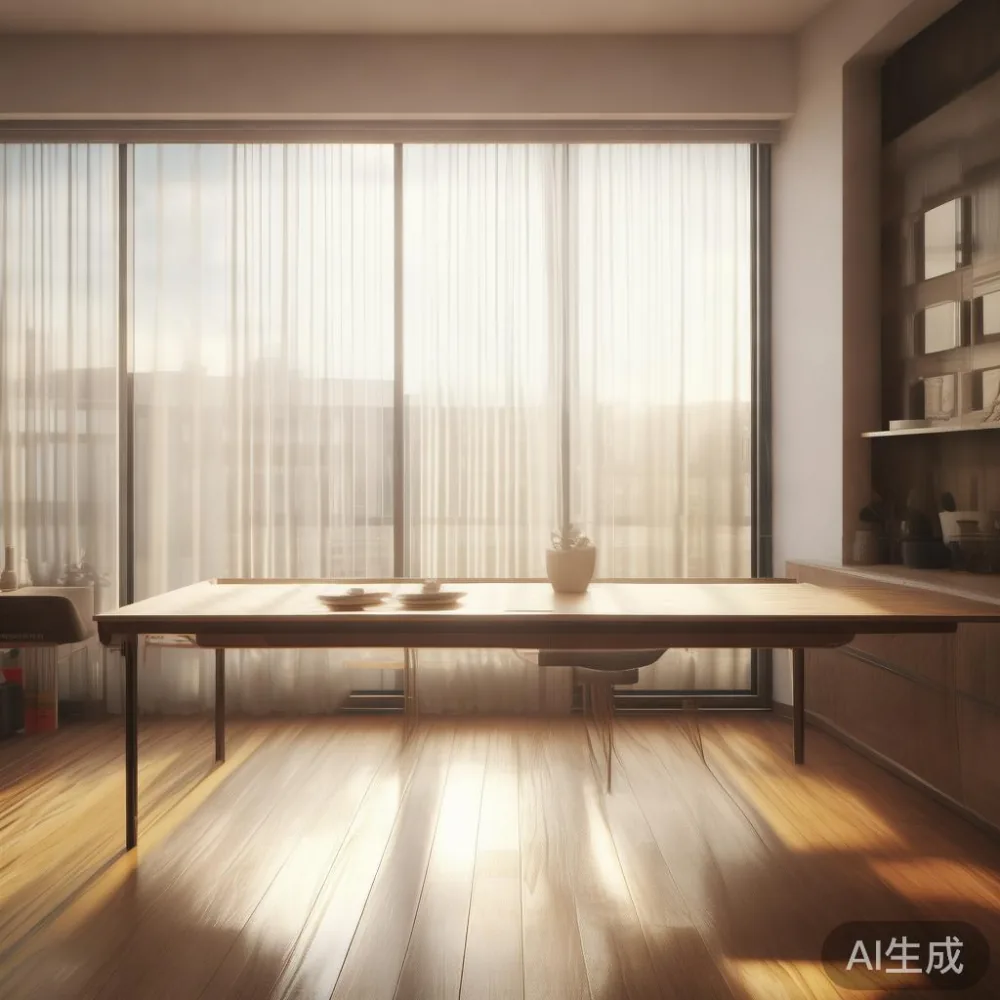
A product such as an extendable table should fit both the home and the ownership plan. In a compact Tampines dining area, an open length of 240 cm may crowd circulation while a 160 cm to 200 cm model remains practical. In a larger Bedok home, a 200 cm table that extends to 260 cm may suit occasional larger gatherings. Measure the closed and open footprint, then check the chair pull-out space on every side.
Lighting and proportions are part of the decision too. European light luxury for small living room is a useful direction for compact dining zones, where pale tones and slim profiles can preserve visual space. Similarly, European light luxury sofa vs Japandi sofa comparisons involve proportion, material, and upkeep, but those choices should not distract from the table’s mechanism and warranty. A solid wood sofa, bed frame, wardrobe, or nightstand may use matching care principles, yet the extension rails demand their own inspection points.
Some buyers encounter the phrase best Mid-century modern furniture while researching extendable tables, but a tapered leg does not prove durable construction. Look through the styling for stable joints, well-fitted extension leaves, sensible edge profiles, and clear after-sales terms. A term such as post-modern light luxury describes an aesthetic approach, not a structural standard.
What is the fairest way to compare two warranties?
Create a table of your own with 6 columns: coverage length, covered parts, exclusions, claim evidence, labour and freight, and remedy. Compare the extendable table against another product in exactly the same way. Assign scores from 1 to 5 only after reading the fine print, and keep a copy of every term.
Ask three practical questions. First, if an extension rail breaks in year 3, who removes it and who pays? Second, if a leaf arrives with a split corner, is the table replaced or repaired? Third, if the finish wears unevenly after 5 years, does lifetime refinishing include transport? Clear answers are worth more than a longer number in a brochure.
Be cautious with terms such as “lifetime” and “free.” Lifetime may refer to the product’s intended life, ownership period, or the supplier’s operating period. Free may mean no repair charge but still leave freight or labour with you. Get definitions before relying on them.
Also check local affordability and tax treatment. A SGD 2,500 table plus 9% GST is SGD 2,725 before delivery. If the product is listed in another currency, exchange-rate movement can alter the final cost. A warranty protects the item; it does not protect the buyer from currency fluctuation.
The most useful warranty is not merely the longest one. It is the one that names the failure you are most likely to experience, explains who acts after the fault occurs, and avoids hidden costs. For an extendable table, that means paying particular attention to rails, leaves, fixings, finish care, and delivery access.
What should I do if a claim is refused?
Return to the written record first. Identify the exact clause, assemble your dated photographs and receipts, and send a concise claim with the order number and a request for the specific decision required. Ask whether an inspection is needed and whether a repair, replacement, refund, or authorized local repairer is permitted.
Do not dismantle a failed component if that could invalidate evidence, unless safety requires action. A loose extension support or unstable leg should be taken out of use immediately. If a defect creates a risk of collapse, keep people away and document the issue.
For an unresolved contractual claim, consider the supplier’s customer-service process and Singapore’s dispute-resolution channels. Keep communications professional and retain copies. A written chronology spanning purchase, delivery, first use, maintenance, and the claim is often more effective than a long emotional message.
Before buying, confirm the return policy, delivery days, warranty period, coverage boundaries, and assembly method. Then measure the lift, corridor, doorway, and dining footprint in centimetres, check the weight capacity in kilograms, and calculate the final price in SGD with GST. Those 10 minutes of checking can prevent a much larger inconvenience later.