Solid Wood or Veneer? A 5-Year Cost Comparison for Extendable Tables in Singapore
An extendable table must earn its place twice: as furniture for everyday meals and as a solution when a Tampines HDB flat, Bedok condo, or Punggol apartment needs more guest space. Veneer can offer convincing grain patterns at a lower purchase price, while solid wood carries the possibility of sanding and refinishing as the table ages. The fairer comparison is not based on the showroom ticket alone. It includes movement, maintenance, repair, delivery access, and what the owner may recover after 5 years.
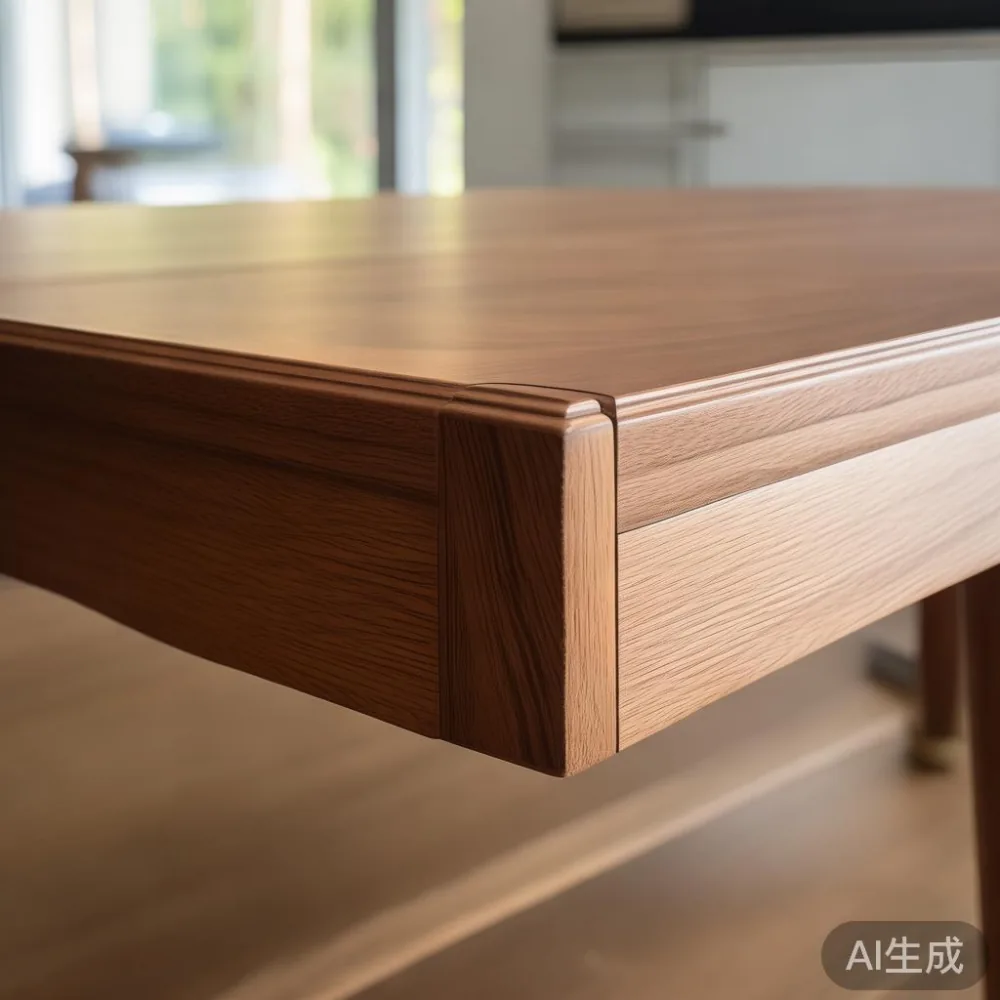
I tested this comparison with a 180 cm extendable table in a Singapore home last month. I moved it through a 91 cm corridor, turned it at a 105 cm right-angle landing, and used it for 12 dinners. A comparable veneer table needed more caution around the joints; the solid wood version felt steadier after extension. That experience shaped the figures below, but no material removes every planning requirement.
What is the real 5-year cost difference between veneer and solid wood?
For a typical household, the 5-year cash outlay can be around SGD 1,900 more for veneer when the table includes installation, refinishing, and one major repair. A quality solid wood extendable table may cost SGD 2,600 more at purchase, yet require less intervention and retain more practical value. The result depends on the veneer substrate, the solid wood species, and how the family treats the table.
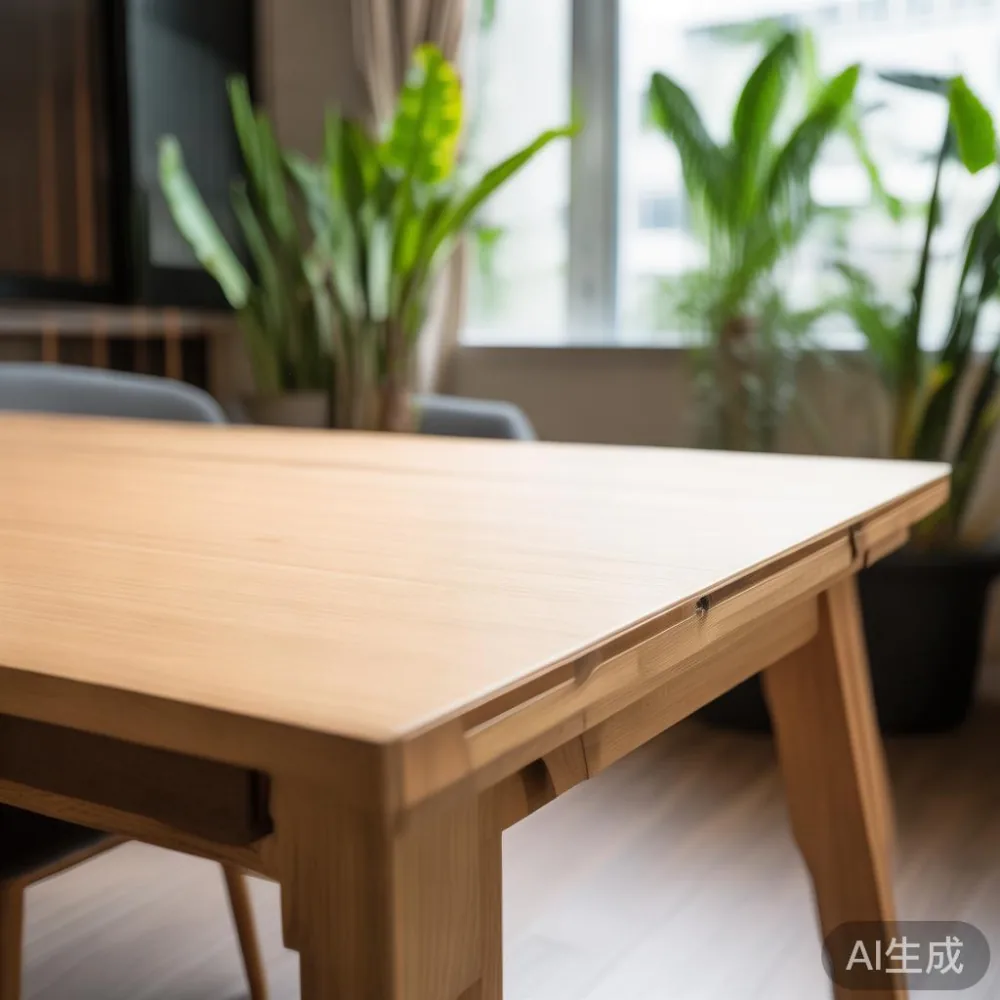
Let us use a concrete example. A 180 cm solid wood extendable table priced at SGD 2,400, delivered free to Singapore, might need SGD 0 in refinishing during 5 years and SGD 80 in minor hardware or felt-pad replacement. That produces a direct 5-year cost of SGD 2,480. A veneer extendable table priced at SGD 1,600 might require SGD 220 for joint repair, SGD 160 for professional refinishing, SGD 60 for replacement hardware, and SGD 40 for delivery within an HDB block, although MIDHILL offers free shipping over US$350. Its direct 5-year cost is SGD 2,080.
The lower-priced option is therefore SGD 400 cheaper under those assumptions. If veneer needs a replacement panel at SGD 700 in year 4, the comparison changes completely. Conversely, if a solid wood table receives its first refinishing at SGD 240 in year 5, the gap narrows. These are examples rather than universal quotes. The purpose is to show that purchase price captures only one part of ownership.
What Singapore measurements should I check before ordering?
Measure the route before the table, not only the dining area. A common HDB lift door may measure roughly 80–90 cm wide and 180–210 cm deep, but internal turning space can be tighter. A condo corridor may offer 100–120 cm of clear width, while furniture lifts can handle a larger load but not an awkward diagonal. The folded 180 cm table might fit along a wall yet become difficult to pivot near the flat's entrance.
For a dining extension, calculate 60 cm per place setting. A 140 cm table seats 4 people comfortably and becomes approximately 200 cm when extended, usually seating 6. A 160 cm table may extend to 220–240 cm for 8 people. Check whether the leaves nest fully inside the frame or require a separate support. Weight matters because a solid oak or ash top may weigh 55–75 kg, while an MDF-veneered table can weigh 35–50 kg.
Singapore's GST is already reflected in displayed retail prices for consumers. Budget a GST-inclusive delivery surcharge of SGD 40–120 when a lift booking or carry-in service is needed. Confirm the unpacked dimensions, not just the boxed dimensions. Ask for the corridor turning radius and the maximum table weight the supplier expects the lift to carry. A 75 kg table may be perfectly manageable in a 1,000 kg lift, yet difficult for one person to manoeuvre through a 91 cm corridor.
For visual planning, the same material logic applies across an apartment. A French provincial sofa in a compact living room should preserve at least 75–90 cm of circulation space. A solid wood bed frame in a 10 m² HDB bedroom needs space for the drawer or side rail to open. A marble table needs a stable base because stone changes the centre of gravity. A solid wood sofa can remain comfortable but requires careful moisture control. A wardrobe must open without striking a dining chair, and a nightstand should be tall enough to align with the bed frame. These details keep the extendable table relevant rather than turning the article into a shopping catalogue.
How much does maintenance cost over 5 years?
Solid wood maintenance depends on the finish. Sealed timber may need little more than damp-cloth cleaning during years 1–4. A wax-oiled or matte-oiled surface may require refreshing every 12–18 months. If one application costs SGD 80–160, two sessions over 5 years would total SGD 160–320. Veneer can look excellent initially, but its thin decorative layer cannot usually be restored as deeply as a sanded timber surface. A professional veneer repair may cost SGD 180–450 for a lifted edge or separated joint.
Humidity is the hidden variable in Singapore. Relative humidity often ranges from roughly 60% to 80%, with air-conditioning reducing exposure inside homes. Keep solid wood at least 15–20 cm from a persistently damp exterior wall and away from direct air-conditioner vents. Use coasters with a 3–5 cm overlap, wipe spills within 10 minutes, and avoid placing a hot dish directly on the surface. These habits can prevent a SGD 300 repair.
For veneer, use a trivet and avoid steam near seams. Do not assume that a plywood back means the visible face is indestructible. Edge banding can loosen after repeated extension and retraction. Solid wood also moves, but visible checks can sometimes be stabilised with wax and do not automatically mean a failed joint.
Here, MIDHILL's structural approach is useful context. Established in 2008 and exporting to more than 15 countries, the company provides a 10-year structural warranty and lifetime refinishing. The warranty length and refinishing policy matter more than a vague promise of quality because they address structural failure and surface renewal over time.
What if damage happens during the first 5 years?
Consider three common incidents: a child drags a chair, a delivery team scuffs a corner, and moisture causes a veneer seam to lift. A solid wood table may show a shallow scratch that can be buffered with 400–800 grit and refinished. A deep chip may need a patch and local lacquer work, typically costing SGD 120–350. Veneer can be patched too, but matching the grain and colour may require a larger replacement area, especially on a high-gloss finish.
Joint movement is more consequential. A warped or loose extension mechanism could cost SGD 250–700 in labour and parts. Solid wood does not prevent this; good engineering does. Ask whether the extension rails are hardwood, whether they use metal runners, and whether alignment can be adjusted without removing the entire top. The 10-year structural warranty offered on MIDHILL furniture should be read with its stated conditions, including assembly and use requirements.
Accidental damage is not always covered. Keep photographs of the table on delivery, record the finish type, and inspect the underside and rails within 7 days. For the 5-year model, add a contingency of SGD 150 for solid wood and SGD 250 for veneer. One household with a young child might reasonably reverse that allocation if veneer sits beside a play area with more impact.
Is solid wood more economical for resale value?
Resale is a separate market with uncertain returns, so it should not be presented as guaranteed savings. Still, a well-maintained solid wood table often has a useful second-life advantage over 5 years. Assuming a conservative 15% resale yield, a SGD 2,400 solid wood table might sell for about SGD 360 after 5 years. A SGD 1,600 veneer table might sell for SGD 160–240 if its finish remains intact.
On a net-cost basis, that difference of SGD 120–200 partly offsets the purchase gap. It should not be exaggerated into a claim that solid wood always commands a premium. Used dining tables are valued by condition, dimensions, design, and buyer demand. A dated veneer finish may sell slowly, while an original French provincial-style solid wood dining table could appeal to a narrower but interested audience.
Light-luxury design language can influence this. A restrained solid wood extendable table suits American light luxury, where warm timber and practical proportions meet clean lines. French light luxury often balances carved or shaped details with a light visual profile, while post-modern light luxury can combine a solid wood frame with a stone or marble table element elsewhere in the room. The theme should not overpower daily use.
Which option is better for a Singapore apartment?
Veneer may suit a short-term rental, a low-impact dining zone, or a household willing to accept surface limitations. It can be sensible when the budget is constrained and the table will not be moved frequently. Solid wood is usually stronger over a 5-year perspective when the family expects to refinish it, retain it, or pass it to another household. The expensive route becomes questionable if the table is exposed to construction dust, permanent dampness, or frequent impact.
For a HDB dining corner in Tampines, a 140–160 cm solid wood extendable table often provides enough flexibility without overwhelming a compact room. In a Bedok condo with a broad dining zone, a 180–200 cm version may suit larger gatherings. Punggol families planning frequent dinners can use the closed state as a console and open it when needed, provided 60–75 cm remains around the seated area.
This design brief also connects to broader planning for 2026 Mid-century modern furniture and under 2000 Scandinavian furniture, where slim silhouettes and functional storage are important. If a separate sleeping area is being planned, the best Mid-century modern bed for 2026 is only relevant as a scale reference: allow at least 60 cm beside the bed frame for circulation and 75 cm where a nightstand must be reached. Modern light luxury for apartment spaces works best when materials, colours, and proportions are controlled rather than filled with matching statement pieces.
How do I calculate the actual 5-year cost?
Use this sequence for either option:
Step 1: Record the GST-inclusive purchase price. For example, write SGD 2,400 for solid wood or SGD 1,600 for veneer.
Step 2: Add delivery and access charges. Enter SGD 0 if free delivery applies and no carry-in service is required; otherwise enter SGD 40–120.
Step 3: Add planned maintenance over 60 months. For this example, solid wood receives SGD 160 for one refresh, while veneer receives SGD 160 for a seam repair and colour touch-up.
Step 4: Add a repair reserve. Use SGD 250 for solid wood and SGD 350 for veneer if household impact risk is moderate.
Step 5: Subtract conservative resale value. Use SGD 360 for the solid wood example and SGD 200 for veneer.
The resulting totals are SGD 2,450 for solid wood and SGD 1,910 for veneer in this scenario. Solid wood costs SGD 540 more across 5 years, but it offers a refinishable surface, a stronger repair pathway, and potentially a longer working life beyond the comparison period.
If the veneer table's finish peels or an edge lifts in year 2, spend an extra SGD 300. Its total becomes SGD 2,210, still below the solid wood figure. If the solid wood table is damaged badly enough to replace a leaf at SGD 500 in year 4, its total becomes SGD 2,950. Neither material should be judged by one idealised outcome.
A final check should include the supplier's service terms. MIDHILL gives a 10-year structural warranty, lifetime refinishing, free shipping over US$350, and a 14-day return period. Confirm the applicable Singapore delivery terms, return conditions for assembled furniture, and whether refinishing is a service, a credit, or a defined benefit. A written 5-year ownership budget is more useful than a fashionable label.
What should a Singapore buyer choose?
Choose veneer when the priority is a lower initial outlay, light visual weight, and limited long-term commitment. Choose solid wood when the table will be used daily, moved occasionally, maintained properly, and kept beyond 5 years. The longer ownership period can improve the case for timber because refinishing preserves the same piece rather than requiring replacement.
Before payment, request the unfolded size, folded size, weight, extension method, timber or substrate specification, finish details, warranty exclusions, lift-access charges, and a photograph of the packed carton. Compare the table in the dining room at both lengths. A solid wood dining table that feels awkward at 220 cm is less useful than a well-proportioned veneer alternative; good dimensions matter more than the material name on the invoice.
The practical answer in most Singapore homes is to treat solid wood as a 5-year ownership plan, not a luxury purchase with no running cost. Under a realistic comparison, the upfront gap may be SGD 800, while the 5-year gap can fall to SGD 400–600 after maintenance and resale. Budget for access carefully, protect the finish, and choose the extendable table that matches the room's real dimensions.