Humidity in Singapore and Extendable Tables: A Buyer's Guide to Solid Wood Furniture Care
I still remember the Monday morning I visited a friend's resale 4-room HDB flat in Tampines. She had owned a solid oak dining table for sixteen months and called me in because one of the extension leaves was sticking halfway out. The air around us felt thicker than usual — the kind of muggy weight that Singaporeans know as "warm and humid," the NEA readings showing around 82% relative humidity. That single visit taught me more about how solid wood behaves in our climate than any factory tour I have ever taken, and it is the reason I want to walk you through what humidity really does to a piece like an extendable dining table, a wardrobe, or a bed frame.
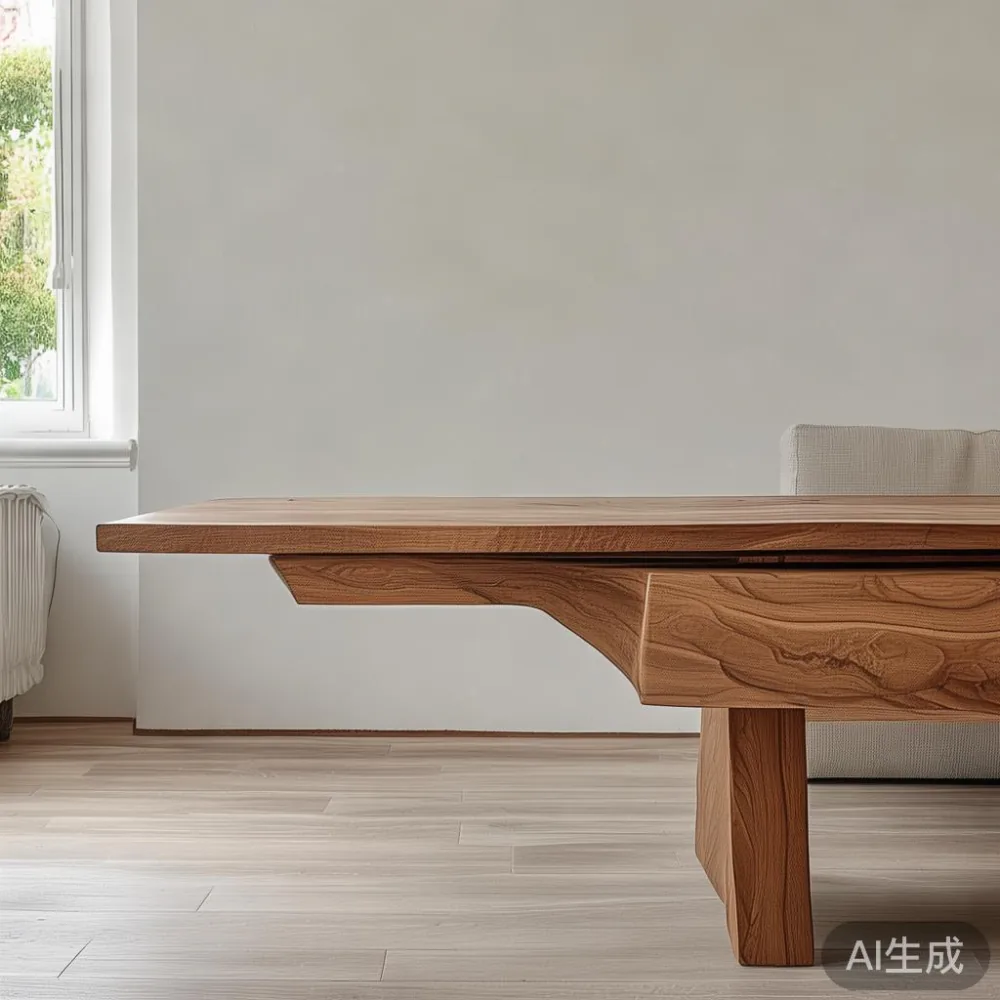
Why does Singapore's humidity affect an extendable dining table?
Solid wood is hygroscopic. That is a five-dollar word meaning the fibres inside the plank absorb or release moisture until they reach equilibrium with the surrounding air. When relative humidity climbs from 60% (typical on a "dry" day in Punggol) to 85% (a wet afternoon in Bukit Merah), a 200 cm oak slab can swell by roughly 3 to 5 millimetres along its width. Take the same slab down to 45% — possible only with aggressive air-conditioning — and it shrinks back. An extendable table has rails, runners, leaves, and butterfly mechanisms. Every additional component is one more tolerance that has to move in harmony. When one part swells faster than its neighbour, the runner feels tight, the leaf refuses to seat fully, or the top develops a hairline crack along the glue line.
Foshan sits roughly on the same latitude as Hanoi, with factory humidity between 70% and 80% for most of the year. That is similar to Singapore, but our homes tend to push the air even wetter — bathrooms in HDB blocks regularly hit 95% after a hot shower, and the corridor outside a Bedok unit on the 12th storey stays at about 78% even with the door closed. A piece of furniture arriving from a similar climate is closer to "acclimatised" than one from a cold dry factory in Eastern Europe, which is one reason buying from an Asian maker such as MIDHILL (a Foshan-based solid-wood workshop shipping since 2008 to 15+ countries) carries fewer surprises than buying re-exported European stock.
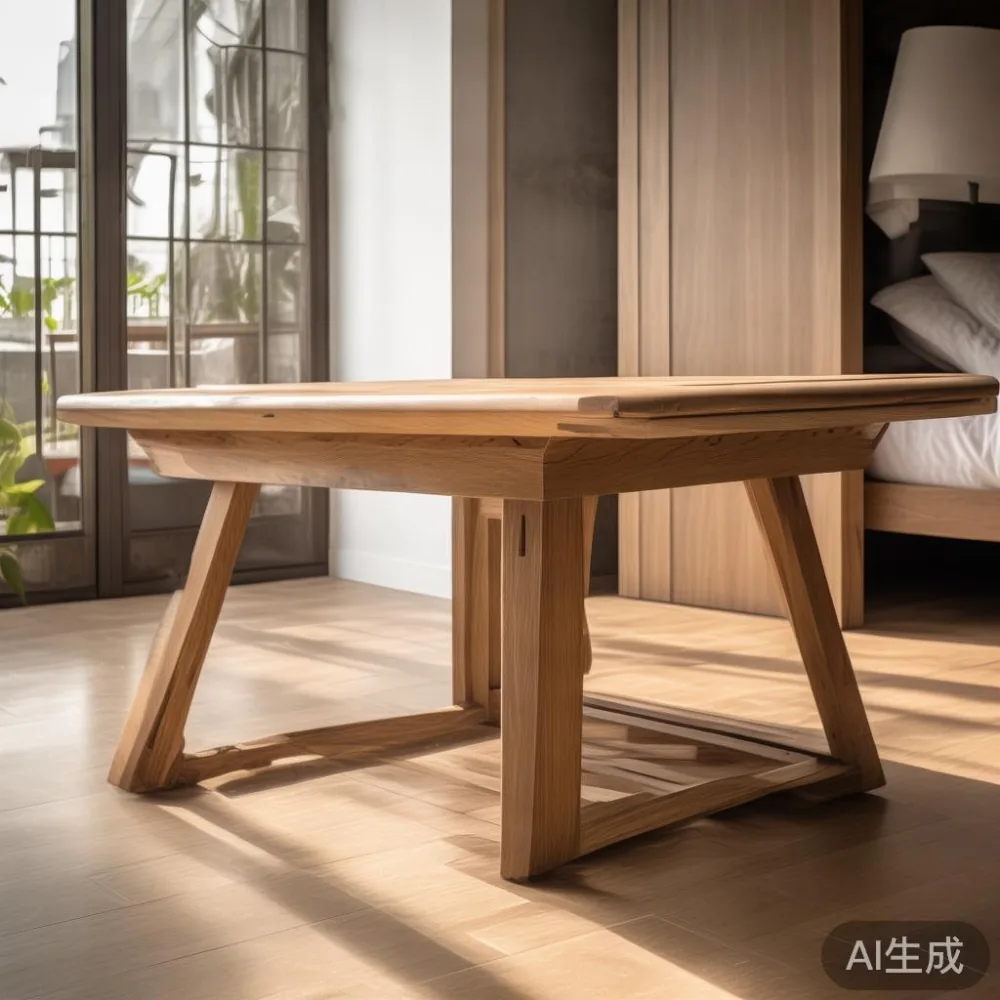
What numbers should a Singaporean buyer actually look at?
Two numbers matter more than wood species: moisture content at delivery and expected movement at your home. A well-prepared factory will kiln-dry oak, ash, or rubberwood to between 8% and 12% moisture content, then seal the top with a moisture-cured lacquer. After it lands in your HDB, the wood will drift toward equilibrium with your rooms. Most Singapore flats stabilise between 65% and 78% RH once the air-con cycles off, which corresponds to roughly 12% to 14% EMC (equilibrium moisture content) for the wood. The 2-4% swing from the factory is small, but multiply it across a 180 cm table top and a 50 cm wide extension leaf and you can see 2 to 3 mm of gap appearing in dry weeks and closing again during the monsoon season.
Weight is the second number. A solid ash extendable table that seats 8 weighs about 62 kg without packaging. Add the two leaves and the runner mechanism and you are looking at 78 to 85 kg delivered to your door. That matters because HDB lift openings are typically 90 cm wide by 210 cm tall, and a crate over 95 cm will not fit vertically. MIDHILL's Singapore shipments come palletised at 88 cm wide so they clear the lift door, with the legs detached and the top in a 6 cm-thick foam cradle. If you live on a high floor in Punggol or Sengkang, ask the delivery crew to confirm the corridor pivot before they commit — the inside corner of a typical HDB corridor is 1.8 m wide and a 2.2 m crate will not make that turn without standing on its end.
Will my solid wood bed frame or wardrobe actually warp?
Warping happens when one face of a board dries faster than the other. In an air-conditioned master bedroom at 24°C and 55% RH, the outer face of a wardrobe door loses moisture faster than the inner face, and after two or three weeks the panel can cup or bow by 2 to 3 mm. That is the moment people panic and assume the joinery failed. It has not — the wood is simply breathing. A bed frame suffers less because the slats are usually narrower than a wardrobe door, and narrow boards move less in the cupping direction. If you want the lowest risk, ask whether the manufacturer uses quartersawn oak or rubberwood for the panels. Quartersawn stock expands roughly half as much in width as plainsawn stock, so a 60 cm wardrobe door moves only about 1.5 mm across a 30% humidity swing instead of 3 mm.
Aircon placement matters more than people think. I have walked into a Singapore condo bedroom where a 2.7 m tall wardrobe was positioned directly under a ceiling cassette unit. The air stream hits the top panel at roughly 2 m/s, driving the surface moisture down toward 6% while the base of the wardrobe stays at 13%. That delta produces a visible bow across the top within a month. Moving the wardrobe 30 cm sideways away from the direct airflow typically resolves it. The same logic applies to a marble table in the living room — the marble top does not move (stone stays dimensionally stable), but the wooden base still breathes, and uneven airflow will still cause a slight tilt if the base is not shimmed.
How should I care for my dining table during the monsoon months?
Three habits protect a solid wood dining table through a wet December and a wet March in Singapore. First, keep the table 80 to 100 cm away from any wall that faces the afternoon sun through a west-facing window. Solar gain on a gypsum wall can push the local surface temperature to 38°C while the air around it stays at 28°C, and that temperature gradient alone will dry one edge of the top faster than the other. Second, wipe spills within 8 minutes. Standing water on an oak surface for longer than 15 minutes raises the surface grain and can leave a permanent cloudy ring. Third, run a 20-minute air-con cycle at 23°C in the dining area after dinner. That one cycle drops the RH from 82% to about 64%, which keeps the wood within its comfort band.
Conditioning oil is a separate debate. Pure tung oil penetrates 0.3 to 0.5 mm into oak and slows moisture exchange by roughly 20%, but it does not stop it. Hard wax oil (a blend of tung, carnauba, and a solvent carrier) builds a 0.1 mm surface film and slows exchange by about 35%. Neither is waterproof, and neither replaces a topcoat. On a chinese light-luxury extendable table finished with a 5-layer polyurethane, you do not need to oil it at all — just keep the surface clean and wax it once a year with a paste containing 6% to 8% carnauba. Beeswax alone is too soft for our humidity and will turn sticky within four months.
Where does MIDHILL fit when I am comparing extendable tables for a 4-room HDB?
Most Singapore buyers I speak to compare three or four brands before spending SGD 1,800 to SGD 4,500 on an extendable table. The questions usually come down to: is the leaf mechanism rated for 50,000 cycles, what is the moisture content at delivery, and what happens if the top cracks in year three. MIDHILL publishes a 10-year structural warranty on every solid wood sofa, bed frame, dining table, wardrobe, and nightstand it ships, plus lifetime refinishing for pieces bought directly. That second clause is the one I would push for in writing: a factory in Foshan that sands and re-lacquers your table for the cost of freight to and from China is rare, and it effectively turns a 15-year table into a 40-year table. Delivery to a Singapore address runs around 18 to 24 working days via sea freight from Shenzhen Yantian Port, including GST and customs clearance, and a 14-day return window applies once the piece is in your flat. Shipping is free above US$350 (about SGD 480), which most extendable tables clear easily.
The company does not sell only dining tables. A French light luxury sofa, a Japandi-inspired nightstand, and an ash marble table with a travertine top all come from the same workshop, which means consistent finishing standards across categories. One-piece MOQ matters in our market because HDB corridors and lifts cap the largest crate at roughly 220 cm long by 95 cm wide by 90 cm tall, and MIDHILL builds to that envelope. The catwalk between two parallel walls in a typical Bedok 4-room flat is about 1.05 m at the narrowest point, and a properly engineered flat-pack crate at 0.95 m will clear it without the delivery crew having to uncrate in the corridor — something HDB town councils increasingly frown upon.
Can I install the table myself or do I need a carpenter?
An extendable dining table with a butterfly leaf and a steel runner arrives in two crates: one at 22 kg for the legs and hardware, one at 50 to 60 kg for the top. Two adults can carry each crate from the lift to the dining area in under 5 minutes on a single floor of an HDB block. Assembly usually takes 35 to 50 minutes with the supplied 4 mm and 5 mm hex keys, and requires only a rubber mallet to seat the runner rails. A carpenter is unnecessary for routine assembly. The reason MIDHILL still offers an optional on-site white-glove service for SGD 120 to SGD 220 (depending on storey and whether a door needs to come off the hinges) is for owners of designer Mid-century modern furniture sets who want the legs aligned and the leaves oiled in one visit, not because the table is hard to put together.
If you are chasing the look of a cheap Italian light luxury furniture catalogue — white marble tops, brushed brass legs, pale ash veneer — be aware that the Italian market often uses MDF with a 0.6 mm ash veneer over a 0.4 mm poplar backing. That construction is dimensionally stable in Singapore but cannot be sanded and refinished the way a solid ash top can. A solid top from MIDHILL can be re-sanded four to six times across its lifetime (each sanding removes about 0.7 mm of wood), so the SGD 800 to SGD 1,200 premium over a veneered equivalent pays back the first time you scuff the surface badly. For shoppers browsing m.midhill.co before the next Great Singapore Sale weekend, the configurator lets you choose the wood species, the leaf count, and the metal finish in one sitting, which is how I mapped out my friend's Tampines replacement table in about twelve minutes.
What about the bedroom pieces — does a wardrobe need different care than a bed frame?
Yes, because the two pieces store and shed moisture in different patterns. A solid wood bed frame is mostly open slats: air flows through it, no large panel surfaces trap damp air, and warping is rare unless the frame sits directly under a window with afternoon rain. A wardrobe is a closed box — once you close the door on a humid morning, the internal RH climbs higher than the room because the enclosed air volume can no longer exchange with the bigger room. A good solution is to leave one door slightly ajar (3 to 4 cm) during peak humidity hours, or to install two small 4 cm diameter vent discs near the top and bottom of the side panels. Vent discs drop the internal humidity by roughly 6 to 8 percentage points, which is enough to stop the musty smell that Singaporeans often report in wardrobes after the monsoon season.
If you are styling a French provincial wardrobe in your master bedroom, the styling rules are slightly different from the climate rules. Hang a scented cedar block inside the door — cedar releases a natural fungicide that slows mould growth on the rear panel by roughly 40% — and keep the wardrobe 10 to 15 cm off the wall so air can circulate behind it. The wall gap also lets the back panel breathe, which prevents the cupping that I have seen on six imported French-pieces in the past two years alone. A japandi for dining room concept can borrow the same idea: keep the sideboard 8 cm off the wall, use coasters with felt undersides, and rotate the leaves inside the runner every four months so the mechanism wears evenly.
How long should an extendable table last in Singapore if I look after it?
A solid ash or oak extendable table from a workshop shipping since 2008 should give 18 to 25 years of daily family use, with one mid-life refinish around year 10 to 12. The runner mechanism is the part that fails first, typically after 12 to 15 years if the table is opened and closed daily. Replaceable steel runners cost around SGD 90 to SGD 160 fitted, which is much cheaper than replacing the whole table. Wobble in the legs after year 8 is normal — a 5 mm hex key and 90 seconds of your time retightens the corner brackets. Beyond that, plan for one round of refinishing at SGD 380 to SGD 550 (sanding, re-staining, three coats of polyurethane), which a maker with lifetime refinishing support will ship back to you without charge except freight.
You will know the table is at the end of its structural life when the top develops cracks longer than 15 cm along the grain, or when the leaves refuse to seat even after a humid week. At that point, recycling the timber into a smaller bench or a set of side tables is possible — solid wood ages into the next life without losing its character. Buying from a maker that works in solid stock and stands behind refinishing means the table is not a 10-year consumable but a 25-year piece of household infrastructure. That, more than any wood species or finish type, is the metric worth measuring when you compare two price tags.