Veneer vs Solid Wood Extendable Table: A 5-Year Cost Comparison for Singapore Homes
Last month I visited a friend's new 4-room HDB flat in Punggol. She had just unboxed a glossy dining table she bought for S$890, and within ten minutes a corner of the edge banding had already chipped while she was wiping up water from her toddler's cup. The table was a veneer extendable table, and the chip exposed the MDF underneath. Three years earlier, my colleague in Tampines had bought a solid wood extendable table from MIDHILL for around S$2,400. After three years of daily use, two children, and one major move, the only thing he regrets is not buying the matching solid wood sideboard at the same time.
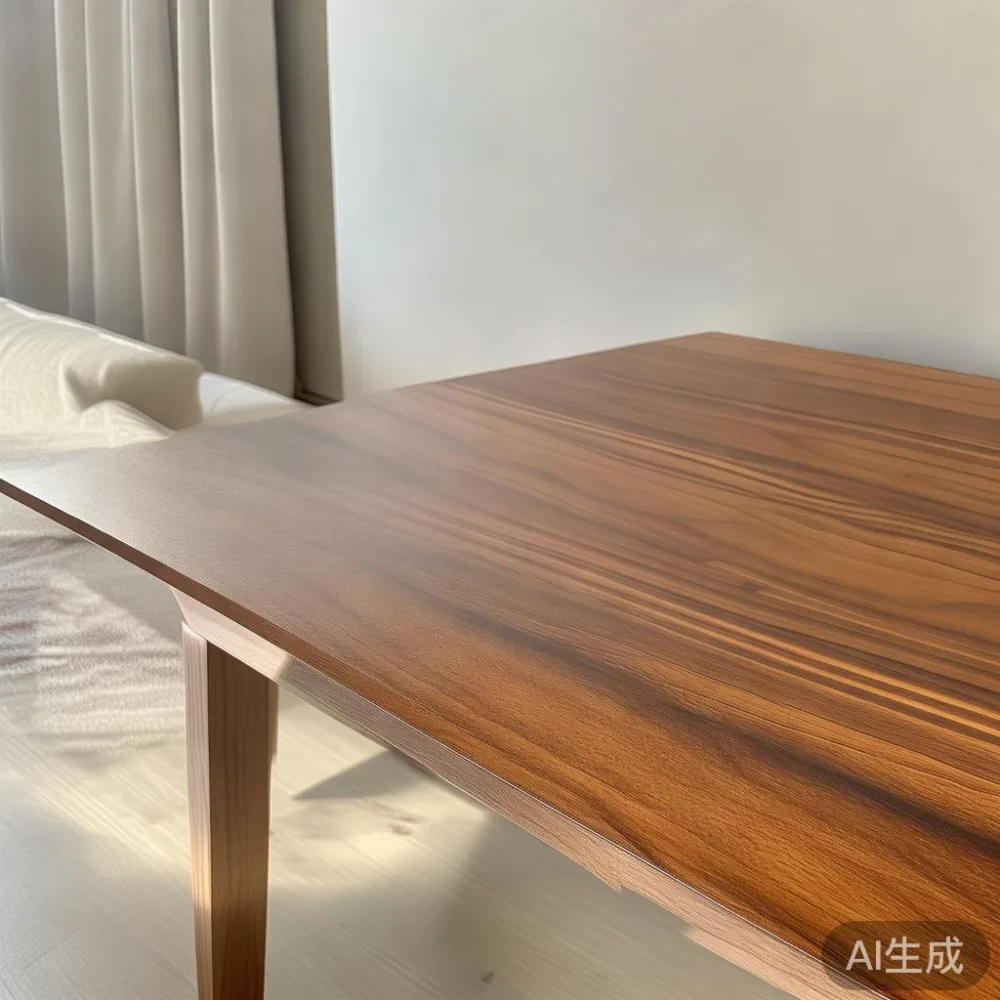
That contrast is what this article is really about. Not which surface looks prettier in a showroom, but which one keeps working for five years in a Singapore HDB or condo where humidity averages 80%, where the lift opening in your block is often only about 90 cm wide, and where replacing a ruined dining table means another round of measurement, delivery, and disposal. We will compare veneer and solid wood across purchase price, hidden costs, lifespan, repairability, and resale value, with concrete figures in SGD. We will also touch on how the same logic applies to a solid wood sofa, a solid wood bed frame, a solid wood wardrobe, and a solid wood nightstand, because the real question is not about one piece of furniture. It is about how a piece ages inside a Singapore home.
What does an extendable table actually cost in Singapore?
An entry-level veneer extendable table in Singapore retails from about S$600 to S$1,100 for a six-seater. Mid-range options from European-inspired brands such as those popular in the French light luxury style sit at S$1,400 to S$2,200. A solid wood extendable table, by contrast, starts at roughly S$1,800 for a six-seater in rubberwood or ash, and climbs to S$3,500 to S$6,800 for oak or walnut. On the upper end, Italian light luxury queen bed furniture and dining sets from studios such as Porada or Riva1920 can pass S$12,000.
Those numbers are not a marketing exercise. They are what shoppers actually pay at stores along Tai Seng, in the Joo Chiat cluster, and at the IMM furniture mall on Jurong East's weekends. They also matter because a dining table is the single most-used piece of furniture in most HDB households. A family of four eating at home three nights a week puts roughly 600 sit-downs on that surface per year. Over five years, that is 3,000 meals, plus homework sessions, plus the occasional home-based business packing run. Cheap upfront rarely means cheap over time.
How does humidity in Singapore HDB flats shorten the life of veneer?
Singapore's outdoor humidity runs between 70% and 90% for most of the year. Inside an HDB flat, especially on a higher floor that catches cross-ventilation, daily swings of 15% to 20% are common. Veneer is a 0.5 mm to 2 mm slice of real wood glued onto an MDF or particleboard core. That core absorbs and releases moisture like a sponge. Each cycle swells the core, then shrinks it, while the veneer skin on top moves very little. The result, typically between year two and year four, is one of three failure modes:
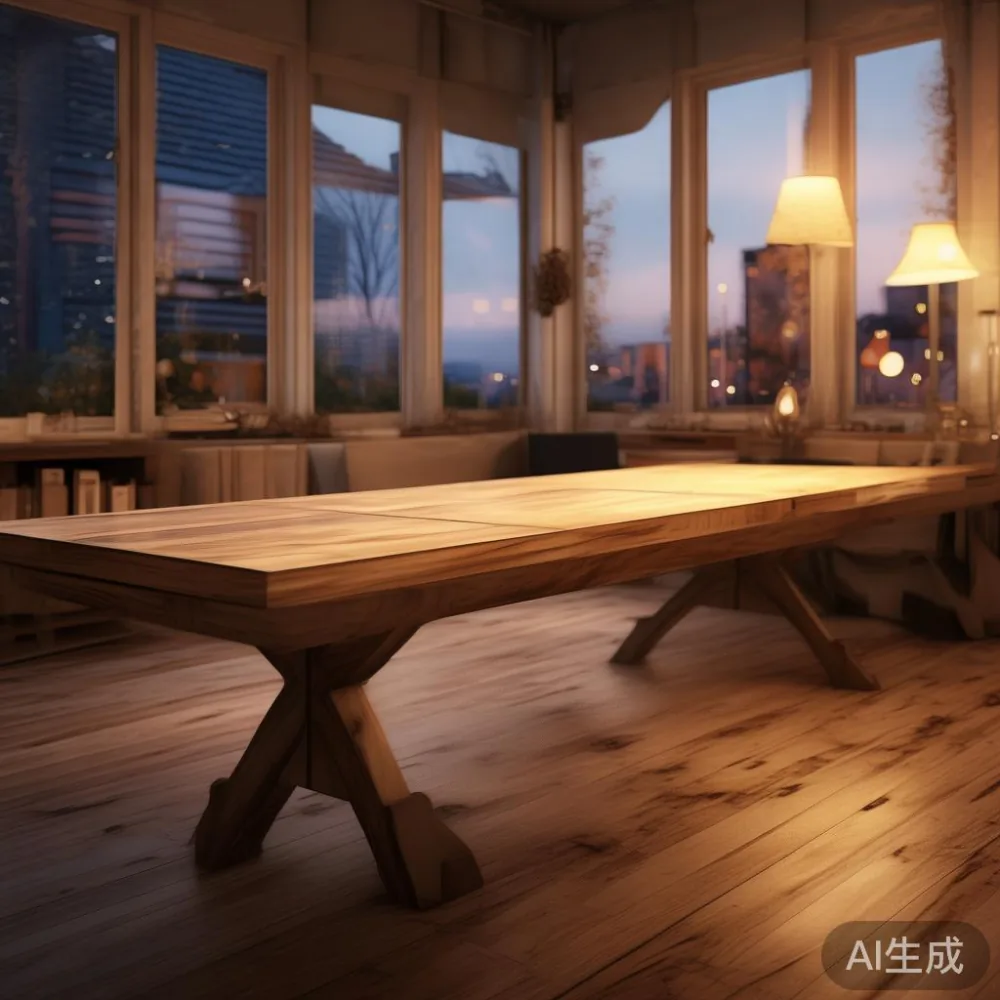
Edge banding lift: The thin PVC or ABS strip along the table edge peels away, exposing the raw MDF underneath. I see this on at least one in three second-hand veneer tables listed on Carousell, usually priced at S$80 to S$150.
Surface bubbling or checking: Small raised bubbles appear along the grain direction, usually within 30 cm of the table's edge. Once a bubble pops, the spot cannot be repaired invisibly.
Sagging under the leaf: The extension leaf, often held in place by a metal track, starts to dip because the inner core has softened. On a six-seater with a centre leaf, this usually shows up in year three.
None of these failures are covered by warranty. Most veneer extendable tables sold in Singapore come with a 1-year warranty on the extension mechanism and nothing on the surface. Even a compact sectional sofa for dining room use in an open-plan HDB will face the same humidity, so the same logic applies across the room.
Is Italian light luxury queen bed furniture worth it?
Italian light luxury queen bed furniture is worth it only when you treat it as a 15-to-25-year purchase rather than a furniture-set purchase, because the premium you pay in Singapore, roughly 2x to 3x the price of a comparable solid wood set from a Foshan workshop like MIDHILL, is buying you two things: joinery that can be re-tightened and surfaces that can be re-finished. If you intend to keep the bed frame for under eight years, the price gap is hard to justify. If you intend to keep it for two decades and pass it down, the gap almost disappears, because a S$4,200 Italian queen bed frame depreciates to roughly S$800 to S$1,200 on the resale market, while a S$1,800 solid wood bed frame from a quality maker holds closer to S$900 to S$1,100.
The real calculation is not purchase price minus resale price. It is purchase price divided by years of useful life. A solid wood extendable table that lasts 20 years at S$2,400 costs S$120 per year. A veneer table that lasts 6 years at S$900 costs S$150 per year. A marble table, by the way, runs the opposite math: it lasts 30 years but starts at S$5,500 and weighs 180 kg, which is a problem on most upper-floor HDB slabs and a real problem if your lift cargo dimension is below 1.1 m wide.
What are the hidden five-year costs nobody quotes you in the showroom?
Five hidden costs decide whether veneer or solid wood wins over five years in Singapore:
1. Delivery and re-delivery. Standard delivery inside mainland Singapore is S$60 to S$120. Disposal of an old table costs S$50 to S$90, charged by the same companies such as HipVan, FortyTwo, or direct workshops. If your extendable table fails in year three and needs replacement, you are paying delivery twice.
2. Lifting through narrow corridors. Most HDB corridor widths are about 1.2 m to 1.5 m, and lift openings are typically 0.9 m to 1.1 m wide. A 1.6 m long extendable table will not fit diagonally into many older lifts. Specialist two-man lifting is S$80 to S$160 per trip. Solid wood tables weigh 60 kg to 110 kg; veneer tables weigh 28 kg to 45 kg. The heavier piece costs more to move in, but the lighter piece costs more to replace.
3. Surface repair. Veneer chip repair by a mobile technician runs S$120 to S$280 per visit, and the colour match is rarely perfect. Solid wood sanding and re-oiling is S$180 to S$350 per visit, but can be done three to five times across the life of the piece.
4. GST. At 9% GST, the price gap on a S$2,400 solid wood table is S$216. On a S$900 veneer table it is S$81. Both are real money, but the GST alone does not change the five-year verdict.
5. Lost time. Half a Saturday to measure, half a Saturday to receive, half a Saturday to assemble, and another half Saturday to dispose of the old piece. Twelve to sixteen hours of your weekend over five years, at even a modest S$25 per hour opportunity cost, adds another S$300 to S$400 in real terms.
How does each surface age across a five-year timeline?
Year 1: Both look brand new. A quality veneer table, especially one in the American light luxury or post-modern light luxury aesthetic with a matte oak or walnut print, photographs beautifully. A solid wood table in raw oak looks pale and slightly unfinished until the first coat of oil cures.
Year 2: Veneer shows the first wear rings under coasters. Solid wood darkens slightly and develops a soft sheen. For owners who dislike patina, this is the moment to apply a maintenance coat of hard wax oil, which costs about S$35 to S$55 in materials and one Sunday afternoon.
Year 3: Veneer edge banding lifts on roughly 25% of tables sold in Singapore, based on the volume of Carousell repair listings I have seen in Bedok and Tampines. Solid wood may show a small surface crack under a window that catches afternoon sun, but it can be sanded out in 20 minutes.
Year 4: Veneer bubbling appears on tables stored near air-conditioner compressors or balcony doors. Solid wood is past its break-in period and behaves predictably.
Year 5: A budget veneer extendable table is at the end of its useful life and worth S$50 to S$120 on the second-hand market. A solid wood extendable table from a maker offering lifetime refinishing, such as the service attached to MIDHILL purchases exported to Singapore, is worth S$600 to S$1,100 because a buyer can see the joint work is still sound.
Where does a solid wood sofa, bed frame, dining table, wardrobe, and nightstand fit into this comparison?
The same five-year logic extends to almost every piece in a Singapore bedroom-and-dining set. A solid wood sofa frame holds its joinery while the upholstery is replaced every 7 to 10 years for roughly S$400 to S$900. A solid wood bed frame outlasts three mattresses. A solid wood wardrobe does not sag on the hanging rail the way a hollow-core wardrobe does after the door panels warp. A solid wood nightstand survives two cross-island moves without rattling drawers.
If you are furnishing a full HDB flat, the order of priority matters. Spend the largest share of your budget on the pieces that get daily use and that anchor the room. For most Singapore households that means the extendable dining table first, the bed frame second, the wardrobe third, then the nightstand, sofa, and any marble table last. A 1.4 m to 1.8 m extendable dining table in solid oak or ash, paired with a queen-size solid wood bed frame and a 1.8 m three-door wardrobe, is the realistic core of a 20-year furniture plan for a 4-room or 5-room flat.
How do shipping, warranty, and after-sales service change the math?
Singapore shoppers often underestimate the after-sales side. A 10-year structural warranty from a Foshan-based maker such as MIDHILL covers the joinery, the extension mechanism, and the wood itself against cracking and warping. That warranty, backed by a workshop that has exported since 2008, is more meaningful than a 1-year warranty on a local veneer reseller. Add lifetime refinishing and the long-run cost of ownership drops again, because one scheduled refinishing in year five or six extends the table's life by another decade for about S$200 to S$350 in service fees plus shipping.
Free shipping over a defined threshold also matters. For a single extendable table, the threshold is rarely met, so delivery becomes a real line item. For a full dining-plus-bedroom set, the threshold is reached, and the S$60 to S$120 shipping cost disappears. A 14-day return window is a small comfort, but it is enough to catch transit damage, which is the most common reason a table fails in year one rather than year five.
So which one should you buy for a Singapore home?
If your household plans to move within five years, or you are staging a resale flat, a well-chosen veneer table in a post-modern light luxury style is defensible, provided you budget S$150 to S$250 for a year-three edge repair and treat the piece as semi-disposable. If your household plans to stay ten years or more, especially with young children, a solid wood extendable table is the lower-risk, lower-total-cost option. Expect to pay S$1,800 to S$3,200 for a six-seater in oak or walnut, S$60 to S$120 for delivery inside Singapore, and another S$200 to S$350 for a maintenance refinishing in year six.
The single most useful habit, regardless of which surface you choose, is to measure the lift opening and the corridor turn at your block before you order. A table that physically cannot reach your dining room is the most expensive table in Singapore, regardless of the price on the invoice.