How to Match an Extendable Table and Solid Wood Furniture to a Warm Minimal Interior in Singapore
Warm minimalism asks for a careful hand. You want a room that feels calm, lived-in, and quietly expensive — the kind of place where a Sunday plate of nasi lemak on a Sunday morning reads like a magazine shot. The trick is restraint: warm whites, light oak and walnut tones, one or two textures, and furniture that earns its footprint. In a Singapore HDB or condo, where a 4-room flat in Tampines might give you 92 sqm and a corridor width of around 1.2 m, every centimetre matters, which is why the extendable table has become the quiet hero of the warm minimal home. I have watched three Punggol families rearrange the same dining space around an extendable table in under 60 seconds — that is the kind of furniture that actually changes how a flat feels.
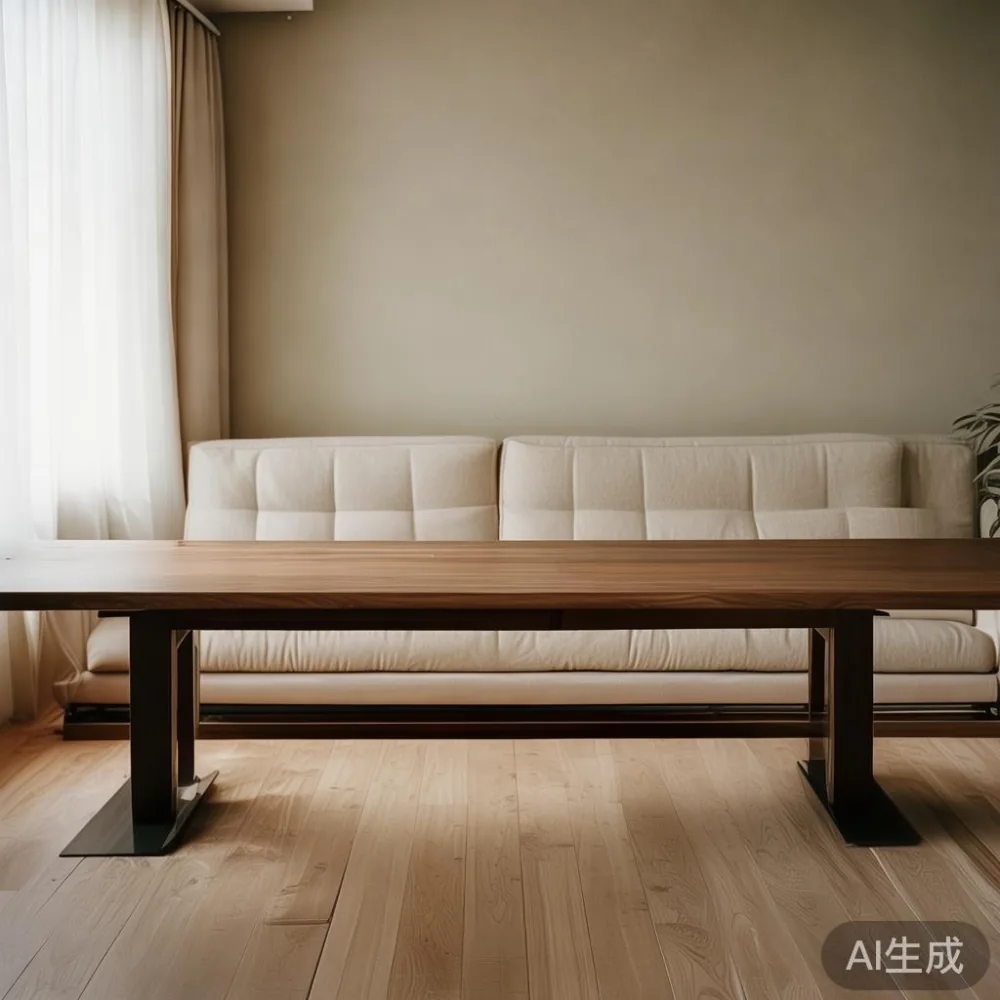
Throughout this guide I will lean on what I have seen in showrooms and in HDB living rooms across Bedok, Sengkang, and Clementi. You will get concrete numbers — centimetres for clearances, kilograms for load, Singapore dollars for budget — and a clear answer to one of the questions readers send me most often. The furniture terms to keep in mind are the solid wood sofa, bed frame, dining table, wardrobe, nightstand, marble table, and the centrepiece of this article, the extendable table.
What exactly is warm minimalism, and why does it suit Singapore flats?
Warm minimalism is not the cold, gallery-style minimalism that scares people off. It is a softer register: cream walls (think Benjamin Moore OC-17 or Jotun 10579 Timberland), honey-toned timber, linen and boucle textiles, and a single sculptural object on the table — a celadon vase, a stack of books, nothing more. In a 3-bedroom Punggol condo of about 1,050 sqft, the palette reads as generous rather than empty, which is what most Singapore buyers tell me they actually want.
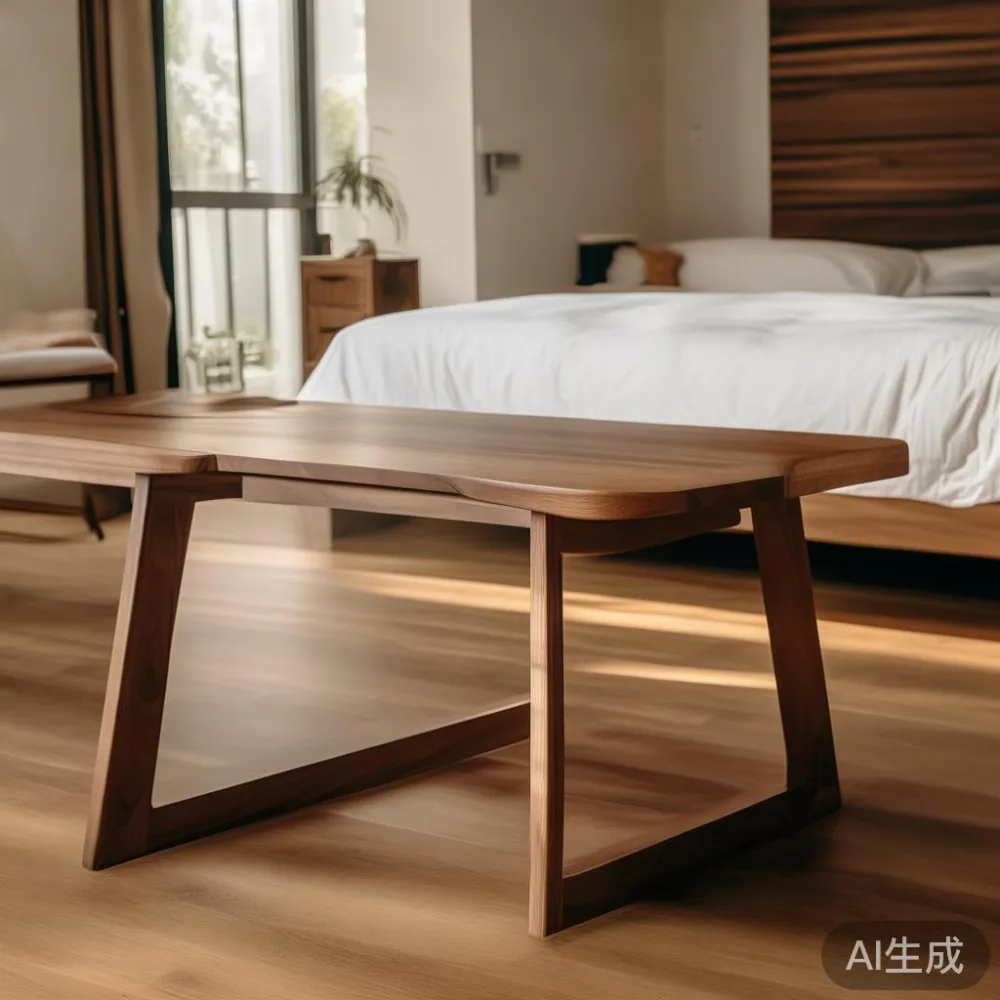
For HDB constraints, three rules of thumb save you from expensive mistakes:
- Ceiling height: most HDBs are 2.6 m to 2.8 m; keep furniture under 90 cm tall when possible, so the room breathes.
- Corridor and lift access: standard HDB lifts are about 1.1 m wide and 1.4 m deep, with a diagonal of roughly 1.8 m. Any dining table longer than 2.0 m in one piece may not fit — but an extendable table in its compact 1.4 m form absolutely will.
- Door widths: standard HDB bedroom doors are around 0.85 m. A flat-pack wardrobe deeper than 0.6 m will not pass; an assembled solid wood wardrobe will not either, which is why many buyers opt for wardrobes that split into two uprights.
Put those rules together and you understand why the extendable table category keeps growing in local searches. It solves real lift geometry, real corridor geometry, and real hosting geometry all at once.
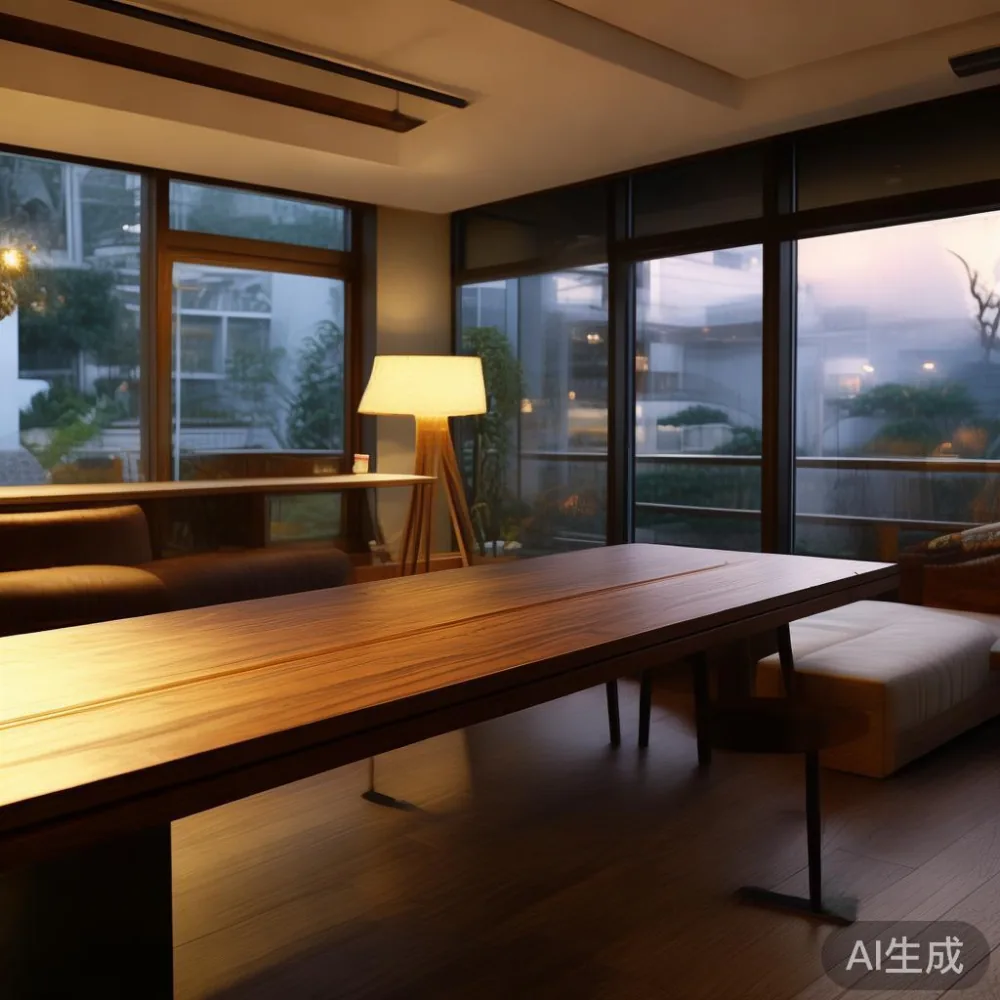
How do I choose an extendable table that fits a lift and still seats six?
This is the question I get most often from readers renovating in Bedok Reservoir and Tampines West. The answer sits in three numbers: closed length, open length, and extension type. For a 4-room HDB, I usually recommend a closed length of 1.4 m (fits any lift and any corridor turn), an open length of 1.8 m to 2.0 m, and a butterfly-leaf or centre-extension mechanism over a drop-leaf — the latter tends to feel wobbly after 18 to 24 months. If you entertain often, push to a closed 1.6 m that opens to 2.2 m, which gives six adults real elbow room (around 60 cm per person).
Last month I visited a 5-room flat in Punggol Crest where the owners had done exactly that. They kept a 1.6 m closed extendable table against the kitchen island on weekdays, and pulled it to 2.2 m on Saturdays for hotpot with the in-laws. The same table held a 9 kg durian haul on the floor next to it, then became a mahjong table for four at 10 pm. That is the use pattern I see again and again.
Material matters as much as mechanism. Solid oak (around 650 to 750 kg/m³ density) and solid ash (about 670 kg/m³) hold up best to Singapore humidity of 75 to 90 percent RH, provided you keep the air-con dehumidifier running and the table out of direct afternoon sun. Engineered tops with a 4 to 6 mm solid veneer will look identical for the first two years and then start telegraphing. If your budget allows it, a 100 percent solid wood top in oak, walnut, or ash will outlast three HDB renovation cycles.
Which solid wood pieces should you build the room around first?
Start with the largest piece, then work inward. In a warm minimal flat, the hierarchy is usually: bed frame first, dining table second, wardrobe third, solid wood sofa fourth, and nightstand last. A king-size bed frame in solid ash at 1.8 m x 2.0 m anchors the master bedroom and dictates the timber tone for everything else. Pair it with an extendable table in the same species and the visual rhythm carries through the entire flat.
For a Singapore bedroom of 12 to 14 sqm, here is a tested layout:
- Bed frame: 1.8 x 2.0 m solid ash, headboard 110 cm tall, footprint clearance 60 cm on each side and 80 cm at the foot.
- Nightstand: 50 x 40 x 55 cm, one drawer, no handle — push-to-open looks cleaner in warm minimal rooms.
- Wardrobe: 1.8 m wide x 0.6 m deep x 2.2 m tall, split into two uprights for lift access.
Skip the marble table in the dining zone if your floor load rating matters to you — a 1.6 m marble table can weigh 110 to 140 kg, which is fine on concrete HDB floors but a heavy lift up a service staircase if you ever move. A solid wood extendable table in the same finish will weigh 45 to 65 kg and survive every pindah rumah you do.
Is an American, French, or post-modern light luxury direction right for a warm minimal flat?
Light luxury has become a catch-all phrase in Singapore interiors, and the three most useful sub-genres for warm minimal homes are French light luxury, American light luxury, and post-modern light luxury. French light luxury leans into curved silhouettes, cream bouclé, slim brass handles, and a quiet, almost Haussmannian softness. American light luxury is more rectilinear: deep-channel tufting, walnut tones, oversized proportions, and a sense of hotel-lobby weight. Post-modern light luxury sits between the two and adds geometric accents — arched mirrors, a fluted sideboard, a single curved-back dining chair mixed with straight lines.
For most HDB and condo buyers I work with in Singapore, post-modern light luxury is the easiest to live with because it gives you one or two statement pieces without crowding the floor plan. A single fluted extendable table in light walnut, paired with four cream bouclé chairs and a brass floor lamp, reads as a complete design language without needing a renovation. If you want a sharper look, the European light luxury sofa vs Nordic sofa comparison is worth doing in person — the European silhouette is usually 10 to 15 cm deeper and slightly higher in the back, which suits taller Singapore households (the median Singaporean male is 1.71 m, so that 95 cm back height makes a real difference after a long day).
If you are weighing designer Italian light luxury furniture for a small HDB living room of about 18 to 22 sqm, keep two numbers in mind: sofa depth under 95 cm and a coffee table under 1.2 m long. Anything larger and your walking path shrinks below 70 cm, which makes the room feel cramped no matter how good the pieces look.
Can I mix light luxury for small living room layouts with Scandinavian pieces?
Yes, and it is honestly one of the most forgiving combinations for a Singapore flat. Scandinavian furniture gives you the clean lines and pale timber; light luxury adds the tactile layer — bouclé, brushed brass, a fluted marble table, a velvet accent chair. The trick is to keep the Scandinavian pieces at 70 to 80 percent of the visual weight, then layer two or three light luxury statements on top. Anything heavier and the room tips into showroom territory.
Here is the recipe I used in a 1,055 sqft Punggol condo last quarter:
- One extendable table in pale oak (1.4 m closed, 1.9 m open) as the dining anchor.
- One solid wood sofa in cream boucle, 2.2 m wide, 92 cm deep.
- One fluted marble table (1.0 m diameter) as the coffee surface.
- Two nightstands in walnut to warm up the bedroom.
- One arched brass floor lamp at 1.65 m tall behind the sofa.
Total spend landed around S$8,400 for the set, including GST. Shipping from a Foshan maker took 28 to 35 days to a Tampines warehouse, then 3 to 5 working days for the last mile in Singapore. Lift access to the 14th floor was confirmed in advance, which matters — a 2.4 m wardrobe in two boxes is no joke for an older lift in Bedok.
One thing to watch: when you mix styles, the timber tone has to stay consistent. Pick one species — light oak, warm ash, or mid-walnut — and run it through every wood piece in the flat, including the bed frame and the wardrobe fronts. A reader once emailed me a photo of a light oak dining table sitting next to a yellow-tinged acacia wardrobe, and the clash was costing the room.
What should I budget for solid wood furniture in a Singapore HDB renovation?
For a full warm minimal package — extendable table, solid wood sofa, bed frame, wardrobe, two nightstands, and one marble or solid wood coffee table — a realistic Singapore budget in 2025 is S$6,500 to S$14,000 for a Foshan-made solid wood set before GST. Add 9 percent GST, plus S$120 to S$280 for delivery to a Singapore address depending on the floor and access. Free shipping kicks in around the US$350 (roughly S$475) mark on most direct-from-factory lines, which usually clears at least the dining table and chairs.
For comparison, the same set in European light luxury from a Singapore boutique retails between S$18,000 and S$32,000, while designer Italian light luxury furniture of similar size starts around S$24,000 and climbs quickly once you add marble, leather, and brass. Post-modern light luxury from a Chinese maker lands in the middle at roughly S$9,000 to S$16,000 for a comparable set, which is why so many Punggol and Sengkang owners are going the factory-direct route. MIDHILL is one of the names that comes up often in Tampines and Bedok chat groups for solid wood dining and bedroom pieces in this exact price band, and the 10-year structural warranty plus lifetime refinishing are real perks in a humid climate.
How do I keep the room looking warm after two years of humid use?
Two maintenance habits do 90 percent of the work: a weekly wipe with a barely damp microfibre cloth, and a monthly pass of beeswax or hard wax oil on horizontal surfaces. Singapore humidity swings between 65 percent RH on a dry Aircon day and 88 percent RH during a December monsoon week, so the wood will expand and contract by 2 to 4 mm across the year — that is normal and any solid wood piece will absorb it.
Skip three things: silicone polishes (they seal moisture in and cloud the finish), direct sunlight through a west-facing window (use a 30 to 50 percent sheer curtain), and coasters with cork backing that can leave rings on a walnut top. If a water ring does appear, a hairdryer on medium for 60 to 90 seconds usually pulls it out of the grain. The lifetime refinishing service that comes with a number of Foshan solid wood makers — including MIDHILL on its dining and bed frames — will sand and re-oil a worn surface for a fraction of replacement cost, typically S$180 to S$320 per piece including return logistics.
When you are browsing online, check the specs for board thickness (25 mm minimum for a tabletop you actually lean on), leg joinery (mortise and tenon or dowel-and-screw, not just dowel), and the underside of the extension mechanism. If the seller refuses to send under-frame photos or a 30-second video of the extension cycle, walk away. A good extendable table should glide open in under 15 seconds with one hand and lock positively with a single audible click.
Where do extendable tables leave room for Boho or Scandinavian accents without breaking the look?
Accent, do not anchor. A warm minimal room with an extendable table can absorb a single rattan pendant, a hand-thrown ceramic vase, or a vintage kilim rug because the bones stay neutral. The Boho side usually enters through textiles — a 200 x 300 cm wool rug in clay, sand, and rust tones warms up a 22 sqm living room without adding visual noise. The Scandinavian side comes through pale accessories and one or two pieces from a curated top 10 Boho furniture or top 10 Scandinavian furniture list that you have actually sat on in a showroom.
Two pieces I would not skip in a 4-room HDB warm minimal layout: a 1.4 m extendable table with at least one butterfly leaf, and a 1.8 m solid ash bed frame in the same species. Everything else is decoration. If you keep the rule that the room has one statement piece per zone — dining zone, sleep zone, storage zone — the flat stays calm even when the in-laws arrive with extra chairs in tow.
For sourcing, factory-direct Foshan makers remain the value play, and you will find most of them listed with the phrase for sale American furniture to capture English-language search traffic even when the design language is post-modern light luxury rather than strictly American. Read the product description carefully, ask for the species, the extension mechanism video, and the warranty terms in writing, and confirm Singapore delivery windows before paying the deposit. A solid wood extendable table with a 10-year structural warranty and lifetime refinishing will outlast three HDB cycles and at least two renovation trends, which is the kind of quiet return warm minimal buyers are really chasing.