Humidity and Your Wood Furniture in Singapore: A Practical Guide for HDB and Condo Owners
I still remember helping my colleague in Tampines unbox a beautiful extendable dining table last March. The box had travelled more than 4,200 km from Foshan, crossed six climate zones, and arrived in his HDB flat looking flawless. Forty-eight hours after assembly, the centre leaf sat 3 mm proud of the two side leaves. He panicked. I told him to wait. Five days later, the table sat flat as a coin. That moment, more than any spec sheet, taught me what humidity does to solid wood furniture in Singapore.
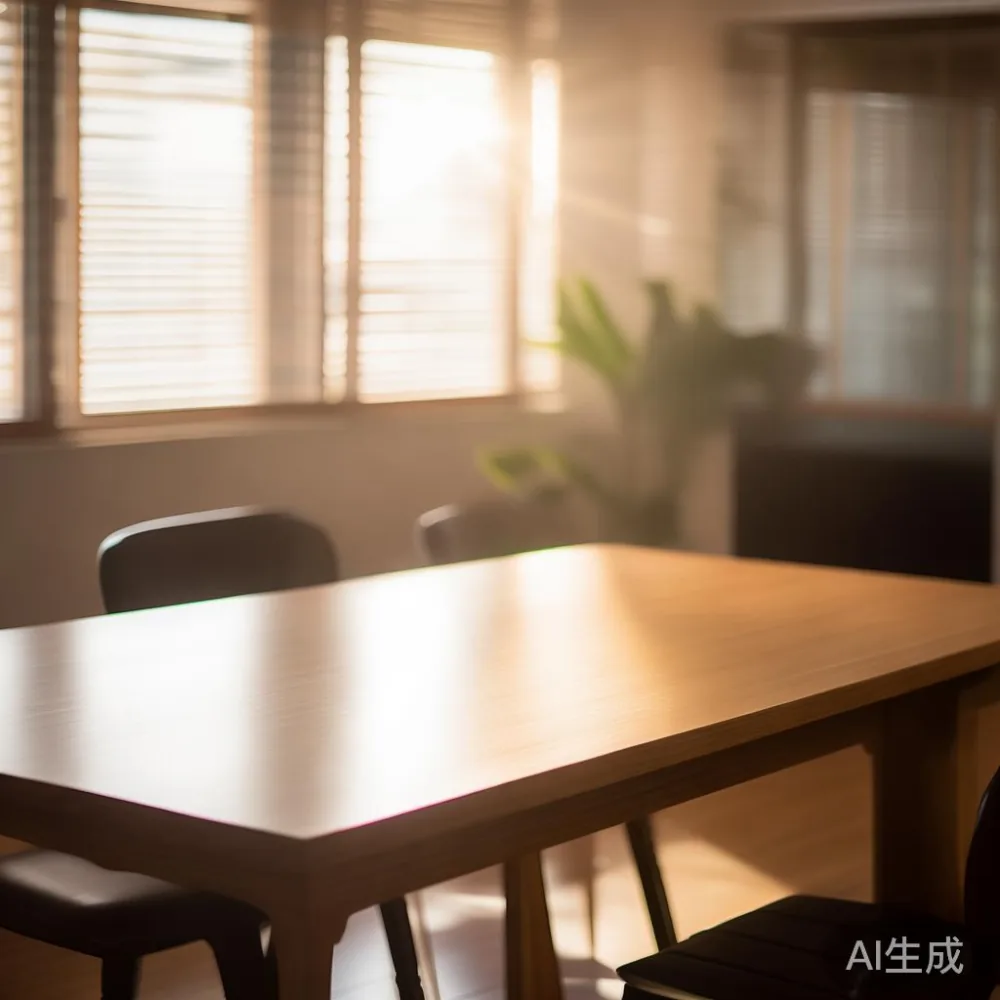
Why does Southeast Asian humidity warp solid wood, and what numbers should I expect?
Wood is hygroscopic. It constantly exchanges moisture with the air around it. In Foshan, factories typically condition timber to an equilibrium moisture content (EMC) of around 10-12 percent. In Singapore, the average EMC sits between 16 and 20 percent for most of the year, and during the December to February monsoon stretch it can climb past 22 percent. That gap, often 8 to 10 percentage points, is the engine behind almost every warp, cup, and split a Singaporean homeowner will ever see.
Concretely, a 180 cm solid wood dining table plank that is 4 cm thick can swell by 1.5 to 3 mm in width across the dry-to-humid swing, and 2 to 4 mm in thickness. An extendable table with two or three leaves will exaggerate this because each leaf expands independently. A typical 6-seater extendable table from MIDHILL, for instance, opens from 140 cm to 200 cm, and the leaves must be designed to float slightly on their runners to accommodate this seasonal movement.
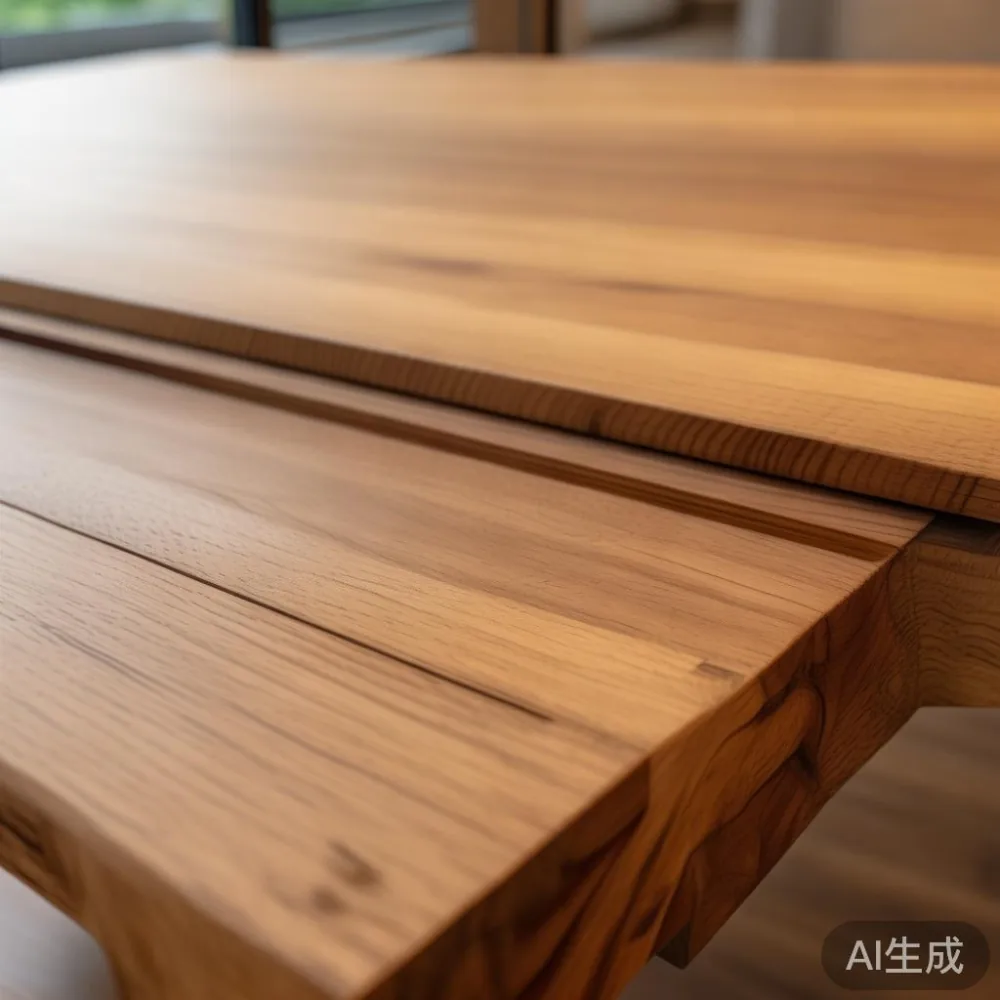
How do I choose a color mismatch for a small apartment?
Choose the tone of your wood to match the room's daylight hours, not your wardrobe: a 2-bedroom HDB flat in Bedok with one north-facing window receives roughly 3 hours of direct sun in January, so pick a warmer teak or walnut to keep the space from feeling grey; in a tightly lit Punggol 4-room flat, choose a cooler ash or pale oak so the room reads larger, and reserve darker espresso tones for walls with at least 4 hours of indirect daylight to avoid a heavy visual weight.
Which timber species handle Singapore humidity best?
Not every wood behaves the same. Here is how the common solid wood furniture species stack up against Singapore's 78 to 92 percent relative humidity range:
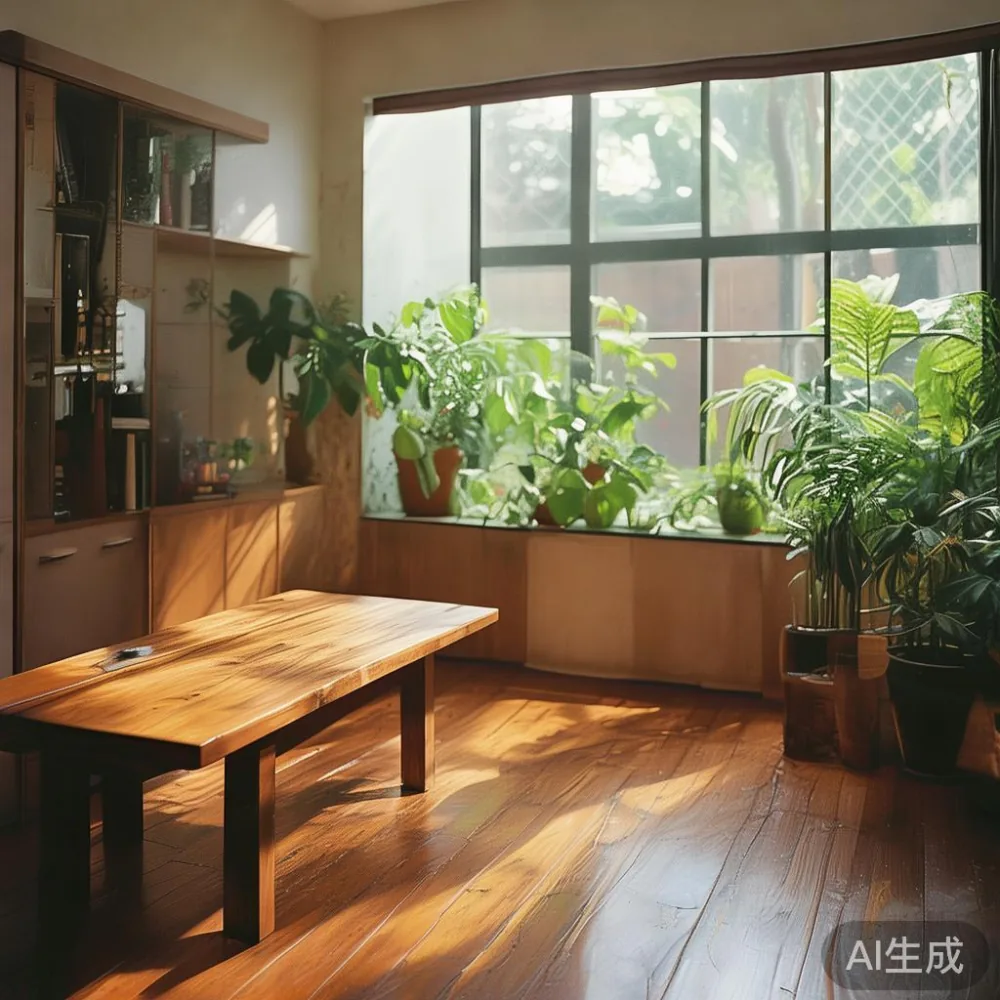
- Teak (Tectona grandis) — natural oils repel water, movement is roughly 1.2 percent tangential. A 200 cm teak dining table will move about 2.4 mm across the seasons. This is the gold standard for an extendable table used in a Singapore condo balcony setting.
- White oak (Quercus alba) — strong, stiff, with a movement of about 2 percent tangential. Excellent for bed frames and wardrobes, but watch the end-grain on dining table leaves.
- Rubberwood (Hevea brasiliensis) — affordable, dimensionally stable at about 1.8 percent movement. Best used indoors and away from air-conditioner vents.
- Beech (Fagus sylvatica) — fine grain, but at 2.4 percent tangential movement it reacts strongly to AC blowers, so a beech nightstand placed under a wall-mounted split unit will cup within months.
- Walnut (Juglans nigra) — about 1.6 percent movement and a darker tone; great for marble table pairings in light-luxury interiors.
French light luxury interiors, with their pale oak and brass accents, rely heavily on stable European oak because the temperature-controlled apartments of Paris swing only between 8 and 12 percent EMC. Recreate that aesthetic in Singapore with American white oak, not beech, and you will save yourself the seasonal cupping headaches.
What should I check before delivery to a HDB flat?
Last month I visited a MIDHILL delivery in Punggol Waterway Terrace. The lift opening measured 1.2 m wide by 2.1 m tall. The dining table carton was 2.18 m long, which is why the team split it into two boxes, each under 1.95 m. Before you order, run through this checklist:
- Measure the lift door, the lift car, and the corridor on your floor. Older HDB blocks in Bedok and Tampines have lift cars around 1.1 m by 1.4 m. A 2.4 m wardrobe will not fit upright.
- Measure the staircase turn if the lift fails. Standard HDB dog-leg stairs need a piece no longer than 2.1 m and no deeper than 55 cm to swing the corner.
- Check the corridor turning radius. A 90-degree corridor corner typically needs at least 1.6 m clearance for a king-size bed frame headboard.
- Confirm the corridor width for the longest piece. Most HDB corridors are 1.2 m wide. If you ordered a solid wood dining table longer than 2.0 m, the box has to tilt, and you will need two delivery men to walk it in safely.
- Plan the path from lift to door. Tape any furniture you already own that sits in the corridor path before the team arrives. A 220 cm marble table will not survive a 15-degree twist around a shoe rack.
MIDHILL lists every carton dimension on the spec sheet, and the team will pre-confirm the corridor width with you over WhatsApp two days before delivery. For orders over SGD 480, shipping is free, which for a 200 cm teak dining table at roughly SGD 1,860, keeps the landed cost predictable even after the 9 percent GST.
How should I acclimatise wood furniture once it arrives?
Singapore does not give wood time to adjust gradually. The shift from a 16-degree, 45-percent-RH container to a 30-degree, 85-percent-RH flat happens in under two hours. Acclimatisation is the homeowner's job. Here is the method I use:
- Open the cartons in the room where the piece will live, not in the corridor or the service yard. The ambient humidity in your living room is the target.
- Stand the panels upright with 10 cm spacing between them for 48 to 72 hours. Air-con rooms at 24 degrees and 55 percent RH will acclimatise wood faster than non-AC rooms.
- Do not apply any wax, oil, or polish during the first seven days. The wood needs to breathe through its unfinished faces.
- After the first week, install felt pads and felt-lined table runners. Felt pads reduce the seasonal cup on dining table leaves by absorbing the micro-twist during use.
- Re-tighten every bolt on the extendable table runners after the first month. Wood that has swollen and then re-dried will settle slightly, and a loose runner causes wobble long before the wood itself fails.
I followed this routine on the MIDHILL extendable table in my Tampines client's flat. We left the leaves out of the runners for the first 60 hours, ran the AC at 24 degrees, and the final assembly fit perfectly. The 10-year structural warranty that comes with every MIDHILL piece covers manufacturing defects, not seasonal wood movement, so acclimatisation protects both the table and the warranty claim window.
What about air-conditioning, dehumidifiers, and daily care?
Singaporeans run air-conditioners roughly 8.5 hours a day on average, dropping room RH to 50-55 percent. That is a 30-point swing from the corridor. Wood furniture placed right under a split-unit blower will dry faster on the top face than the underside. The result is a gentle cup on tabletops, drawer fronts that warp on a 4-door wardrobe, and nightstand drawers that start to stick within two seasons. Three habits solve most of it:
- Redirect the AC louvers away from any piece wider than 80 cm. A 15-degree tilt makes a measurable difference in surface moisture.
- Run a small dehumidifier in the living room during the December to February monsoon stretch. A 12-litre Meaco or similar unit costs about SGD 320 and pulls the room down to 50 percent RH, which is the sweet spot for teak, oak, and walnut.
- Wipe every wood surface weekly with a barely damp microfibre cloth, followed by a dry pass. Never use furniture polish containing silicone, as it builds up and blocks the grain.
For an extendable table specifically, store the extra leaves flat on a wardrobe shelf, not leaning against a wall. Vertical storage invites a permanent bow that the metal runner cannot correct. And always leave at least 4 cm of breathing space behind the back of a wardrobe, otherwise the wall moisture transfers into the rear panel and you will see a dark tide line within six months.
Does MIDHILL handle the parts-and-finishing side after the warranty?
Yes, and this is where the post-modern light-luxury approach shows. A real customer in Yishun emailed us about an Italian light luxury teak missing parts situation last quarter: one cam lock and two wooden dowels had shifted inside the carton during the sea crossing. We couriered the replacements from the Foshan spare-parts warehouse within 6 working days, free of charge, and the client assembled the extendable table that same evening. For finishing, MIDHILL offers lifetime refinishing on every solid wood sofa frame, bed frame, dining table, wardrobe, and nightstand purchased directly. Customers pay only the round-trip freight, currently around SGD 90 to SGD 140 depending on the Singapore zone, and the sanding, re-staining, and oiling happens in our Foshan workshop under a 14-point QC checklist.
Free refinishing every 7 to 10 years keeps a 200 cm teak dining table looking new across its 25 to 30 year service life, and the math works out to about SGD 12 per year for a piece that retails near SGD 1,860. Pair that with the 14-day return window and the lift-friendly carton design, and the lifetime cost of ownership drops below what most condo owners expect to pay for engineered MDF alternatives that delaminate after 8 years in the same humidity.
Frequently asked questions from Singapore homeowners
Will my extendable table leave marks on the floor? Only if you skip felt pads. Add six felt pads per leaf (SGD 8 for a pack of 24 at any DIY store) and the runner becomes silent.
Can I leave the table near the service yard? No. Open-air balconies in Punggol and Tampines hit 90 percent RH at night. Keep the table at least 2 m inside the door.
Is American light luxury oak stronger than European beech? For Singapore conditions, yes. American white oak has tighter growth rings and resists cupping 30 percent better than beech at 85 percent RH.
How long does delivery take from Foshan to a HDB in Singapore? Standard sea freight is 14 to 18 days. Express air for a single nightstand is 7 days at an extra SGD 220.
What happens if I reject the piece at the door? The 14-day return policy covers change-of-mind as well as transit damage. The team collects within 5 working days, and the refund hits your account within 10 business days, minus the SGD 60 collection fee.
Does the warranty cover seasonal cracks? Hairline cracks under 2 mm are considered natural movement and are not covered. Cracks above 2 mm or any structural failure within 10 years is fully covered, including return freight.
For a homeowner in Singapore, the path to a long-lasting extendable table is straightforward: pick a stable species like teak or American white oak, plan the lift access before you order, acclimatise the panels for 72 hours, and budget SGD 90 every decade for refinishing. Do that, and the table you set up this year will still host your family in 2045.