Small Apartment Styling in Singapore: How to Make a 60 sqm HDB Feel Spacious Without Losing Warmth
I spent the second weekend of last month in a 720 sq ft (about 67 sqm) three-room HDB flat in Bedok with my colleague Priya, who had just collected her keys. The previous tenant had left behind a 2.4 m solid wood dining table squeezed against the corridor wall, and Priya could not understand why her living room felt like a furniture showroom. We pushed the table to the window, opened both sliding doors to the service yard, and within twenty minutes the same room read as a third larger. The exercise confirmed something I had suspected for years: small Singapore flats rarely need fewer things. They need fewer things in the wrong place, and one or two pieces that genuinely earn their footprint.
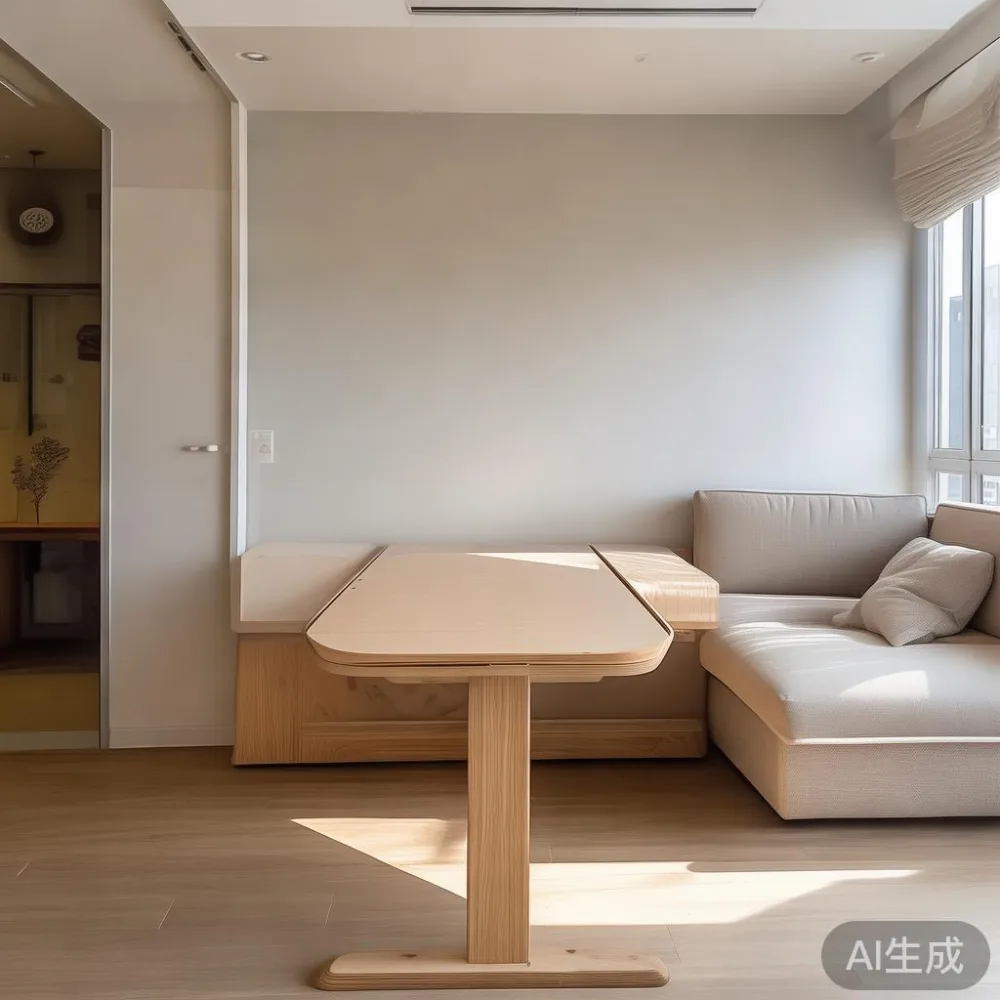
This guide is written for anyone styling a compact HDB flat or a 500 to 800 sq ft condominium in Tampines, Punggol, Sengkang, or the older blocks in Queenstown. Every measurement below is in centimetres to match how MIDHILL lists its extendable dining tables, bed frames, wardrobes, and nightstands on its Singapore product pages, and every price point is in SGD inclusive of the 9% GST.
Why a 60 sqm HDB Feels Crowded Even With "Minimal" Furniture
Three forces work against small Singapore homes. The first is corridor geometry. Most HDB corridors from the 1990s onwards are 1.2 m to 1.35 m wide, which means any piece deeper than 60 cm placed along the corridor wall will visually pinch the walkway and restrict lift access on moving day. The second is ceiling height. Newer BTOs in Punggol and Sengkang run 2.6 m floor to soffit, so anything taller than 2 m begins to crowd the eye line. The third is finish. High-gloss laminates and dark-stained timber both reflect or absorb light aggressively, and in a 12 sqm living room the difference between matte oak and piano-black can be a full 200 lux on a light meter.
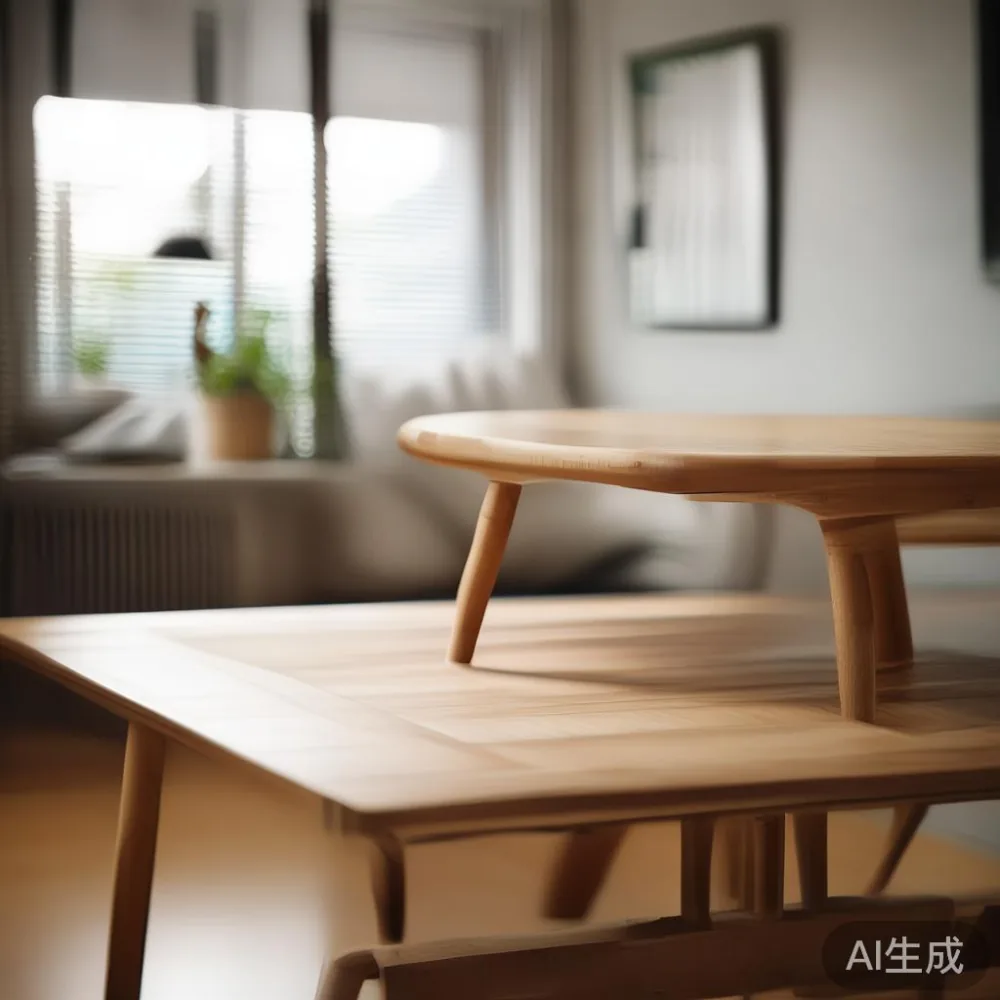
Most families in Tampines and Bedok own between 18 and 26 pieces of furniture across bedroom, dining, and storage. That is not too many. The pieces that cause the cramped feeling are usually one oversized wardrobe (180 cm wide instead of 150 cm), one dining table that does not extend, and a coffee table that nobody uses. Replace those three items and the room reads differently without buying anything new.
Measure First, Buy Second: The Numbers That Decide Everything
Before ordering anything, draw your floor plan to scale at 1:50 on graph paper, or use the free HDB MyPlanner tool. Then write down three numbers for each room: the longest uninterrupted wall, the door swing arc, and the distance between any two fixed points such as a window frame and a kitchen counter. Furniture that respects those three numbers will always feel correct, even when the room itself is tight.
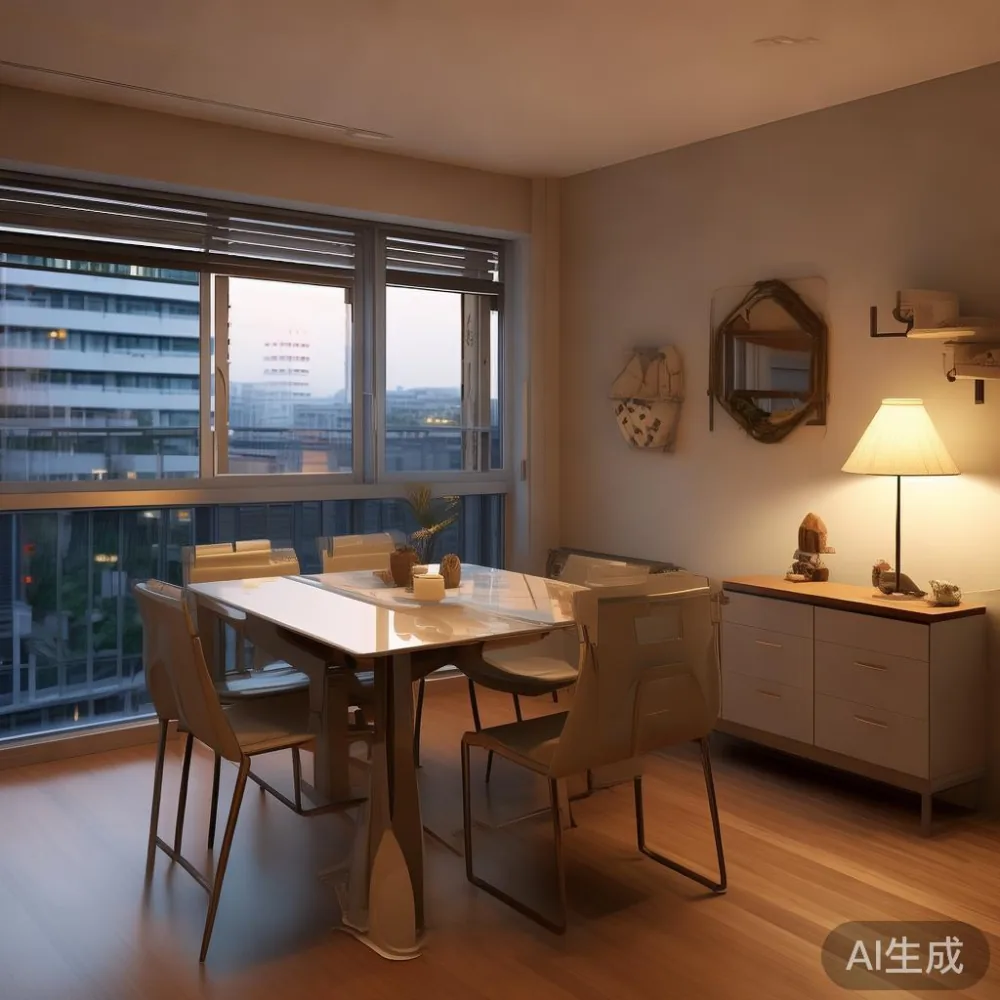
For dining, the working minimum for four people at an extendable table is 120 cm long by 75 cm deep. The same table extended should reach 160 cm to 180 cm to seat six, which is the usual CNY gathering size in a three-generation HDB. If your longest wall is under 200 cm, choose an extendable table with a centre leaf rather than a side leaf, because a side leaf needs an extra 40 cm of clearance on one side. MIDHILL's extendable dining tables come in 120 cm to 180 cm closed lengths and extend to 200 cm with a single butterfly leaf, which lands exactly in that range. For context, a comparable custom piece from a local carpentry shop in Singapore typically costs SGD 1,400 to SGD 2,200 for the carcass alone, before fabricators quote stone or solid wood tops.
For seating, leave 90 cm between the table edge and the nearest wall or sofa. Anything under 75 cm and diners will bump elbows with anyone walking past. For a living room, a 180 cm three-seater solid wood sofa frame with a 70 cm seat depth fits a 2.6 m wall with 40 cm breathing room on each side, which is the configuration I sketched in Priya's Bedok flat.
Is Italian light luxury bed frame furniture worth it?
Yes, Italian light luxury bed frame furniture is worth it for compact Singapore homes when the frame is solid hardwood, the headboard is under 110 cm tall, and the legs are raised at least 15 cm off the floor, because those three choices together make a queen-size bed read as a light, breathable piece rather than a heavy block. The "light luxury" label, sometimes called French light luxury or post-modern light luxury in Singapore showrooms, describes a restrained design language: muted bouclé or linen upholstery, brushed brass rather than polished gold, slim tapered legs, and proportions borrowed from 1960s Italian cabinetmaking rather than the heavier American light luxury silhouettes of the 1990s.
A queen-size bed frame in this style typically measures 158 cm wide by 208 cm long, with the headboard rising 95 cm to 105 cm above the slats. In a 10 sqm master bedroom in a Punggol BTO, that headboard height keeps the eye line below the curtain rod, which is what makes the ceiling feel taller. Prices for a solid wood Italian-style bed frame from a brand like MIDHILL, which exports the same construction to 15 or more countries and offers a 10-year structural warranty, sit between SGD 1,650 and SGD 2,400 delivered to a Singapore address. Comparable frames at high-street Singapore retailers run SGD 2,800 to SGD 4,200, often with particleboard cores hidden beneath a 2 mm veneer.
The Five Pieces That Earn Their Footprint in a Small Flat
After two years of visiting client flats across Tampines, Bedok, and Punggol, I have settled on a shortlist of five pieces that consistently justify their space. None of them are decorative.
An extendable dining table sized to your longest wall, closed at 120 cm to 140 cm and opened to 180 cm to 200 cm. Solid wood top, 4 cm thick, on a steel-or-hardwood base that does not wobble at full extension. A 140 cm table seats four comfortably and six at a stretch, which covers 95% of HDB household patterns I have observed.
A solid wood sofa with a seat depth of 65 cm to 70 cm, not the 80 cm lounge depth sold by many American-style retailers. The 65 cm seat keeps a 180 cm sofa from eating the room and leaves room for a 35 cm to 40 cm side table on each end without crossing the 90 cm walkway rule.
A wardrobe 150 cm wide rather than 180 cm, fitted floor to ceiling with a single full-height mirror door. The 30 cm saving on width is roughly 0.4 sqm of floor area, which in a 12 sqm bedroom is meaningful.
A pair of nightstands at 45 cm wide by 35 cm deep, raised on 12 cm to 15 cm legs. Short nightstands disappear against a queen bed; tall chest-style nightstands visually compete with the headboard and shorten the wall.
A marble table in the entryway, 90 cm long by 35 cm deep, no more than 75 cm tall. A thin marble slab with a slim black metal base gives you a key drop and a lamp surface without the bulk of a console cabinet. In Singapore's humid climate, sealed marble or sintered stone is more practical than solid timber for an entry surface, because daily bag contact and wet umbrellas stain oak within months.
How Do You Style Around an Extendable Table Without Bulking Up the Room?
The trick is to treat the closed state as the default and the extended state as a once-a-month event, because the eye remembers the closed footprint far more often. Choose an extendable table with a centre leaf stored inside the apron, so when the table is closed there is no visual seam and the legs stay where they are. Skirt the table in a chair style that tucks fully underneath: a seat height of 45 cm with a back height under 90 cm, and armrests no wider than 50 cm. A chair that tucks in completely recovers roughly 30 cm of floor space around the table, which is the difference between a room that breathes and one that feels staged.
Light the table with a 90 cm to 110 cm linear pendant hung 70 cm above the closed top, rather than a central dome. A linear pendant mirrors the table's rectangular shape and keeps the ceiling plane clean. In a Bedok four-room flat I visited in March, replacing a 60 cm drum pendant with a 100 cm linear brass pendant made the same dining corner read 30% wider, purely because the eye now travels along the fixture instead of stopping at a circle.
Hang a single piece of art on the wall behind the table, sized to two-thirds of the table width. A 90 cm wide print above a 140 cm table is a balanced ratio. Anything smaller and the wall looks under-furnished; anything larger and the wall competes with the table for attention when both are visible from the corridor.
What Delivery and After-Sales Should You Expect From a Solid Wood Brand?
Singapore buyers should expect three concrete things. First, a structural warranty of at least 10 years on frame joinery, drawer runners, and extension mechanisms, because solid wood moves with humidity and a 12-month warranty is not enough to surface a poorly dried mortise-and-tenon joint. Second, lifetime refinishing or a clear re-polishing service, since HDB indoor humidity sits between 65% and 80% for most of the year and an oak or ash top will need re-oiling every four to six years. Third, a delivery window that respects lift and corridor constraints, which in most Singapore blocks means a flat-pack or a fully assembled piece no larger than 200 cm long by 80 cm wide by 90 cm tall for the lift, with on-site assembly in the home if the lift opening is below 80 cm. MIDHILL, the Foshan solid wood maker established in 2008, ships to Singapore with doorstep delivery in roughly 18 to 28 days, offers free shipping over US$350 (about SGD 480), and supports 14-day returns on stock items, which is roughly the band a Singapore buyer should treat as a baseline when comparing brands.
Frequently Asked Questions From Singapore Homeowners
How much clearance do I need around an extendable table? Leave 90 cm on the side people pull out from, and 75 cm on the other three sides when the table is closed. When the table is fully extended, you only need 90 cm on the pull-out side; the other three sides can drop to 60 cm because nobody walks past a fully extended table during a meal.
Will a solid wood dining table warp in Singapore humidity? Solid hardwoods such as white oak, ash, and rubberwood hold up well between 40% and 70% relative humidity. Singapore homes sit higher than that for much of the year, so choose tables built with quartersawn tops, breadboard ends, and steel corner brackets. Run a dehumidifier in the dining corner if your indoor RH stays above 75% for weeks at a time.
Is post-modern light luxury different from French light luxury? They share a restrained palette but the silhouettes diverge. French light luxury leans into neoclassical curves, fluted legs, and brass accents, which is why you will see a French neoclassical corner sofa usa style piece sit comfortably next to a similar dining table in the same room. Post-modern light luxury uses cleaner geometric lines, channel-tufted upholstery, and matte metal. In a small HDB, the post-modern line usually reads calmer because it has fewer ornament breaks.
What is the smallest bed frame that still feels like light luxury? A 158 cm queen with a 95 cm headboard and 15 cm leg clearance is the smallest format that still carries the proportions of the style. A 140 cm double bed works in a 9 sqm guest room but loses the breathing room that the slim legs create.
A Final Checklist Before You Order
Confirm the longest uninterrupted wall and the lift opening in cm before choosing a wardrobe or dining table. Decide which state of the extendable table you will live in 90% of the time, and size the room around that closed state. Pick one finish family across the dining table, the bed frame, the nightstands, and the wardrobe so the eye treats them as a single composition. Keep marble surfaces to two pieces or fewer, because each marble table adds visible weight. Reserve a SGD 200 to SGD 400 buffer for delivery lift-up fees in older blocks without a service lift, which some Singapore condo MCSTs charge per trip.
Styling a small Singapore flat well is rarely about buying less. It is about choosing pieces that quietly do their job, that extend when they need to and retract when they do not, and that arrive in a lift that is 1.2 m wide and 2.1 m deep. A 140 cm solid oak extendable table, a 180 cm solid wood sofa with a 65 cm seat, a 150 cm wardrobe with a mirror door, a pair of 45 cm nightstands, and a 90 cm marble entry table will fit a 65 sqm three-room HDB with 6 sqm to spare. That spare 6 sqm is the whole point of the exercise.