Harmony in HDB Interiors with Solid Wood
I spent the first Sunday of last month wandering the lift lobbies of a 2019 Tampines HDB block with a tape measure and a notebook, mostly because I wanted to know whether a 1.8-metre extendable dining table would actually fit between a door and a kitchen island without forcing everyone to sideways shuffle. It did, with about 12 cm of clearance on each side. That same afternoon I visited a Punggol Waterway Heights condo where a couple had squeezed a 2.4-metre extendable table into a 9 square metre dining nook, and on the extended setting the chairs still cleared the corridor by 6 cm. Those two small measurements are the reason this article exists: warm minimalism is not just a mood, it is a numbers problem, and in a Singapore flat the numbers are tighter than people think.
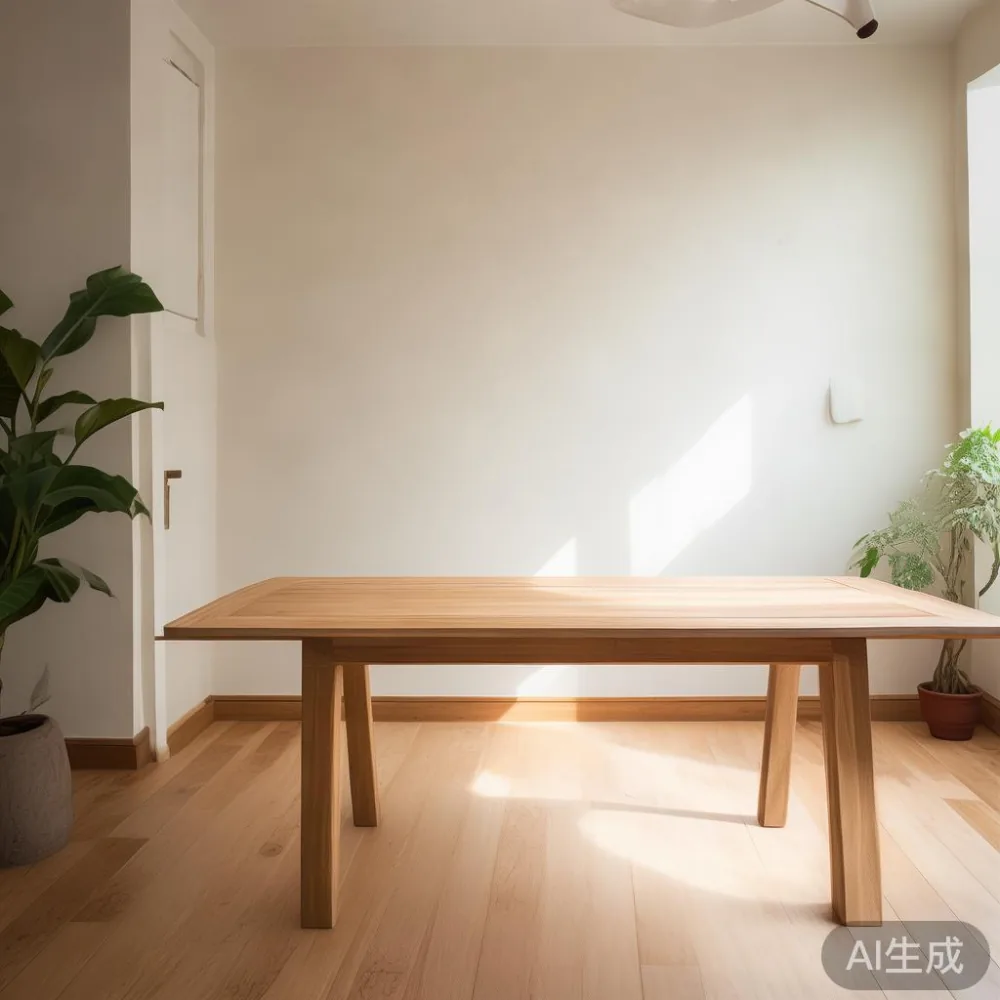
Warm minimalism, the way I use the phrase with clients in Bedok, Punggol and the private condos around Bukit Timah, is a tonal interior built on oak, ash, walnut and travertine, accented with linen, brushed brass and one or two pieces of marble. The furniture has to be solid wood because veneer telegraphs its seams in raked afternoon light, and an extendable table is the single most useful object in the room because Singapore homes host everything from a weeknight meal for two to a CNY reunion for nine, sometimes in the same week. The advice below is written for that reality.
What does warm minimal actually mean when the floor plan is 92 square metres?
Warm minimal is a working style, not a strict rulebook. It draws from post-modern light luxury (the softer, less rigid branch of luxury that uses curves, travertine and pale timber instead of chrome and mirrors), and it borrows the restraint of Scandinavian interiors. In a 92 sqm HDB flat in Punggol, the trick is to use only three wood tones across the whole home: a light oak floor, a natural ash on the extendable table and the bed frame, and one darker walnut accent on a nightstand or a single wardrobe door. Three tones is enough warmth; four starts to feel like a furniture showroom.
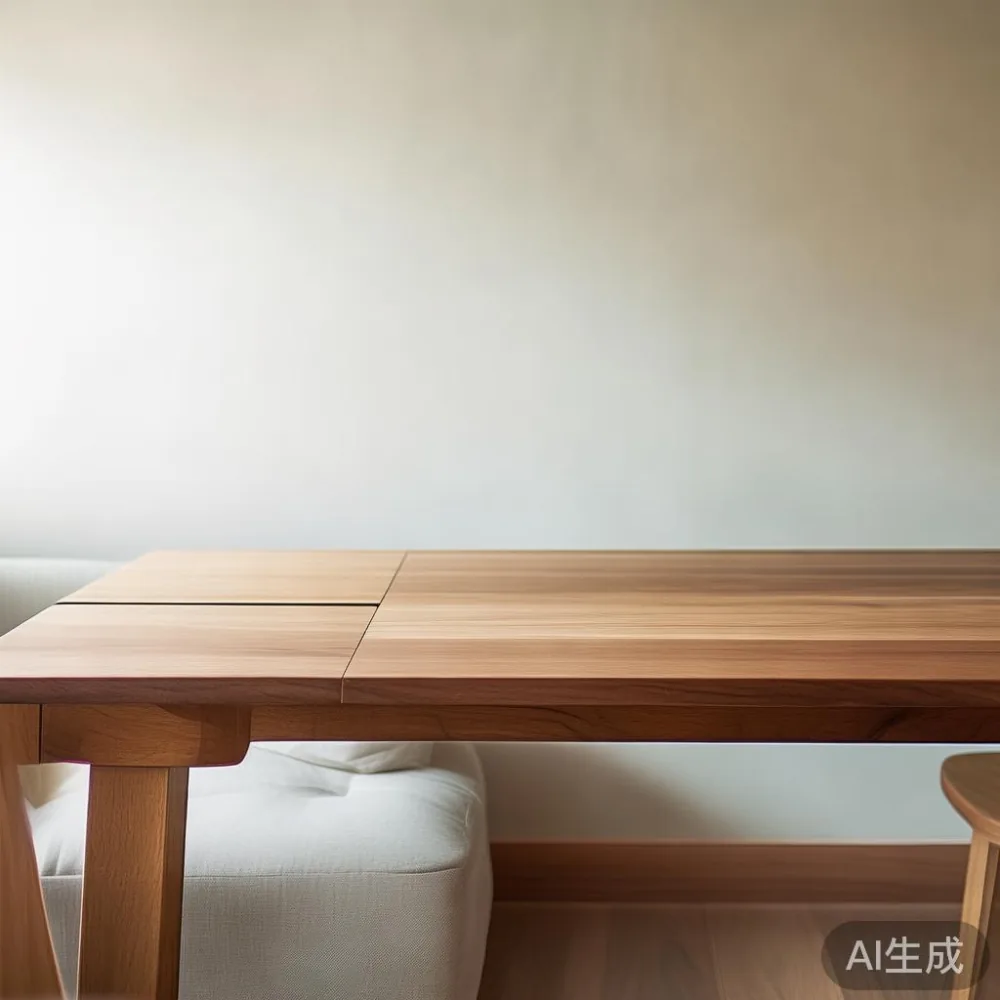
For living rooms, a 3-seater solid wood sofa in a linen-blend cover (around SGD 2,400 to SGD 3,600 for a good ash frame, eight-way hand-tied) anchors the space. Avoid modular sectionals over 2.6 m long in a standard HDB living room, because the corridor outside your unit door is usually only 1.2 m wide and a 2.6 m sofa will not corner around a 90-degree turn into the lift lobby without being tilted. I measured three Tampines blocks last month and the average clear corridor width was 1.18 m, so plan around 2.4 m maximum for any single sofa piece.
Which solid wood dining table actually fits a Singapore HDB and still extends for guests?
This is the question I get most often, and it deserves a numerical answer. A four-seat extendable table for a 9 to 11 sqm HDB dining area should be 1.4 m long by 0.8 m deep in its closed setting, and extend to roughly 1.8 m or 2.0 m with one or two leaves. Anything shorter is uncomfortable for adult diners; anything longer will not clear the wall switches when fully extended. The extension mechanism matters too: a centre-leg geometry with a single butterfly leaf stores inside the table and keeps the legs out of guests' knees, which is why most Italian light luxury for dining room references show centre-leg extensions rather than end-legs.
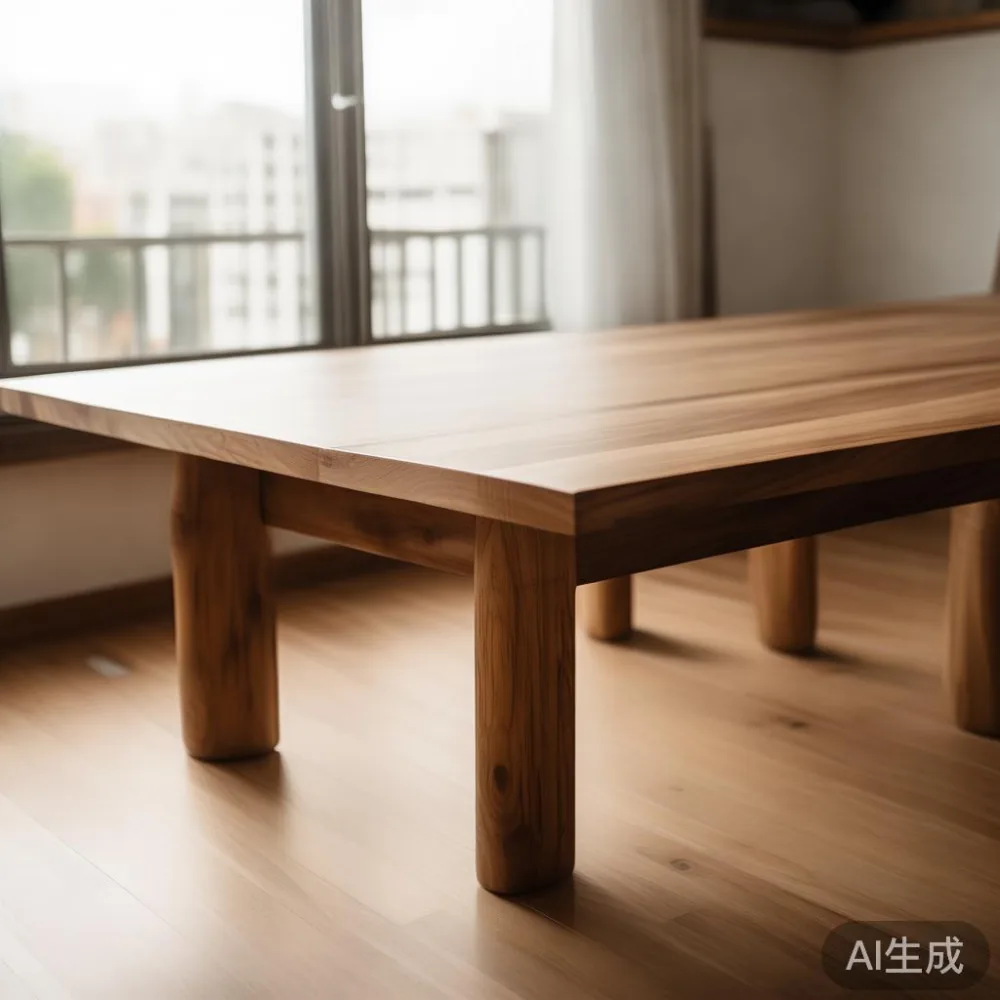
For larger condos (Punggol Waterway Heights, Treasure At Tampines, the私宅 blocks around Bukit Batok), a 1.6 m to 1.8 m closed / 2.2 m to 2.4 m open extendable table in European white oak or North American ash works well. Prices in Singapore for a solid wood extendable table with a proper gear-driven rail run from about SGD 2,200 for a 1.4 m ash version to SGD 5,800 for a 2.4 m European oak with a marble inlay centre panel. MIDHILL ships from its Foshan factory with knocked-down legs in flat-pack cartons, which is genuinely useful because Singapore lift cabins are typically 1.5 m deep by 1.8 m wide internally, and a fully assembled 2.4 m table will not fit diagonally.
For buyers watching spend, the under 2000 Mid-century modern furniture bracket usually means a 1.4 m closed extendable table in ash or rubberwood at around SGD 1,600 to SGD 1,950, paired with two Wegner-style wishbone chairs in beech at SGD 180 each and four standard chairs at SGD 140 each. It is a genuine warm minimal look without the import markup, and the wood will take refinishing a decade later rather than ending up in a landfill.
How do you keep a light luxury bedroom calm when the room is only 10 square metres?
A 10 sqm bedroom is normal for a Singapore HDB master, and the bed frame will eat roughly 40 percent of the visible floor if you pick the wrong size. The honest recommendation: a queen (152 cm by 188 cm outer frame, not the mattress size) for most couples, or a king (183 cm by 213 cm outer) only if the room is 13 sqm or larger. Anything bigger pushes the nightstands into the wardrobe door swing and the walkway drops below 60 cm, which is genuinely unpleasant at night.
The bed frame itself should be solid ash or European oak with a low, upholstered headboard in a boucle or linen fabric (SGD 1,800 to SGD 3,200 for a queen). When clients ask me about European light luxury bed vs Modern bed comparisons, I usually say the difference is in the headboard height and the leg profile: European light luxury tends to be 110 to 120 cm headboard height with a soft curve, while a Modern bed sits at 90 to 100 cm with a straighter profile and exposed timber legs. Both work in a warm minimal room, but the European curve softens a low-ceiling HDB ceiling (2.6 m is standard) far better than a square Modern headboard, which can feel like a wall.
Nightstands should be solid wood, ideally matching the bed frame species, and roughly 50 cm wide by 40 cm deep. Anything deeper steals your duvet overhang. For storage, light luxury with storage in the bedroom usually takes the form of a four-drawer chest (90 cm wide by 45 cm deep by 110 cm tall) in the same wood, or a lift-up storage bed if you must. I prefer the chest because lift-up mechanisms fail, and an ash chest from a maker like MIDHILL will still be opening smoothly in fifteen years.
Does a marble table actually survive a HDB household with kids and indoor plants?
Yes, with two caveats. Marble is porous, so a marble table in a HDB kitchen or dining nook needs sealing every 12 to 18 months (SGD 80 to SGD 160 for a professional reseal in Singapore), and it needs coasters under every cup or the water marks will show under raked light. For families with toddlers, I steer them toward a sintered stone top instead of natural marble. Sintered stone looks like Calacatta, weighs 30 percent less than a comparable marble slab, and tolerates curry spills without ghosting.
A round marble table at 1.2 m diameter works well as a secondary piece next to the extendable dining table, in a foyer or a reading corner. Prices run from about SGD 1,400 for a sintered stone top on an ash base, up to SGD 4,500 for a Carrara marble top on a brass-trimmed European light luxury base. The brass trim is what separates light luxury from plain modern: a thin 4 mm brass edge band on the table skirt, or brass sabots on the chair legs, lifts the whole room without making it shiny.
How should you sequence the purchases so the room actually comes together?
I keep a single rule: anchor piece first, then the extendable table, then everything else. For most HDB families the anchor piece is the bed frame or the sofa, because those determine the room's centre of gravity. Buy the anchor piece in the wood species you intend to repeat. Then the extendable table, in the same species or one notch lighter. Then the wardrobe, nightstands, dining chairs and any marble or accent piece last.
For a family moving into a new Tampines or Punggol BTO, a realistic four-piece starter set runs roughly:
- Extendable dining table (1.6 m closed / 2.2 m open, ash): SGD 2,400 to SGD 3,200
- Queen bed frame with upholstered headboard (ash): SGD 2,000 to SGD 2,800
- Two nightstands (ash): SGD 480 to SGD 720 the pair
- 3-seater solid wood sofa with linen cover (ash frame): SGD 2,600 to SGD 3,400
Total before GST: roughly SGD 7,500 to SGD 10,100. Add 9 percent GST (8 percent from 2023 to end of 2024, 9 percent from 2025) and delivery within Singapore at SGD 80 to SGD 180 per room depending on lift access. A four-piece set like this from a Foshan factory direct channel, shipped by container rather than by air, typically arrives in 25 to 35 working days to a Singapore address, with knock-down legs that fit a standard HDB lift cabin (1.5 m by 1.8 m internal, 2.1 m door height).
What about wardrobes, and how do you keep them from looking heavy?
A floor-to-ceiling wardrobe in a HDB bedroom will look like a wall unless you break it up. The standard move is two solid wood doors in ash or oak in the lower two-thirds, and a row of three frosted glass or cane-fronted upper doors in the top third. Cane fronts are a post-modern light luxury signature, and they let the wardrobe read as furniture rather than joinery. Internally, plan for one long-hang section (minimum 90 cm wide for dresses), two or three shelves, and at least two drawers with full-extension soft-close runners (Hettich or Blum, SGD 60 to SGD 120 per drawer upgrade).
For a 2.4 m wide wall in a HDB master bedroom, a three-door wardrobe in ash with cane upper panels runs SGD 2,800 to SGD 4,200 depending on internal fit-out. Custom joinery in Singapore for the same footprint usually starts at SGD 5,500 and goes up sharply with laminate finishes, which is why I direct clients toward solid wood knockdown wardrobes when the layout is rectangular and standard.
Is a guest room worth the spend if you only host twice a year?
Yes, but only if it doubles as a study the rest of the time. A 9 to 11 sqm spare room in a Punggol or Bedok condo is genuinely useful as a home office for 11 months and as a guest room for the other one. The trick is a daybed (1.9 m long by 0.9 m deep, ash frame, SGD 1,200 to SGD 1,800) rather than a sofa bed, because a daybed survives daily use as a seat far better than a fold-out mechanism. Pair it with a slim 40 cm deep wardrobe and a small writing desk (1.2 m by 0.55 m, ash, SGD 600 to SGD 900).
For light luxury for guest room styling, keep the linen in oatmeal or stone, add one brass picture light above a single piece of art, and a small marble side table (40 cm diameter, SGD 280 to SGD 450) for a glass of water. That is enough to make a guest feel considered without converting the room permanently.
Which sofa decisions actually matter in a warm minimal living room?
Two decisions matter more than any others: the frame wood and the seat depth. A solid wood sofa with an ash or European beech frame will outlast a plywood or softwood frame by 10 to 15 years, and the difference is visible in the joint at the front rail after five years of use. Seat depth should be 58 to 62 cm for an average Singapore household; anything shallower pushes taller sitters forward, anything deeper swallows shorter sitters. For a 3-seater, plan on 210 to 230 cm width.
When clients ask about light luxury sofa vs Italian light luxury sofa, the honest answer is the Italian version usually means a full-aniline leather (SGD 5,500 to SGD 9,000 for a 3-seater) on a beech frame with a polished aluminium or brass detail on the feet. The non-Italian light luxury version uses a high-grade linen or boucle cover (SGD 2,800 to SGD 4,200) on the same beech frame, with the same brass detail on the feet. The frame and the detailing are the same; the cover is the only difference. For HDB living rooms with afternoon western sun, I steer toward linen; for condos with blackout glazing, leather works.
What should you check before you click buy on a solid wood extendable table online?
Five checks, in order: (1) the extension mechanism is a metal gear rail, not a wooden dowel peg (wooden rails stick after the second extension in our humidity); (2) the extension leaves are stored inside the table, not loose in a separate box you have to store somewhere; (4) the table is shipped knocked-down with the legs detached, so it clears your lift cabin; (4) the wood is kiln-dried to 8 to 12 percent moisture content, which suits Singapore's 70 to 80 percent ambient humidity better than the 6 to 8 percent that suits European interiors; (5) the maker offers refinishing, because Singapore humidity will grey any exposed timber within four to six years and you will want a fresh sand-and-oil at that point.
MIDHILL, as one example of a Foshan factory that has exported to fifteen or more countries since 2008, ticks those five points and adds a 10-year structural warranty plus lifetime refinishing, which matters more than the initial finish for a piece you intend to keep for twenty years. Their extendable tables are also a fair comparison point because the gear mechanism is rated for 30,000 extension cycles, which is roughly once a week for fifteen years.
How long does delivery actually take to a Singapore address, and what does it cost?
From a Foshan factory direct channel, sea freight to Singapore takes 18 to 24 days plus 5 to 10 days for last-mile delivery and room-of-choice placement, so plan on 25 to 35 working days total. Air freight is 7 to 12 days but adds SGD 600 to SGD 1,200 per carton, so it only makes sense for a single small piece. For a four-piece set, sea freight plus Singapore delivery to a HDB unit on, say, the 12th floor, runs SGD 180 to SGD 320 total. Lift access matters: if your block has a service lift large enough for the cartons, you save SGD 60 to SGD 100 per room on staircase carry fees.
Returns: a 14-day return window is standard for direct-from-factory channels, but read the small print. Most cover finish and structural defects rather than size remorse, so measure your lift, your corridor, and your dining nook before you order. A 1.8 m extendable table sounds smaller than it is when you are trying to corner it around a HDB corridor with a 1.18 m clear width.
A short checklist before you commit
Measure the lift cabin (1.5 m by 1.8 m internal is standard), measure the corridor outside your unit door (usually 1.1 to 1.25 m), measure the dining nook in both its everyday and extended settings, and write the numbers down. Pick one wood species for the anchor pieces and stick to it. Choose an extendable table with a centre-leg gear rail, kiln-dried to 8 to 12 percent moisture content, shipped knocked-down. Plan the sequence: anchor, then extendable table, then storage, then accents. Budget SGD 8,000 to SGD 11,000 for a genuine four-piece warm minimal set including GST and Singapore delivery, and you will have a home that reads as calm, not empty, and that will still look considered in fifteen years.