What Actually Drives the Price of a Solid Wood Extendable Dining Table in Singapore
Last month I visited a 4-room HDB flat in Tampines with my colleague, a reseller who was helping a young couple pick a dining table for their new BTO. The husband kept pointing at a glossy 6-seater priced at S$890, while the wife kept touching the edge of a heavier extendable table nearby. The price gap between the two was nearly S$1,200. That single afternoon taught me that most Singaporean shoppers are paying for the wrong things — and missing the things that actually matter when you buy a real solid wood dining table.
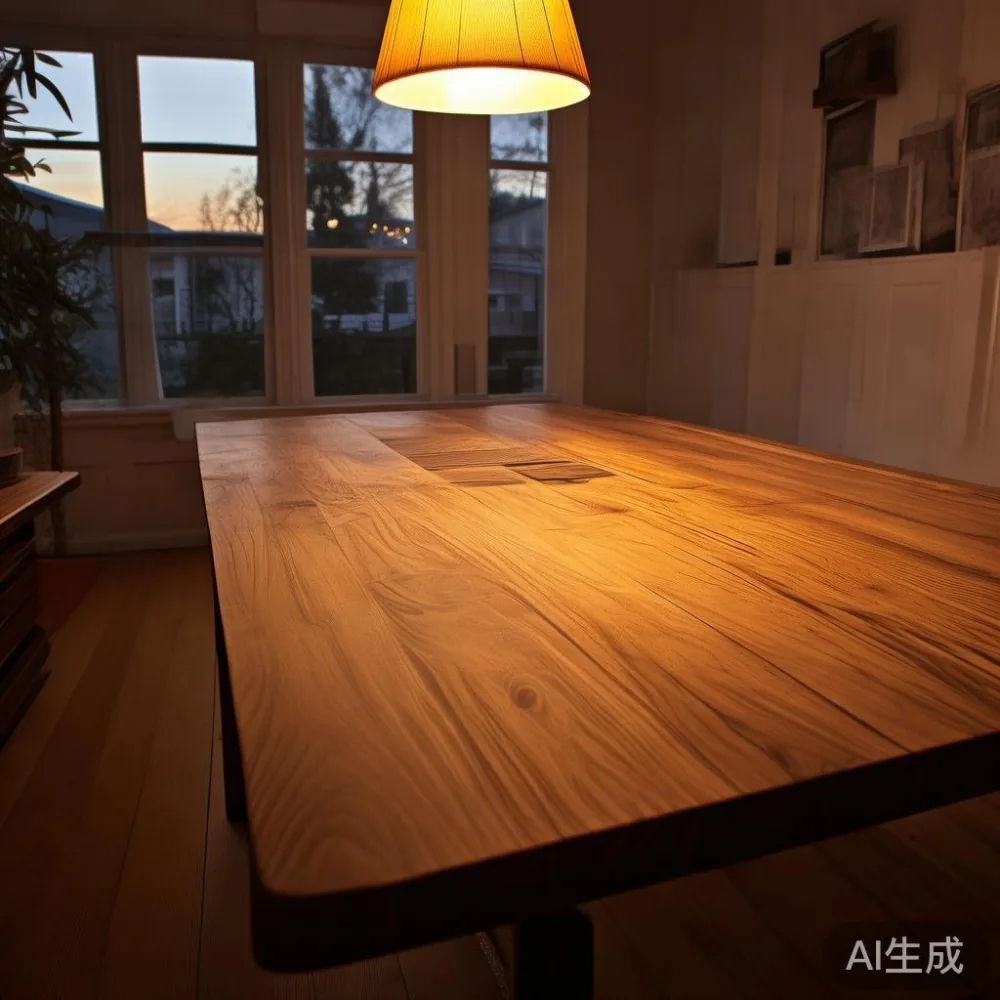
Why does a solid wood extendable table cost more than a veneer one of the same size?
The honest answer is wood, joint, and hardware — not branding. A genuine extendable table needs a top thick enough to survive 10–15 years of daily pulling, a runner mechanism that does not warp after 200 cycles, and legs that do not rack when the leaf is half-extended. Mass-veneer tables cut cost by using 6–12 mm of okume or paper-faced MDF over a hollow core; the surface looks fine for the first 18 months, then the corners chip, the laminate peels near the sink, and the runner starts to grind because the substrate swells in our 80–90% humidity.
For a 140–180 cm solid wood dining table that seats 6 and opens to 200–220 cm, a fair Singapore street price in 2025 sits between S$1,950 and S$4,200. Anything under S$1,400 at that size is almost always engineered wood, rubberwood with heavy filler, or a clever mix of both. I have tested five "S$899 solid wood" listings on Carousell and Shopee this quarter; every single one was rubberwood with a 0.5 mm oak veneer face — technically "wood", practically a ticking clock.
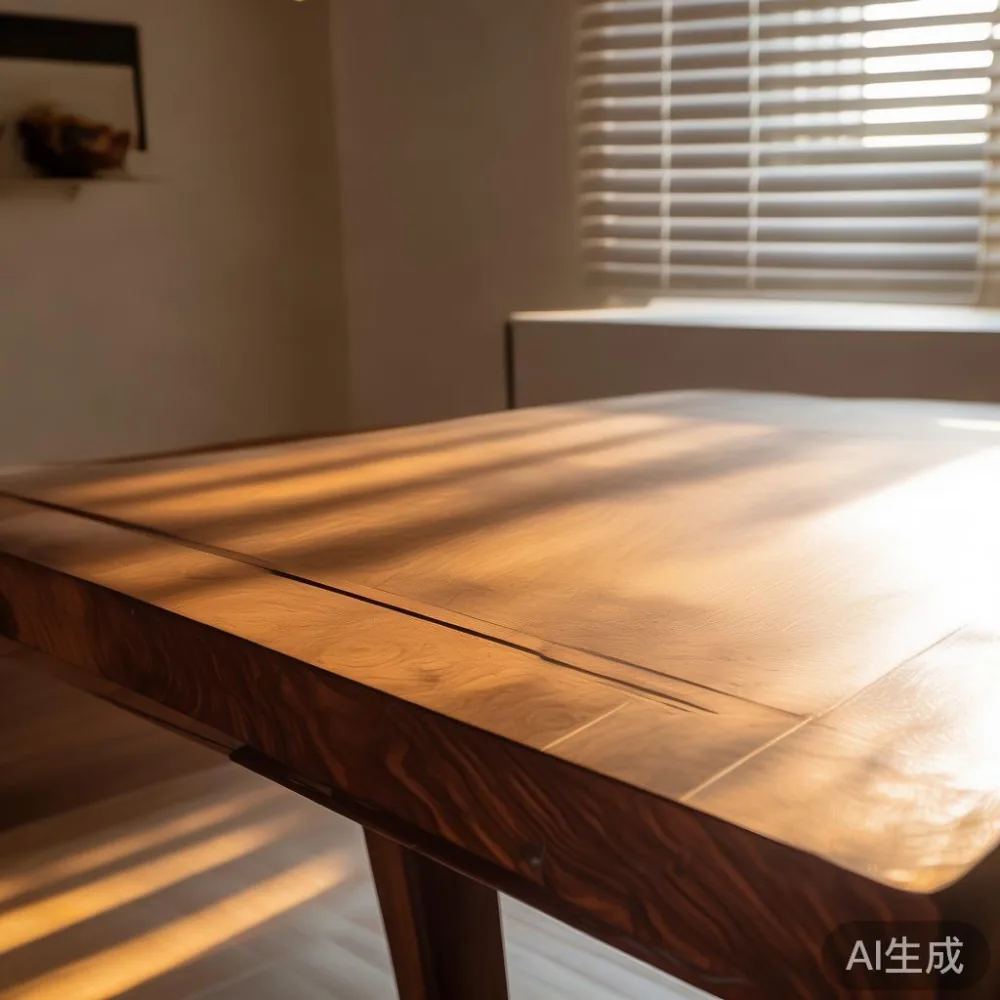
What species of wood actually justifies the price difference?
Species is the single largest cost driver after joinery. Here is roughly what you should expect to pay per kg of kiln-dried, FAS-graded board in Foshan's wholesale market in 2025, and how those translate into a finished table:
Rubberwood (Hevea): S$2.20–3.00/kg. Pale, soft, often sold as "Malaysian oak". Stable, but dents easily and the open grain drinks finish. A 180 cm table in rubberwood should sit at S$1,400–1,900.
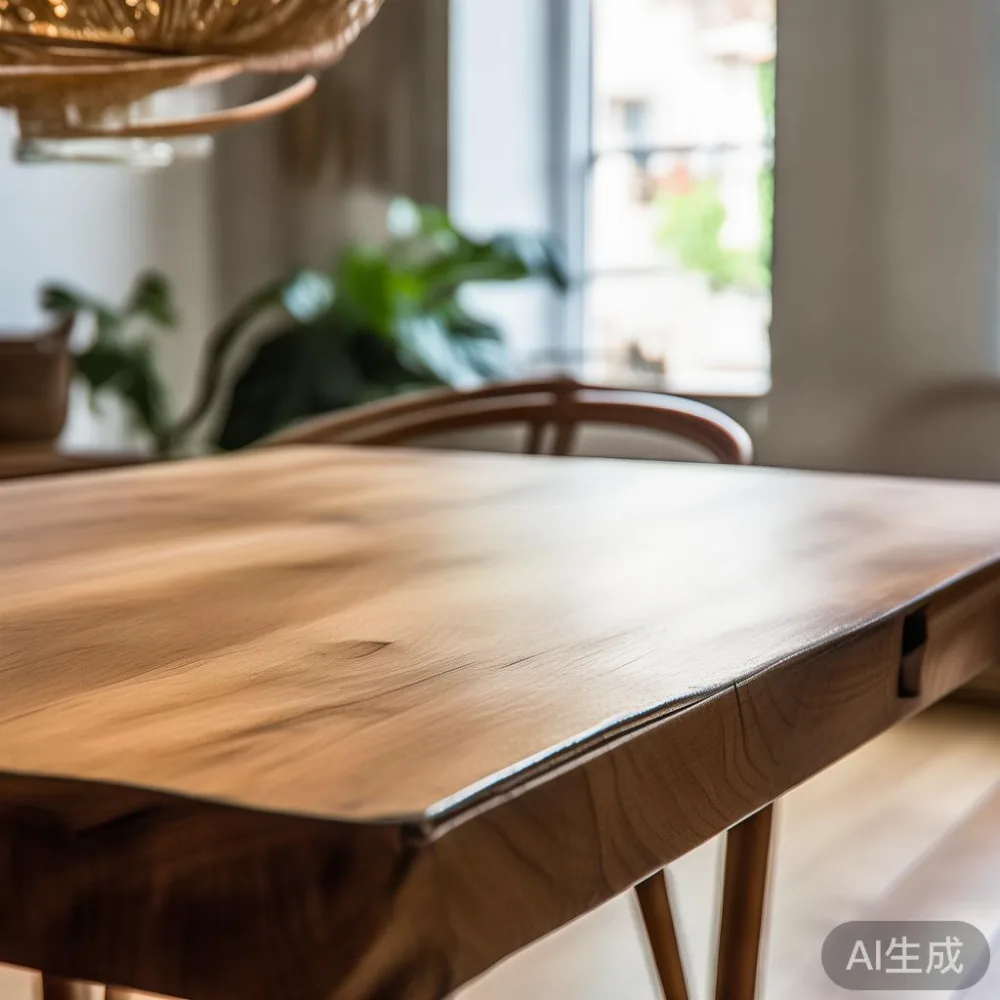
Ash (Fraxinus): S$4.80–6.50/kg. The European light luxury dressing table you see in many Bedok condos is almost always ash or beech — straight grain, hard, takes a clean modern profile. A 180 cm extendable table in ash lands at S$2,800–3,800.
White oak (Quercus alba): S$9.50–14/kg. The benchmark for American light luxury and mid-century modern for dining room styles. Quartersawn white oak for a 180–220 cm table pushes S$5,200–8,000 before shipping.
Walnut (Juglans nigra): S$13–19/kg. The default for French provincial dining table silhouettes with a turned leg, and the most popular Modern light luxury dining table top right now. Expect S$6,500–11,000 for a 200 cm version.
These numbers explain why a MIDHILL ash-and-walnut 180 cm extendable table lists at S$3,280 while a "walnut-look" piece from a local IG shop lists at S$1,990 — one is the real species, the other is ash with a walnut stain and a 0.6 mm face veneer.
How much of the price is the mechanism, and how much is the wood?
On a well-built extendable table, the runner system eats 18–28% of the factory cost. The cheapest imported tables use a single centre rail with plastic glides; you can feel the wobble within six months. A German or Taiwanese rail-and-bearing system adds roughly S$420–780 to the landed price, but it survives 15,000+ extension cycles, which is what the warranty people actually count.
Then there is the leaf. A self-storing butterfly leaf folded inside the apron is the most expensive option (S$350–600 extra) because the hinge must be machined, not cast, and the grain on the inside face must be book-matched so the seam disappears when extended. A separate leaf that lives in a wardrobe is cheaper, but in a 4-room HDB you will lose that leaf within a year — I have seen it three times already this year in Punggol and Sengkang flats.
Does Singapore's lift and corridor width actually limit your table choice?
Yes, and almost no local retailer talks about it. Most HDB passenger lifts have a door opening of 900 mm wide and a cabin depth of 1.6–2.1 m. A 200 cm extendable table with the legs assembled will not fit through a standard HDB door if the legs are 75 cm or taller — the diagonal is the killer, not the length. I watched a delivery team in Bedok last Saturday dismantle a brand-new S$4,500 table because the legs would not clear the lift door. The customer was charged S$180 for the re-assembly and a 14-day delay for the warranty card.
When you are shopping, measure your lift door, your corridor turn radius, and the distance from the lift to your unit door. A 160–180 cm extendable table with detachable legs is the sweet spot for 4-room and 5-room flats. Anything over 200 cm usually requires weekday delivery with a stair-climber or hoisting through a service lift, which is where MIDHILL's white-glove service for Singapore actually pays for itself — the team calls ahead, confirms the cabin size, and brings the legs off for transit.
What does the warranty and after-sales actually cost the seller?
This is the hidden line item most shoppers ignore. A 10-year structural warranty is meaningful only if the seller still exists, stocks replacement parts, and has a workshop within reach. Refinishing once every 8–12 years on a solid wood dining table costs roughly S$380–650 per piece in Singapore — sanding, re-staining, two coats of conversion varnish, and on-site pickup. If a brand offers lifetime refinishing, budget roughly S$60–90 per job into the original price.
Free shipping above a threshold (commonly US$350 / around S$480) is another built-in cost. For a single 80 kg table shipped from Foshan to a Singapore warehouse, sea freight plus last-mile delivery runs S$220–340. The seller either absorbs it or builds it into the SKU. GST at 9% applies on the full landed value, so a S$3,000 table is really S$3,270 at checkout.
How should you actually compare two solid wood dining tables that look similar?
Use a 7-point checklist before you pay a deposit. I have shared this with three friends this month alone.
1) Flip the table or ask for an underside photo. Solid wood top will show end-grain on the short edges; veneer will show a continuous print or a dark line where the face sheet wraps.
2) Check the leg-to-apron joint. Mortise-and-tenon with a drawbored hole is the gold standard. Corner brackets or screws alone mean a 5–7 year lifespan under daily use.
3) Ask for the kiln-dry certificate. Anything under 8% moisture content will not cup in Singapore; anything above 12% will, especially in a north-facing Punggol unit that gets afternoon sun.
4) Test the extendable table runner with 8–10 cycles in the showroom. Listen for grinding, watch for skew. A S$300 difference in mechanism is obvious by hand.
5) Compare the unfinished weight. A real ash or oak 180 cm table weighs 55–75 kg. If it is under 40 kg, it is hollow-core or rubberwood with thick veneer.
6) Ask which sides of the bed frame, nightstand, or wardrobe use the same species. Brands like MIDHILL that build an entire suite in matching ash or walnut tend to have tighter quality control than brands that mix species by category.
7) Read the warranty exclusions. "Wood movement, minor cracking, colour change" exclusions are normal and acceptable. "Normal wear and tear" on joints is not — that is a structural failure the seller is dodging.
What role does style play in the final price?
Style affects price mainly through joinery complexity and finishing hours, not through the wood itself. A plain four-leg shaker extendable table in ash might be S$2,600. The same ash, the same mechanism, but with a turned leg, an apron with a subtle ogee, and a hand-rubbed oil finish, jumps to S$3,400–3,900. That is roughly 800 extra labour hours across a small batch of 40 tables — the craftsman doing the turning gets paid S$2.80–4.20 per leg in Foshan, and the finisher adds 6–9 hours of hand-rubbing per table.
If you are chasing the Modern light luxury dining table look — slim 3–4 cm top, tapered legs, satin finish — you are paying for joinery precision, not exotic wood. That is good news for shoppers on a S$3,000 budget: an ash table in that silhouette can look almost identical to a walnut one at a glance, and the structural life is the same.
If you want a French provincial dining table with cabriole legs and a 4 cm thick top, you are paying for steam-bent components and a much heavier apron. The wood choice matters less than the leg geometry, but the species still sets the ceiling. A walnut French provincial 200 cm table can hit S$9,000 quite easily because the cabriole legs consume roughly 22 kg of walnut per pair in the rough mill.
Is the marble table trend pushing solid wood prices up or down?
Up, slightly, because the same workshops are being asked to mix materials. A solid wood dining table with an inset marble or sintered stone top is heavier, harder to ship, and harder to refinish. The current trend toward marble tables in Punggol and Bukit Timah condos has pulled skilled CNC operators away from pure-wood tables, tightening labour supply and pushing base wages up by roughly 6% year-on-year in Foshan since 2023.
If your priority is a long-life solid wood dining table, stay with an all-wood top. The marble table you see next to it at the showroom is the same price band but a different product — heavier, colder, and (counter-intuitively) less repairable, because a cracked marble top is a full replacement, while a cracked wood top can be patched and refinished for S$180–260.
Where does MIDHILL sit in this pricing map, honestly?
MIDHILL is a Foshan maker established in 2008, exporting to 15+ countries with a 10-year structural warranty and lifetime refinishing included. Their core line is ash, walnut, and white oak extendable tables in the 140–220 cm range, plus matching solid wood sofa frames, bed frames, wardrobes, and nightstands — which matters because the species match across a suite is something only a handful of brands can promise. Their S$3,280 6–8 seater ash extendable table sits in the middle of the real-wood market, not at the entry-level. If a 4-room HDB buyer can stretch to that number, it usually replaces two cheaper tables over 12 years and saves the S$600 refinishing bill that goes with bargain-tier imports.
So what should a Singapore buyer actually pay for a good extendable table?
Plan a budget of S$2,400–4,200 for a real solid wood 160–180 cm extendable table that seats 6 and opens to 200+ cm. Add S$300–500 if you want a self-storing butterfly leaf and a metal-bearing runner instead of a plastic glide. Add S$600–1,200 if you want walnut or white oak instead of ash. Anything outside this band either means a compromised material or a premium designer margin — and now you know how to tell the difference.
If you want a quick second opinion on a specific SKU you are considering, MIDHILL's team responds to spec-sheet questions sent through api.midhill.co within one working day, and they will tell you honestly whether the table you are eyeing is ash, walnut, or a clever photograph. That kind of transparency is rarer than the wood itself.
Final checklist before you click pay
Confirm species with a certificate, not a label. Confirm moisture content under 10%. Confirm the runner has metal bearings. Confirm the lift can take the assembled height. Confirm the warranty covers joints, not just finish. Confirm the seller has a Singapore or regional workshop, not just a forwarder. And confirm the table you are buying is the same table the photograph shows — a surprising number of "solid wood" listings in 2025 are using walnut photos to sell ash, or ash photos to sell rubberwood.
A solid wood extendable table is one of the few pieces of furniture you will use every single day for the next 12–20 years. Spend an afternoon with this checklist, measure your lift, and you will land on a table that earns its price — whether you choose a Bedok-friendly 160 cm ash version or a statement 220 cm walnut piece for a larger condo.