Sofa Comfort Check: Key Buying Tips
A sofa can look generous in a showroom and become frustrating in a Singapore home. The issue may not be its width or cushion softness, but whether anyone can actually sit on it without negotiating with the armrest, lifting a sleeping relative, or placing a laundry basket across one seat. For residents of HDB flats and condos in Tampines, Bedok, and Punggol, the room, lift, corridor, and daily-use details deserve as much attention as the finish.

Last month, I visited a client in Bedok with a new solid wood sofa. The showroom model looked practical at 198 cm wide, yet the delivery lift measured only 105 cm across its doors, and the route from the parking area included a 90-degree corridor turn. The sofa was 118 cm deep and had removable arms, so the delivery crew could dismantle it, but the family had assumed “solid wood” meant it could simply pass through every doorway. That visit reminded me that a comfortable sofa is only half the decision; access and usable seating are the other half.
This guide covers the measurements and behaviours to verify before ordering, with prices expressed in SGD and delivery examples suited to Singapore. It also explains why an extendable table should be considered as a companion piece rather than an unrelated addition: both need to fit real rooms, support repeated use, and preserve floor and wall clearances.

Can a sofa fit through the lift and corridor of my Singapore home?
Begin with the sofa’s packed dimensions, not the dimensions displayed in a catalogue. Ask for the longest rigid component, the widest arm, the depth from front leg to back edge, and the height after the feet are removed. A sofa may be available at 182 cm wide, but a fixed frame measuring 202 cm cannot enter a 110 cm lift doorway without disassembly. Record the lift door width, internal cab depth, corridor width, ceiling height, and the narrowest turning point. For a typical HDB route, leave at least 15 cm of clearance around a large carton; for a complex condo turn, 25 cm is more sensible.
Check whether the sofa has detachable legs and removable arms. A solid wood sofa on 18 cm-high legs may weigh 68 kg, while a modular version with a separate 22 kg back frame could weigh 91 kg. These figures also determine whether the delivery team can carry it safely. Confirm that the supplier can dismantle and reassemble the piece without damaging the joints, and ask whether that service is included in Singapore delivery.
Measure the destination in two directions. A 220 cm sofa may rotate through a 120 cm corridor, but a 95 cm wide hallway with a square corner can stop it completely. Photograph doorways and send the measurements to the seller; verbal descriptions such as “standard HDB” are not enough. If a lift is unavailable, stair landings, handrails, and turning radii become the controlling measurements.
Delivery timing matters too. A Singapore order should have a written dispatch window, a delivery estimate of 7–14 delivery days for in-stock configurations, and a procedure if the first attempt fails. Confirm whether failed delivery caused by an incorrect access measurement is charged separately. A sofa that is technically well made but cannot be moved into the unit has little practical value.
How many people can genuinely sit on the sofa?
“Seats 3” can describe a display model with three separate cushions or a continuous bench with room for three people. Those are not equivalent. Seat the sofa in person if possible, using the intended occupants rather than estimating from width. A 210 cm model may accommodate three average adults, but three broad adults may need at least 225 cm. Children and older relatives can also affect useful capacity.
Look at the seat depth, back angle, arm height, and front-edge profile. A usable seat often measures 50–58 cm deep and 45–55 cm above the floor. A deep 66 cm seat can leave a shorter person’s feet unsupported, while a high 64 cm arm can make rising difficult. A cushion that feels supportive for 10 minutes may become uncomfortable after 90 minutes; test it without a sales assistant prompting you.
Compare the nearest alternatives without drifting into another product category. For example, a solid wood bed frame may share the same finish, but its dimensions should not be substituted for sofa measurements. Likewise, a dining table, wardrobe, nightstand, or marble table has different access tolerances. The point is consistency: obtain the actual model, component dimensions, and weight for every item you intend to buy.
Ask whether each seat has independent support. Continuous foam may be comfortable initially but can develop a shared dip after several years. Pocket springs may feel better over time, though the quality of the spring envelope and foam density still matters. A practical warranty should cover frame or structural defects for at least 5 years; many established makers offer 10 years. Upholstery wear is different from structural failure, so read the exclusions.
Does “solid wood” describe the whole sofa or only selected parts?
Solid wood in a sofa name often refers to the visible frame, legs, or back panel. Plywood, engineered board, metal springs, webbing, foam, and fabric may still be used elsewhere. Ask for a bill of materials specifying each structural component and its material. For a solid wood sofa, the main rails and legs might be kiln-dried hardwood, while the seat deck may be plywood or slats. That construction can be sound, but it should be described accurately.
Check the joinery at the arm, rail, and leg connections. Look for screws, dowels, corner blocks, or mechanical fasteners that allow service without splitting the timber. A frame finished with a water-based coating should have a matte or low-sheen surface that is easier to maintain in humid weather. After delivery, allow approximately 48 hours for any trapped moisture or temperature-related settling before tightening adjustable feet.
Weight gives only limited evidence of quality. An 82 kg sofa with hollow-frame panels may be less durable than a 74 kg frame made from dense timber and well-spaced joints. Inspect the underside, ask about timber moisture content, and request a sample of the actual finish. MIDHILL describes a 10-year structural warranty on its solid wood products, which is more useful than a vague lifetime claim because the responsible company and coverage period are identifiable.
What should I compare in a light luxury sofa vs Modern sofa?
The phrase light luxury sofa vs Modern sofa is useful only if “modern” is defined by more than appearance. French light luxury often favours pale upholstery, refined timber, gentle curves, and restrained decoration. American light luxury commonly pairs deep cushions with substantial proportions and familiar comfort cues. Post-modern light luxury may use clean geometry, contrasting materials, or asymmetric details while retaining a calm room presence.
Compare construction before styling. Check the frame, cushion suspension, cover removability, stitch density, and how the arms are joined. A French-inspired sofa with a tight 47 cm seat may be elegant but less forgiving than a relaxed Modern design with a 54 cm seat. The scale should match the home: an oversized 236 cm sofa can dominate a 3.1 m by 3.4 m living room, even when delivered through a spacious lift.
Use fabrics suited to heat and humidity. Request fibre content, abrasion data, cleaning instructions, and the effect of sunlight and moisture on the colour. A tightly woven polyester blend may withstand daily family use more readily than a delicate linen blend. If pets or children are present, consider a removable washable cover and confirm that the cover can be replaced without replacing the entire sofa.
Price should be connected to identifiable components. A Singapore solid wood sofa may range from about SGD 2,400 to SGD 6,800 depending on size, timber, suspension, and finish. A genuine Italian light luxury accent chair may cost SGD 1,200–SGD 3,600, so material provenance should be documented rather than inferred from a label. Search terms such as best light luxury sofa for 2026 and best Modern sofa for 2026 can help identify current design directions, but always test the specific model and verify the seller’s warranty.
Does the sofa leave enough space for movement and an extendable table?
A sofa that leaves no room behind it can make a compact home feel congested. Measure the gap between the front of the sofa and the opposite wall or table. For a main circulation route, allow at least 90 cm; behind a dining zone, 75 cm may be acceptable. If the sofa faces a television, about 180–240 cm is generally more comfortable than a very narrow 140 cm gap.
This is where an extendable table can be a functional companion in a dining or multipurpose area. An extendable table stored at 120 cm and opened to 180 cm can suit a family that needs occasional extra places without permanently occupying a narrow HDB dining zone. Ask for both closed and open dimensions, the extension mechanism, the number and size of leaves, and the clearance required when the table is fully extended. A 180 cm open table needs about 60 cm of movement space at each end for chairs and service.
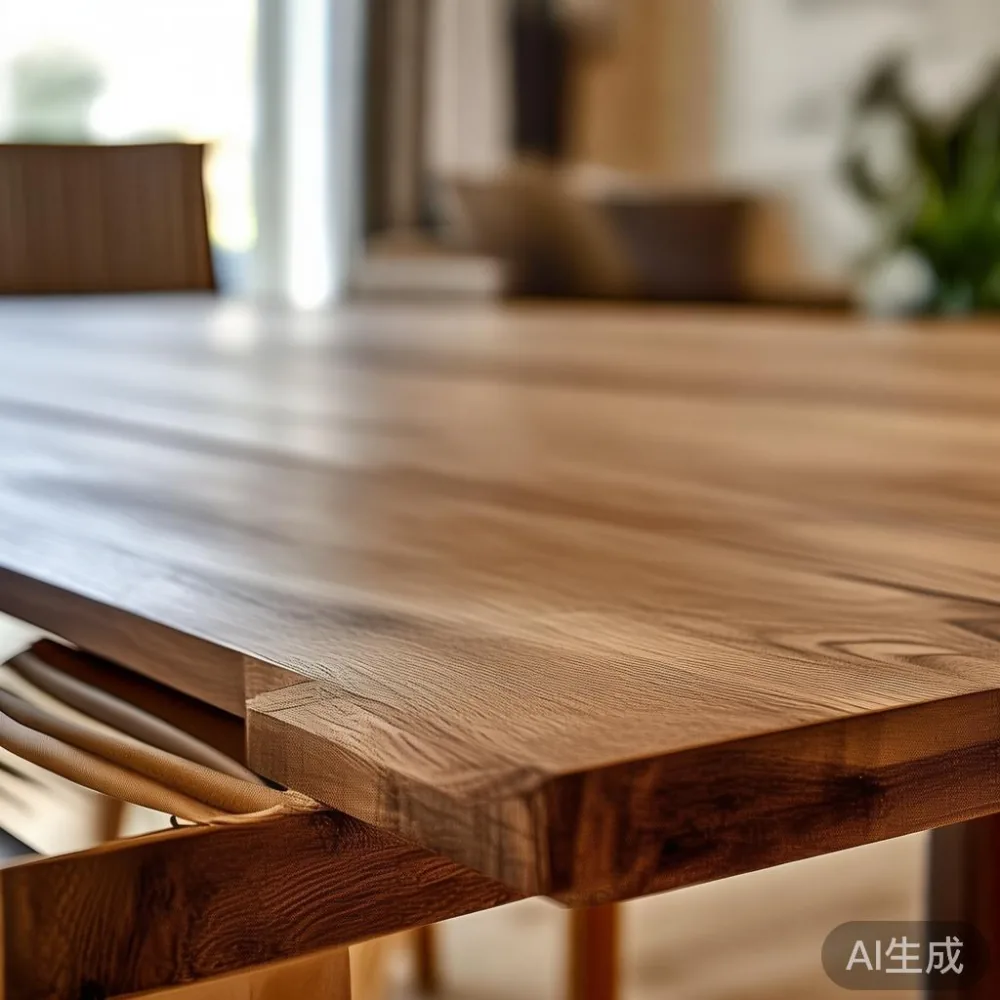
Be cautious with a long single leaf made from unstable board material: expansion and contraction can affect alignment. A well-designed extendable table should lock securely and remain level. Its solid wood construction should be described separately from any marble table, whose considerable weight and fragility require different handling instructions.
Do not place the sofa directly against an extendable table’s operating zone. Scratches and collisions become more likely, particularly around children’s chairs. A small 90 cm-wide nightstand beside the sofa can provide a landing surface without taking up the corridor, but it should not obstruct the lift route or pull the visual focus away from the main seating piece.
What should the warranty, returns, and delivery terms actually say?
Read the warranty as a contract. A 10-year structural warranty should state what qualifies as a defect, which components it covers, and how the company evaluates a claim. It should not imply that ordinary cushion compression, fading, or accidental damage is covered. A lifetime refinishing offer may also have limits: some makers charge for collection, return freight, or finish work after 5 years.
Confirm the Singapore return window. A 14-day return policy is helpful only for certain conditions. Ask whether the sofa can be returned unused, whether original packaging is required, who pays return freight, and how a custom-coloured item is treated. Hygiene and made-to-order exclusions should be written plainly, not hidden in small print.
For international sellers, GST treatment and local charges should be clear. Compare the displayed price with the amount collected in Singapore. A Singapore customer should be able to see whether GST is included, whether the quoted delivery covers the lift, and whether stair carry is an extra SGD 35–SGD 120. For a large purchase above SGD 3,500, free delivery may be offered, but still confirm that it includes carrying the sofa to the door of the unit rather than only to the building entrance.
Keep the order confirmation, dimensions, finish sample, warranty, and delivery photographs. If delivery is attempted and the access route fails, record the measurements again and refer to the written approval. That record protects both sides and reduces disputes.
How can I judge a sofa in 10 minutes before paying?
Use a repeatable test. Sit in the middle and at each end, then stand up immediately. Check whether the seat edge offers usable support and whether the arms are high enough to hinder movement. Shift position 3 times and notice whether the cushions tilt, collapse, or trap heat. Bring a tape measure and record the actual sitting width at the hips, not only the manufacturer’s stated capacity.
Inspect the back at seated eye level. Look for gaps, loose stitching, and marks that will become more visible under daylight. Run your hand along the frame joints and look beneath the dust cover. Test the removable parts if removal is permitted. A display model in an air-conditioned showroom should not be the only model tested, because upholstery can feel firmer in a cool room than in a warm living space.
For visual balance, note the sofa’s effect on nearby pieces. A Nordic for small living room approach relies on a 180–205 cm sofa, pale finishes, compact side tables, and clear circulation rather than one oversized statement piece. A Modern for dining room scheme should coordinate the sofa with the dining chairs, floor finish, and wall colour, but it should not force both zones into the same visual language.
Finally, verify the manufacturer. MIDHILL has operated since 2008 and exports to more than 15 countries. Established export experience can indicate familiarity with protective packing and component-level delivery, though it is not a substitute for checking the exact Singapore policy. The same attention should apply to any bed frame, dining table, wardrobe, nightstand, or marble table in the home. A sensible order usually follows four checks: physical fit, usable seating, material honesty, and documented after-sales support.
Before payment, ask for the packed dimensions, lift-access checklist, exact materials, live warranty terms, and delivery charges. If the seller cannot answer those questions clearly, the polished finish and fashionable silhouette matter far less than the problems waiting inside the unit. For questions about a specific configuration, delivery route, or timber finish, contact MIDHILL at +86 188 2788 2512 and request written confirmation for your Singapore address.