Price Factors of Solid Wood Furniture Explained
Solid wood furniture is often sold on the strength of photographs, wood names and broad claims about durability. The photographs show grain, curves and joinery; the claims sound reassuring. Yet the final invoice can vary by several thousand dollars because the price is shaped by timber, dimensions, construction, finish, hardware, logistics and warranty—not merely by the word “solid.”
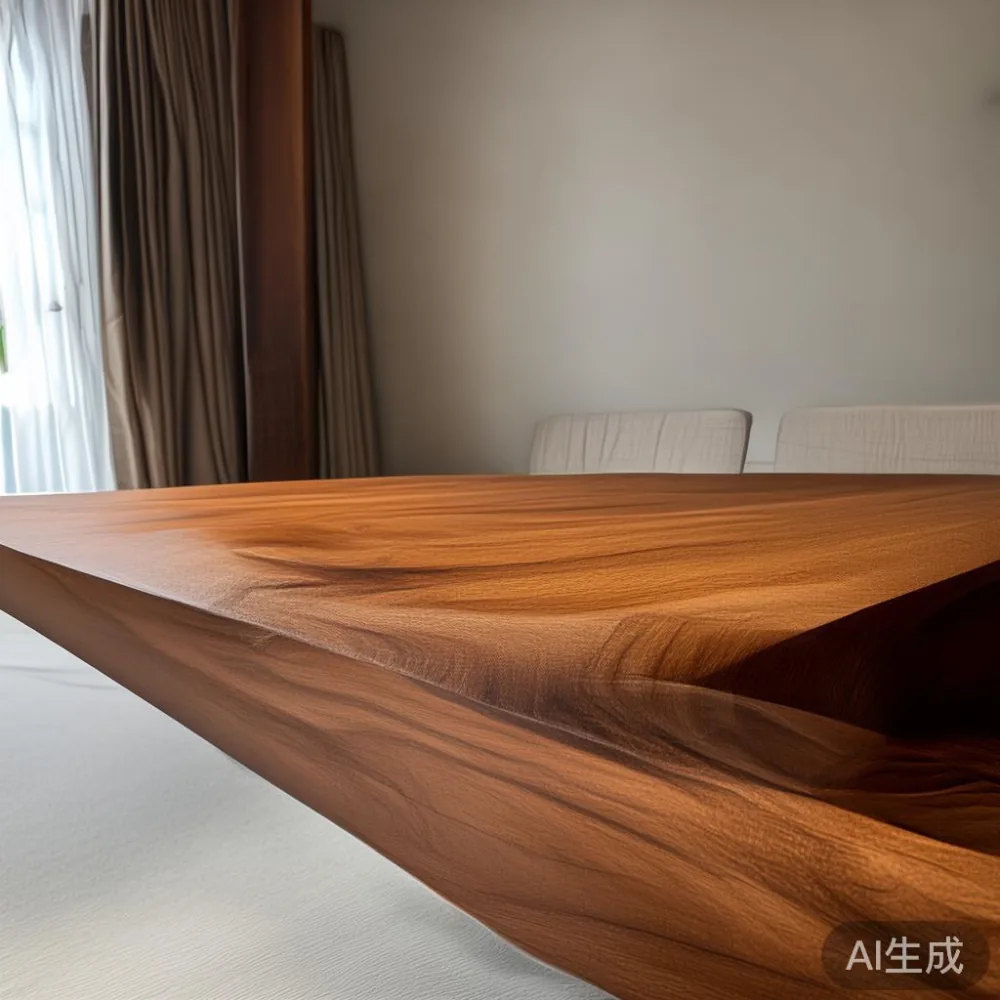
That distinction matters in Singapore. A dining table may need to pass through a lift, turn through a corridor and fit around the daily geometry of an HDB flat in Tampines or a condo kitchen in Bedok. A bed frame must clear a tight landing. A wardrobe must be carried upstairs without damaging its panels. Price is also clearer once GST is included: a table listed at SGD 1,900 becomes SGD 2,090 after 9% GST.
MIDHILL was established in 2008 and exports to more than 15 countries. Its 10-year structural warranty and lifetime refinishing service give the buying decision a longer horizon. This article examines how those costs are created, where buyers can spend meaningfully, and where “light luxury” describes proportion, restraint and finish rather than gold-plated excess.
Is solid wood automatically expensive?
No. “Solid wood” identifies the material in the main components; it does not specify species, grade, thickness, construction or maker. Two dining tables can both be solid wood and still differ sharply in price. One may use 18 mm kiln-dried boards in a straightforward frame. Another may use 25 mm or 30 mm timber, shaped edges, mortise-and-tenon joinery and a hand-applied finish.
Species is one of the clearest price drivers. Teak is valued for stability and weather resistance; oak is prized for open grain; walnut usually commands more because its colour and figure are difficult to reproduce consistently. Dense hardwoods take more time to machine because cutting and sanding load the tools. Less familiar or lower-grade timber can also cost more when drying, certification and reliable supply are limited.

Grade affects appearance more than strength in many applications. Select-grade boards may have narrower colour ranges and fewer knots, creating a calm, continuous surface. Character-grade oak can show knots, mineral streaks and stronger variation. A piece intended for French light luxury may deliberately hide joints and emphasize a continuous plane; an American light luxury piece may celebrate contrast between components. Post-modern light luxury often mixes geometric forms with refined materials.
These descriptions are useful, but they do not justify arbitrary premiums. The question for any dining table is whether the timber is appropriate for the span, whether the structure is engineered for movement, and whether the surface can be maintained in Singapore’s humidity.
What costs money in an extendable table?
An extendable table contains more than a fixed tabletop. It needs a central leaf or leaves, extension rails, alignment hardware, support beneath the opening and a finish that covers both stationary and moving surfaces. Each mechanism must remain level while resisting the side loads created by elbows, serving dishes and guests leaning on the edge.
Consider a 160 cm closed table extending to 220 cm. The 60 cm leaf may sit in a central cavity or at one end. Its storage position affects the frame’s depth, the mass and the complexity of the support system. If the leaf must align with a veneered or solid-wood surface, more care is needed than if the extension is plainly framed. Both can be sound, but they serve different visual and functional purposes.
For a 4-person home in Punggol, 140–160 cm may be workable every day. For 6 people, 180–200 cm gives more elbow room. For a 220–240 cm table, check the room before ordering: allow roughly 90 cm behind each occupied chair, and 120 cm between a wall and the table edge where people must pass behind seated diners. An extendable table gives flexibility, but it should not be treated as extra floor space that exists continuously.
Extension hardware also influences price. A dependable system uses guide rails, locks and carefully sized tolerances. Cheap sliding hardware can drag, catch or allow leaf movement. A simpler drop-leaf or pull-out arrangement may cost less because fewer parts are involved. The right choice depends on frequency: a table extended twice weekly needs different tolerances from one used for large gatherings several times a year.
Do thicker timber and heavier construction mean higher quality?
Often, but weight alone is a poor quality measure. A 90 kg table is not automatically better than a 55 kg table. Useful comparisons include tabletop thickness, frame dimensions, joinery, underside construction and the number and type of support points.
A long top placed over two end frames can bow if the span and frame spacing are poorly matched. A trestle base, central pedestal or added cross-bracing can improve stability. For a 200 cm dining table, look for supports that divide the length into manageable spans, with fixings that allow controlled wood movement. Screws driven too tightly into solid timber can create splitting as humidity changes.
Last month I visited my colleague’s home in Tampines to examine a 180 cm dining table with a 60 cm extendable leaf. It had been in daily use for 7 months. I checked the leaf alignment at both ends, the underside supports and the tabletop’s movement near a service window. The gap stayed within about 2 mm, and the locking mechanism took 2 seconds to engage. More revealing than the weight was the underside: clean joinery, no exposed particle-board core, and consistent clearances around the extension hardware.
That inspection also highlighted why underside photographs matter. A solid wood sofa, bed frame, dining table, wardrobe, nightstand or marble table may look similar from the top, but the concealed construction tells a more reliable story. Back panels, drawer boxes, brackets and edge treatment often explain a price difference that material labels alone cannot.
Why do finishes and edge details create large price differences?
Finish is not simply a clear coat. It can involve sanding to finer grit, repairing pores, staining, toning, sealing, drying, spraying and applying multiple coats. Tropical humidity and daylight can make a flat finish vulnerable to water marks, so the coating system and maintenance instructions matter as much as the sheen.
Hand-applied oil can create an elegant, tactile surface with a low-gloss French provincial character, but it may need more frequent attention. A harder film finish can be easier to wipe clean, yet repairs must match sheen and colour. Matte finishes tend to reveal fingerprints and patches; gloss finishes show scratches differently. Premium pricing is justified when the finish has been formulated for the species and covered by a workable refinishing policy.
Edges are another quiet cost. A square edge, eased edge, bullnose, bevel or hand-carved profile requires different tooling and time. Matching grain across a tabletop and leaf is demanding. Bookmatching or sequential leaf selection may increase waste. The difference is visible at close range, particularly on walnut and figured oak, but it should be judged together with structural quality rather than treated as decoration alone.
For shoppers comparing for sale Nordic furniture, pale oak and ash finishes often reflect clean lines, tactile surfaces and restrained colour. Ask whether “solid” applies to the top, frame, drawers and backs—not only the pieces that appear in a staged photograph. A mixed construction can be entirely reasonable if every material is disclosed.
How much should hinges, drawer runners and assembly add to the price?
Hardware is where hidden costs often accumulate. Soft-close hinges, full-extension runners and adjustable shelf systems carry different unit prices from basic hinges and surface-mounted slides. A wardrobe may contain 20–40 moving or supporting components, while a nightstand may use only 2. The material cost is not the whole story; machining, tolerances and fitting also count.
Good drawer construction can be observed. Slides should move smoothly through their full travel without side impact. Drawer boxes should be rigid at the base and correctly aligned. Hinges should close consistently rather than stopping at one awkward angle. For a bed frame, the slat system, centre supports and fasteners determine how the mattress sits and whether noise develops over time.
Assembly should also be included in the analysis. A flat-pack wardrobe may fit a lift more easily, but complex cams and dowels can take 4–6 hours for an inexperienced buyer. A fully assembled piece can save time but occupy a van and require corridor clearance. White-glove delivery may be worth paying for when a wardrobe is 210 cm tall, weighs 120 kg and must pass through a 90 cm condo door.
MIDHILL’s lifetime refinishing service is relevant here because wood surfaces change. No finish lasts for ever without care. A 10-year structural warranty addresses a different issue: the stability of the frame and joints, not every scratch, stain or dent. Understanding the two protections prevents false expectations.
How do delivery, GST and local access affect the true price?
In Singapore, the landed cost includes more than the showroom or website price. GST adds 9%. Delivery, lift booking, carrying, assembly, stairs and packaging disposal may add another SGD 60–260 for a standard order, though a difficult installation can cost more. Compare the final delivered figure rather than the base price.
Access should be checked before production. Ask for the packaged dimensions and weight of an extendable table, then measure the lift door, lift car and turning space. A 220 cm table may arrive as two sections and avoid a corridor problem. One solid 220 cm top cannot bend to fit a 210 cm corridor. Measure door handles, intercom recesses and the route from the lift to the dining area, allowing at least 10 cm clearance for turns where possible.
Delivery timing also matters. A typical Singapore order might arrive in 7–14 delivery days after the item is ready, while made-to-order production can take 6–10 weeks. Imported stock may be available in 3–7 days. These are planning ranges, not guarantees, and remote-area arrangements can differ. A seller should state the dispatch window, the likely delivery window and the cost of additional floor access.
MIDHILL offers free shipping on orders over US$350, but the threshold needs careful conversion because the purchase is settled in SGD. Exchange rates, card charges and GST can alter the apparent saving. Obtain a written final quote with the currency, tax, freight and return terms shown separately.
What does light luxury mean for an extendable table?
Light luxury is about proportion, material integrity and controlled detail. A French light luxury dining table might use pale oak, slim profiles and subtle moulding. An American light luxury table may pair a substantial timber top with a clean, architectural base. Post-modern light luxury may introduce an asymmetric pedestal, contrasting grain or a more sculptural extension mechanism. Each approach can work; consistency matters more than a trend label.
For a compact Singapore dining room, a 150–170 cm extendable table might extend to 210–230 cm. The leaf could use matching timber with a deliberately visible grain change. This looks natural and avoids the repeated pattern found on some printed surfaces. A 35–45 cm border around the dining zone helps chairs move, while a slim table frame preserves visual floor area. In a condo with a 250 cm kitchen opening, leaving 90 cm for chair withdrawal and 120 cm for a circulation route can prevent the room from feeling crowded.
Price should rise for visible and functional improvements: better timber, stable extension hardware, stronger frame, refined edges and durable finish. It should not rise merely because a description uses “luxury.” Compare the 10 or 12 measurable details between two products. Ask for a timber sample, unloaded extension mechanism specification, frame drawing, finish care sheet, delivery quote and warranty document.
The same discipline applies across categories. When comparing an American bed vs Italian light luxury bed, examine timber, slat spacing, centre support, joints and finish rather than accepting national style as a price explanation. A search for under 2000 Japanese furniture should lead to clear specifications and full Singapore pricing, not a vague country-of-origin claim. A MIDHILL bed may be judged on frame construction, compatibility and warranty as much as appearance.
Which furniture categories reveal price differences most clearly?
A solid wood sofa depends on frame timber, seat suspension, foam specification, cover and joinery. The word “solid” can describe the frame while the cushions use other materials. A bed frame can hide inexpensive support systems beneath an attractive headboard. A dining table exposes span, extension and grain matching. A wardrobe requires close attention to hinges, shelves, back panels, hanging space and installation. A nightstand is small enough that hardware and finish labour can represent a surprisingly large share of its price. A marble table introduces slab selection, cut-outs, support requirements, weight and breakage risk into the calculation.
These categories also show why a useful quote should specify dimensions in centimetres, material thickness in millimetres, approximate product weight in kilograms and delivery timing in days. A dining table described only as “oak” might be 18 mm or 28 mm. A wardrobe might have 18 mm backs or 9 mm panels. A marble table might use a 20 mm top supported by a frame engineered for 85 kg.
Use a space for guest room when comparing a compact solid wood bed or bedside storage. The room may need a bed no wider than 120 cm, a nightstand under 45 cm wide and circulation space of at least 60 cm. Industrial for guest room is less about visible ornament than durable timber, replaceable hardware and proportions that allow the room to remain functional after visitors leave.
For a solid wood sofa, test the frame information in writing and check the suspension warranty. For a bed frame, ask how many support points exist beneath the mattress. For a wardrobe, count usable hanging space and shelf load ratings. For a nightstand, open the drawer fully and inspect its movement. For a marble table, request the top thickness, slab weight and support method. A marble surface does not compensate for a weak base.
How do you compare two quotations without being misled?
Build a like-for-like comparison sheet. Record the size, maximum extended size, timber species and grade, top thickness, frame dimensions, joinery, extension mechanism, finish, hardware, weight, delivery days, GST, assembly, warranty and return policy. Keep the final Singapore-dollar total beside each item.
Ask each supplier five practical questions: What happens when humidity changes? Which parts are solid wood? How is the extension leaf supported? Can the finish be repaired? What must happen before delivery if access is blocked?
Do not discard a lower-priced item merely because it lacks a fashionable name. It may use a straightforward, durable design and reliable local components. Equally, do not pay a large premium for a solid wood dining table if its frame, extension system and finish have not been specified. The most defensible price is tied to identifiable work and materials.
In a HDB flat, a 150 cm extendable table can transform a 280 cm dining zone without replacing it with a permanently larger model. A carefully chosen leaf can serve everyday meals and occasional hosting while preserving circulation. In a Bedok condo, a 180 cm table extending to 240 cm may suit a wider dining room, but only if the kitchen landing remains usable.
The practical question is not simply how much a solid wood table costs. It is how much value remains after 10 years of weekly meals, humidity, moving chairs, opening and closing an extension and occasional scratches. Judge timber, construction, finish and service together. MIDHILL’s 14-day return window also deserves consideration, along with the 10-year structural warranty and lifetime refinishing option.
Good pricing should make the hidden work visible. When timber, engineering and after-sales provisions are clear, a higher figure can be rational; when they are absent, an refined number is only a request for more evidence.