How Southeast Asian Humidity Affects Solid Wood Extendable Tables
Singapore’s warm, humid climate can change the dimensions, finish and movement of solid wood furniture. The effects are especially noticeable on an extendable table, whose timber rails, leaves and joints must expand together without weakening the daily dining experience. In HDB flats and condominiums around Tampines, Bedok and Punggol, air-conditioning often creates a sharp contrast between a dry interior and a humid balcony, corridor or entrance area. Understanding that movement makes it easier to choose, place and maintain a dining table for years of use.
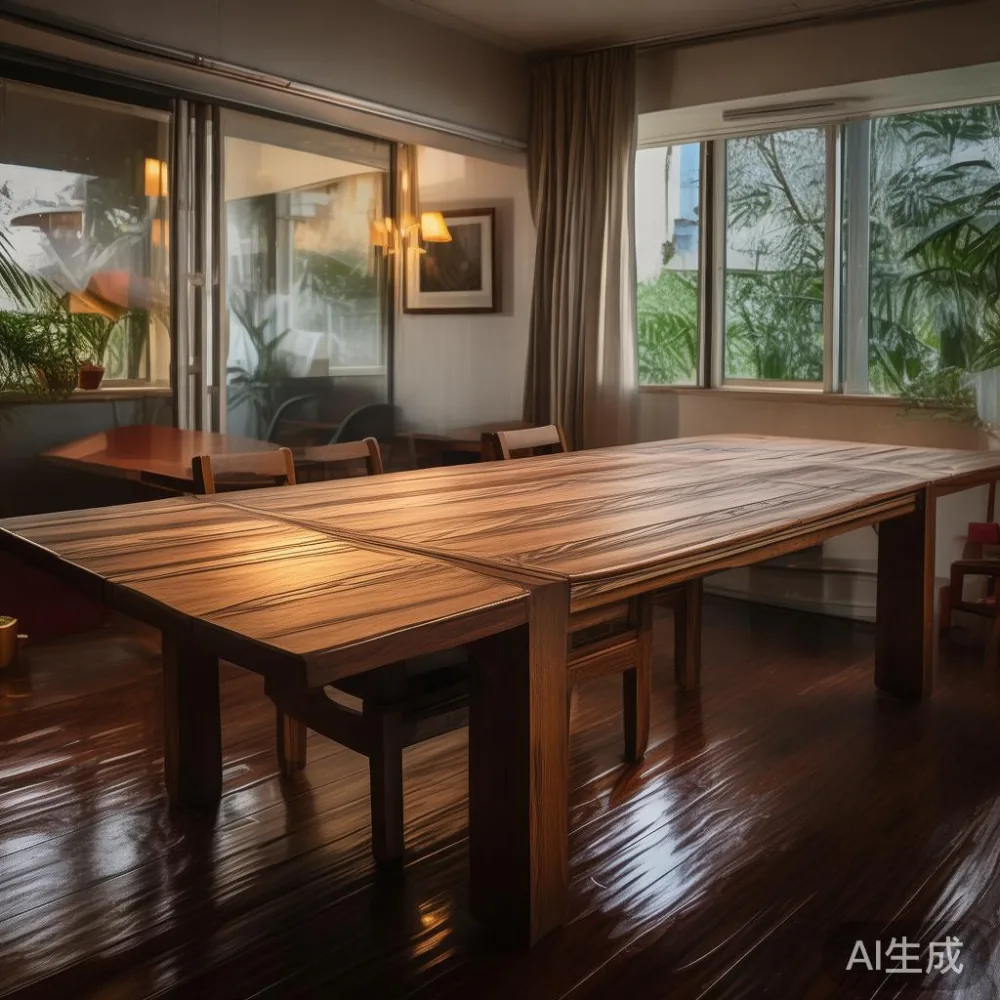
This guide examines relative humidity, seasonal changes, lift access, finishes and practical care. It also explains how to compare solid wood with marble and other materials. MIDHILL has manufactured solid wood furniture since 2008, supplying customers in more than 15 countries with a 10-year structural warranty and lifetime refinishing service. Its Singapore pricing is shown in SGD, while GST is added at checkout where applicable.
Why does humidity make an extendable table move?
Wood absorbs water vapour through its exposed surfaces. When relative humidity rises, the cells gain moisture and the board expands mainly across its grain. For a dining table, that may mean a 180 cm top grows by roughly 1–3 mm as the air becomes more humid, while a solid oak board can show a little more movement than denser rubberwood or a multilayer panel.
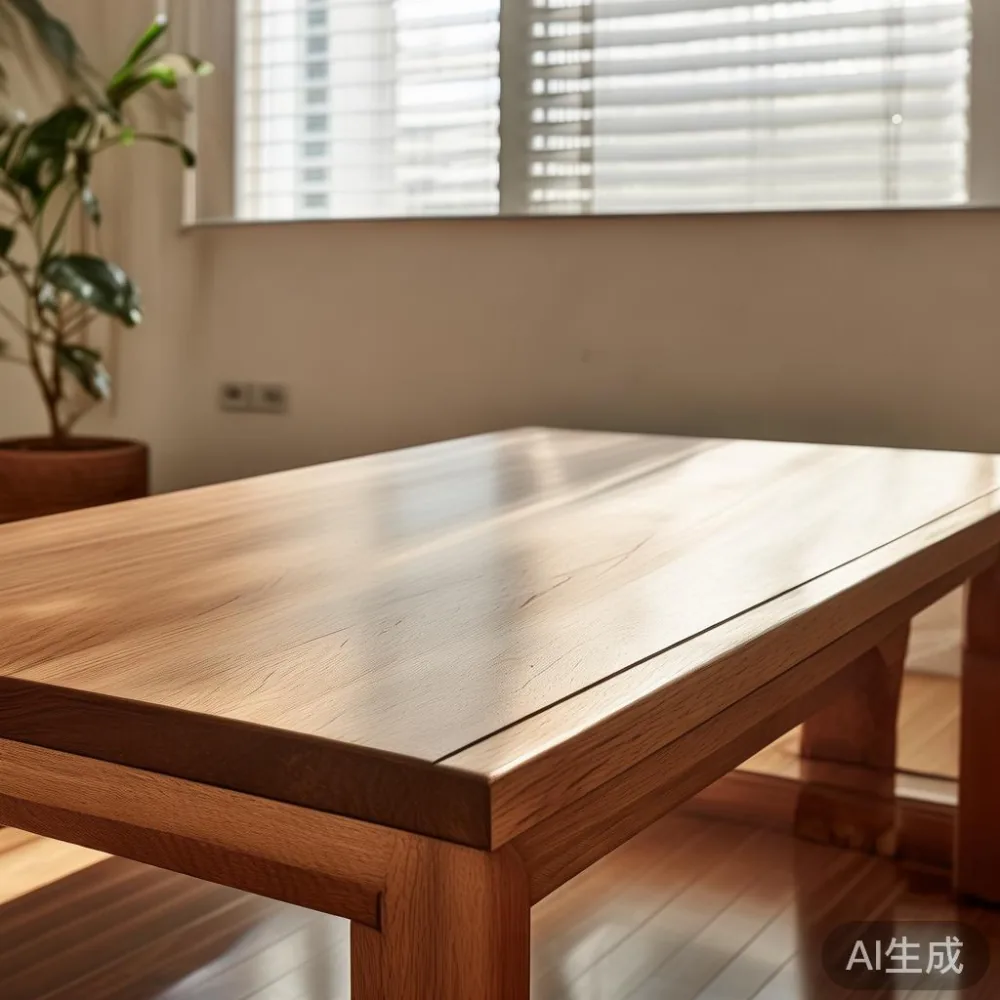
An extendable table presents a more demanding task than a fixed table because several timber sections must fit together accurately. As the tabletop expands, its rails may also change length. That is not automatically a defect. Good construction allows controlled movement, but poor connections can bind, loosen or develop gaps. The extension should glide with a light hand load and return to square without force.
Measure the actual room rather than relying only on a weather forecast. A useful indoor target is around 40–60% relative humidity, although local buildings often sit outside that range for short periods. Cheap digital hygrometers commonly cost SGD 12–35. Place one near the dining area but out of direct air-con airflow, and record readings at about 8 a.m. and 8 p.m. for 7 days. If the result moves between 45% and 75%, reasonable protective measures become worthwhile.
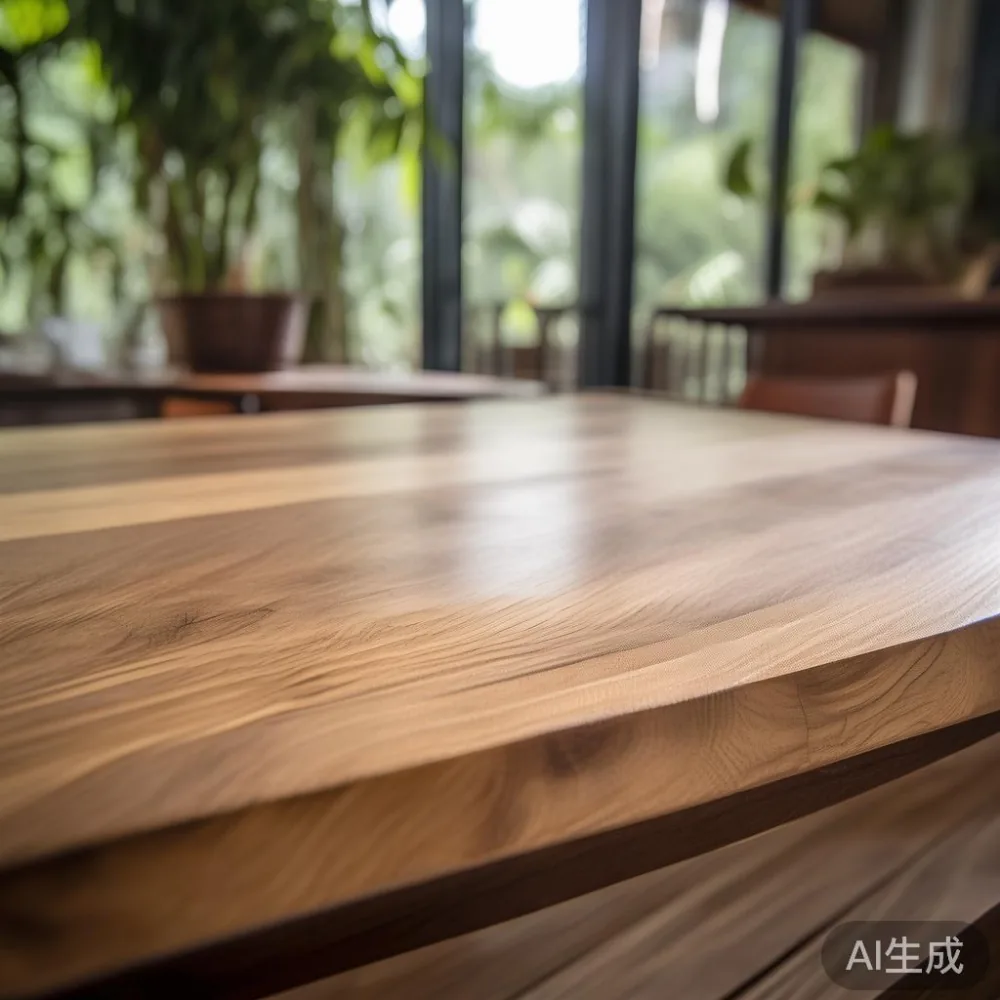
The grain direction also matters. A correctly made solid wood dining table may move 3–5 mm over 100 cm across the grain during normal seasonal variation. Movement along the grain is generally smaller. A warped leaf, permanently tight extension or cracked finish deserves an inspection; a tiny gap under changing humidity can be ordinary timber behaviour.
How humid is Singapore, and which areas are most affected?
Singapore typically experiences high temperatures and persistent atmospheric moisture, with annual relative humidity often near 75–90%. Rainy periods, winds and overnight humidity can alter indoor conditions quickly. An HDB kitchen may stay near 60–70% because of cooking and limited cross-ventilation, while an air-conditioned condominium dining space may fall to 45–55% during the day.
Air-con dries timber, but it does not guarantee stable humidity. Warm air entering from an open door can dampen one side of an extendable table while the opposite side remains cool. Coastal units in Bedok and Punggol may also experience frequent moisture changes, although tower position, wind exposure and building design matter as much as distance from the sea.
Track conditions for 14 days before blaming the furniture. Record a high reading of 75% and a low reading of 45%, and check the tabletop, underside and extension mechanism with a straightedge. Photograph the closed gap at intervals. These records help distinguish normal dimensional response from a damaged rail, misplaced fastener or finish failure.
What should I check before choosing a humidity-resistant extendable table?
Ask for the species, board dimensions, joinery and finish rather than accepting “solid wood” as a sufficient description. A dining top made from boards about 18–25 mm thick generally feels more substantial than 12–16 mm material and has greater stability across wet and dry periods. Confirm that the extension leaves use matching timber rather than thin printed veneer.
Check the mechanism under load. Extend and retract it 10 times, then run it through its travel while gently pressing the top. The action should remain smooth, with no scraping or forcing. Rubber or felt buffers should contact the rails evenly, and any locking system should engage without pinching the leaf.
Look at exposed edges and underside areas because moisture can enter through unfinished or damaged sections. A sealed surface reduces water uptake, but maintenance remains part of ownership. Inspect every 6 months, clean gently and address scratches promptly. A manufacturer that offers lifetime refinishing can restore the protective surface after years of use rather than replacing a structurally sound table.
Design also influences stability. A restrained French light luxury profile, a post-modern light luxury shape or an American light luxury dining room style can all work, provided the construction is sound. Slim construction may be visually light but should not sacrifice support. Ask the supplier to explain how the frame resists racking when someone leans against the table.
Can an extendable table fit through a Singapore HDB lift or condo corridor?
Humidity is only one part of the decision; access can determine whether the table reaches its destination. Measure the packed table, not the assembled dining set. In many HDB blocks, lift doors are around 90 cm wide and 210 cm high, although older and renovated buildings vary. Corridor widths can be about 120–180 cm, with tight turns at void landings.
For an extendable table, record 3 measurements: the closed table length, width and height, plus the length of the longest removed section. A 180 cm table might have two 45 cm leaves, or it could use a single 60 cm extension. Add 5–10 cm of working clearance to the doorway rather than assuming a tight fit is safe.
Protect solid wood during delivery. Wrap corners with 5 mm foam, cover the surface with a breathable blanket and keep the package away from rain. A delivery team should not drag the table through a corridor. If the route cannot be confirmed, order a modular extension or ask whether the leaves can be shipped separately and fitted after delivery.
Timing matters as well. Confirm a delivery window of 1–3 days once stock is ready, and obtain the lift booking rules from building management. Free delivery over SGD 350 is available from MIDHILL, but the exact service area and timing should be checked before purchase. For a dining table, the practical total cost may be around SGD 900–2,800 depending on size, timber and hardware; GST is shown separately at checkout.
How should I prevent humidity damage without making my dining room feel damp?
Keep the extendable table away from balcony doors, bathroom vents, wet kitchens and direct air-con outlets. Leave 20–30 cm from a wall if space allows, because airflow behind the table slows surface drying. Do not place a damp cloth, flower vase or cold drink container directly on the wood for long periods.
Wipe spills within 5 minutes. Use a soft, slightly damp cloth, then dry with a clean cotton cloth. Avoid steam cleaners, bleach, ammonia and rough scouring pads. Cleaning every 1–2 weeks is sensible in a busy dining room, with a light polish every 3–6 months only if the product instructions allow it.
Run the air-con or dehumidifier when the hygrometer reads above roughly 70%. Set a reasonable indoor target of 50–60% rather than chasing an exact number. Sudden changes can be as disruptive as persistent dampness, so avoid moving an air-conditioner blast from one end of the table to the other several times a day.
Use a stable placemat under hot dishes and felt pads underneath legs. Do not apply improvised oils or waxes over an existing lacquer without checking the finish type. A small repair to a damaged coating can stop moisture entering the board; leaving the break untreated for 12 months may allow the surrounding area to swell.
What does humidity do to a solid wood bed frame, wardrobe or nightstand?
The same principle applies across a bedroom. A solid wood bed frame can loosen slightly if its rails move, while a wardrobe door may stick when the case absorbs moisture. A nightstand near an open balcony can develop a dull patch or finish wear faster than one kept in a dry room.
For customers comparing bedroom products, how to choose Japanese bed is partly a question of joinery and room conditions, not only style. Inspect the platform, centre supports and connection points. A frame with a 2–3 cm ventilation gap beneath the slats can dry more evenly after cleaning. For a French bed vs Mid-century modern bed comparison, compare frame tolerances, hardware and replacement slat access rather than selecting from appearance alone.
Give a wardrobe 5–10 cm of clearance from an exterior wall where possible, and inspect hinges every 6 months. Near a nightstand, use a coaster under a glass and keep the top clear of damp towels. Product searches may include a light brown luxury sofa or a marble table; those materials also need care, but they should not be evaluated as though they share the exact movement behaviour of solid timber.
A solid wood sofa has upholstered surfaces that can conceal moisture, so lift cushions and check beneath them after a rainy week. A bed frame with wooden slats should be ventilated. In every case, inspect for musty smells, soft board edges or mould around 2–3 weeks after a humidity spike.
How can I tell whether movement is normal or a manufacturing problem?
Normal movement is reversible. A table top that returns to its original dimensions after the air dries is behaving like seasoned solid wood. A gap that widens from 0.5 mm to 2 mm and then closes again may be acceptable if the mechanism remains smooth, especially during a seasonal change.
A manufacturing concern is different: the top remains crooked, the extension binds after repeated use, a rail splits, a screw protrudes, or a joint separates under ordinary load. Place a 1 m straightedge across the surface and compare the edges with a 0.5 mm feeler gauge. Document the reading, humidity and date. A 10-year structural warranty can protect against qualifying structural faults, while lifetime refinishing addresses surface restoration; confirm both terms in writing.
I tested this process last month at a Singapore dining area with an extendable table near a sliding balcony door. The hygrometer showed 72% for 6 hours after rain, then 48% once the air-conditioner ran. I measured a 1.2 mm change across the 180 cm top over 48 hours. The extension remained smooth, and the gap closed after the room dried. The experience confirmed why a reading is more useful than a guess: the same table might look faulty at 72% but behave perfectly at 52%.
For a design-conscious home, phrases such as cheap European light luxury furniture, for sale Italian light luxury furniture and wholesale European light luxury furniture can describe a buying preference, but material specifications should decide suitability. Ask who made the table, which timber was used and what happens if moisture causes a gap. In Southeast Asia, good documentation and stable indoor conditions matter as much as the style.
What maintenance schedule works for a solid wood extendable table?
Inspect the surface every month and clean it weekly or after each meal. Check the extension mechanism at least 6 times a year. At the half-year mark, examine the underside, rail ends and corners for raised grain or finish wear. Refinishing should follow the product’s care guidance, often after several years rather than as an automatic annual requirement.
Keep a humidity log for 12 months if the table sits near an exterior wall. Record the lowest and highest readings, the number of extension cycles and any finish marks. Use a scraper only on a loose, damaged coating, and choose a finish compatible with the original product. Avoid sanding aggressively because uneven surfaces can hold moisture differently after refinishing.
Before delivery, protect the dining area with a floor covering, especially along the route from the lift to the dining room. Confirm the table after 24 hours, then inspect again 7 days later. A small checklist reduces disputes and catches a loose buffer or minor finish mark early.
For larger households, consider a second dining table only after measuring circulation space. In a compact HDB flat, an extendable table can serve 6 people at a 180–220 cm closed length and expand for guests, while a 260–300 cm arrangement may still leave less than 90 cm at a narrow walkway. Choose the closed size that fits the daily room, not the largest configuration shown in a catalogue.
Humidity control is not about creating a permanently perfect atmosphere. It is about moderating changes, protecting the finish and respecting timber’s natural movement. With sensible placement, a reliable hygrometer and regular inspection, an extendable table can remain stable through Singapore’s wet seasons for years.