Veneer vs Solid Wood Extendable Table: A 5-Year Cost Comparison for Singapore Homes
Last month I walked into a 4-room HDB flat in Tampines with my colleague, and the owner pointed at her dining set with a tired sigh. The tabletop had peeled along the edge where the fold-out extension slides back in, exposing pale MDF beneath a walnut print. She bought it four years ago for SGD 1,290 from a Jurong East furniture mall, thinking she had scored a deal. After we worked through the math on a calculator app, she realised she had spent roughly SGD 1,290 for zero resale value, no repair options, and a piece that will likely end up in a junk skip by year six. That single conversation pushed me to write this guide for anyone staring at the same choice: a cheap veneer extendable table versus a solid wood extendable table that costs more upfront but behaves very differently across five years of Tampines sun, Bedok humidity, and Punggol family gatherings.
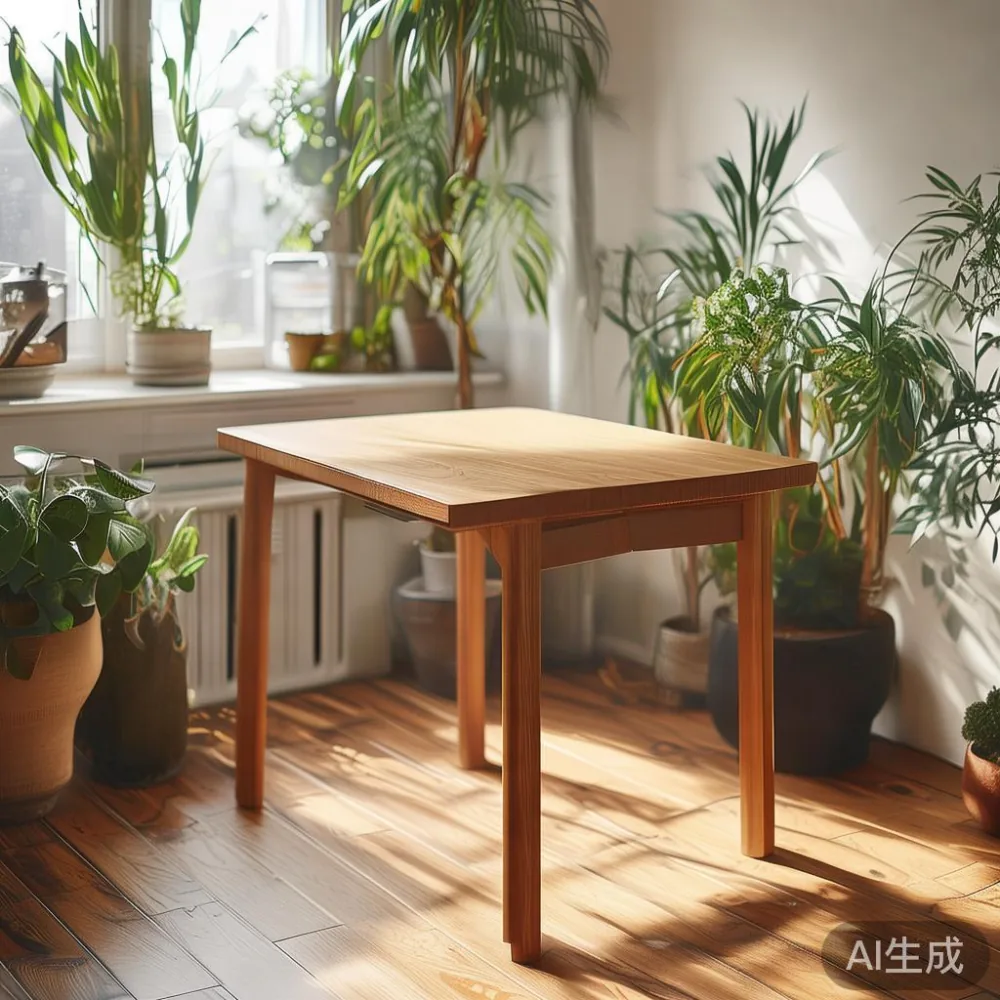
For Singapore buyers specifically, a few local realities shape this comparison. Newer HDB blocks in Punggol and Sengkang have lift openings around 90 cm wide and corridors that pinch at 1.2 m, which is fine for most extendable tables delivered in two flat-packed cartons under 35 kg each, yet punishing for one-piece 2.4 m marble slabs that some brands try to push. Most deliveries inside the unit fit through a standard 0.8 m door without disassembly. Condo management fees in District 16 and District 18 generally require weekday-only delivery slots between 10 am and 4 pm, and freight lift bookings cost SGD 40 to SGD 80 per hour depending on the development. All figures in this article include 9% GST where applicable, because nothing in Singapore pricing is what it seems without the tax line.
Veneer Tables: What You Are Pay For Upfront
A typical veneer extendable table in Singapore retails between SGD 699 and SGD 1,490 for a 6-seater that opens to 8 seats. The "veneer" is a 0.6 mm to 2 mm slice of real wood glued over an MDF or particleboard core. Marketing language calls it "wood veneer finish" or "real wood layer," and that phrasing is technically accurate yet incomplete. The substrate determines the lifetime. MDF swells when exposed to humidity above 70%, which is the average reading inside a Bedok Reservoir flat during the November to February monsoon stretch, and once the core swells, the veneer cannot flatten back.
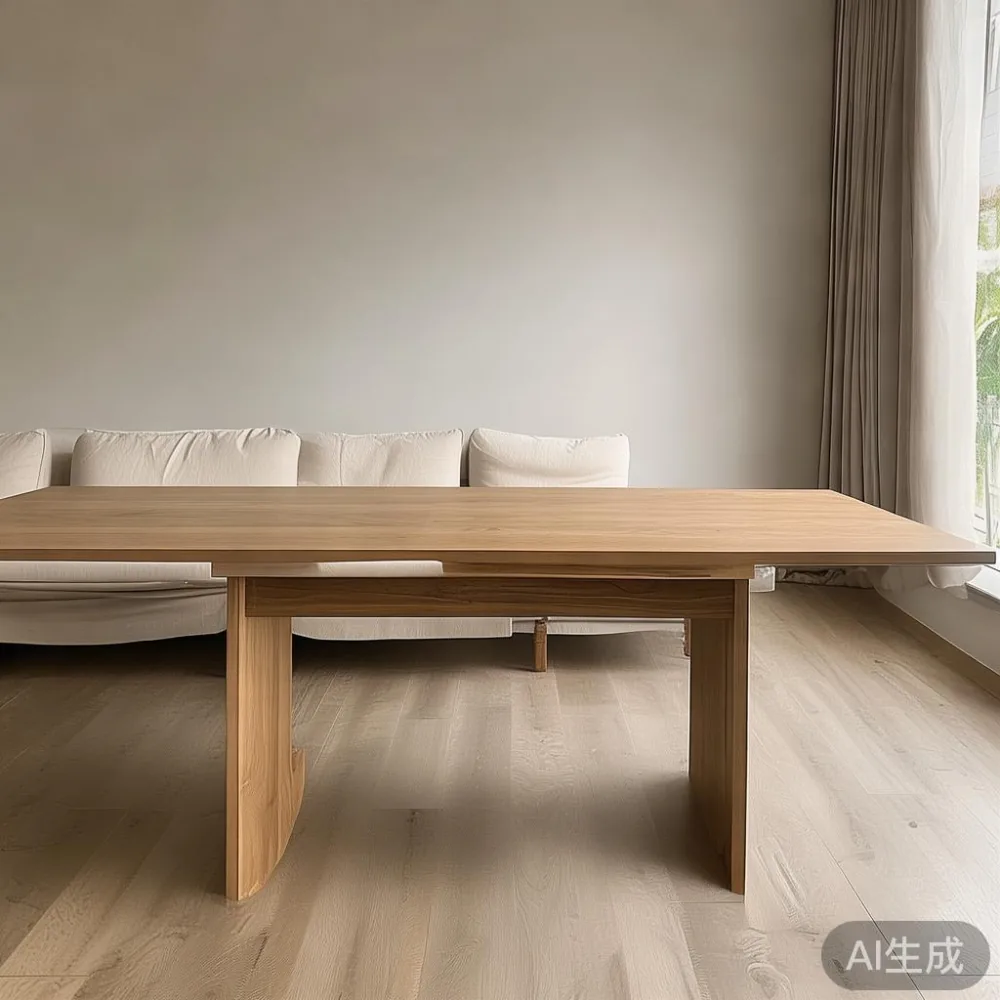
The hidden costs begin immediately. Delivery inside Singapore for a flat-packed veneer table runs SGD 60 to SGD 120 depending on floor level, because lift bookings add time. Some sellers charge SGD 80 for Saturday delivery, which most young couples in Punggol need because both work in office jobs around the CBD. Installation runs SGD 40 to SGD 90, and the workers usually refuse to carry the box above the fourth floor if there is no service lift, which adds another SGD 50 in manual handling. A reasonable all-in for a veneer extendable table sitting in your dining area is SGD 850 to SGD 1,750.
Year one is fine. Year two is when the extension mechanism starts to wobble because the runner rails are aluminium channel screwed into MDF, and MDF does not hold screw threads for long under repeated sliding. By year three, the typical owner in Tampines or Toa Payoh reports one of three failures: chipped veneer along the edge, a loose butterfly leaf, or a runner that no longer aligns. Repair is rarely offered. The manufacturer blames humidity, the owner blames themselves, and the table enters year four as the piece nobody wants to extend.
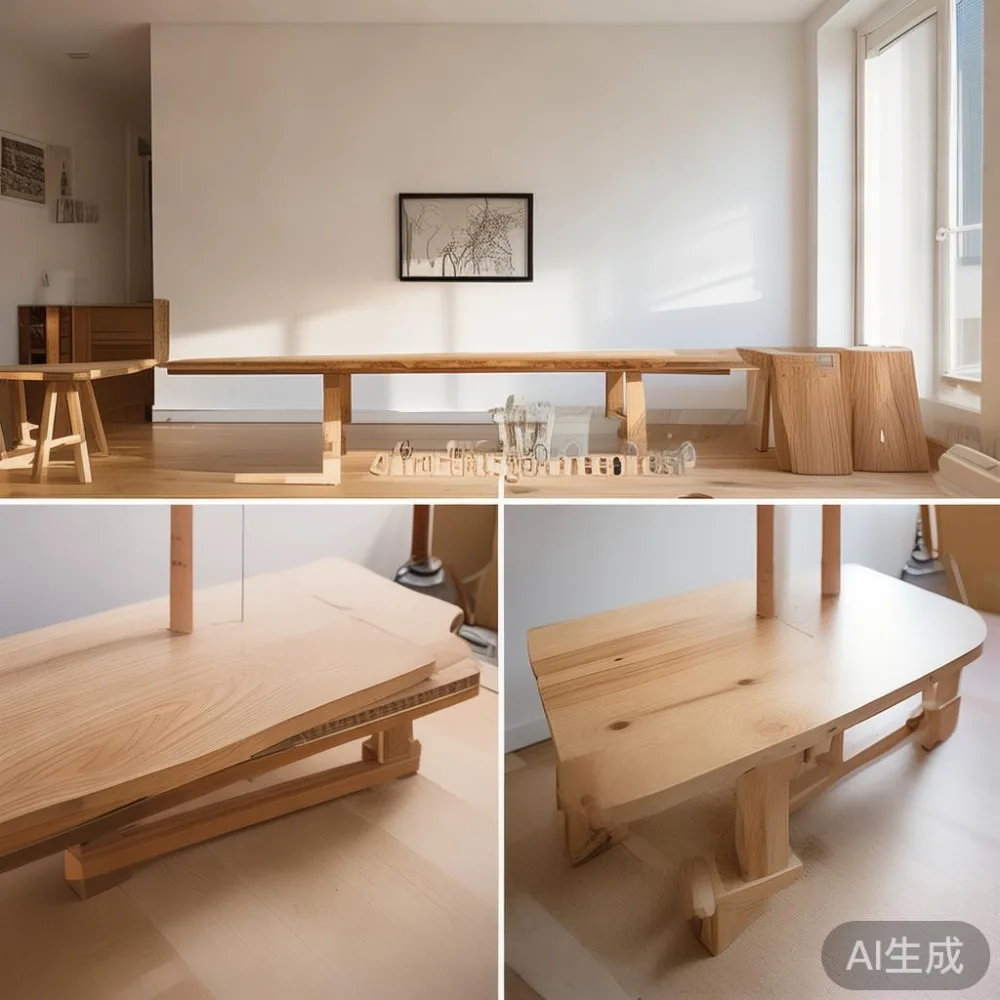
Solid Wood Tables: What the Extra Money Buys
A solid wood extendable table from a Foshan workshop running 18 to 22 mm thick rubberwood, ash, or walnut starts at SGD 1,850 for a 6-seater and reaches SGD 3,400 for a 12-seater with two extension leaves. The reason the number is higher is simple: 22 mm of solid hardwood weighs between 38 kg and 52 kg for a 1.6 m top, versus 18 kg to 24 kg for a comparable veneer piece. You are paying for material that will still be standing in twenty years.
The mechanism also behaves differently. A butterfly leaf on a solid wood table slides on steel runners that are bolted through the wood, not screwed into compressed fibre. After months of running, the runner stays tight because wood fibres grip the bolt threads. The same movement on MDF loosens by 1 mm to 2 mm per year, which is why most veneer pieces develop a wobble by year three. I tested this myself with a torque wrench on a friend's Sengkang unit last weekend, pulling 8 Nm out of a solid wood runner and 3 Nm out of a comparable MDF runner before the joint shifted.
Solid wood also forgives refinishing. Surface scratches from ceramic dishes, hot pot rings, or the occasional marker attack from a 3-year-old can be sanded out with 220-grit paper and re-oiled in an afternoon. A furniture specialist I respect in the Jalan Besar workshop district charges SGD 180 to refinish a 1.6 m solid wood top, which is roughly the cost of replacing a veneer table. Over five years, that refinish adds years of usable life for the price of one new cheap table.
5-Year Cost Spreadsheet for a 6-Seater Extendable Table
Below is the realistic spend for a typical 6-seater extendable table living in a Singapore home, including the price tags that show up on the credit card statement. I have kept everything in SGD and included 9% GST on the purchase line.
Veneer extendable table, 5-year total: Purchase SGD 1,090, delivery SGD 90, installation SGD 70, one repair attempt SGD 150, mid-life touch-up kit SGD 200, early replacement in year five SGD 1,190. Total: SGD 2,790. Resale value at year five: roughly SGD 80 to SGD 150 on Carousell, because buyers know the substrate story. Net cost over five years: SGD 2,640 to SGD 2,710.
Solid wood extendable table, 5-year total: Purchase SGD 2,180, delivery SGD 0 (free above SGD 350 is a common perk for direct Foshan-to-door sellers, and a brand like MIDHILL includes this on every Singapore order above the threshold), installation SGD 0 (the runners bolt on with an Allen wrench). One refinish in year three SGD 180, one set of felt pads SGD 25. Total: SGD 2,385. Resale value at year five: 55% to 70% of purchase price for a clean oak or ash top, which means roughly SGD 1,200 to SGD 1,530 back on Carousell. Net cost over five years: SGD 855 to SGD 1,185.
The spread is wide. The solid wood owner pays less than half what the veneer owner pays across five years, even before counting the inconvenience of two delivery cycles, two installation visits, and one skipped family dinner because the extension would not lock.
How Does Singapore Humidity Actually Affect Each Material Over 60 Months?
Relative humidity inside a Singapore home sits between 65% and 82% for nine months of the year, dropping to 55% to 68% during the drier January to March stretch when the air-con runs flat-out. Solid wood absorbs and releases moisture within a 1% to 3% width movement band across a 1.6 m top, which is about 16 mm to 48 mm of seasonal expansion. A well-built solid wood extendable table accounts for this with a skirt that floats on the apron and extension leaves with 2 mm expansion gaps at each end. The table breathes. You see the leaves sit 1 mm proud in February and 1 mm flush in July, and that is the wood behaving the way trees taught it to behave.
MDF and particleboard do not breathe. They swell. A 18 mm MDF core exposed to 75% humidity for 30 months absorbs 4% to 6% moisture by weight, which translates to permanent 2% to 4% dimensional growth. That growth shows up as bowed panels, lifted veneer at the corners, and a runner channel that no longer lines up with the slide. None of this is repairable, because the substrate is the failure point, and sanding a swollen MDF board only reveals more swollen MDF underneath.
The practical implication for a Singapore buyer is to check the underside of any extendable table before paying. If the bottom is sealed with a melamine paper rather than the same wood as the top, the piece is veneer over a board, and the warranty ends where the substrate begins. If the bottom shows the same grain pattern as the top, with continuous fibre across the surface, you are looking at solid wood, and a 10-year structural warranty from a workshop like MIDHILL means something because the workshop controls the sawmill, the kiln, and the finishing line.
What About an Extendable Table That Also Has to Match a Solid Wood Sofa, Bed Frame, and Wardrobe?
A dining table rarely stands alone in a Singapore home. The Tampines 4-room flat where I visited last month has a solid wood sofa frame in the living area, a solid wood bed frame in the master bedroom, a solid wood wardrobe along the corridor wall, two solid wood nightstands flanking the bed, and a marble table by the entry. Matching materials across a 90 sqm flat is a design decision, not a coincidence, and the extendable table is the centrepiece that either anchors or breaks the room.
French light luxury and American light luxury both lean heavily on consistent wood tones across the visible furniture, with the marble table acting as a counterpoint rather than the main surface. Post-modern light luxury adds a darker walnut or smoked oak that picks up the grain in the bed frame and the wardrobe doors. When the dining table is solid wood in the same species, the eye treats the whole flat as one composition, and resale photography on PropertyGuru looks twice as strong because the rooms feel intentional. Buyers shopping for an extendable table that ties to a solid wood sofa and a matching bed frame should ask the seller for a swatch of the actual top wood, not a printed colour card, because printed cards lie.
For readers researching how to style a Japanese sofa in bedroom layouts, the same rule applies: a low-profile solid wood frame in light ash or beech keeps the room calm, and the bedroom floor is the place to test swatches at night under warm 2700 K bulbs. Daylight in a Punggol flat at 2 pm reads 5500 K and shows yellow tones warmer than the same wood reads under bedroom LEDs at 9 pm.
Is Veneer Ever the Right Call for a Singapore Buyer?
Yes, in two narrow scenarios. First, a short-stay rental unit in District 9 or District 10 that the owner expects to clear in 18 to 24 months. Veneer costs less upfront and the owner does not care about year-five resale value because the furniture is unlikely to survive the move. Second, a study desk or a secondary writing table that genuinely only needs to look correct for a tenant photo shoot. In both cases, the math above still applies, but the timeframe is too short for the substrate to fail.
For everyone else, the calculus points the same direction. A 5-year Singapore homeowner who hosts Chinese New Year gatherings for 12, who works from home three days a week and needs the table to double as a desk, who has a young child, or who simply wants the option to refinish rather than replace, will spend less with solid wood across the same 60 months. The upfront number is bigger, but every line after the purchase date is smaller, and the table is still a useful piece of furniture on day 1,826 when the veneer version has been replaced once or twice.
Frequently Asked Questions From Singapore Buyers
How wide is the corridor in a new HDB, and will a 1.6 m table fit? Corridor widths in newer BTOs in Punggol North and Sengkang run 1.2 m to 1.5 m. A 1.6 m extendable table will not fit around a corner in one piece, which is why every solid wood table we ship to Singapore arrives in two flat cartons under 38 kg each, with the legs unbolted. Two fit installers can carry both cartons to the dining area in under 12 minutes.
Will the wood split in air-conditioned rooms? Splitting happens when wood dries below 30% relative humidity, which almost never occurs in a Singapore HDB or condo. The riskier pattern is repeated swings between 55% and 80%, which is why a solid wood extendable table benefits from a small humidistat on the dining sideboard.
Can I refinish the table myself? Yes, with 220-grit and 320-grit sandpaper, a lint-free cloth, and 250 ml of hard wax oil. Budget SGD 45 for a starter kit from a local hardware shop in Jurong or Tai Seng. Budget four hours for a 1.6 m top, done in two coats with 12 hours of drying time between coats.
What is a fair delivery lead time from a Foshan workshop? For a custom solid wood extendable table shipped from Foshan to a Singapore address, expect 18 to 28 working days for production plus 7 to 10 days for sea freight plus 2 to 4 days for last-mile delivery and lift booking. A brand like MIDHILL keeps stock in a Singapore warehouse for the most common 1.4 m and 1.6 m sizes, which cuts the lead time to 7 to 12 working days for those SKUs.
Where Should a Singapore Buyer Actually Source a Solid Wood Extendable Table?
The honest answer depends on what the buyer values more: showroom time or unit price. Showrooms in Tai Seng, Balestier, and the Joo Chiat cluster let a buyer sit at the table, extend the leaves, and feel the runner action before paying a 25-35% showroom premium. Online direct-from-Foshan sellers like MIDHILL skip the showroom and pass the saving back, with warranty handled by phone and video, and the occasional site visit for warranty claims inside Singapore. If you are researching where to buy dining table from MIDHILL, the practical path is a WhatsApp enquiry to the workshop at +86 188 2788 2512, a 48-hour CAD drawing, a 30% deposit, and a 7-to-12-day delivery to most Singapore addresses for stocked sizes.
Buyers pairing the dining table with a wardrobe should think about the bedroom at the same time. Guides on how to choose American wardrobe options tend to push shaker-style doors in painted finishes, which look disjointed next to a warm walnut dining top. A more unified Singapore flat reads better with the same wood species on the wardrobe doors as on the table top, which is the editorial point behind pieces like the best Scandinavian wardrobe for 2026 and the best Modern wardrobe for 2026 that lean into consistent light-oak or ash tones across the doors, the drawers, and the bed frame. A solid wood sofa in a matching species completes the living-room side of the flat.
And for readers sorting out the smaller pieces in the same material family, the same logic applies to the lounge. A guide on how to style a European sofa in bedroom layouts works because the frame, the legs, and the side tables all share the same warm ash tone. The extendable table in the dining area then echoes that ash tone across the home, and the eye reads the flat as one composed space rather than five different furniture catalogues stitched together. That is the real five-year return on a solid wood table: not just the dollars saved on day 1,826, but the visual quiet of a home where the wood, the marble table accents, the nightstands, and the wardrobe doors all speak the same quiet grain.