How to Choose the Right-Sized Extendable Table for a Singapore Living Room
Choosing a dining table for a Singapore HDB flat or condo is rarely just a matter of measuring the room. A table that suits a 9 cm-wide dining recess in a Tampines flat can overwhelm a larger Bedok living room, while a compact model may leave guests without enough space in a Punggol home designed for entertaining. The right extendable table balances everyday circulation, realistic seating capacity, delivery access, and the way your household actually uses its living area.
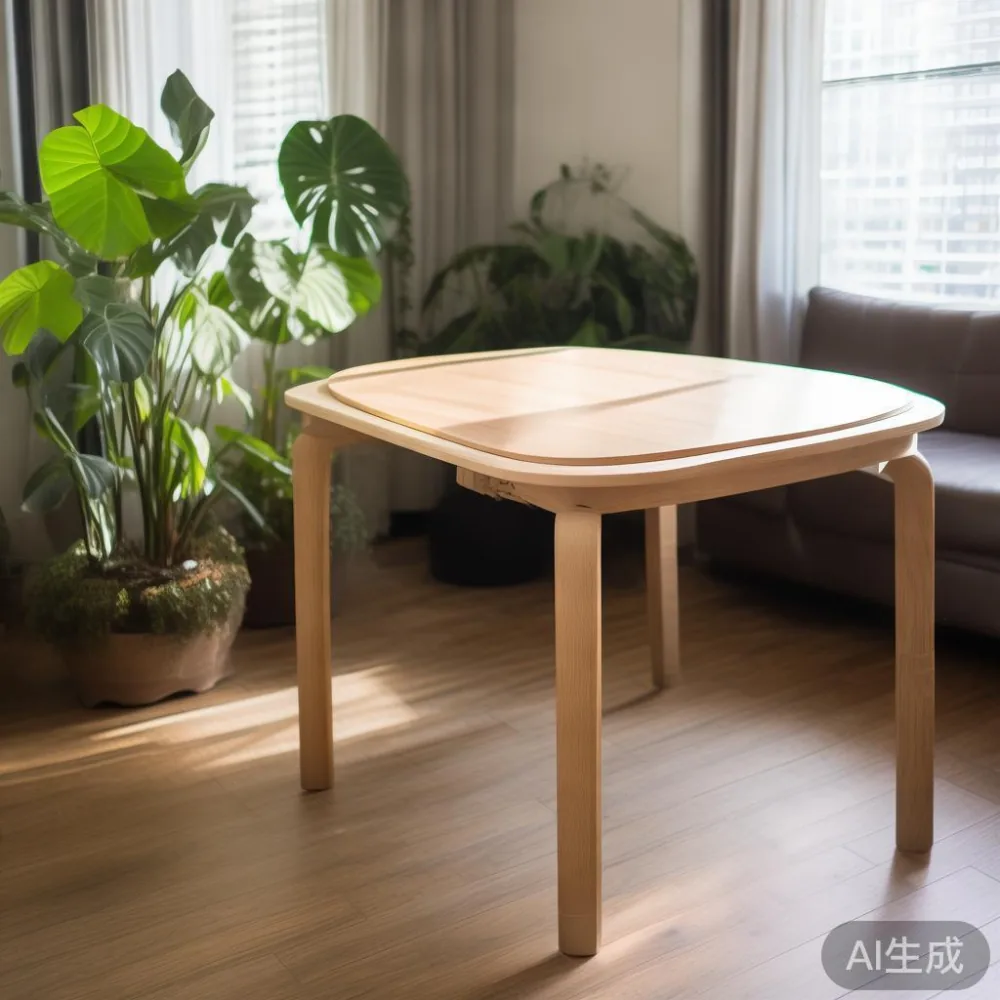
I tested one of MIDHILL's solid wood extendable table designs last month in a 12-by-16 ft living room, with the table placed near a window and a sofa opposite. At its closed length, it occupied little visual space; extended, it created a practical dining surface without requiring a separate dining room. That experience reinforced a simple principle: dimensions matter, but so do extension method, tabletop clearance, and the route from the lift to the table.
What Size Extendable Table Suits a Typical Singapore Living Room?
Most compact Singapore living rooms fall between 10 and 16 ft in length, although the usable width and dining recess can vary considerably. A closed table measuring 120 cm by 70 cm is a sensible starting point for 4 people. It gives each diner about 55-60 cm of width and leaves roughly 75-90 cm for a chair to be pulled back and for someone to pass behind it.
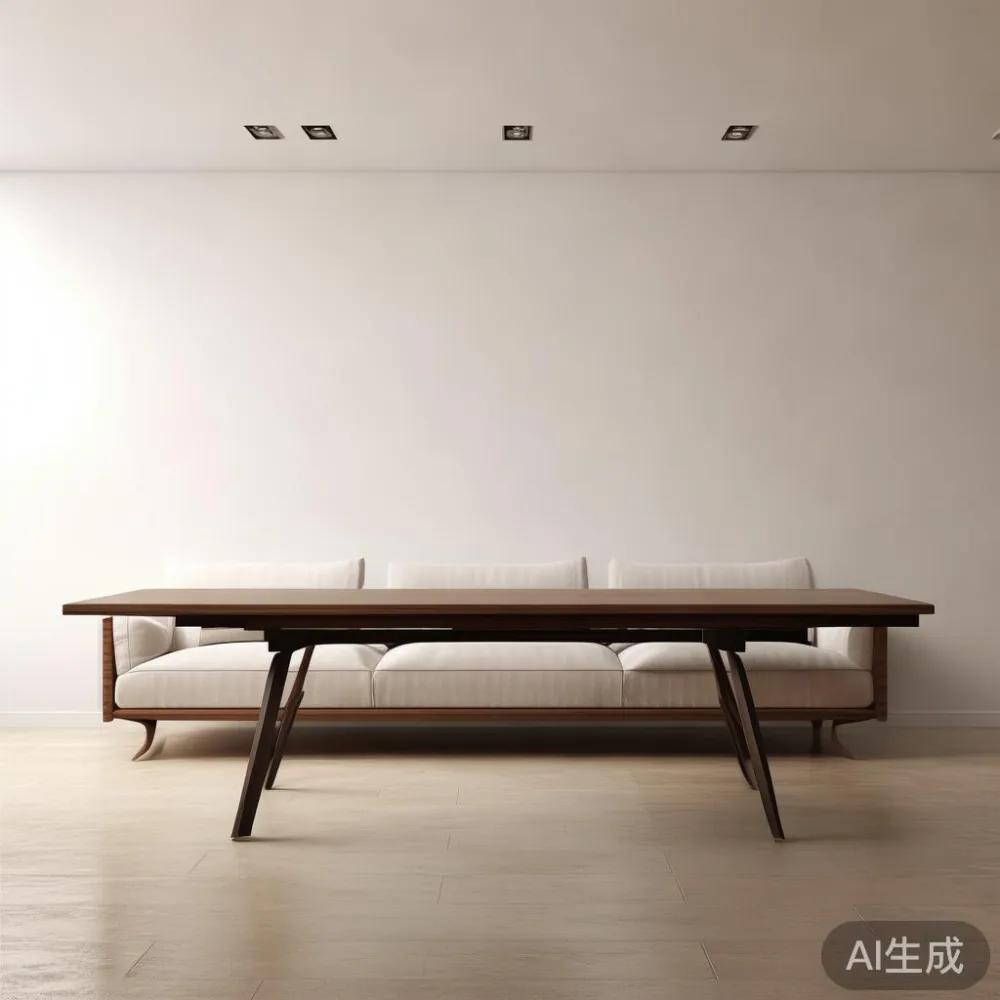
If you expect 6 diners, consider a 160 cm closed model that extends to 200 or 220 cm. A 180 cm table may work in a wider room, but it should not block a balcony door, television console, or the main passage from the entrance. For a compact HDB living room, 140-160 cm is often more manageable than 180 cm.
Do not rely on the number of chairs printed on a product page. Add about 15 cm of clearance behind each occupied chair. A 160 cm table with six chairs needs approximately 200 cm of usable length, including the seated zone. The rest of the room should still provide a 75-90 cm circulation route where people regularly walk.
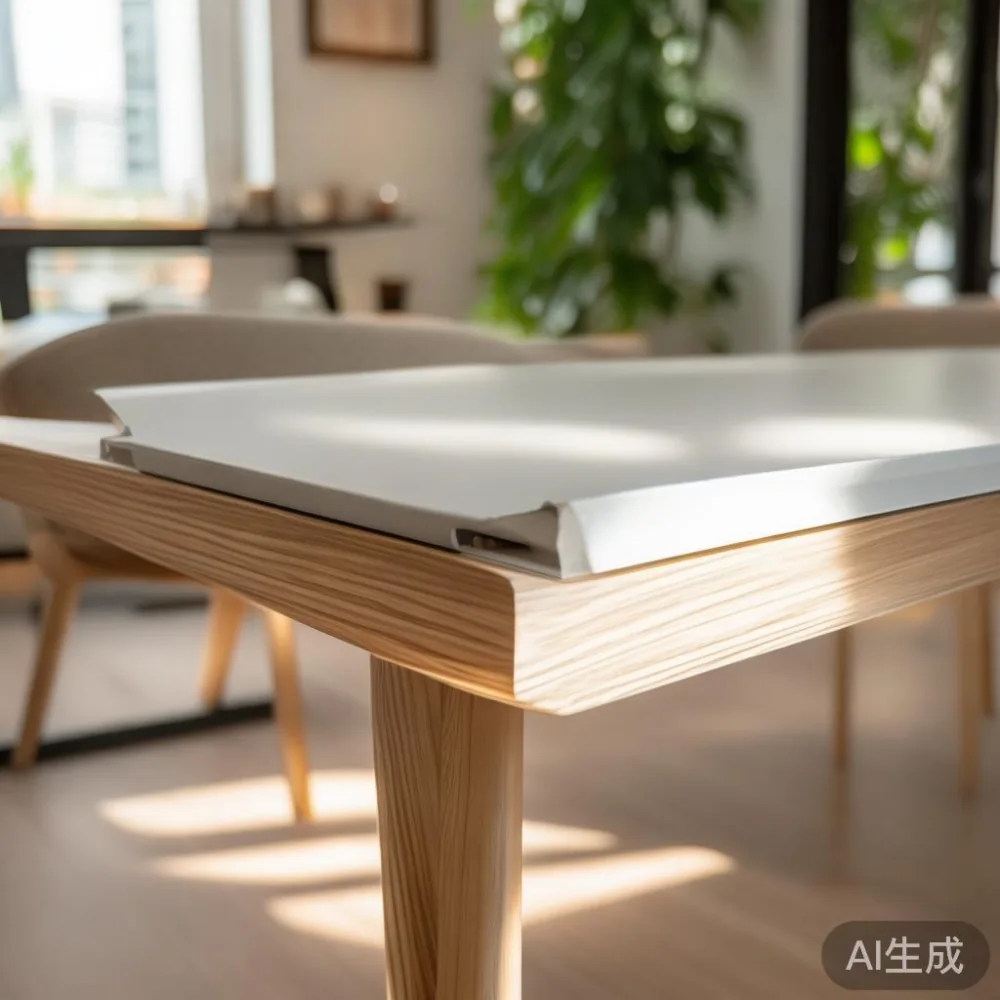
Leave at least 60 cm between the table edge and a solid wall or television, and avoid placing a dining table directly in front of a frequently used doorway. In a 3-room HDB flat, the dining area may be immediately beside the kitchen, so the table should support a short route with a hot dish rather than sit far from the entrance. A 200 cm fully extended table may be practical for a condo but difficult to deploy in a 9-11 ft dining alcove.
How Do You Measure a Singapore HDB Living Room for an Extendable Table?
Measure the room at 3 points: the narrowest width, the longest usable wall, and the depth between fixed furniture. Use a tape measure rather than a floor plan, because older HDB layouts and built-in units can differ from the drawings. Record the position of sockets, floor outlets, air-conditioner vents, balcony thresholds, and television brackets before ordering.
Sketch the furniture footprint on graph paper at a scale of 1:10. A 160 cm table becomes 16 squares by 7 squares, which makes circulation easier to judge. Include chair pull-out space in the drawing, plus 45-60 cm for a person carrying plates. A table that looks acceptable when closed can become frustrating when extended into a walkway.
For a rectangular room, keep the table parallel to the longer wall unless a corner extension and swivel chairs are possible. If your household eats at the dining table for most meals, prioritize legroom over symmetrical spacing. If the table mainly holds display pieces and weekend gatherings, a smaller model with a 40 cm extension may suit better.
Allow 90 cm around the table where no one needs to pass, 75 cm for occasional use, and a minimum of 60 cm in a tight route. These figures are planning guides, not building-code requirements. They reflect comfortable household movement and help prevent a chair from striking a sofa, wardrobe, or open balcony door.
Will a Fully Extended Table Fit Through Your Lift and Corridor?
Yes, if you check the closed dimensions and the extension mechanism. Most extendable tables are delivered closed, with leaves stored separately or inserted underneath. A model measuring 160 cm closed and 220 cm extended may fit in a standard HDB lift even though the open tabletop cannot.
Typical HDB passenger lifts have internal dimensions around 107 cm by 137 cm, with door openings near 90 cm wide, although individual blocks and upgrades vary. A table 160 cm long will often need to stand diagonally. Before delivery, ask for the packaged table length, width, and height, plus the lift door measurement. If the package exceeds 137 cm, check whether the table can be turned diagonally; if not, confirm the service lift or stair-carry procedure.
Corridor turns, fire doors, and the flat's entrance are often more restrictive than the lift itself. Measure the narrowest landing, note whether the route includes a 90-degree turn, and photograph doorways. The 10-year structural warranty on MIDHILL products addresses the table's construction, but it does not replace careful access planning.
For upper-floor homes without a suitable lift, a table weighing under 25 kg is much easier for two people to carry than a 45 kg model. Solid wood is dense, so lighter extension systems and smaller closed sizes can make a meaningful difference. Request delivery within 7-14 days after confirming access, and check whether the courier leaves the package at the lobby or carries it to the door.
Should You Choose Solid Wood, Veneer, or a Marble Table?
For an extendable dining table in Singapore's humid environment, solid wood offers repairability and a warm appearance. Look for hardwood such as oak, ash, or rubberwood with a durable finish that can be maintained. A solid wood table can be sanded and refinished, which is why MIDHILL offers lifetime refinishing. Solid wood sofa, bed frame, dining table, wardrobe, and nightstand collections can share a consistent grain and tone without making a small room feel visually crowded.
Veneer can be lighter and less expensive, but the quality of the substrate and edge banding affects long-term use. Marble table options create a crisp, light-luxury look, yet marble is heavy, unforgiving of stains, and difficult to move through a narrow corridor. A marble-topped extendable table may also require more care around heat and acidic food.
French light luxury often combines pale woods, restrained profiles, soft upholstery, and gentle contrasts. American light luxury tends toward broader proportions, comfortable seating, and practical solid wood construction. Post-modern light luxury may use mixed materials and geometric details, but a busy extension mechanism can look visually heavy in an HDB living room.
Choose a light finish such as natural oak, warm white, or light walnut to reflect daylight and keep the room open. Dark walnut can still work in a large condo, though it may make a compact room feel narrower. Match the table to the sofa and bed frame rather than matching every item exactly; consistent wood tones create calm without a rigid catalogue effect.
Which Extension Mechanism Is Most Practical for Everyday Use?
There are three common systems: a butterfly leaf that folds in half, a single center leaf, and a sliding or telescoping top. A butterfly leaf is efficient because the closed table can remain long, but the hinge and folding support should be smooth and clearly operated. A center leaf is simple to extend, although it may require a second person if the table is wide. A sliding top is convenient but needs a suitable base and accurate alignment.
For a Singapore home, a single 40 cm leaf is often the most useful addition. It expands a 140 cm table to 180 cm and a 160 cm table to 200 cm, enough for 2 extra diners without changing the footprint dramatically. Two 30 cm leaves provide more flexibility but demand more storage and a larger table base. The extension should sit flush, with no ledge, and the locking hardware should prevent accidental movement.
Test the extension with dishes on the surface. A useful home check is to place 3 cups near the seam, press gently around the joint, and then seat 6 people. If the cups rattle or the leaves shift, the mechanism needs adjustment. A reputable supplier should explain care, provide replacement hardware where possible, and document the warranty period.
How Many People Can Sit Comfortably Around an Extendable Table?
Plan 55-60 cm of table edge per person when chairs can overlap slightly, and 70 cm for more generous comfort. A 140 by 70 cm table comfortably seats 4. Extended to 180 cm, it can seat 6. A 160 by 80 cm table also suits 4, and its 220 cm extension can accommodate 6-8 depending on chair width and room clearance.
Corner seats sacrifice usable edge space, so count a corner as roughly half a place if the table is only 70 cm wide. Round extension leaves may improve conversation, but a square or rectangular leaf generally wastes less space and fits narrow HDB dining recesses. If your guests include children, allow extra elbow room and keep the leaf seam away from the main serving position.
For a compact home, buy for the seats used most days, not for the largest gathering imaginable. A 120-140 cm closed table with one leaf can adapt to 6 people when needed. A 180 cm permanently open table may seat more, but it occupies valuable floor area every evening and may disrupt a daily work-from-home setup.
What Should You Budget for a Solid Wood Extendable Table in Singapore?
A locally relevant budget should include the table, delivery, and any access charges. Solid wood extendable tables may range from SGD 1,200 to SGD 4,500, depending on timber, dimensions, joinery, finish, and extension design. A compact 120-140 cm model may cost around SGD 1,200-SGD 2,200, while a 160-180 cm table with a more elaborate mechanism may fall between SGD 2,300 and SGD 4,500.
Singapore's 9% GST is included in displayed retail prices for consumers, so compare the final payable amount rather than pre-GST figures. Delivery to most Singapore addresses may be around SGD 60-SGD 180, depending on the size, access, and location. Confirm whether upper-floor carrying, lift reservation, and assembly are separate charges.
MIDHILL provides free shipping on orders above US$350, although the exact Singapore checkout threshold and currency conversion should be verified before payment. Local currency is still the practical reference: a SGD 2,600 table is the item price, and any shipping or access fee should be shown clearly before checkout.
Consider the return policy as part of the purchase. A 14-day return period is useful for checking room fit, but solid wood should be protected from outdoor humidity and prolonged direct sun. Confirm whether returns require original packaging and who bears return freight.
How Do You Style an Extendable Table in a Small HDB Living Room?
Use the closed table as the everyday centrepiece and extend it only when needed. A slim 70-75 cm wide top preserves circulation, while 80-90 cm is more generous but can make a 10 ft room feel tight. A light top, simple straight legs, and one understated pendant light often create more space than ornate carving or several competing accessories.
Choose chairs with a slim back and legs that tuck under the table. Swivel chairs are useful at corners, while upholstered seats add comfort. Keep the rug at least 20 cm beyond the closed table edge, or 55-65 cm beneath the extended position, so it still frames the furniture when the leaves are open.
For a coordinated home, compare the table finish with a solid wood sofa or bed frame. A wardrobe near the dining area can use the same timber family, while a nightstand can carry a darker accent if the room needs contrast. In a nearby bedroom, how to choose Japandi bed is a separate exercise from selecting a dining table, and light luxury bed vs Japandi bed decisions usually focus on comfort and visual rhythm rather than table dimensions.
Decorate according to use rather than display. One low vase, 2-4 nesting bowls, and table lamps at 25-35 cm high will not obstruct conversation. Keep the surface clear for at least 4 place settings. For storage, consider a slim console no deeper than 35 cm along the opposite wall.
What Are People Asking About Extendable Tables for Singapore Homes?
Many owners ask whether a 160 cm table is too large for an HDB dining area, especially when the room also contains a sofa. The answer depends on the minimum clear width. A 160 by 70 cm table may work in a 10-11 ft room if the sofa is light and the walkway remains 75 cm; in a 9 ft dining recess, choose 120-140 cm instead.
Others ask whether a 200 cm table can pass through a lift. Usually, the closed table can, provided its packaged length stays within the lift's diagonal and the carrier can manoeuvre it. Measure the door, lift, landing, and flat entrance rather than assuming.
Buyers also ask how to choose European light luxury wardrobe pieces for nearby storage. In a compact dining area, a pale finish and shallow depth of 45-55 cm can prevent the room from feeling crowded, but the dining table should still be selected first so the chair route remains clear.
Some search terms focus on retail availability, such as for sale Modern furniture or for sale Japandi furniture, but a credible supplier should offer dimensions, material details, delivery timing, and warranty terms before a purchase. The same disciplined comparison applies to under 2000 Boho furniture, where a woven or rattan accent may complement an extendable table without competing with it.
Finally, buyers want to know how long the table should last. A well-made solid wood dining table with a stable extension, supported by a 10-year structural warranty and lifetime refinishing, can serve several household stages. Delivery in 7-14 days, 14-day returns, and clear access planning make the transition from showroom planning to a Singapore home more manageable.
What Size Should You Choose Before Ordering?
Start with the room's smallest practical dimension, not the largest gathering you can imagine. Choose 120-140 cm for a tight HDB dining area used by 4 people, 140-160 cm for a balanced HDB living room, and 160-180 cm for a spacious condo or frequently hosted home. Look for one 40-60 cm leaf if regular extension is needed.
Before paying, photograph and measure the full delivery route, confirm the closed and extended dimensions, check the finish against your lighting, and seat people in the planned position. The most suitable extendable table is the one that feels comfortable when closed, expands without obstructing circulation, and can reach your dining area without damaging the lift, corridor, or doorframes.