Warm Minimal Interiors in Singapore HDBs: A Practical Guide to Matching Solid Wood Furniture
I spent the first weekend of last month walking through three resale flats in Tampines with a friend who had just collected her keys. The same conversation came up in every living room, usually while she measured the corridor wall with a yellow tape: how do you keep a 90 sqm HDB flat calm and warm without it drifting into the cold, gallery-style minimalism that often feels a touch clinical once the air-con runs for six hours? The answer, in most cases, is not fewer objects. It is the right objects in the right species of wood, with the right surface finish and the right scale for lift landings and doorway widths. Below is a practical, number-heavy guide I wish someone had handed her on the spot.
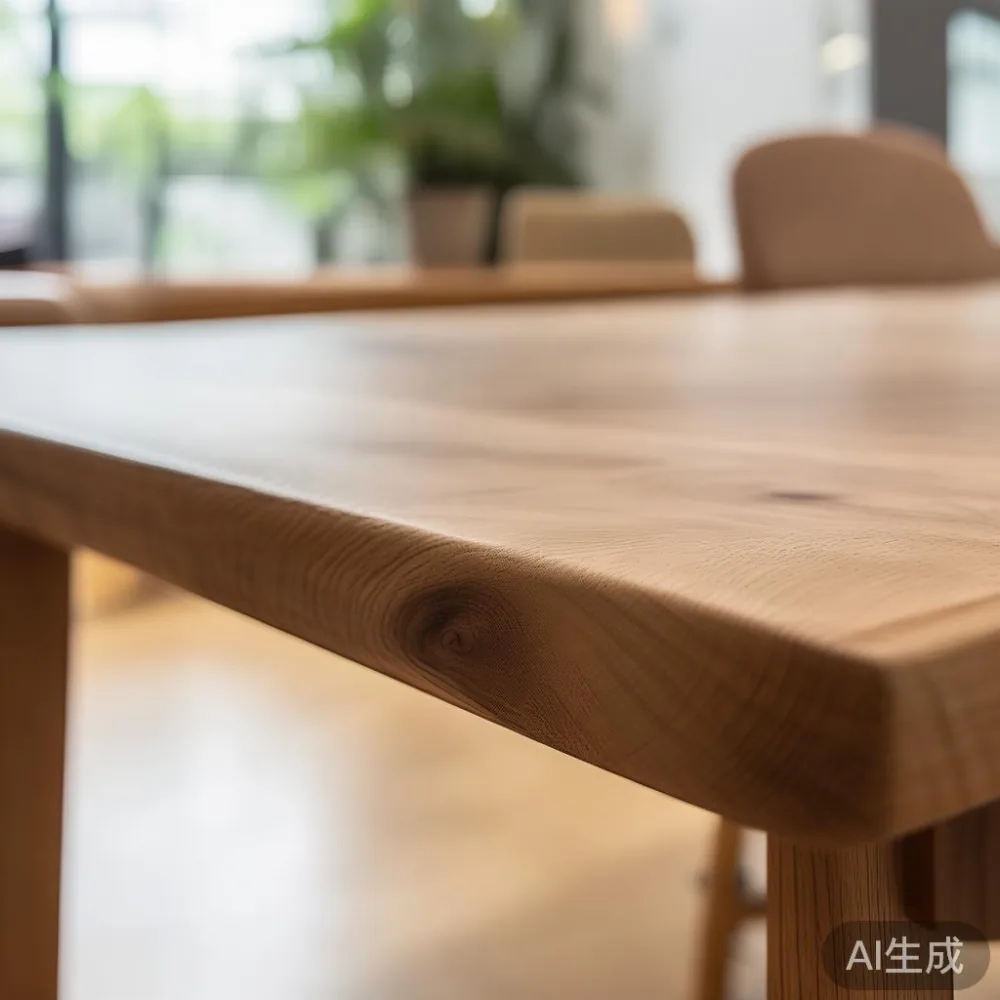
Warm minimalism is a small, deliberate contradiction: the clean lines and edited surfaces of Scandinavian restraint, warmed up through material and light. Think pale ash and white oak rather than high-gloss black, off-white limewash walls instead of pure brilliant white, and one or two tactile objects per surface. In Singapore HDBs, where ceiling heights typically run between 2.55 m and 2.8 m and natural light from a service yard window is often your best asset, that restraint matters even more. Clutter compounds visually in a compact room.
What Does Warm Minimal Actually Look Like in a Tampines or Punggol Flat?
Practical reference, not theory. In the two-bedroom flexi layouts I visit in Punggol (around 63 to 68 sqm), warm minimal usually reads as three or four quiet tones: warm white on the walls (something like Dulux White 00NN 83/000 or Jotun Warm Linen), a medium honey or caramel on the wood, a soft putty or greige on soft furnishings, and one darker accent such as tobacco, walnut, or charcoal. The floor is often light: 12 mm engineered oak or 8 mm vinyl in a pale timber print. Against that floor, a solid wood dining table in ash or oak at 140 cm by 80 cm, expanding to 180 cm, sits comfortably with a 70 cm walkway behind each chair. That 70 cm number is the minimum I push for; below that, pulling out a chair becomes a daily irritation.
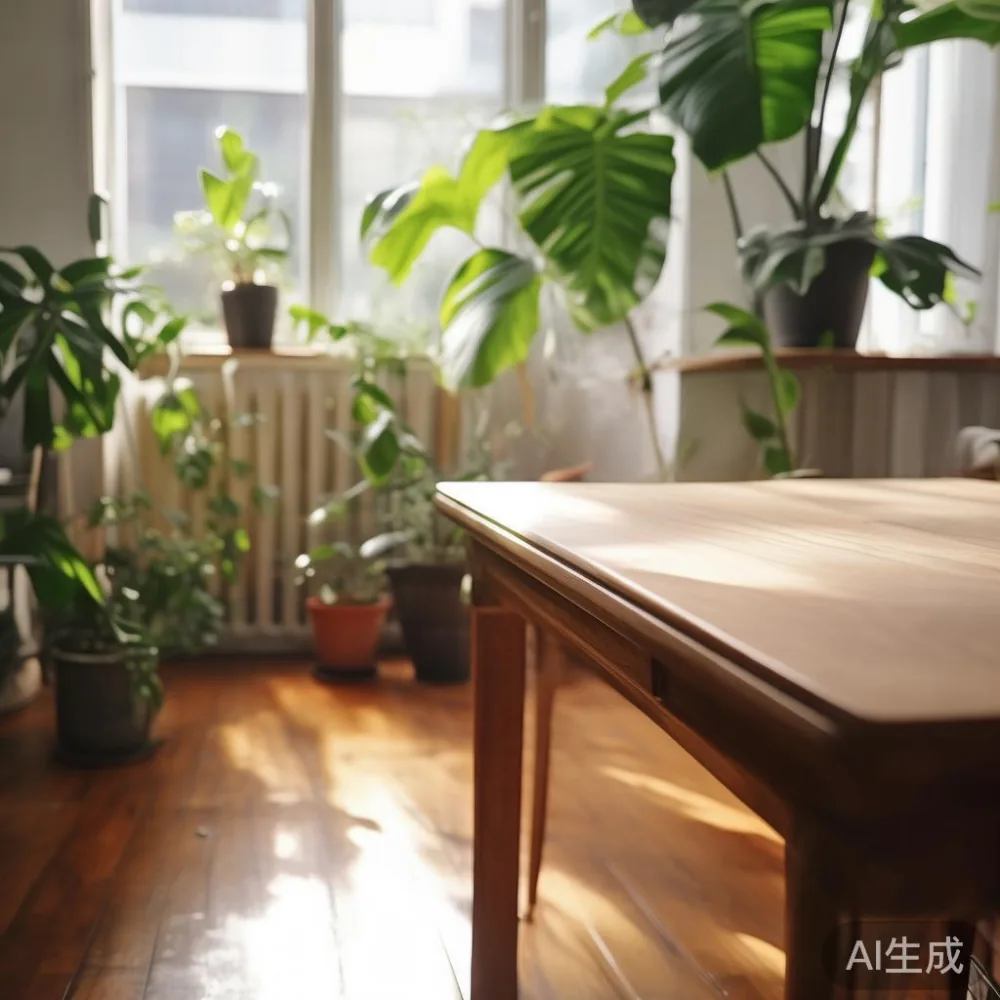
If you are starting from a BTO or a freshly painted resale, plan the colour and the wood before the lights go in. CRI 90+ bulbs at 2700 K are worth the small premium in a dining room; under cheap 4000 K tubes, even expensive oak reads grey and flat. Lighting is the cheapest tool you have for warmth, and it is the one most people skip.
Which Solid Wood Pieces Actually Belong in a Warm Minimal Living Room?
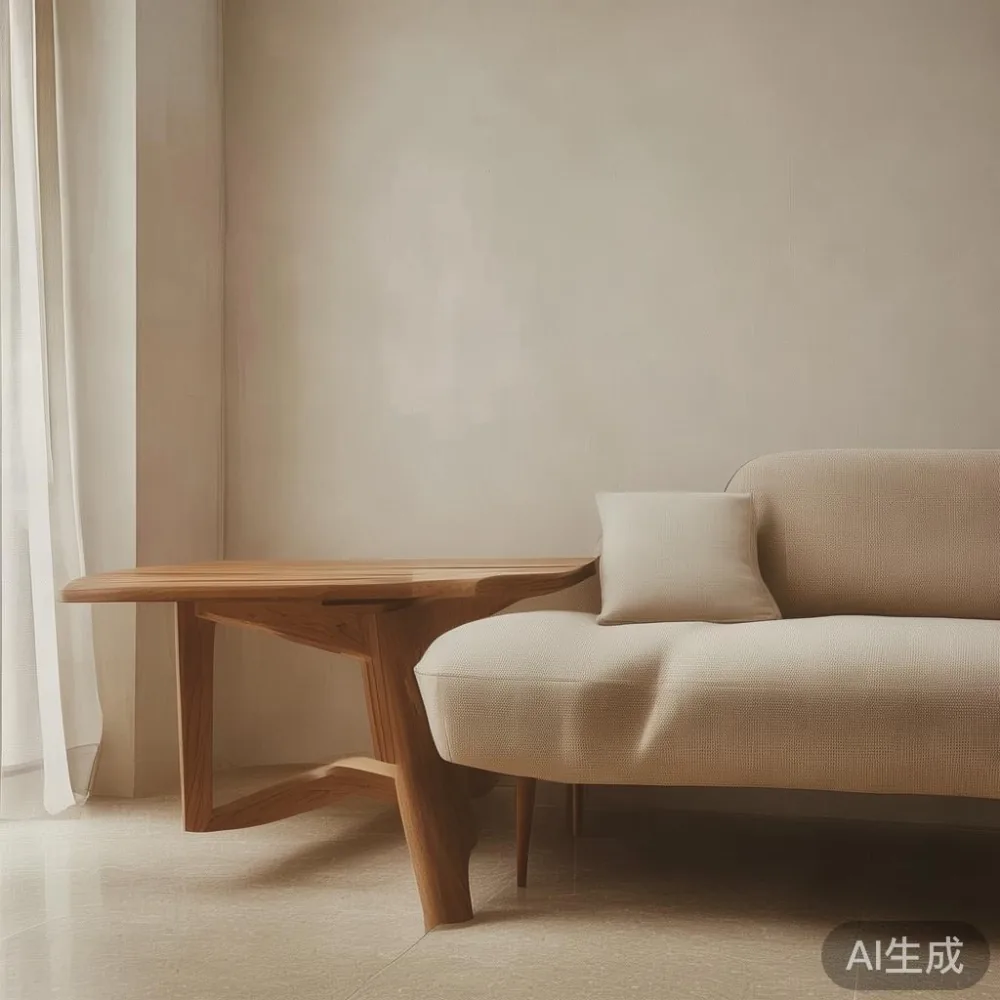
Keep the inventory tight. A solid wood sofa frame in ash or white oak, a coffee table or side table in the same species, a single open shelving unit, and one piece of upholstered seating in a contrasting texture (boucle, linen, or brushed cotton) is usually enough. The number of pieces, not their cost, is what creates the calm. I prefer ash under about S$2,800 for a three-seater frame and oak under about S$3,500 for the same; prices climb quickly once you add boucle upholstery and full-aniline leather, which is where the American light luxury influence shows up in pieces such as a soft-padded solid wood sofa with a low, deep seat and slightly angled arms.
For bedroom furniture, the same restraint applies. A bed frame in white oak or beech at 150 cm or 180 cm wide, with a headboard no taller than 110 cm, keeps the proportions human. A nightstand at 45 cm by 40 cm by 55 cm high slides neatly beside most HDB bed layouts without crowding the doorway. The nightstand, when matched to the bed frame in finish, is the quiet detail that ties the room together. A wardrobe is the third piece worth choosing carefully: panel-front, push-to-open, in oak or ash veneer over a solid wood internal frame, around 200 cm tall and 180 to 240 cm wide depending on your bay.
Is a European Wardrobe Worth It for an HDB Bedroom?
This is one of the questions I get asked weekly, and it has a real answer. The honest read on is European wardrobe worth it in a Singapore context: it depends on the internal spec, not the continent. A genuinely European-spec wardrobe with 18 mm solid wood carcass, soft-close Blum or Hettich hinges, full-extension drawers, and proper ventilation slots will run roughly S$2,400 to S$4,800 for a 3-door bay in white oak or ash. A cheaper Asian-built unit at S$900 to S$1,600 will often use 12 mm or 15 mm particleboard with cam-lock assembly, which holds up fine for five to seven years but will sag at the hinges by year eight. If you intend to stay in the flat for more than ten years, or you plan to rent it out, the European-spec build pays back through service calls you never have to make. If your tenancy is two to four years, save the money and put it into a better bed frame or dining table instead.
For HDBs with the older 2.4 m wall-to-wall bedroom height, check the wardrobe depth before you buy. Anything deeper than 60 cm will eat floor space and stop you from opening the opposite door fully. Sixty centimetres is the practical ceiling for most layouts in Bedok and Tampines four-room flats.
How Do You Match an Extendable Table to a Warm Minimal Dining Area?
The extendable table is the single most useful piece in a compact HDB dining room, and the one I recommend people invest in first. A typical 4-seat HDB dining nook is 120 cm by 70 cm, which fits four but not six. A 140 cm extendable table that opens to 180 cm or 200 cm covers both daily use and the once-a-month extended family dinner, without forcing you to dedicate square metres to a six-seat table that sits empty eleven months a year. MIDHILL's solid ash and white oak extendable table range typically ships at 140 to 160 cm closed, extending to 180 to 220 cm, and the mechanism should be tested in person: lift-out, slide-leaf, or self-storing butterfly, each has a different feel.
In my own test of a 160 cm to 200 cm ash extendable table last month, the extension mechanism needed a flat palm press rather than a hard pull; this is normal for solid wood, since the rails swell slightly in our humidity. Reserve about 70 cm of clearance behind each chair and at least 90 cm of corridor clearance if the table sits in line with the kitchen entrance. Lift access in most HDB blocks is around 210 cm deep and 110 cm wide, so a table that disassembles below 95 cm in any single component is the practical upper limit if you are moving into a resale above the fourth floor.
Pair the extendable table with chairs at 45 cm seat height (the standard) and a tabletop thickness of 3.5 to 4 cm. Anything thinner than 3 cm looks insubstantial against a solid wood sofa frame and reads as flat-pack. The marble table option is the warm-minimal wildcard: a small round marble side table at 50 cm diameter, paired with a timber dining table, gives you the material contrast that minimal rooms usually lack.
French Provincial, Japanese, or Nordic: Which Sofa Direction Fits Warm Minimal?
This is where the market gets noisy, and where a few honest comparisons save a lot of regret. On French sofa vs French provincial sofa, the distinction matters: a true French provincial sofa leans into carved timber trim, curved cabriole legs, and skirted bases in linen, usually at 200 cm to 240 cm wide. A French light luxury sofa, by contrast, keeps the silhouette clean, drops the carvings, and uses higher-quality boucle or velvet on a solid beech or oak frame. If you are aiming for warm minimal, the French light luxury direction is the safer match; full French provincial tends to fight minimalism rather than warm it.
On Japanese sofa vs Nordic sofa: Japanese-influenced frames sit lower (38 to 42 cm seat height), with deeper seats (60 to 70 cm) and plain cotton or linen covers; Nordic frames sit slightly higher (42 to 45 cm), with cleaner exposed timber arms and wool or boucle upholstery. For an HDB living room with a 2.55 m ceiling, the Japanese line keeps the room feeling open; the Nordic line keeps it feeling grounded. Both work, and both pair with a solid wood sofa frame in ash or oak.
For those drawn to the provincial direction, the more restrained version is modern French provincial furniture, which takes the curved lines of the 18th century and quietens the carving and ornament. A modern provincial dining table in whitewashed oak at 180 cm fits many HDB dining rooms, and the cost is usually 15 to 25 percent higher than a plain oak equivalent because of the turned legs and shaped aprons. Pieces in this style, including for sale French provincial furniture listings from both local ateliers and Foshan factories shipping to Singapore, are widely available at the S$1,800 to S$4,500 range for dining and bedroom sets. Local context worth keeping in mind: GST is 9 percent at the time of writing, so a S$3,000 dining set lands closer to S$3,270 all-in, and many retailers now absorb part of this with GST-absorbed pricing during promotions.
How Should You Plan Delivery and Access for an HDB Move-In?
Delivery is where a lot of furniture plans quietly fall apart. A solid oak wardrobe in three flat-pack sections of about 70 kg each is realistic to lift into a lift; a fully assembled 2.4 m wardrobe at 130 kg is not, and getting it up six floors via the service stair is a S$400 to S$800 add-on. Confirm the lift depth and door width before you order, not on delivery day.
Shipping from China to Singapore for solid wood pieces typically takes 35 to 55 days by sea, plus 7 to 14 days for last-mile and white-glove service; air freight compresses this to 10 to 18 days at roughly double the cost. MIDHILL, which ships to 15-plus countries from its Foshan base, has a 10-year structural warranty on solid wood frames and offers lifetime refinishing on most dining and bedroom surfaces, a useful fallback when Singapore humidity takes its toll on a tabletop in years four to six. White-glove delivery in Singapore usually adds S$120 to S$220 per room on top of the landed price, depending on lift access and assembly needs.
What Finishes and Colours Actually Work in Singapore Humidity?
Pick the finish based on what the room does at 3pm. A pure matte open-grain oil finish on oak looks beautiful in a Punggol flat with west-facing afternoon sun; the same finish on a north-facing Tampines flat can look flat and chalky unless the room has at least 2,500 to 3,000 lumens of warm light. A satin hardwax oil is the practical compromise: it resists our 70 to 90 percent humidity band, takes a touch of spilled teh tarik without staining, and can be spot-repaired.
For upholstery, boucle and brushed cotton in ivory, sand, putty, and a single tobacco accent are the safest warm-minimal choices. Avoid pure white, which yellows within a year in non-air-conditioned rooms; avoid pure black, which fights the warm wood story. A solid wood sofa in oak with a stone-washed linen cover in a 60 percent ivory to 40 percent oat mix is the kind of piece that quietly outlasts trends by five to eight years.
What Budget Should You Plan for a Full Warm-Minimal HDB Set?
A realistic starter package for a four-room HDB in the S$12,000 to S$22,000 range, before GST: an extendable dining table in ash or oak (S$2,200 to S$4,800), four to six dining chairs (S$1,200 to S$2,400), a solid wood sofa frame with upholstery (S$2,800 to S$5,500), a coffee table (S$900 to S$1,800), a queen-size bed frame (S$1,800 to S$3,400), two nightstands (S$700 to S$1,400), a 3-door wardrobe (S$2,400 to S$4,800), and a small marble side table (S$600 to S$1,200). At the lower end you are getting clean design and honest materials; at the upper end, you are paying for premium fabrics, longer warranties, and often better joinery.
Where to spend first: the extendable table, the bed frame, and the wardrobe. Where to save: the coffee table (a S$900 piece does 90 percent of the work) and the second nightstand (a wall-mounted shelf at 45 cm by 30 cm costs roughly S$180 and reads the same in a warm-minimal room). Spreading the budget over 18 to 36 months and adding one or two pieces per quarter gives the room time to settle and avoids the over-stuffed feeling that ruins a freshly decorated flat by month three.
How Do You Style a Warm-Minimal Room So It Stays Calm?
Styling is where warm minimal either holds or collapses into either cold minimal or boho clutter. A useful rule: one large piece, one medium piece, one small piece per surface, in mixed materials. On the dining table, a single ceramic vase at 25 cm tall, one shallow timber tray, and a candle in stone or glass. On the bed, two sleeping pillows, two reading pillows in a contrasting texture, and one folded throw at the foot. On the wardrobe top, nothing, or one low ceramic bowl. Negative space is part of the composition.
Plants are useful but easy to overdo. One large plant (Monstera, Strelitzia, or a tall Sansevieria at 1.2 to 1.6 m) and one small trailing plant (Pothos or String of Hearts) per room is enough. Anything more starts to feel like a nursery. The plan is the same one my Tampines friend ended up with after two afternoons of measuring: an ash extendable table at 160 to 200 cm, a white oak wardrobe at 200 cm by 220 cm, an oak bed frame at 150 cm, two matching nightstands, a putty boucle solid wood sofa, and a single marble side table. Eight pieces in a 90 sqm flat, all solid wood where wood was the right material, all in the same warm honey to caramel range. Calm, warm, and noticeably not cold.
For shoppers comparing sources, listings under phrases such as for sale Industrial furniture can be worth a look if you are deliberately pulling the room slightly toward post-modern light luxury; the trick is to mix one industrial material (a blackened steel shelf, a brushed metal lamp) with the warm wood story rather than letting it lead. Pieces from MIDHILL furniture ranges, including their solid wood sofa, dining table, and bedroom lines, are an option worth measuring against local prices, especially when warranty length and lifetime refinishing are factored into the all-in cost across ten years of ownership. A room built around warm minimal is one of the few interior directions that genuinely ages well; the constraint is what gives it longevity.