Extendable Table Warranty: What You Need to Know
A solid wood furniture warranty can look generous on the first page and still leave a Singapore household with an expensive dispute. The useful details are often buried in clauses about moisture, movement, finish, assembly, and service access. For an extendable table, the wording also needs to explain how rails, leaves, joints, and alignment are covered.
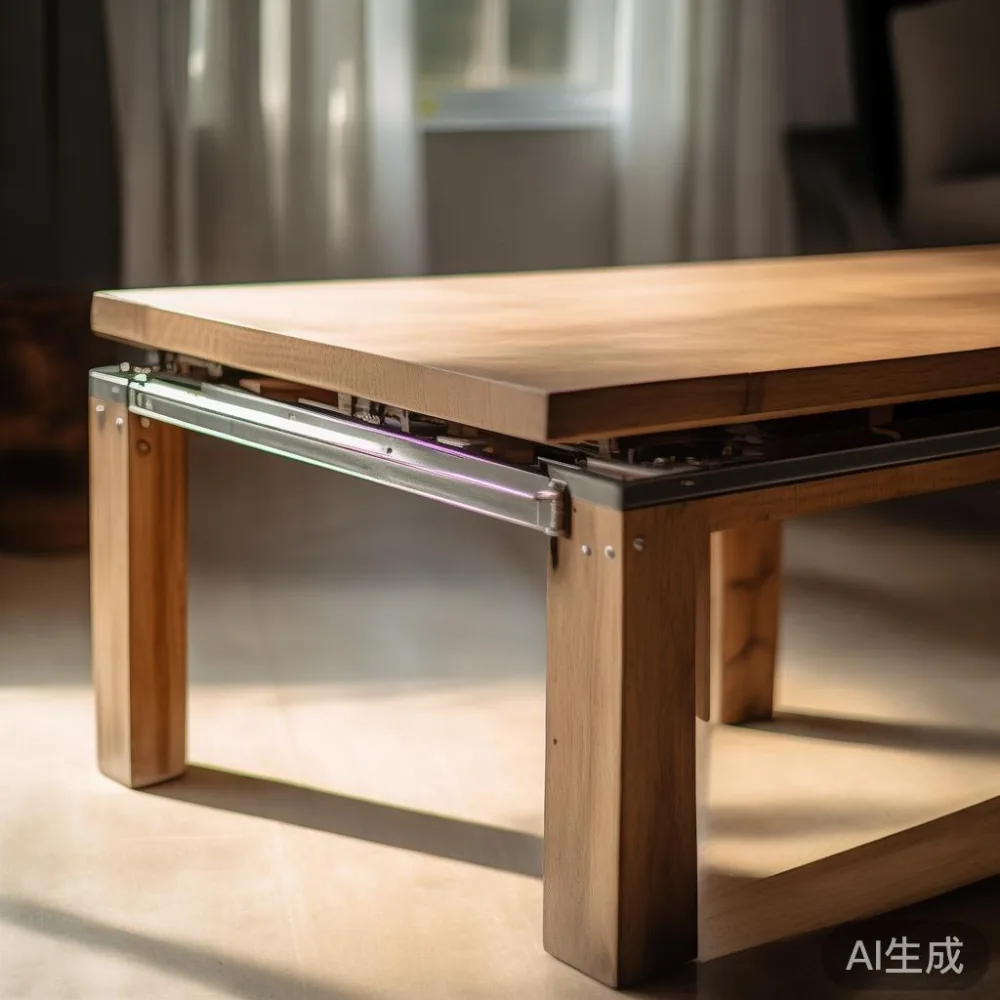
That matters in Tampines, Bedok, and Punggol, where an HDB flat or condo may have a lift lobby, corridor, and dining recess that restrict both delivery and future repairs. GST, access charges, and replacement logistics should be considered alongside the headline warranty period.
MIDHILL was established in 2008 and exports to more than 15 countries. Its solid wood furniture carries a 10-year structural warranty, with lifetime refinishing, 14-day returns, and free shipping on orders over US$350. Those are meaningful commitments, but customers still need to read exactly what “structural” and “lifetime” mean. Here is how to do that without getting caught out.
What does a 10-year structural warranty actually cover?
Start with the list of covered parts. For an extendable table, ask whether the warranty includes:
- The tabletop, apron, legs, and supporting rails.
- The extension mechanism, slides, locking pins, screws, and connectors.
- Wood-joint separation, cracking, or splitting caused by a manufacturing defect.
- Alignment problems that prevent the table from opening, closing, or locking safely.
“Structural” normally refers to the load-bearing construction, not every visible mark. A scratch, faded stain, small gap, or dent may sit outside the structural promise even when a table feels durable. Check whether finish defects are handled separately.
Ask for the claim procedure in writing. A clear process should identify the evidence required, inspection method, repair or replacement timeline, and treatment of transport damage. Find out whether MIDHILL supplies parts directly, sends a technician locally, or asks the customer to arrange collection. For a table weighing 45–80 kg, dismantling and moving it can cost more than the repair itself.
Last month I visited a colleague’s Bedok condo to inspect a solid oak dining table whose centre extension had developed a 3 mm alignment fault. The retailer initially described it as “wood movement.” The supplier’s inspection showed a warped guide rail rather than natural timber expansion. The distinction mattered because one claim fell under ordinary appearance, while the other involved the extension structure. Reading the component list would have answered the question before the table reached the showroom.
Is an extendable table warranty affected by Singapore humidity?
Wood naturally responds to humidity. In Singapore, relative humidity often ranges around 65–85%, while air-conditioned interiors may remain closer to 50–60%. An extendable table can therefore expand, contract, cup, or develop seasonal movement, especially if one side is exposed to a window and the other faces a cooled room.
Look for exclusions relating to humidity, direct sunlight, air-conditioning vents, water spills, and outdoor use. A reasonable warranty should distinguish normal dimensional movement from a defective joint or mechanism. It should also state what care prevents avoidable claims: wipe spills promptly, use coasters and felt pads, maintain ventilation, and avoid placing the table beside a damp wall.
For extension leaves, check whether the pieces are solid wood, veneer, or another material. Solid wood leaves may show grain and colour differences from the main top. If the policy treats those differences as defects, the wording is unclear. Ask whether the table must be fully extended during inspection and whether seasonal movement must first be allowed to settle for 30 days.
Measure the actual indoor conditions rather than relying on general advice. Place a hygrometer near the dining area for at least 7 days. If readings move sharply between 45% and 80%, discuss control measures with the supplier. Concrete care instructions are more useful than a vague promise that the product suits “tropical conditions.”
Does “lifetime refinishing” cover every kind of damage?
Lifetime refinishing sounds straightforward, but finish is not one thing. A dining table may use water-based lacquer, oil, stain, wax, or a combination. Scratches, heat marks, water staining, peeling, and uneven colour may each require a different treatment.
Ask for these details:
- Which refinishing services are included at no charge.
- Whether the service is available once per year or once in the product’s lifetime.
- Whether freight, GST, labour, and return transport are included.
- Whether refinishing changes the current finish or is intended to restore the original appearance.
- Whether damage caused by misuse is excluded.
At some point, refinishing may not be technically possible. A deep burn 15 cm long, a split through a joint, or a failed extension lock could need replacement instead. A useful warranty separates cosmetic restoration from structural repair and explains the sequence of options.
Request written examples of colour matching and expected variation. An exact match may not be possible if the original finish has aged. Ask whether customers can choose a comparable finish and whether nearby touch-up work is recommended. A 48-hour assessment window and a 14-day regional service target would be clearer than “lifetime service.”
Will the warranty still work after my home or office changes?
Many warranties follow the product rather than the original buyer, but not every seller uses the same terms. Ask whether coverage transfers with the furniture, whether proof of purchase is required, and whether the original invoice must show delivery to Singapore.
For HDB flats and condos, access is part of the ownership experience. An extendable table may be delivered in 2–4 separate sections, with the largest section measuring 120–180 cm and weighing 25–45 kg. Before accepting delivery, record:
- Lift car door width: usually 90 cm; car depth: commonly 120–150 cm.
- Corridor width at narrowest point: often 100–140 cm.
- Stair landing or turning space: ideally at least 140 cm across.
- Dining space needed for the closed table: 160–220 cm.
- Space required when open: 220–320 cm.
Some delivery teams disassemble a table and place it in the room, while others deliver it to the lobby only. The warranty should not be undermined by damage during a customer-arranged move. It should also state whether assembly is included and whether incorrect tightening can void coverage.
For condo projects, check management rules and loading bays. A professional delivery could add SGD 80–250 depending on distance and access complexity. A covered warranty claim involving collection may still incur separate charges unless the document explicitly includes them.
What should I check before paying for an extendable table?
Compare the commercial terms, not just the warranty headline. Look for:
- At least a 10-year structural warranty on the frame and extension system.
- A clear 14-day return window, including the condition required for returns.
- Delivery estimates in working days, such as 7–14 days after production.
- Whether free shipping over US$350 is converted to SGD, and whether GST is added.
- Assembly, lift access, and damage-inspection procedures.
- Replacement timelines for unavailable parts or finish colours.
Budget SGD 1,800–3,500 for a mid-range solid wood extendable table, and roughly SGD 3,500–7,500 for a larger or more finely finished model. These are planning ranges rather than fixed quotations. Delivery in Singapore may add SGD 60–180 to SGD 150–400, and GST is normally 9%.
Ask to see the extension operated at least 10 times. Check that each leaf locks evenly, that the runners remain stable when the table is loaded, and that the locking hardware is accessible. Confirm the extended weight limit in kilograms. A table used for 4 people may carry 120–180 kg, while a larger model may be specified for 200–300 kg. The supplier should provide a figure rather than leaving capacity open to interpretation.
Photograph and time the mechanism. Record extension movement in the first 7 days. These records make later claims easier to verify.
What if the furniture arrives damaged?
Inspect the delivery before the team leaves. Check the tabletop, corners, legs, rails, extension leaves, hardware, and finish under good lighting. Photograph each side and capture packaging, labels, and delivery notes. Note every dent, crack, chip, and finish issue on the delivery receipt.
Do not sign “no damage” without checking. If damage is visible, ask the carrier or supplier to record it immediately and specify whether the table will be collected, repaired on site, or replaced. Keep packaging for at least 7 days if a claim is likely; manufacturers may need it for transport or inspection.
Check the claim windows. A 3-day damage-reporting requirement is different from a 14-day ordinary return policy. Determine whether the clock starts at manufacture, dispatch, or delivery. Written approval before repair can prevent a customer-funded repair from being rejected later.
If a leaf is warped or a lock fails during the first 30 days, ask whether the return window and structural claim process can operate together. A clear policy should not force customers to choose between keeping a defective table and obtaining a repair.
Does a solid wood warranty include every part equally?
No. The wording may protect the main frame for 10 years while treating hardware, mechanisms, or finishes differently. For an extendable table, the extension system deserves its own coverage period and replacement terms.
Ask whether solid wood sofa, bed frame, dining table, wardrobe, nightstand, and marble table pieces are governed by the same policy. These categories have different risks. Marble can chip, a wardrobe can lose alignment, and a nightstand can suffer water damage. A warranty that identifies the construction and component is more useful than one that promises broad cover without detail.
Design language also shapes expectations. French light luxury often uses pale woods, carved edges, and refined upholstery; American light luxury favours clean proportions and restrained detailing; post-modern light luxury may mix materials, shapes, and finishes more freely. The warranty should define the materials regardless of style. A marble table may need separate stone and seam provisions, while a solid wood bed frame needs joint and centre-support terms.
For buyers comparing broader collections, top 10 Rustic furniture checklists often overlook the small print. The same care applies to questions such as how to style European sofa in bedroom or best Japandi wardrobe for 2026: verify the construction first, then the finish and dimensions.
How do I compare different warranty statements?
Create a one-page comparison with actual numbers. Enter the structural period, finish service, return period, delivery commitment, claim window, and access fees beside each supplier. Use Singapore dollars for estimated service and delivery costs, and note whether GST is included.
Compare like with like. A 5-year warranty with local technician support may be more practical than a 10-year warranty that requires overseas shipping, subject to extended waiting periods, and excludes dismantling. MIDHILL’s stated 10-year structural coverage and lifetime refinishing provide a concrete starting point, but the customer should confirm the component and service details applicable to the chosen extendable table.
Other useful questions include: Is the warranty backed by the seller or manufacturer? Which Singapore entity handles claims? Are spare extension leaves available? What is the response time in working days? Can an authorised technician inspect the table without dismantling the whole frame?
Some buyers encounter phrases such as is Mid-century modern wardrobe worth it or best French provincial wardrobe for 2026 while researching styles. Those comparisons should still include warranty terms, moisture assumptions, and available after-sales support.
Who should handle the claim, and what evidence is needed?
Identify one named contact channel. Keep the invoice, warranty certificate, product photos, delivery receipt, and written claim reference in one folder. A useful first claim should include the model, purchase date, delivery address, component affected, approximate dimensions, and clear photographs or video.
For extension faults, include a short clip showing the leaf, runner, lock, and alignment. State the room conditions and the approximate temperature and humidity. This allows the supplier to distinguish a mechanism defect from seasonal movement or uneven loading.
Agree on response times. A reasonable written process might acknowledge a claim within 3 working days, provide an assessment within 7–14 days, and schedule repair or collection within a further 7–21 days, subject to parts availability. These are not universal deadlines, but they make accountability measurable.
Ask whether claims can be handled by a local agent or must be returned to Foshan Lingzhan in China. Overseas handling can add 10–30 days and substantial freight costs. Local inspection may solve that issue, but the policy should state who pays.
Also confirm that deliberate alterations are handled fairly. Replacing an extension runner, refinishing a top, or adding a centre support may affect future claims. The insurer should state when permission is needed and whether authorised modifications preserve coverage.
What questions should I ask before placing the order?
Ask for 10 answers in writing:
- Which components are covered for 10 years?
- How long are the extension runners, locks, and connectors covered?
- Does lifetime refinishing include scratches, stains, peeling, and heat marks?
- Are labour, collection, delivery, and GST included?
- What is the exact 14-day return procedure?
- How quickly should a claim be acknowledged and resolved?
- Can repairs be completed in Singapore?
- What maintenance conditions are required?
- Will the warranty transfer to a new owner?
- Are spare leaves, runners, and finish codes available?
Review the answers against the actual contract, sales receipt, and manufacturer policy. Screenshots of a chat may help, but a PDF terms document is more dependable. Keep a copy with the invoice.
The furniture itself may be a solid wood sofa, bed frame, dining table, wardrobe, nightstand, or marble table, but the warranty should name the product and its materials precisely. Claims about a Japanese bed vs Japandi bed, for example, can be confused by style labels; frame construction and component coverage are what matter.
Good warranty reading turns a promise into a usable service map. You should know which part is protected, for how many years, who inspects it, what you pay, and how quickly action follows. With clear measurements, documented care, and written terms, an extendable table can offer the flexibility a compact Singapore dining area needs without leaving warranty gaps at the dining table.