Extendable Table Warranties Explained in Singapore
A furniture warranty can look generous on the first page and still leave an extendable table owner with a difficult claim. The important details are usually hidden in plain sight: the length of coverage, the definition of a defect, the treatment of movement, the replacement of parts, and the limits on labour. In Singapore, where many residents live in HDB flats and condos in Tampines, Bedok, and Punggol, an extendable table may also need to pass through a lift, turn along a corridor, and fit into a dining space that was not designed for a large gathering. A 10-year structural warranty is useful, but it is only one part of the purchase decision.
This guide explains how to read a furniture warranty in practical terms. It uses extendable tables as the central example while showing why the same questions apply to a solid wood sofa, bed frame, dining table, wardrobe, nightstand, or marble table. MIDHILL was established in 2008 and exports to more than 15 countries. Its warranty terms include a 10-year structural warranty and lifetime refinishing, which gives customers concrete points to check against the small print. Shipping over US$350 is free, and returns are accepted within 14 days, although delivery terms and condition requirements should still be confirmed.
What does a 10-year furniture warranty actually cover?
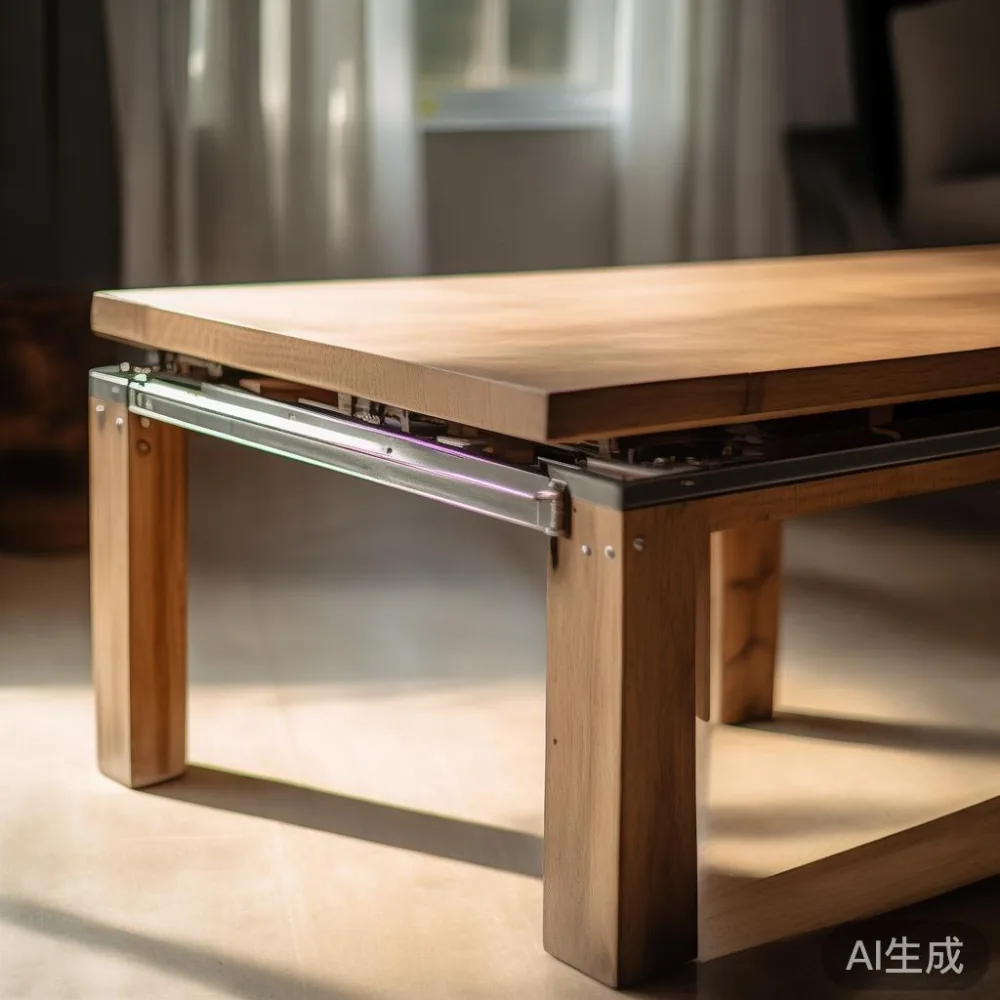
Start by separating structural integrity from appearance. A structural warranty commonly covers failures in the frame, joints, and load-bearing components under normal use. It may not cover ordinary changes in colour, surface scratches, fading, dents, or the movement of solid wood as humidity changes. For an extendable table, ask whether the warranty covers the leaf-support mechanism, extension rails, locking pins, frame joints, and the stability of the fully extended surface. The table’s advertised 10-year structural period should be compared with the supplier’s definition of “structural”.

Check the start date too. It may begin on the purchase date, the delivery date, or the date shown on the invoice. If a table is delivered on 18 March 2026 but ordered on 2 March 2026, ask which date determines the end of the 10-year period. Keep the order number, invoice, delivery record, photographs, and warranty certificate together. A claim is easier to document when every relevant date is written down.
Ask what happens if a component fails. Does the company repair it, replace it, issue a credit, or refund the purchase price? A repair may be free for the part but charge for labour or delivery. A replacement may use a different wood batch, finish, or component grade. For an extendable table, one failed locking pin should not necessarily require a whole new top. The right answer should explain how replacement parts are supplied and how the table is returned or serviced.

One practical test is to imagine two failure scenarios. First, imagine a dining table frame joint loosening after 3 years of daily meals. Second, imagine the table’s finish becoming lighter after 2 years near a window. One event may fall under structural coverage; the other may be considered cosmetic wear. If the warranty does not distinguish between them, it is not yet clear enough to rely on.
Is the warranty for parts, labour, and delivery too?
Many warranties mention replacement parts but omit service costs. For a customer in Bedok, a technician visit may involve parking charges, lift booking, and time away from work. Ask whether the warranty includes the labour needed to remove a damaged rail, transport the replacement part, and reinstall it. If the company requires the owner to collect the extendable table from a warehouse, the repair could cost more than the original fault.
Delivery protection is another separate question. Ask whether transit damage is covered by the warranty or by the delivery policy. A table arriving with a cracked corner may be a transportation issue rather than a manufacturing defect. The company should state who to contact within the first 48 hours, what photographs to provide, and whether the packaging must be retained. Photograph the tabletop, underside, extension rails, and corners before assembly. Take 6 clear images: 2 full views, 2 close-ups of the joints, 1 image of the mechanism, and 1 image of the shipping condition.
For orders shipped internationally, the terms may change after the goods leave the country. Confirm whether the warranty continues in Singapore, whether local labour is included, and whether the company can dispatch a replacement directly to a Singapore address. Also check whether GST is added to service calls, return freight, or replacement parts. A 10-year promise that excludes labour outside the factory may be less useful than a 5-year promise with a clear local service procedure.
Will a big extendable table fit through my HDB flat?
Warranty language cannot solve a sizing mistake. Before buying an extendable table, measure the route from the delivery point to the dining area. Singapore HDB corridors can be narrow, and a standard lift has a limited door width and internal depth. Measure the lift door, lift car, hallway turns, and the table’s longest packed dimension. Allow at least 10 cm of clearance at a tight turn, although a square top may still be easier to rotate than a long rectangular one.
For example, an extendable table with a 180 cm closed top and a 240 cm fully extended length may fit in a condo dining room but still be difficult to move into a compact HDB flat. The extension may add 30 cm per leaf, so confirm the closed and open sizes separately. Ask the seller for a dimensioned drawing with the width, length, height, and weight of the assembled table. A useful product specification would state a closed size of 160 × 90 × 75 cm, an open size of 220 × 90 × 75 cm, and a weight of 58 kg.
Weight matters because two people may need to carry an extendable table upstairs. Ask whether the legs detach and whether the top separates into sections. A table weighing 58 kg is manageable for some adults, but not for a single person carrying it up 3 flights. Confirm whether delivery includes carrying the package to the door, unpacking, assembly, and placement in the dining room. If the building requires a loading bay booking or lift reservation, arrange those details before delivery day.
Measure the table’s operating space too. When fully extended, the tabletop should not press against a wall, a sliding door, or a corridor. Leave at least 60 cm around a dining table for chairs and movement. In a Punggol condo with an open kitchen, a 220 cm extendable table may look attractive in a catalogue but occupy the entire centre island once the leaves are installed. The warranty protects a product after purchase; careful measurement protects the purchase itself.
What is covered for solid wood movement and finish changes?
Solid wood is valued for its grain, warmth, and ability to be refinished, but it responds to humidity and temperature. A warranty should not treat every natural variation as a defect. Ask whether the supplier defines acceptable colour variation, checking, knots, grain differences, and seasonal movement. For example, a change of 3–5 mm in a panel over a full year may be within a documented natural movement range, while a loose joint or cracked frame is different.
Confirm whether the warranty covers finish defects such as peeling, blistering, or separation from the substrate, while excluding scratches from normal use. Ask which cleaning products are permitted. A damp cloth may be suitable, but abrasive pads, solvents, and soaking the surface may cause damage that is not covered. The supplier should provide care instructions in writing, including recommended humidity levels and a clear process for addressing accidental damage.
MIDHILL offers lifetime refinishing. That is a meaningful long-term service if the terms explain what it includes: sanding, stain or paint correction, and refinishing of eligible surfaces, or merely advice and replacement parts. Ask whether customer collection, freight, and GST are charged for refinishing. If the table has a stone or marble insert, determine whether the warranty treats the marble table surface differently from the wooden frame. Marble may need sealing according to the specific stone and should not be exposed to sudden thermal shock.
Finish photographs taken at delivery are useful evidence. Place a ruler beside any mark, record the room temperature if possible, and avoid adjusting the furniture immediately after unpacking. Acclimatisation can take several days, especially when a solid wood dining table moves from a warehouse or container into an air-conditioned home.
Does the warranty cover accidental damage, misuse, and commercial use?
Look for exclusions written as examples rather than vague terms. Common examples include standing on a chair, jumping on the extendable table, modifying the locking mechanism, using it as a work platform, or exceeding the stated load. The load figure is worth checking. A household dining table may be rated for 80 kg evenly distributed, while a table used in a café or office may be subject to different conditions. Ask whether a home office counts as domestic use and whether the warranty remains valid for occasional remote work.
Accidental-damage cover is sometimes sold as a separate plan. The standard structural warranty may not reimburse a dropped table or a pet scratch. If you want that protection, ask for the premium, deductible, and claims process in SGD. Do not rely on a phrase such as “comprehensive coverage” without seeing which risks are named and which are excluded.
Last month I visited a customer in Tampines who had received a 6-month-old dining table with a rubbing sound when the extension was opened. We checked the guide, cleaned the rail with a dry cloth, and found a small packaging fragment caught in the lock. It was not a structural failure. The repair took 12 minutes, and no claim was needed. The experience reinforced why the warranty should be read alongside the assembly manual: a clear operating procedure can prevent a false defect claim.
How long do returns, repairs, and replacements take?
A warranty is not only about duration; response time matters. Ask how quickly the company acknowledges a claim, provides a diagnosis, and arranges repair or replacement. A stated response within 3 business days is more useful than a vague promise of “prompt service”. For a table, an interim solution may matter if a family depends on it every evening. Ask whether the company can supply a temporary extension support or repair visit while the original part is ordered.
MIDHILL allows returns within 14 days. Confirm whether the extendable table must be unused, whether custom dimensions affect eligibility, and how the return is packed. A table that has been assembled and then returned may need protective materials that were not supplied. Also check whether the 14-day period is counted from order, delivery, or receipt.
For a replacement, request a new delivery date and a written commitment. If a damaged rail is replaced after 21 days, ask whether the company covers the freight and whether the old part must be returned. Keep a claim log with the date, the person contacted, the issue, and the promised next step. This simple record can prevent a dispute over whether a repair was approved.
Which warranty terms should you ask the seller to confirm?
Before paying, ask the seller to confirm at least 12 items in writing: the exact coverage period; the structural components covered; the treatment of solid wood movement; the finish policy; the extension mechanism; the response time; parts; labour; delivery; GST; return eligibility; and the exclusions. Request the complete document rather than relying on a summary on a website or a verbal assurance.
For a solid wood sofa, the same checklist should identify frame and suspension coverage. For a bed frame, ask about centre support and joint failure. For a wardrobe, check whether hanging rails, hinges, and door alignment are included. For a nightstand, look for drawer and cable-management details. For a marble table, distinguish stone defects from frame defects. These product categories should not be used to pad the article; they show how warranty language changes according to the product’s moving parts.
Light-luxury language also needs clarity. A French light luxury wardrobe may be described as refined, restrained, and carefully detailed, but a warranty should explain whether decorative veneer, lacquer, brass hardware, and mirrored panels are treated differently. A Post-modern light luxury dining table may use sculpted lines and mixed materials, yet the structural warranty still needs to identify the load-bearing parts. If a customer searches for how to style European light luxury wardrobe in room, the styling advice is separate from the promise that the wardrobe will be repaired if a hinge fails. Likewise, a French sofa vs Nordic sofa comparison should not distract from frame, cushion, and suspension terms.
Some product copy borrows terms such as Post-modern for dining room or modern Mid-century modern furniture. Those phrases describe an aesthetic direction, not a warranty scope. A customer asking is Mid-century modern sofa worth it may want appearance, comfort, and dimensions; a useful answer then checks the frame warranty and fabric exclusions. A search for the best Post-modern sofa for 2026 can lead to many styles, but the most relevant question remains whether a broken joint is covered and how quickly it will be serviced.
Always request the full product specification in centimetres and kilograms. Confirm the warranty for the exact model, not merely for a product range. If the order includes a MIDHILL bed, obtain the relevant structural terms for that bed separately from the dining table’s coverage. Use the invoice description, the product code, the material, and the finish to ensure there is no mismatch between the sample in the showroom and the item delivered.
What is the safest way to keep a warranty valid?
Follow the instructions, use the furniture for its intended purpose, and document the condition of the item. Assemble the extendable table on a protective floor covering. Do not force the extension rails, and use two people when opening or closing a large top. Keep liquids away from the joints and wipe spills promptly. If a noise appears, stop using the extension and contact the supplier rather than continuing to test it.
Store the warranty certificate somewhere you can find it, and schedule an annual check. Inspect the tabletop, underside, rails, locking hardware, and joints every 12 months. Tighten only the fasteners approved by the manufacturer, because excessive torque can damage the wood. Photograph any change before it becomes a dispute. For refinishing, use the authorised service or a documented professional method.
A good warranty is not merely a long number. It identifies what can fail, who pays for the repair, what evidence is needed, and how long the process takes. For Singapore households, also consider the dimensions, route, weight, and delivery terms. That combination—clear coverage plus realistic planning—gives an extendable table a better chance of serving a family for years without becoming an expensive surprise.