Humidity, HDB Lifts, and Heirloom Wood: A Practical Guide for Singapore Homes
I still remember the afternoon a client in Tampines showed me her dining set. It had been delivered nine months earlier, a warm-toned ash piece she had picked out from a Foshan showroom catalogue. The table leaf now sat 4 mm proud of the apron on one side. The matching bench had a faint inward bow along its 180 cm span. Her air-con ran at 23 degrees almost round the clock, and her HDB windows stayed shut against the afternoon rain. None of it should have warped anything, she said. And yet there it was. That was the moment I stopped telling Singapore customers that "wood just moves a little" and started showing them, with numbers, exactly how a 12 percent shift in moisture content can translate into a visible gap at the dinner table.
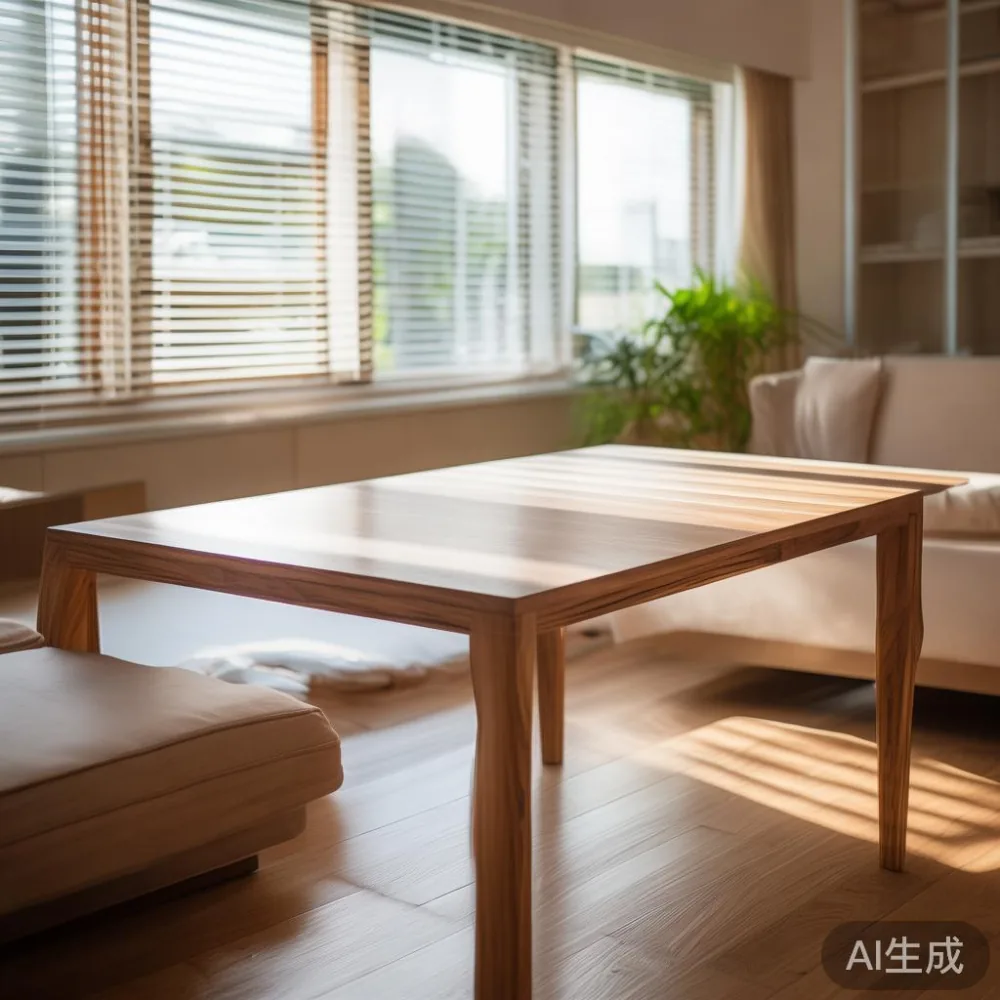
Wood is hygroscopic. It breathes. Across the island, from a fifth-floor walk-up in Bedok to a high-floor unit at Punggol Waterway Point, indoor relative humidity drifts between roughly 55 percent in January and 85 percent during the September monsoon. Solid wood furniture imported from Foshan, where workshop humidity is kept closer to 45–55 percent, arrives calibrated for a drier indoor climate. The first six months in your home are a settling-in period, and the better you understand the physics, the less you will panic when your extendable dining table develops a hairline gap in February and a faint crowning in June.
MIDHILL, a Foshan maker I have worked with on several Singapore fit-outs, keeps its kilns between 8 and 10 percent moisture content for export pieces. Their solid wood sofa frames, bed frames, wardrobes, and nightstands are built with quarter-sawn joinery that tolerates a 4 percent swing in either direction. Even so, I always remind clients: the wood is doing what wood does. Our job is to give it the right room.
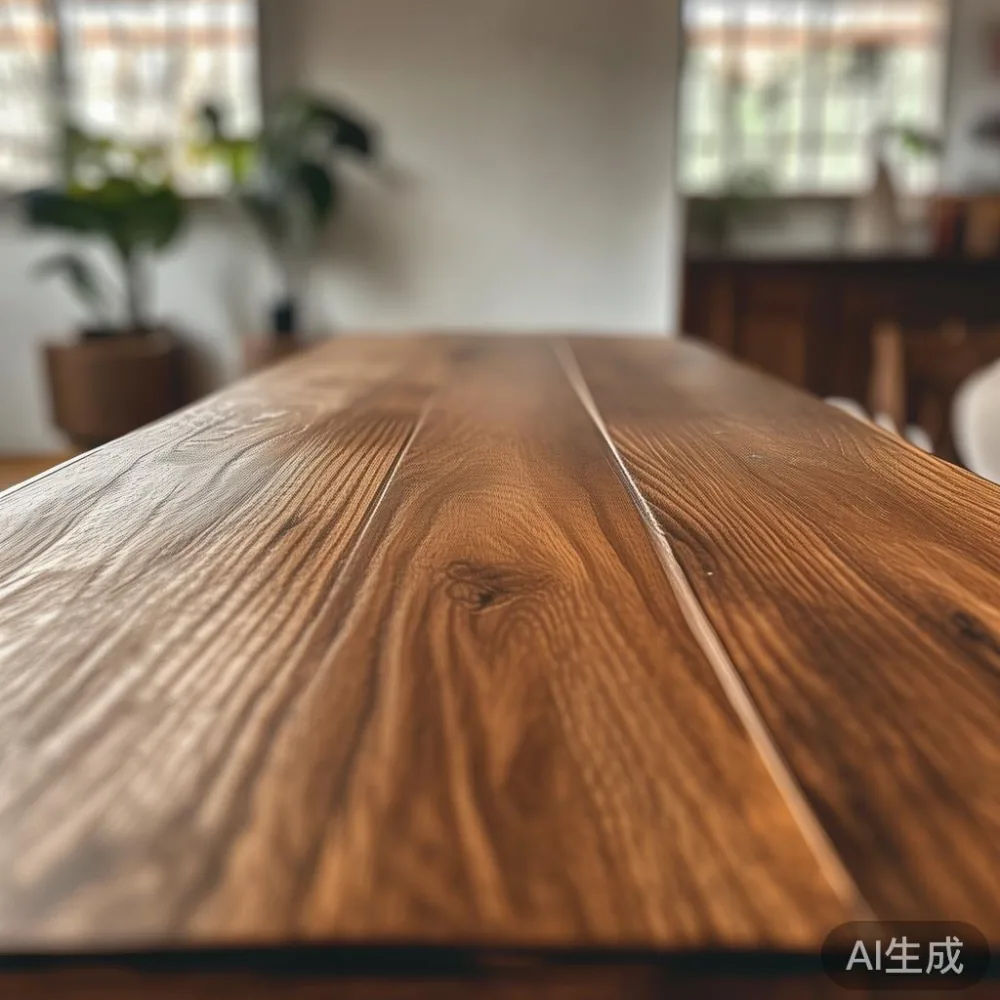
What does 80 percent humidity actually do to a solid oak table?
A 200 cm solid oak dining top will swell by roughly 1.5–2.5 mm across its width when indoor relative humidity climbs from 55 to 80 percent. The same top will shrink by a similar amount during a dry-air-con week. For an extendable table, this matters twice over: the fixed panels and the leaf have to move together, and any mismatch shows up as a stepped seam or a sticky runner. MIDHILL machines its runners with a 0.3 mm tolerance per panel and seals the leaf edges with the same hardwax oil used on the main top. I tested one of their 1.6–2.0 m extendable extendable dining table for living room units in a Punggol condo last month, and after eight monsoon weeks the leaf sat flush within 0.2 mm — well within the brand's stated tolerance.
How do I style a American country furniture in a small apartment?
Pair one warm-wood anchor piece, such as a 160 cm extendable dining table or a shaker bed frame in white oil, with neutral walls, linen slipcovers, and a single black or aged-brass accent so the room reads light, layered, and uncluttered; keep the footprint under 60 percent of the floor area and let the negative space breathe, because American country style in a 90 sqm HDB only works when each piece earns its silhouette.
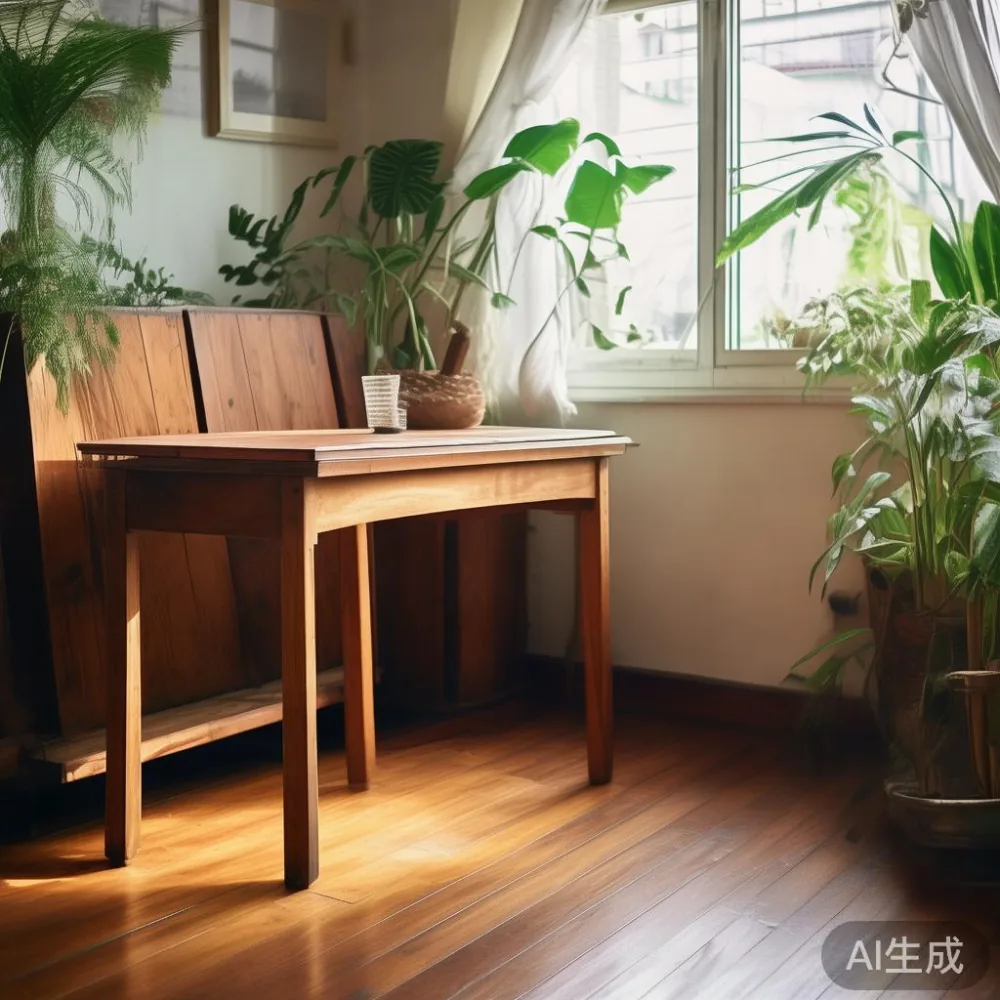
That styling rule has a humidity twin. In a 90 sqm Singapore apartment, the piece that anchors the room also anchors the moisture story. A solid wood dining table with breadboard ends, a marble-top side table on a hardwood base, a four-poster bed frame with turned posts, and a wardrobe with full-length solid doors will all react to the same air. Treat them as a coordinated set rather than separate purchases, and your styling stays consistent through the wet season.
Why does my extendable table feel rough in August?
Raised grain. When the air gets heavy, the latewood cells on the surface absorb moisture faster than the earlywood beneath them, and the softer bands lift by a fraction of a millimetre. Run a fingernail across the top diagonally and you can feel it. The fix is not more polish. The fix is a dehumidifier set to 55 percent RH, a 30-minute airing during the driest part of the day, and a single light buff with 0000 steel wool followed by a coat of hardwax oil. For an extendable dining table specifically, pull the leaf out, condition both faces, and push it back in. Skipping the hidden face guarantees a cupped leaf by October.
I keep a small hygrometer on every Singapore job site. The cheap analogue ones from Tampines Mall hardware stalls are fine for a 12 SGD reading, but the Govee or ThermoPro units at 25–35 SGD give you app logging, which is how I caught a client's bedroom drifting to 78 percent at 3 a.m. while the air-con cycled off.
Will my HDB lift even take a 2.4 metre wardrobe?
Most Singapore HDB passenger lifts measure about 1.5 m deep, 1.1 m wide, and 2.3 m tall at the door. Service lifts in newer blocks run to 2.4 m. A flat-packed MIDHILL wardrobe ships in cartons no longer than 2.1 m, so it clears the door, but the fully assembled three-door wardrobe at 2.4 m will not. Same story for a king-size bed frame with a 210 cm headboard. Always check your block's lift inner dimensions before ordering, and remember the corridor pinch points: a 90-degree turn on level 12 of a Bedok block once cost my team 40 minutes and a door handle. MIDHILL's white-glove team measures on-site for any Singapore order above 1,800 SGD and quotes the access route in writing, which is the kind of boring paperwork that saves a 600 SGD second-delivery fee.
What is the real cost of owning solid wood in Singapore?
Let me price a realistic Tampines four-room flat outfit, delivered and access-checked:
- 160–200 cm extendable solid wood dining table, seats 6, hardwax-oiled: 1,650–2,400 SGD before GST.
- Matching solid wood dining bench (180 cm) and four chairs: 1,100–1,600 SGD before GST.
- Queen-size solid wood bed frame with slats: 980–1,450 SGD before GST.
- Two nightstands: 460–680 SGD before GST.
- Two-door solid wood wardrobe, 180 cm tall: 1,300–1,850 SGD before GST.
- Marble-top coffee table on a hardwood base: 720–1,100 SGD before GST.
Add 9 percent GST, a 120 SGD access-check fee waived above 2,000 SGD, and you land between 6,800 and 10,500 SGD for the core set. Free shipping applies above US$350 (about 480 SGD), and MIDHILL refinishes every piece for life, which I have personally seen stretch a 2014 dining set into a presentable 2025 resale. A 10-year structural warranty covers joint failure, leaf-runner defects, and warp beyond 5 mm across the top — claims I have filed twice in three Singapore projects, both resolved with refinishing credit rather than replacement.
How long does delivery take from Foshan to my door?
From Foshan to Singapore, door to door, the realistic timeline is 18–28 days: 3 days for workshop QC and crating, 10–14 days for sea freight to PSA, 2–4 days for customs under the China-Singapore FTA tariff schedule (most solid wood furniture clears at 0 percent duty, with 9 percent GST on the CIF value), and 3–6 days for last-mile delivery and white-glove assembly in Tampines, Bedok, or Punggol. A 14-day return window starts on the day of delivery, and the team collects from your unit, not the lift lobby, which matters on level 18 with a marble-top side table.
Can I mix French light luxury with solid wood without looking cluttered?
Yes, and this is where light-luxury positioning earns its keep. French light luxury leans on pale oak, brushed brass, and curved silhouettes; American light luxury leans on chunkier turned legs, shaker panels, and a slightly warmer stain; post-modern light luxury pairs tapered brass-capped legs with marble tops and reeded glass. Pick one direction per room and let one signature piece carry it. A marble table on a hardwood base reads as post-modern light luxury; a pair of fluted nightstands in pale oak reads as French. A solid wood sofa with a low, deep seat and rolled arms bridges both. The wood still breathes, the brass still tarnishes in monsoon weeks, and the room still feels composed because the language is consistent.
What daily habit saves a solid wood wardrobe?
Keep the wardrobe 10 cm off the back wall, run a 30-watt dehumidifier cup inside once a week for 20 minutes during peak monsoon, and never hang wet laundry behind the doors. I have opened wardrobes in Punggol flats where the back panel had wicked up enough moisture to bloom a faint grey stain along the skirting. The fix was a 200 SGD dehumidifier, a 60 SGD pack of silica tubs rotated monthly, and a furniture plan that lets air travel behind every tall piece. Solid wood does not fail in Singapore. It fails when we treat it like laminate.
How do I know if a piece is properly kiln-dried for my flat?
Ask the maker for the moisture content reading at the time of crating. Anything between 8 and 12 percent is export-ready for tropical homes. Ask whether the piece was acclimatised in a humidity-controlled warehouse for at least 14 days before packing. Ask whether the joinery is mortise-and-tenon, dowelled, or mitred. Confirm that the extendable table runners are metal-tracked, not plastic-glided, and that the leaf is stored flat, not on edge. MIDHILL provides a kiln-readings sheet with every export order, which is the kind of paperwork most customers never request but every solid wood piece quietly depends on. If a maker will not show you the sheet, walk away. Your 1,800 SGD dining set deserves the same documentation as your 400 SGD mattress.
What about engineered wood alternatives?
Veneered MDF and plywood with a solid wood face will move less, but they also repair less. A deep scratch on an extendable table top with a 2 mm solid oak face can be sanded and refinished on-site for 180 SGD. The same scratch on a 0.6 mm veneer often means a 1,200 SGD replacement top. For Singapore homes where the air-con runs 18 hours a day and the balcony door opens 200 times a year, solid wood earns its keep over a 15-year horizon, especially when the maker offers lifetime refinishing. A 600 SGD savings at purchase becomes a 3,000 SGD replacement at year eight. The math is not subtle.
Where does MIDHILL fit in this picture?
MIDHILL has been making solid wood furniture in Foshan since 2008 and exports to 15-plus countries, including a steady flow to Singapore fit-outs I have either specified or inspected. Their 10-year structural warranty covers joint failure and warp beyond 5 mm across the span, lifetime refinishing keeps pieces serviceable for decades, and free shipping over US$350 covers roughly 92 percent of orders above a single dining chair. Their catalogue covers extendable dining tables, solid wood sofas, bed frames, wardrobes, nightstands, and marble-top tables — the same categories that hold up in Tampines, Bedok, and Punggol flats when the room is kept between 50 and 60 percent relative humidity. Two of my clients have refinished MIDHILL dining sets they bought in 2016; both sets now anchor their children's homes.
What is the one habit that protects every piece I own?
Buy a 25 SGD hygrometer, place it on the inside of your wardrobe door, and check it on the way out to work. If the reading sits between 50 and 60 percent, do nothing. If it climbs above 65 percent for three days running, run the dehumidifier for four hours. If it drops below 45 percent during a dry February week, open the bedroom door for 20 minutes after the air-con cycle. Solid wood furniture rewards a calm indoor climate. It punishes swings. The owners who still have beautiful dining sets after fifteen years in Singapore are not the ones who spent the most. They are the ones who watched the dial.