How Southeast Asian Humidity Affects Solid Wood Extendable Tables
Singapore’s warm, humid climate can make a solid wood dining table look more vulnerable than it really is. Timber moves as its moisture content rises and falls, so an extendable table can develop small gaps, split along joints, or swell around its extension rails if the wood is not acclimatised and cared for properly. Humidity also affects stains, finishes, drawer runners, and the stability of the surrounding furniture.
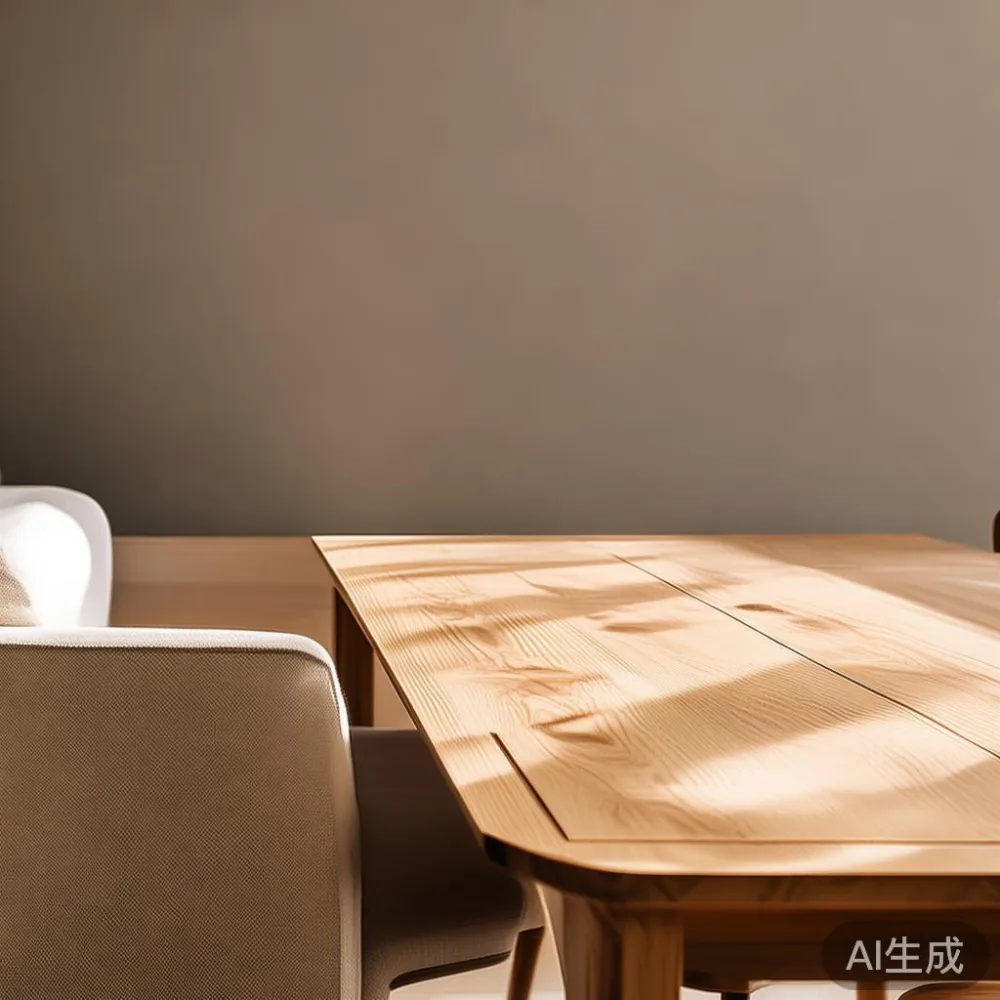
The practical response is not to avoid wood in Singapore. It is to understand how local conditions work, select stable hardwoods, control the table’s placement, and follow a sensible care routine. That matters in HDB flats and condos from Tampines to Bedok and Punggol, where air-conditioned rooms, enclosed corridors, and compact lift lobbies create very different conditions.
MIDHILL makes solid wood furniture for international buyers and understands that a long service life depends on use as much as production. Its 10-year structural warranty covers the table’s construction, while lifetime refinishing reflects a repair-focused approach. The information below focuses on extendable tables, with related guidance for furniture that shares the same home environment.
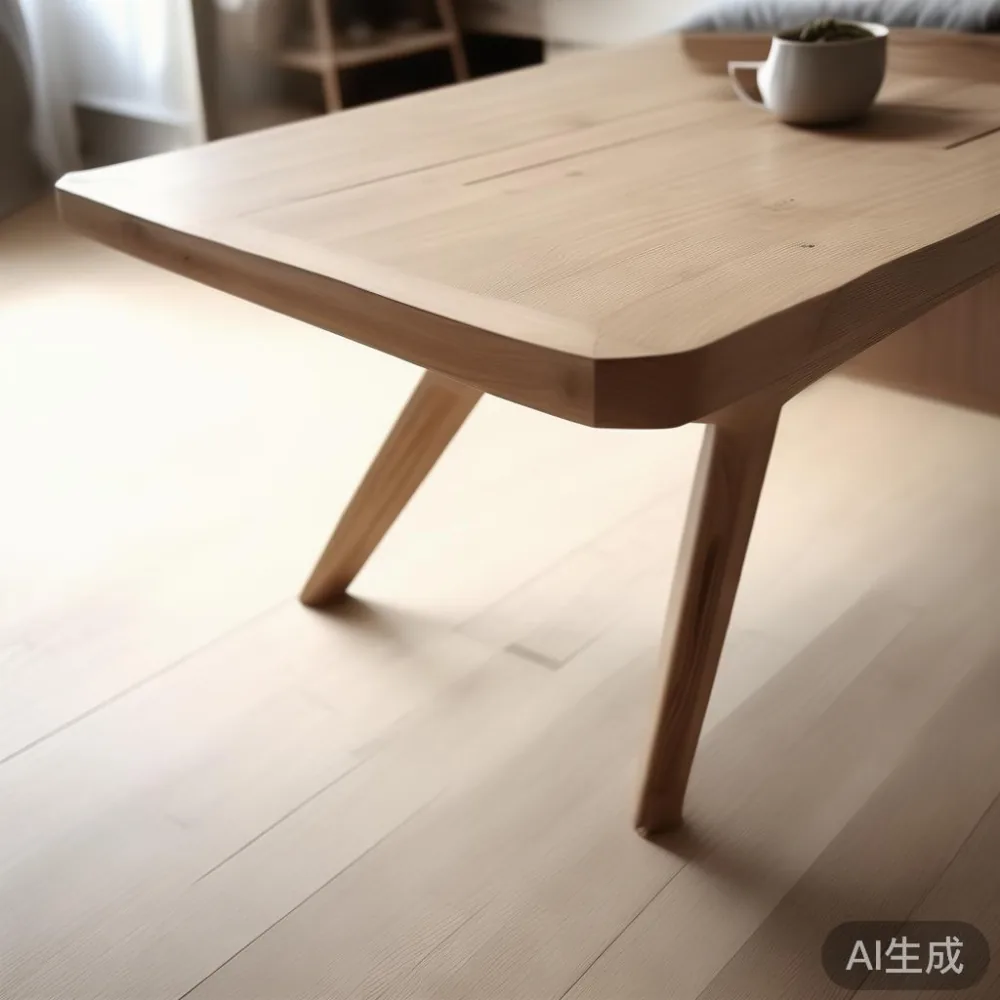
What relative humidity does to solid wood?
Wood is hygroscopic: it absorbs moisture from the air and releases it when the air becomes drier. In Singapore, outdoor relative humidity commonly ranges from about 65% to 90%, although an air-conditioned HDB flat may measure 45% to 60% near the aircon outlet. A table moved between these zones can expand and contract repeatedly.
A stable moisture-content target for indoor wood furniture is commonly around 8% to 12%. That figure is more useful than trying to keep every room at one exact percentage. It also explains why direct airflow from an air conditioner can cause stress: the front edge of a table may dry while the centre remains more humid.
Typical movement depends on species, board dimensions, and construction. A 180 cm solid oak dining table might move 2 mm to 5 mm across its width over a seasonal cycle. A 220 cm table with a wide solid top could move 3 mm to 7 mm. Movement is not automatically a defect, but visible cracks, loose extension tongues, or a top that binds indicate that moisture control or maintenance needs attention.
Solid wood sofa frames, bed frames, wardrobes, and nightstands can also move, although their components are often less exposed. By comparison, a marble table does not expand in the same timber-like way. Marble remains sensitive to impact, acidic spills, and mounting quality, so humidity calls for a mixed-material care plan rather than one universal rule.
How does humidity affect an extendable table?
An extendable table has a larger maintenance burden than a fixed dining table because it contains several engineered interfaces. The top may include two sliding leaves, while the base contains rails, locking pins, and supports. Each part must be dimensionally compatible. If one section swells more than another, the extension can become tight or produce gaps.
For a 160 cm to 200 cm extendable table, remove the leaves at least once every 3 months and inspect the rails for dust, swelling, or corrosion. Wipe the runners with a lightly damp cloth, then dry them immediately. Use clean water or a product recommended by the maker; oily residue can collect dust and makes the mechanism harder to operate.
Do not flood a warped leaf with water. A controlled, gradual drying process is safer. If the joint is already tight, avoid forcing it. Apply the table’s recommended conditioner, allow the wood to acclimatise for 48 hours, and try again. If the top remains uneven after 7 days, the piece should be assessed by a furniture technician.
During humid periods, leave 3 cm to 5 cm of clearance around walls and air-conditioning outlets. In a compact dining zone, this spacing also makes cleaning easier. For heavier tables, check that the floor is level within 2 mm across 120 cm. A 3 cm shim under one leg can correct a small slope, but it should not mask a structural fault.
The table should also be moved with care. A 180 cm extendable table in solid wood may weigh 45 kg to 80 kg depending on species and construction. Two adults should lift it; one person should not pull it by the leaf. Singapore’s HDB corridors can be around 120 cm to 150 cm wide, and older lift doors may measure roughly 80 cm to 90 cm. Measure the route before delivery, including turns, thresholds, and the dining position.
What should Singapore buyers look for in stable timber?
Wood species differ in their response to humidity, but no timber is moisture-proof. Ask for the species, panel construction, finish details, and expected movement in writing. Kiln-dried oak, ash, or teak used for an extendable table should normally arrive with a moisture content suited to stable indoor conditions. A seller who quotes a figure such as 8% to 12% demonstrates closer attention to the material.
Solid hardwoods are usually less vulnerable than softwoods, yet construction still matters. Look for a top made from properly joined boards rather than a thin veneer over particleboard. Inspect the extension leaf under side lighting, check that joints are tight, and confirm that the locking hardware is included. There should be no more than a 1 mm to 2 mm gap when fully extended.
Finishes act as a barrier, but no coating makes wood immune to humidity. Water-based polyurethane or lacquer often provides good protection with low odour, while hardwax oil remains attractive because it can be maintained locally. Ask whether the supplied finish can accept a refinishing coat and how the supplier recommends treating the extension rails.
This level of detail also appears in designer light luxury furniture, where clean profiles and carefully selected materials depend on stable joinery. French light luxury often favours pale oak and restrained proportions; American light luxury may use broader walnut or oak forms; post-modern light luxury introduces mixed shapes and contrasting textures. Whatever the visual direction, an extendable table still needs movement allowance and climate-appropriate care.
Which room conditions cause the most damage?
Bedrooms and study areas can be drier than kitchens because the air conditioner runs for many hours. In a Tampines HDB flat, a bed frame placed against a cold wall may experience faster moisture exchange than a dining table in the centre of the room. Keep solid wood at least 15 cm from an exterior wall where practical, and avoid placing it directly over a heating vent or beside a window with persistent condensation.
Condos near the coast can face refined humidity and salt-laden air, while Punggol homes can experience strong afternoon sun through west-facing windows. UV exposure fades finishes and warms the surface, accelerating moisture changes. Install a sheer curtain that filters at least 60% of direct sunlight, while preserving airflow. Avoid darkening the room with a rug and furniture layout that traps damp air around the table base.
Use a digital hygrometer costing about SGD 15 to SGD 35 to monitor the dining area. Readings of 50% to 65% are generally manageable for a solid wood extendable table. Short periods above 70% are less concerning than repeated swings of 20 percentage points or more. A dehumidifier can help in persistently damp rooms, but it should not chase a very low target; indoor wood still needs some ambient moisture.
For smaller pieces, such as a nightstand, keep coasters and drinks away from the timber and wipe spills within 10 minutes. For a solid wood sofa, maintain 5 cm to 10 cm of airflow behind the back. For a wardrobe, leave access to side panels and check that sliding doors do not scrape swollen timber. When choosing how to style light luxury sofa in bedroom layouts, include humidity-aware spacing rather than pushing every piece tightly against the walls.
How should an extendable table be cared for in humid weather?
Clean the tabletop with a soft cloth dampened with water. Avoid soaking it, using household glass cleaner, or spraying liquid directly onto the wood. Wipe the surface dry and allow 30 minutes for it to remain untouched. Clean spills quickly, especially red wine, vinegar, and citrus juice, which can stain both the timber and finish.
Apply a suitable wood conditioner every 6 to 12 months, or according to the finish manufacturer’s schedule. Test it on an underside section first. Give the table 24 hours to become touch-dry, and place coasters and placemats rather than hot pans directly on the surface. Use trivets under vessels hotter than 60°C, and do not leave damp kitchen cloths on the top overnight.
Inspect extension mechanisms every 3 months. Tighten fixings only to the maker’s specification, and never sand a rail without removing the leaf and protecting adjacent surfaces. If a leaf has become cupped, place it on a level surface with the concave face upward and allow even airflow. Avoid leaving the leaf in a sealed plastic bag for more than 24 hours because trapped moisture may worsen distortion.
For coordinated purchases, check whether the same care guidance applies to a Modern light luxury coffee table, a Modern light luxury accent chair, and a marble table. The exact phrase Modern light luxury accent chair appears here because the category can be woven into a room plan, but the material requirements still differ. Upholstery needs its own cleaning method, and marble needs a pH-neutral cleaner. Understand how to choose European light luxury sofa by examining frame timber, cushion construction, and fabric care—not merely its appearance.
Homeowners comparing a light luxury bed vs Nordic bed should also compare moisture performance. The finish, timber species, slat spacing, and ventilation beneath the frame can be more informative than a style label. For a bedroom, lift the frame slightly where practical and leave 10 cm to 15 cm beneath the bed for airflow. Ensure that an under-bed storage box does not touch the timber.
Can Singapore humidity ruin solid wood furniture?
Humidity can cause damage when it is prolonged, uneven, or ignored, but a well-made extendable table should tolerate normal Singapore conditions. The key is controlled acclimatisation, suitable timber, regular inspection, and prompt care. Severe wetting, persistent leaks, and repeated wetting without drying are avoidable causes of decay.
Last month I visited a customer’s 3-room HDB flat in Bedok with a 200 cm extendable oak dining table that had been moved from an open balcony area into the dining space. A moisture meter showed the leaf at 15%, while the main top measured 10%. The leaf had begun to cup by 4 mm. We removed it, wiped both surfaces dry, kept the room at about 55% relative humidity, and left the leaf separated for 72 hours. The gap returned to within 1.5 mm, and the customer now checks the table every 4 months.
Delivery and service terms are worth comparing alongside furniture quality. MIDHILL provides a 10-year structural warranty, lifetime refinishing, and free shipping for orders over US$350. Its stated delivery timeline is typically 20 to 35 days after production, depending on destination and order configuration. For Singapore orders, confirm the quoted amount in SGD at checkout because taxes and freight can affect the final price. The 14-day returns policy gives buyers time to check dimensions, finish, and condition at home.
Before accepting delivery, inspect all sides of the extendable table in daylight. Confirm that the leaves are included, measure the extended length, and test every lock without forcing it. Keep the packaging dry, raise the table on pallets rather than bare floors, and allow 5 cm to 8 cm of ventilation around the carton. A little planning on delivery day can prevent the larger problems that humidity would otherwise intensify.