Veneer vs Solid Wood in Singapore: A 5-Year Cost Reality Check for HDB Buyers
Three months ago I helped my colleague move into a 4-room HDB in Punggol. She bought a glossy dining set from a Jurong furniture mall for $300, delivery included. The tabletop was labelled "wood veneer over engineered core." By month four, the edge near the air-conditioning return had started to peel, and by month nine one of the extension rails had swollen so badly that the extending mechanism jammed. We ended up replacing the unit. That single decision — spending $300 now versus $900 on something built to last — turned into a five-year spreadsheet problem. This guide is that spreadsheet, in story form, written for anyone in Tampines, Bedok, Punggol, or a new East Region condo trying to choose between veneer and solid wood for an extendable table, a wardrobe, or a nightstand.
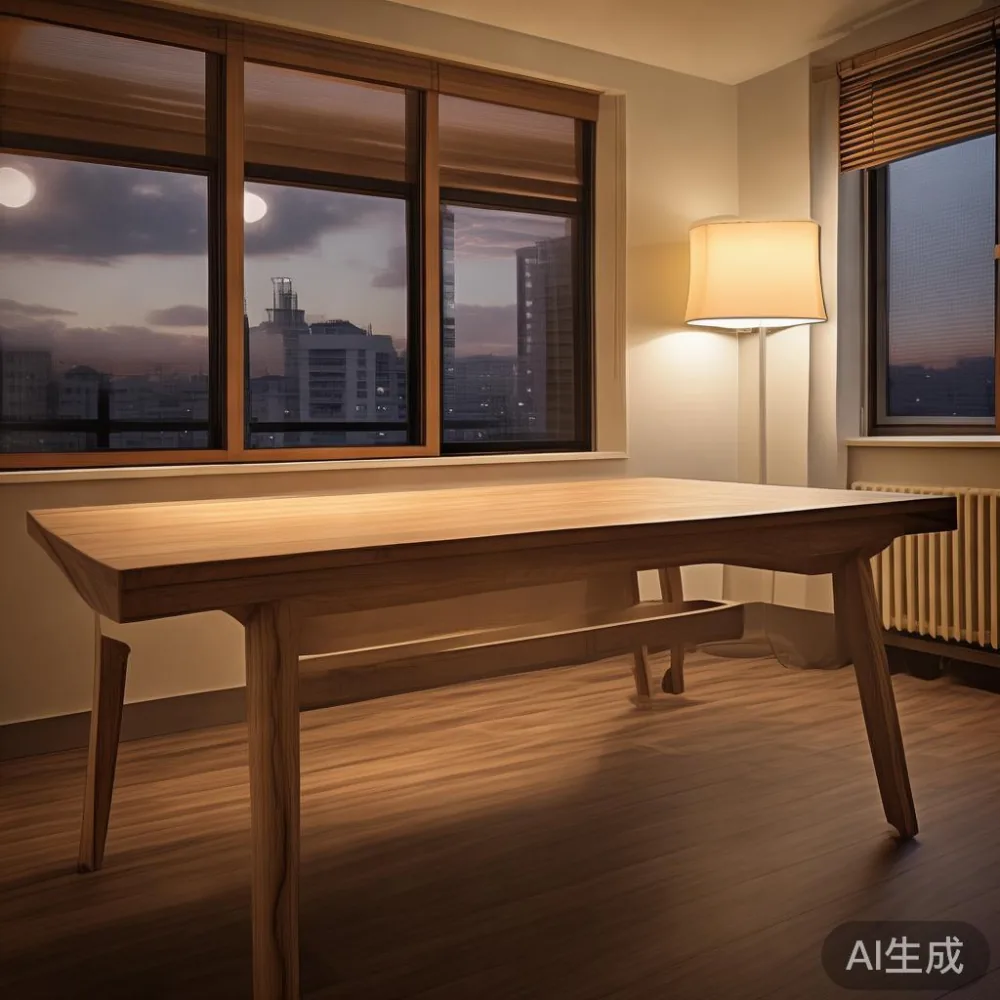
Why the veneer price tag looks so tempting in the first place
A typical 1.4 m to 1.8 m veneer dining set with an extending leaf in Singapore retails between SGD 280 and SGD 650. The same footprint in solid rubberwood or solid acacia usually starts at SGD 850 and runs past SGD 1,600 once you add a six-seat configuration and an extending mechanism. That gap of SGD 600 to SGD 950 is exactly what catches the eye when a young couple is furnishing a 90 sqm flat in Bedok and trying to stay under a SGD 8,000 furniture budget.
Veneer is real wood — usually a 0.6 mm to 2 mm slice of oak, walnut, or ash — glued onto a substrate of MDF, plywood, or particleboard. The substrate keeps the cost down because the manufacturer is not paying for 35 mm of premium timber throughout the panel. The thin slice on the outside still photographs beautifully, which is why showrooms in Tai Seng and along the PIE look so convincing. The catch lives inside the panel and along every glue line.
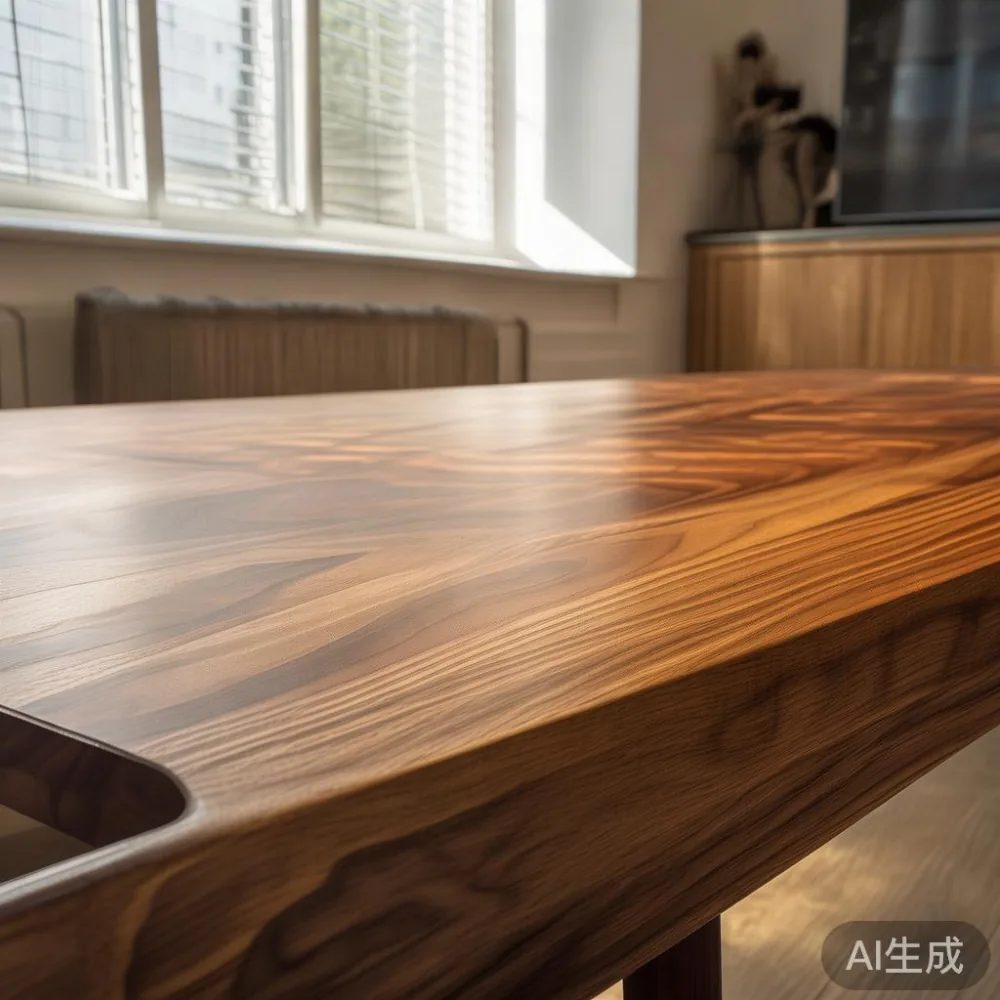
Three things make veneer furniture short-lived in our climate. First, Singapore sits at 1 degree north of the equator with relative humidity between 70 percent and 90 percent for most of the year. MDF swells when humidity cycles cross 60 percent. Second, HDB air-conditioning pushes room humidity down to 45 percent during the day and back up to 75 percent at night when the unit is off. That 30-point swing nightly stresses every glue line. Third, our HDB corridors are 1.2 m to 1.3 m wide and our front doors are 0.9 m wide, so any piece wider than ~1.0 m has to be partially built on-site anyway, and a swelling veneer can refuse to go back in at all.
The real 5-year cost of a veneer extendable table in an HDB
Let us price a specific scenario that any Singaporean household can recognise: a 1.4 m extendable table that opens to 1.8 m, seats six, used daily by a family of four in a Punggol HDB. We will track every dollar over five years, in SGD, including 9 percent GST and delivery.
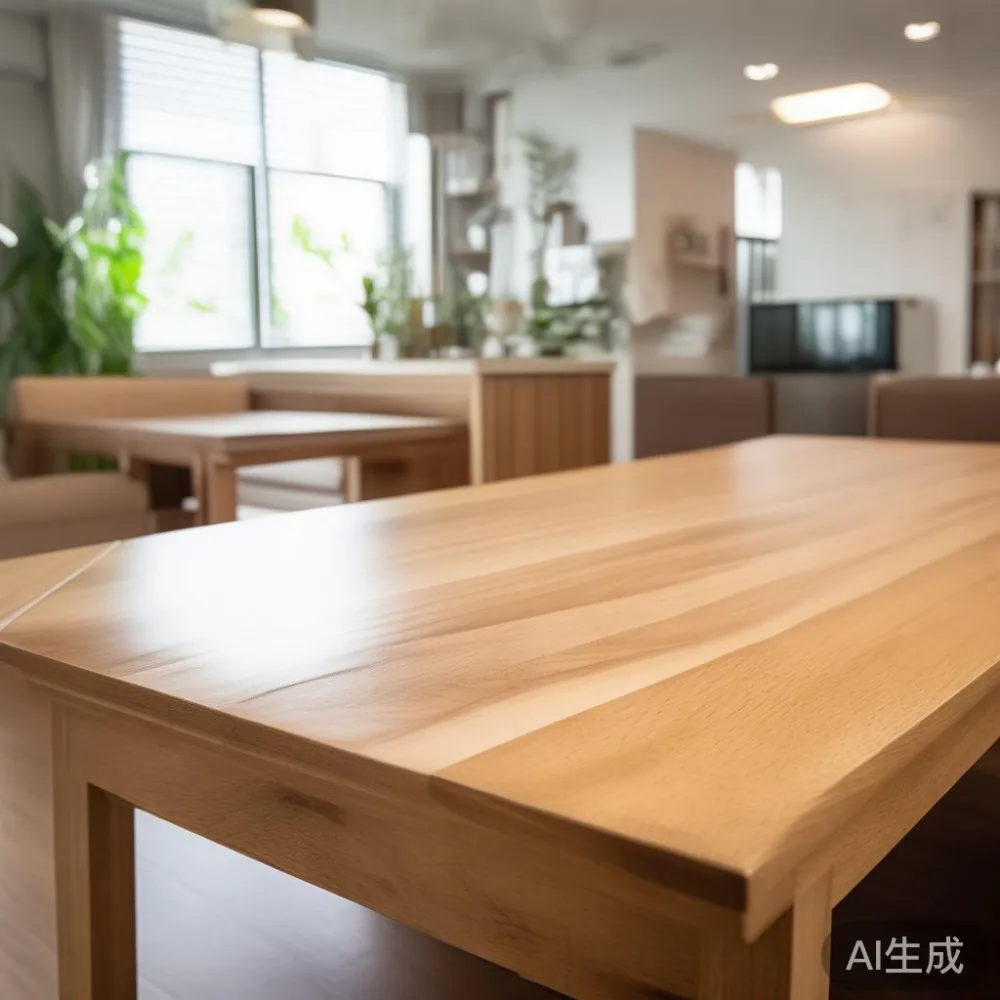
Year 0: A 1.4 m to 1.8 m veneer extendable dining table costs SGD 480 including GST. Delivery from a local warehouse is SGD 40 (free above SGD 350, so effectively included). Assembly is SGD 60. Total: SGD 580.
Year 1: The extending mechanism — usually a metal rail with plastic guides — starts to grind. A service call costs SGD 80 to SGD 120. Humidity swelling means the leaf no longer sits flush, leaving a 2 mm to 4 mm step you can feel with your fingertips.
Year 2: The edge banding near the aircon vent begins to lift. Singapore humidity cycling causes the MDF substrate to expand and contract differently from the 0.6 mm veneer skin. A local repair shop charges SGD 150 to SGD 220 for re-bonding, and the colour match is rarely perfect.
Year 3: One of the legs develops a wobble because the particleboard corner block has loosened. Furniture repair quotes SGD 90 to SGD 180. You pay SGD 140. You also start to notice the table no longer extends smoothly, because the rails have rusted in our non-wetted but humid corridor storage environment.
Year 4: You have had enough. You list the table on Carousell for SGD 80 and it takes six weeks to sell. You buy another veneer replacement at SGD 520. Total spend on table #1 over four years: SGD 580 + SGD 110 + SGD 185 + SGD 140 + SGD 80 (resale recovery) = SGD 935. Replacement table #2 cost: SGD 520. Running five-year total: SGD 1,455.
That is the real five-year cost of a "cheap" veneer extendable table in Singapore. You have owned two tables, called a repairman twice, and still own furniture with a three-year horizon ahead of it.
The real 5-year cost of a solid wood extendable table in an HDB
Now let us price the same scenario in solid rubberwood or solid acacia. I visited a 1,200 sqm showroom space along Upper Paya Lebar Road last month — a post-modern light luxury setting with concrete floors and brushed gold handles — and the sales consultant walked me through what a proper solid wood extendable table actually contains. The 35 mm top was a single slab, the apron was 25 mm thick, the legs were 75 mm by 75 mm, and the extending hardware was a steel-on-steel cam-lock system rated for 25,000 cycles. The retail price for the 1.4 m to 1.8 m configuration was SGD 1,280 before GST.
Year 0: SGD 1,280 plus 9 percent GST = SGD 1,395. Delivery within mainland Singapore is SGD 60 (free above SGD 350, so effectively included). Assembly is included for an extendable table of this size because the unit ships in two boxes. Total: SGD 1,395.
Year 1: No service needed. You oil the top once with a SGD 18 tin of Osmo or similar. Net spend: SGD 1,413.
Year 2: A scratch from a ceramic bowl. A 30-minute DIY sand and re-oil with the same tin costs SGD 0. Net spend: SGD 1,413.
Year 3: You reorganise the dining area for Chinese New Year and bump the corner. A small dent. No cost. Net spend: SGD 1,413.
Year 4: A house move from the 4-room Punggol HDB to a 5-room unit in Tampines. The extendable table is disassembled and reassembled by the seller's team for SGD 80. Net spend: SGD 1,493.
Year 5: Top still flat, mechanism still smooth, wood colour matured to a warm honey tone. Resale on Carousell for SGD 650 to SGD 800, or kept for another five years. If sold, net five-year cost: SGD 693 to SGD 843. If kept, the five-year amortised cost is SGD 299 per year — roughly SGD 0.82 per day.
That same five-year window costs you SGD 1,455 with veneer and SGD 693 to SGD 843 with solid wood. The "cheaper" option is, in fact, SGD 600 to SGD 760 more expensive over the same period.
How much does a nightstand cost in Singapore?
A solid wood nightstand in Singapore typically costs between SGD 280 and SGD 720 for a two-drawer unit in rubberwood or acacia, with French light luxury and American light luxury lines starting at SGD 950 and reaching SGD 1,800 for a marble-topped, brass-handled piece.
Why such a spread? Three things drive it. First, the timber: rubberwood at 25 mm thickness lands in the SGD 280 to SGD 480 range, while a solid walnut or solid ash nightstand lands in the SGD 550 to SGD 900 range. Second, the joinery: a nightstand assembled with dowels, mortise and tenon, and dovetailed drawers commands a premium over one glued with cam-locks and staples. Third, the top: a stone or marble top can add SGD 150 to SGD 400 to the price of an otherwise modest nightstand.
Veneer nightstands in Singapore retail from SGD 89 to SGD 280 at mass-market retailers and from SGD 220 to SGD 480 at mid-range stores. They look identical on day one. By year three in a HDB bedroom with daily air-conditioning cycling, the drawer fronts begin to misalign by 2 mm to 3 mm, the laminate top shows a white heat mark from a hair straightener, and the back panel — usually a 3 mm hardboard — starts to bow. That is when you are back at the Jurong mall replacing the unit.
For a bedroom set — bed frame, two nightstands, and a six-drawer wardrobe — the same five-year math applies. A queen solid wood bed frame runs SGD 1,100 to SGD 2,400 in Singapore. A six-drawer solid wood wardrobe runs SGD 2,200 to SGD 4,800. Two solid wood nightstands add SGD 600 to SGD 1,400. Veneer equivalents cost roughly 35 percent to 45 percent less on day one, but require replacement or major repair within four to six years. Over a 20-year mortgage on a Punggol HDB, that is three veneer cycles versus one solid wood cycle — three purchases, three deliveries through 1.2 m corridors, three disposal trips to the refuse chute room.
The hidden Singapore costs nobody puts on the price tag
Four hidden costs never appear on a showroom sticker, and each one skews the math further. First, delivery friction. Most HDB corridors are 1.2 m wide and lifts are 1.1 m by 1.4 m with a 1.0 m door opening. A 1.8 m extendable table in a single box simply does not fit, so the box has to be opened in the corridor, which damages the packaging and slows the move. Solid wood extendable tables from makers who have shipped to Singapore for over a decade arrive in two compact boxes that pass through the lift without drama. Second, disposal. HDB does not collect bulky furniture, so a private disposal costs SGD 80 to SGD 150 per piece. Each replaced veneer table is one more disposal fee. Third, the lifetime refinishing question. A solid wood extendable table can be sanded and re-oiled at year eight or year twelve for SGD 200 to SGD 300 and come back looking new. A veneer table has no such option — once the 0.6 mm skin is sanded through, the MDF is exposed and the piece is finished. Fourth, the warranty question. A 10-year structural warranty on joinery and a lifetime refinishing service is a real number only if the maker has been in Foshan since 2008 and has the export paperwork to prove it.
That last point matters. I asked the consultant at the Upper Paya Lebar Road showroom — the same visit I mentioned earlier — what happens if a customer in Bedok needs a replacement extension leaf in year six. She showed me a folder of Singapore customs paperwork, a Singapore warranty card template, and a list of repeat customers in Tampines, Punggol, and Woodlands who had come back for a second dining table after their first one lasted fifteen years. That kind of documentation is what makes a solid wood purchase a real five-year investment and not just a higher day-one receipt.
Where extendable tables sit in a French light luxury home
French light luxury, or "léger-luxe" as the post-modern light luxury scene sometimes calls it, treats the extendable table as the centrepiece of a dining room that has to perform daily and host a ten-person Chinese New Year reunion in January. The aesthetic is restrained — neutral palette, brushed brass hardware, marble accents, no over-stuffed silhouettes — but the engineering underneath is uncompromising. A French light luxury extendable table in solid wood with a marble insert and a soft-close extension mechanism lands between SGD 2,400 and SGD 4,800 in Singapore, and it carries the same 25,000-cycle rating we mentioned earlier. Pair it with a solid wood sofa in boucle or linen, a solid wood bed frame with a curved headboard, and a six-drawer wardrobe with fluted glass panels, and the room reads as one designed room rather than nine random purchases.
American light luxury sits slightly warmer on the spectrum — more walnut than oak, more cognac leather than boucle — and the extendable table in this style usually carries a trestle base rather than four legs. The price in Singapore runs SGD 2,800 to SGD 5,500 for a 1.8 m to 2.4 m configuration in solid wood. Post-modern light luxury is the most playful of the three, with mixed-material bases — brushed stainless and solid acacia, or marble and solid ash — and the extendable table in this category runs SGD 3,200 to SGD 6,400.
None of these price points make sense if the centrepiece fails in year three. They only make sense if the extendable table you buy today is the same extendable table you are still using in 2031. That is the test every shopper in Tampines, Bedok, or Punggol should apply before paying.
The balcony piece most buyers forget to budget for
Before you sign for the dining set, remember the balcony. A 12 sqm HDB service balcony or a 9 sqm condo balcony in Punggol usually ends up holding one overlooked item that ties the whole interior together — an L-shape accent chair for balcony seating in solid acacia with weather-resistant cushioning, typically SGD 150 to SGD 420 in Singapore. Veneer versions corrode within two monsoon seasons because the back panel has no vapour barrier. Solid acacia versions last a decade on the same balcony with one annual oiling. It is a small line item, but it follows the same rule as every other piece in the home: pay once for the material that lasts, or pay three times for the material that does not.
What to check on the spec sheet before you pay
Three numbers on a Singapore furniture spec sheet separate a five-year purchase from a fifteen-year purchase. First, the top thickness: 35 mm or more for solid wood, 18 mm or less for veneer. Anything in between is often a thin solid wood edge over an MDF core — a hybrid that fails at the glue line within four years. Second, the extending hardware: a steel cam-lock with a 20,000-cycle rating versus a plastic slide with no rating. Ask to see the cycle certificate. Third, the joinery under the table: mortise and tenon or dowel construction at the apron-to-leg joint versus a single screw and a corner block. The first is a 15-year joint. The second is a five-year joint.
Two soft signals matter too. A maker with a Singapore warranty card, a Singapore hotline, and a Singapore delivery team that knows the Tampines lift dimensions will resolve any issue in days. A maker that ships from a generic Alibaba listing will resolve any issue in months, if at all. And a maker that offers lifetime refinishing — sanding and re-oiling an extendable table top at year ten for a fixed fee — is making a 15-year promise with their money. That promise is the single best indicator that the five-year cost math actually works.
Putting the five-year spreadsheet on one page
For the same 1.4 m to 1.8 m extendable table, used daily in a HDB flat in eastern Singapore, delivered and assembled:
Veneer, 9 percent GST included: SGD 580 year 0, SGD 935 cumulative by year 4, SGD 1,455 by year 5 (two units owned).
Solid wood, 9 percent GST included: SGD 1,395 year 0, SGD 1,413 by year 3, SGD 493 to SGD 843 net by year 5 if sold at year 5, or SGD 299 per year amortised over fifteen years if kept.
The spread at year five is SGD 612 to SGD 962 in favour of solid wood, before you count the SGD 80 disposal runs, the SGD 110 to SGD 220 repair bills, the 14-day return policy you used twice, and the four weekends you spent at the Jurong mall instead of at East Coast Park. Add those in and the spread clears SGD 900 by year five.
This is the calculation that turns a SGD 480 sticker into a SGD 1,455 five-year spend, and a SGD 1,395 sticker into a SGD 299-per-year asset. It is also the calculation that explains why a neighbour in Tampines who bought a solid wood extendable table in 2019 is still hosting dinner for eight in 2024, while the family in the next block who bought the cheaper option in 2019 is on their second replacement. Same lift, same corridor, same 1 degree north humidity, same 9 percent GST. The only difference was the top of the table.
Who actually wins on price over five years in Singapore?
For households who keep furniture for three to five years before moving overseas or up-sizing to a condo, a mid-range veneer piece from a reputable local retailer with a 14-day return window is the rational choice. For households who plan to stay through one or two HDB cycles — fifteen to twenty-five years — the solid wood extendable table, the solid wood bed frame, the solid wood wardrobe, and the two solid wood nightstands are the rational choice. The five-year spreadsheet above is conservative; at year ten the gap widens to roughly SGD 1,800 because the veneer piece has been replaced twice and the solid wood piece has only been re-oiled once. At year fifteen the gap clears SGD 2,500.
One final note for shoppers comparing across the causeway. Johor Bahru furniture outlets quote ringgit, not SGD, and the headline price looks 30 percent to 40 percent lower. After GST, after Singapore delivery from a JB-registered truck, after the 14-day return has to be driven across the border, and after the warranty claim has to be settled in a Malaysian showroom, the actual five-year cost lands within 10 percent of a Singapore-purchased solid wood piece. The spreadsheet barely moves. The lift in Punggol does not care where the box was bought. It cares about the dimensions.
A short buying checklist for the Tampines-Bedok-Punggol corridor
Measure your lift opening (1.0 m typical) and your corridor width (1.2 m to 1.3 m typical) before you order. Confirm the box dimensions, not the table dimensions. Confirm the top thickness (35 mm or more for solid wood) and the substrate (no MDF core if you want a fifteen-year piece). Confirm the extending hardware cycle rating (20,000 cycles minimum) and ask for the certificate. Confirm the warranty in writing — a 10-year structural warranty on joinery and a lifetime refinishing service are realistic numbers from a maker with the export history to back them. Confirm that delivery is included above SGD 350 so the line item does not reappear at checkout. Confirm that the Singapore GST 9 percent is on the invoice, not added later. And finally, confirm that the maker has shipped the same extendable table to Singapore for at least five years, because that is the only way the five-year spreadsheet above is a real number and not a marketing line.
A dining table is the most-used piece of furniture in any HDB or condo. It holds breakfast, homework, WFH lunches, mahjong nights, and reunion dinners. It deserves to be the piece you stop replacing, not the piece you keep replacing. The five-year cost math makes that decision easier than the day-one sticker suggests.