Extendable Tables: The Factors Behind Their Price
Solid wood furniture is often sold on the promise of material, but material is only one part of the price. A dining table can look simple, measure 180 cm across and still cost several times more than a similar-looking table from another workshop. The difference may come down to timber grading, joinery, surface preparation, hardware, engineering, delivery logistics or the number of skilled hands involved.
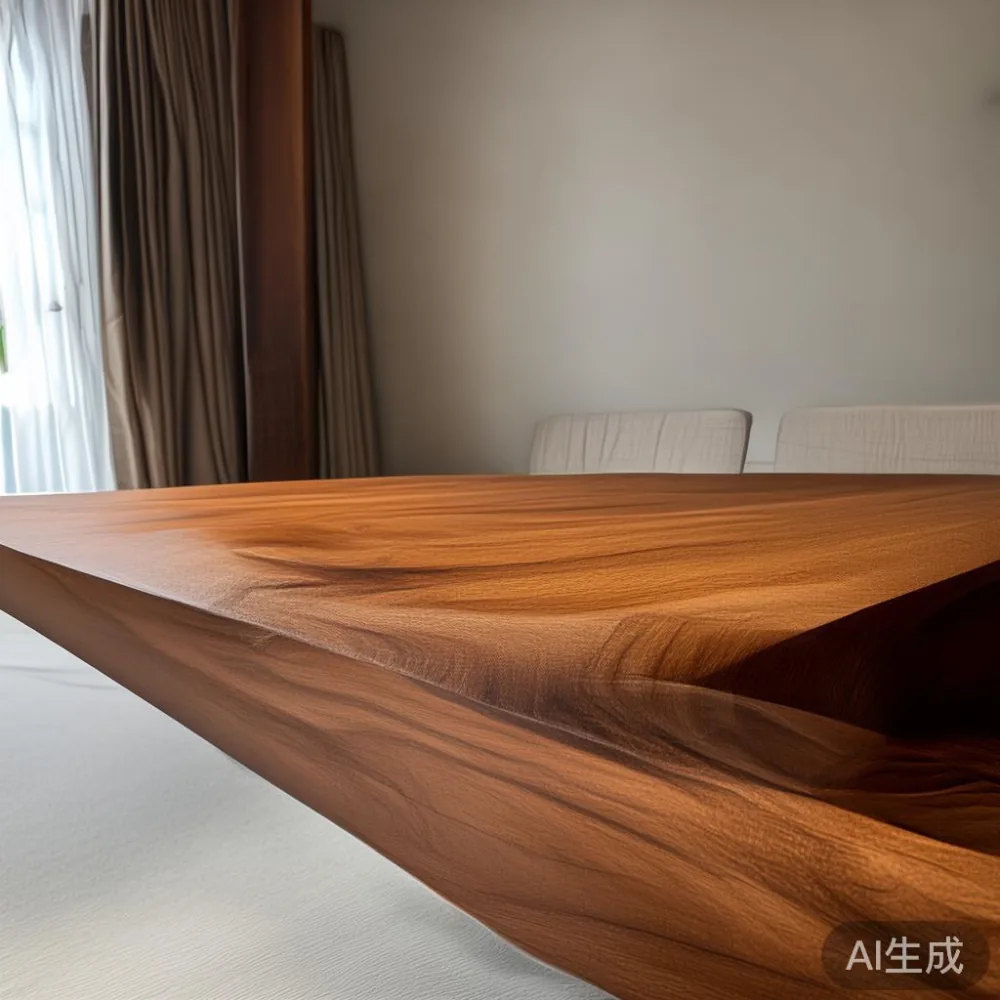
For Singapore households, that calculation becomes more practical than a showroom comparison. A 160 cm extendable table may fit an HDB dining area yet become difficult to manoeuvre through a 90 cm corridor, around a 120 cm lift opening and into a compact kitchen. A wardrobe must be tilted or partly dismantled before it clears the turn. GST and delivery also affect the final figure rather than the furniture alone.
This guide explains what actually drives the price of solid wood furniture, with particular attention to extendable table design. It also shows how to compare quotations fairly without assuming that the highest number always represents the highest quality.
Why do two solid wood dining tables have different prices?
The answer begins with what “solid wood” means and how that timber is selected. A table can use solid hardwood in its top, frame and legs, but the parts may still differ in grade, moisture content and defect allowance. Grade A timber generally has fewer knots, tighter grain and more consistent colour. Lower-grade sections may contain small knots, sapwood or mineral streaks that are acceptable in a table intended to retain a natural appearance.
Thickness changes the calculation quickly. Moving from a 20 mm top to a 30 mm top does not merely add 10 mm of wood. It increases material volume, weight, cutting time, clamping pressure and the number of supporting components needed to prevent sagging. A 200 cm rectangular dining table might use roughly 40% more board area than a 140 cm version, but its fabrication and packing costs can rise by more than that once longer rails and stronger joints are required.

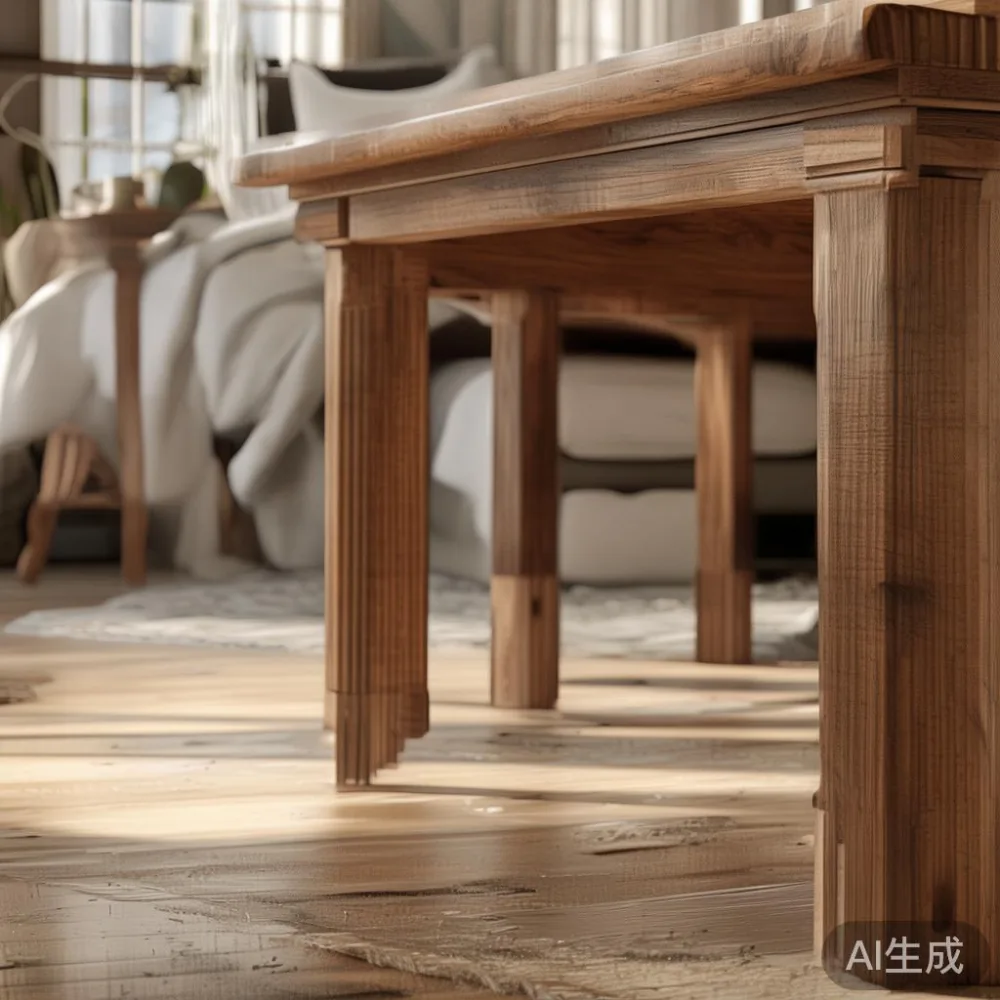
Joinery is another price driver. Mortise-and-tenon joints, dowelled construction and properly fitted apron-and-leg assemblies take more time than simple screw connections. They also improve resistance to movement under Singapore’s humidity. A solid wood sofa, bed frame or nightstand may look visually restrained, yet its concealed joinery and support system can account for a meaningful part of its price.
Finishing matters as well. Hand-sanded surfaces, stain matching, water-based coatings and multiple thin coats often require more hours than spray finishing. The aim is not to disguise the timber but to protect it while allowing the grain to remain visible. A marble table follows a different cost structure because stone selection, polishing, edge treatment and reinforcement determine much of the final price.
How much should timber, joinery and finishing cost?
There is no honest universal price for solid wood furniture because dimensions, species and construction vary too widely. Still, useful reference ranges help buyers identify a quotation. A straightforward 140–160 cm solid wood dining table may fall around SGD 1,200–2,200 before GST. A 200–240 cm extendable table with refined joinery, concealed extension hardware and a multi-stage finish may range from SGD 2,800–5,500 before GST. These are market reference ranges, not guarantees, and the specification should always be checked.
For a wardrobe, the visible timber is only part of the budget. A 180 cm-wide, 210 cm-high unit needs solid framing, adjustable hanging rails, drawers, doors and stable back panels. The price can sit around SGD 2,600–5,000 before GST depending on internal fittings and finish. A solid wood bed frame may be around SGD 900–2,200, while a solid wood sofa can range from roughly SGD 2,200–6,000 because upholstery, frame construction and cushioning introduce several specialist processes.
These figures explain why comparing only headline prices can mislead. One quotation may include solid timber throughout, while another uses solid wood only on visible surfaces and engineered board inside concealed areas. Another may include a protective coating, while the other expects the buyer to maintain it. Ask for a written breakdown of timber, dimensions, joinery, finish, fittings, hardware and delivery.
Style can affect labour but should not be confused with quality. Designer French provincial furniture often carries more pricing than a plain Scandinavian form because shaped aprons, carved details and layered finishes require additional work. A 2026 French provincial furniture search should still focus on frame construction and timber grade. The same principle applies to under 2000 American furniture and to the best Nordic wardrobe for 2026: visual category is not a substitute for measurable construction standards.
What does an extendable table mechanism really add?
An extendable table has to solve two problems at once: it must sit neatly when closed and remain stable when open. The second requirement demands more than a pair of sliding rails and a loose leaf. Under load, the extension must resist racking. The top should close with a narrow, even seam, and the support system should transfer weight without twisting.
Self-storing extension leaves are convenient because the table returns to its compact form without loose storage. Butterfly leaves fold within the table, but they can interrupt grain continuity and create a more complex centre section. Separate leaves may be easier to manufacture and replace. Each approach adds different costs in hardware, machining and quality control.
Dimensions are particularly important for Singapore homes. Many HDB dining spaces measure roughly 250–300 cm across a wall, but access routes may be narrower than the finished room. A 180 cm closed table with two 40 cm leaves extends to 260 cm. A corridor width of 90 cm can accommodate the closed table if it is turned carefully, but a 260 cm open table will not pass through the same route. Buyers should measure the door, lift, corridor turns and final dining position before ordering.
Some apartment lifts have a car depth of about 1,300 mm and a door width near 900 mm. The table must fit diagonally, not simply fit “inside” the lift. Punggol and Tampines HDB blocks may also have tight common-corridor turns. For a lift with a 2,100 mm internal height and a 1,100 mm door width, even a relatively modest 180 cm table may need to be carried vertically. Good suppliers should ask about access dimensions or provide clear delivery terms.
Does weight explain why solid wood furniture costs more?
Weight is a clue, but it is not a quality score by itself. A 180 cm solid oak dining table may weigh 55–85 kg, while a 200 cm extendable model can weigh 75–110 kg. Heavier construction often reflects thicker timber and stronger joinery, but excess mass can also signal inefficient design. Local hardwood species such as teak and rubberwood differ in density and behaviour too, so weight should be considered alongside grade and engineering.
That weight affects delivery. Carrying an 85 kg table from a lorry to a lift requires several people and suitable straps. A 210 cm wardrobe may weigh 120–180 kg, and its carton may exceed the dimensions of a normal apartment lift even when the wardrobe itself could technically fit at an angle. Disassembly can reduce the access problem, but it also adds labour and assembly time.
Delivery to Singapore addresses may cost around SGD 60–180 for a normal scheduled furniture delivery, while difficult access, upper-floor carrying and installation may add SGD 100–350. White-glove placement should be quoted separately from curbside delivery. GST is normally charged at 9% on taxable supplies, so a SGD 3,200 table becomes SGD 3,488 before delivery if GST applies. Confirm the final invoice because freight-related charges and tax treatment can vary by arrangement.
MIDHILL furniture pricing should therefore be examined as a complete package. For local buyers, the most relevant number may be the landed cost: table, protective packaging, delivery to the correct HDB block, carrying to the unit, installation, GST and return terms. A lower showroom figure can become more expensive after access charges are added.
How do design, hardware and styling change the price?
Design labour is visible in edges, profiles and proportions. A post-modern light luxury dining table may use clean lines with a few controlled curves, while American light luxury may pair warm timber with upholstered seating or metal accents. French light luxury often introduces more ornament, so production time rises. None of these labels guarantees better construction.
Hardware can range from simple wood dowels and concealed screws to branded hinges, soft-close drawer runners and precision extension rails. A well-made extendable table might allocate SGD 150–600 to its extension system, with higher costs for self-storage, alignment control or replaceable components. Drawer runners in a nightstand or wardrobe may add another SGD 40–250 per unit.
Surface treatment also affects maintenance. Some suppliers offer refinishing over the product’s lifetime, which has long-term value but should not be confused with a warranty against ordinary wear, misuse or water damage. A 10-year structural warranty addresses a different category from scratches, fading or movement caused by unstable humidity.
Interior planning can add useful context. Mid-century modern for bedroom layouts often values compact proportions and visual lightness, but a solid wood bed frame still needs adequate clearance for circulation. The top 10 Coastal furniture lists may emphasise pale woods and relaxed forms, yet coastal conditions can increase checking and movement if timber is not properly dried and finished. Material specification matters more than the style label.
What should I ask before paying for an extendable table?
Ask whether the top, rails and legs are solid wood, and which parts use plywood or other panel products. Request the timber species, thickness and dimensions. A 180 cm table with a 20 mm top behaves differently from one with a 25 mm top; neither specification can be compared unless both are stated.
Then ask about extension capacity, mechanism type, closed gap tolerance and the need to remove the leaf for access. Test stability with normal household force, not just a fingertip. Sit at the ends, place a 10 kg weight near each extension joint and check for wobble. Confirm whether the extension leaf has its own support or spans between existing frames.
Measure the route. Record corridor width, lift door width, lift car dimensions, ceiling height and the number of turns. Give the supplier exact figures rather than saying it is “a standard HDB flat.” If the table cannot reach the dining area without tilting, ask whether assembly outdoors is permitted or whether a second crew visit is required.
Finally, read the commercial terms. MIDHILL was established in 2008 and exports to more than 15 countries, with a 10-year structural warranty and lifetime refinishing service. Its published offer also includes free shipping above US$350 for qualifying orders and 14-day returns. Cross-border prices in another currency should be converted to SGD, then compared after GST and Singapore delivery are added.
How can you judge value without overpaying?
Value comes from fit, construction and total ownership rather than a single number. A SGD 3,100 extendable table that fits a Tampines dining zone, uses 25 mm solid timber, includes a stable extension system and can be delivered without dismantling may be more rational than a cheaper table that blocks the corridor or needs specialist reinstallation.
Create a comparison sheet with 10 columns: price before GST, final price, top dimensions, closed and extended length, timber species, top thickness, frame construction, finish, delivery charge and warranty. Score each quotation from 1 to 5 for access suitability and construction clarity. This removes decorative language from the decision.
Look for evidence, too. A good supplier should be able to explain why a mortise-and-tenon apron costs more than a simpler screwed assembly and why a 30 mm top needs an additional brace. Ask for photographs of the underside, extension hardware and finished seams. Reviews should mention communication, packaging and actual delivery rather than repeating the product description.
One practical test can reveal more than a showroom finish. Last month I visited a supplier and tried a 190 cm extendable table in a mock-up with a 900 mm doorway and 1,100 mm lift entrance. The closed top measured 14 mm across the centre seam, and the extension stayed steady with 15 kg placed near each end. The heavier frame added 8 kg, yet its stronger rails reduced flex when I pressed down with 40 kg of force. That is the sort of observable performance buyers should compare, not the word “premium.”
Solid wood furniture prices are driven by timber, thickness, joinery, finish, hardware, design hours and logistics. An extendable table also carries the cost of making compact living work without wobble. In Singapore, add GST and measure the route before choosing. The fairest quotation is not simply the smallest figure; it is the one that matches the construction, reaches your home and remains useful every day.