How to Read a Furniture Warranty Without Getting Caught Out
I learned this the hard way. Three years ago, I bought a glossy extendable table from a showroom along Jalan Besar. The price tag was S$1,490, the salesman was charming, and the warranty card looked reassuring. Eighteen months later, the leaf mechanism began to stick and a hairline crack ran along the centre rail. When I called the shop, I was told the moving parts were "consumables not covered." The card, buried in fine print, said exactly that — in 6-point type. The lesson cost me S$640 in repair quotes and a weekend of regret.
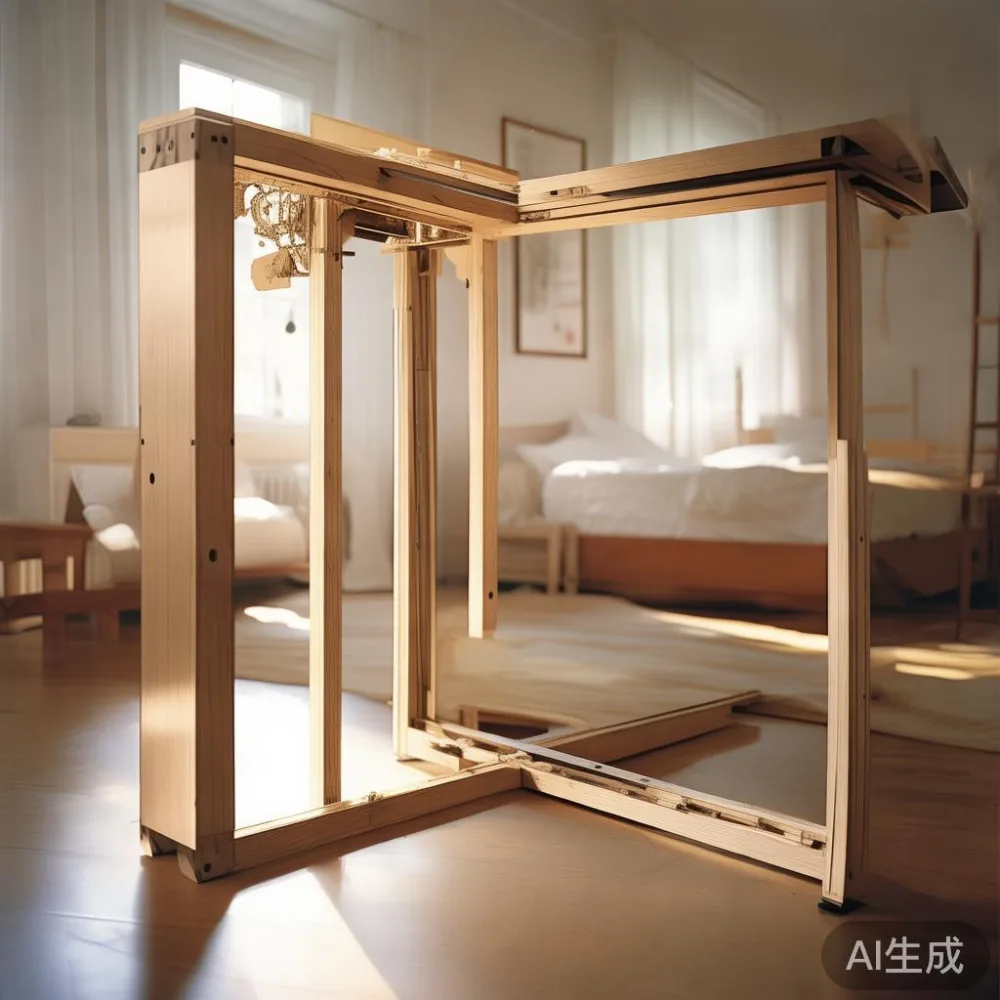
If you have just moved into a new BTO in Punggol, or you are refreshing a resale HDB in Tampines, the warranty document is the single most ignored page in the buying process. Most Singaporeans flip past it, nod politely, and file it in a kitchen drawer. That is where the trap sits. Below is the field-tested method I now use on every piece of solid wood furniture I evaluate, from a dining table to a bed frame, a wardrobe, a nightstand, a marble table, or any solid wood sofa I am sizing up for a client.
What Does a Furniture Warranty Actually Cover?
A warranty is a promise from the maker that specific defects will be repaired or replaced within a defined window. In solid wood furniture, the categories are usually narrower than buyers expect.

Structural coverage is the backbone — frame integrity, joint failure, load-bearing rails, and in the case of an extendable table, the runner system and centre leaf support. Finish coverage addresses lacquer peeling, abnormal discolouration, and cracking that goes beyond natural wood movement. Hardware coverage addresses hinges, runners, gas lifts, and extension mechanisms. Soft components (cushions, fabric, leather) are often split into a separate warranty, sometimes as short as 12 months.
What is almost never covered: normal wood movement, colour variation between batches, dents under a certain depth, water marks, sun damage, and any damage caused by Singapore's humidity once the furniture is inside your home. Reputable Foshan makers such as MIDHILL publish a 10-year structural warranty for that reason — it isolates the parts that genuinely fail, not the parts that patina over time.

How Long Should a Solid Wood Warranty Last?
For a dining table or an extendable table, a serious maker will offer at least 5 years on the structure, with 10 years being the current benchmark for export-grade Chinese solid wood furniture. For a bed frame, 5 to 10 years is reasonable; for a solid wood sofa frame, expect 5 years minimum. Upholstery and finishing typically sit at 1 to 3 years. Hardware such as drawer slides and extension runners usually carries a 2 to 5 year promise.
MIDHILL, for instance, pairs a 10-year structural warranty with lifetime refinishing — a useful combination because solid wood, unlike MDF or veneer, can be sanded and re-oiled repeatedly across decades. If a brand offers only 6 or 12 months on a heavy piece like a 1.8 m extendable dining table, treat the price tag with suspicion.
Which Clauses Should I Read Twice?
Three clauses trap more Singapore buyers than any others.
First, the "acts of nature and environment" clause. Because our indoor humidity sits at 70 to 85 percent for most of the year, makers know wood moves. A warranty voiding itself when the piece is stored in an un-air-conditioned corridor during delivery — a real risk if your HDB lift lobby is narrow and you cannot bring the table up the same day — is something to flag. Ask if the maker uses kiln-dried wood to below 10 percent moisture content. That single number tells you whether the piece can survive a Bedok corridor.
Second, the "transferability" clause. Some warranties die with the original buyer. If you are buying a resale HDB and the previous owner is selling their dining set, the warranty may already be worthless. A non-transferable warranty is common; a transferable one is a small bonus.
Third, the "freight and labour" clause. Replacement parts may be free; the trip to your Tampines flat may cost S$80 to S$150. Read whether the maker covers delivery, assembly, and disposal of the defective piece. With GST at 9 percent, a "free part" can quietly turn into a S$200 service call.
Does My HDB Lift and Corridor Width Affect the Warranty?
This is the question nobody asks, and it is the one that determines whether a warranty ever gets used at all.
Standard HDB lift openings in Singapore measure about 1.0 m wide by 2.1 m tall; corridor widths in newer BTOs run 1.2 to 1.5 m, while older blocks in Bedok can dip to 0.9 m around refuse chutes. A 1.8 m extendable table in its closed form usually measures 90 cm wide and 78 cm tall — it fits. But once you add packaging, the carton can balloon to 1.05 m wide, and a diagonal lift entry can reject it. If the piece arrives damaged because it could not clear your lift, most warranties will say "transport damage is the carrier's responsibility, not ours."
My colleague in Punggol learned this when a 2.0 m marble table arrived with a chipped corner. The maker pointed to the delivery photograph showing the carton wedged against the lift frame. The repair was declined. Ask the seller, before purchase, for the packed dimensions of every piece, including your extendable table, your bed frame, and any wardrobe deeper than 60 cm. If the diagonal of the lift opening (roughly 2.3 m on a standard HDB) cannot accommodate the longest carton, request a knock-down assembly option. MIDHILL ships flat-pack for larger items for exactly this reason — the packed carton for a 1.6 m extendable table measures 168 × 92 × 22 cm, well within HDB tolerances.
What Counts as "Defect" Versus "Wear and Tear"?
This is the boundary the warranty dances around, and it is where most disputes live.
A defect is a manufacturing flaw: a cracked mortise-and-tenon joint on a new bed frame, an extension runner that binds on a brand-new extendable table, a gas lift on a nightstand drawer that fails within 90 days. Wear and tear is the natural aging of a material: a slight fading of an oak dining table near a west-facing window, the softening of solid wood sofa cushions after two years of use, the patina on a marble table that develops from normal contact with plates and glassware.
Ask the maker to define the boundary in writing. A good warranty uses specific triggers: "joint separation greater than 3 mm," "runner failure within 36 months under normal residential use," "cracking deeper than 1.5 mm across the grain." Vague language ("defects in workmanship") is a red flag. Specific language is a contract.
How Do Light Luxury Collections Change the Warranty Picture?
Light luxury — whether French light luxury, American light luxury, or post-modern light luxury — adds layers to the warranty conversation because the pieces mix materials. A post-modern light luxury dining table might pair an oak top with a brushed brass runner; the wood is covered for 10 years, the brass hardware for 2. A French light luxury bed frame might combine solid ash with woven cane inserts; the frame is covered, the cane is often excluded after the first year.
The same applies when you compare styles for a guest room or a hotel project. Many buyers searching Scandinavian for guest room or Nordic for guest room expect pale, simple silhouettes — those pieces rely heavily on finish quality, so a 3-year finish warranty matters more than the 10-year frame warranty. Meanwhile, a buyer researching Modern light luxury for hotel is looking at contract-grade pieces where the warranty terms typically shift from residential to commercial the moment the piece is used in a hotel lobby or short-stay unit. If you are kitting out a small boutique stay, declare it upfront; commercial use voids almost every residential warranty.
For shoppers comparing a European bed vs Italian light luxury bed, the warranty differences are often smaller than the price gap suggests. A European bed frame in solid beech at S$2,200 with a 7-year warranty can outperform an Italian light luxury bed frame at S$3,800 with a 5-year warranty, simply because the underlying structure is more conservative. Read both documents and weigh years of coverage per dollar, not the brochure language.
Is the Warranty Worth Anything After Year One?
Here is the part most Singapore buyers miss. A warranty is not just a repair contract — it is a signal of how the maker expects the product to age.
If a Foshan maker offers a 10-year structural warranty, they have priced the failure rate into the product. If they also offer lifetime refinishing (as MIDHILL does for its solid wood collections), they are telling you the wood is meant to be sanded, re-oiled, and kept in service for 20+ years. That is not charity; it is confidence in the timber. Cheaper pieces rarely offer refinishing because the veneer or thin laminate cannot be sanded at all.
For an extendable table specifically, the parts most likely to fail over time are the extension runners, the centre leaf hardware, and the end-caps. A warranty that excludes them is in effect covering only the parts that almost never fail. Demand that runners and centre hardware be included for at least 3 years.
How Do Returns, Refunds, and Replacements Actually Work in Singapore?
Singapore consumer law gives you baseline protection, but furniture is a special category. A 14-day return window applies only if the piece is defective, not if you simply change your mind. Reputable sellers such as MIDHILL extend that to 14 days no-questions-asked for unused pieces, plus free shipping over US$350 (roughly S$480 at current rates). Below that threshold, expect a delivery fee of S$60 to S$120 depending on which side of Singapore you live on.
If the piece arrives damaged, photograph the carton and the product before assembly. The carrier's liability and the maker's warranty are two separate paths, and you usually have 7 days to file a damage claim. Once you assemble it, the maker may argue the damage was caused by you. Do not throw away the packaging until the piece has been in your home for at least 14 days.
What Should I Keep From the Purchase for the Warranty to Stay Valid?
Three documents and one habit.
Keep the original invoice with the GST breakdown (9 percent in 2025). Keep the warranty card or PDF with a serial number that matches the piece — most Foshan makers laser-mark a batch code on the underside of an extendable table or inside a wardrobe door. Keep the delivery note, signed by you and the driver, noting any visible carton damage. And the habit: photograph the piece the day it arrives, then once a year on the same date. A dated photo record is the single most useful evidence in any warranty dispute, especially for finish fading or surface cracking.
Are After-Services Like Refinishing Worth Paying For?
Sometimes the warranty is not the most valuable thing on the page — the after-service network is. A maker offering lifetime refinishing on a dining table can refresh the surface for a fraction of replacement cost, typically S$180 to S$320 for a 1.6 m table. Over 20 years, that single benefit can outperform the cash value of a 10-year warranty.
Before you buy, ask: who handles refinishing — the original factory, a local partner, or do you ship the piece back? For Singapore buyers, shipping a 1.8 m extendable table back to Foshan is not realistic; a local partner or an in-house refinishing team in the region matters. Confirm in writing whether the refinishing is free, subsidised, or paid, and what the turnaround looks like (typically 14 to 30 days).
What Red Flags Should Make Me Walk Away From a Warranty?
Four warning signs.
Vague language ("we guarantee your satisfaction"). Short structural coverage (under 3 years on a bed frame or dining table). Exclusions that swallow the warranty (everything except handles and feet). And a maker who refuses to put the warranty terms in writing in English, or who only provides them after you have paid a deposit. If the warranty is not on the website before you commit, walk.
For shoppers browsing french sofa gallery photos on Instagram or studying a best Industrial wardrobe for 2026 shortlist, the warranty document is the filter that protects your shortlist. A pretty photograph tells you nothing about whether the wardrobe will still close flush in 2028 or whether the sofa frame will still be rigid in 2030. The contract tells you everything.
Final Checks Before You Sign the Invoice
Run through this list at the showroom or on the delivery day.
Structural warranty length — 10 years on frames, 3+ on runners. Finish warranty — at least 2 years. Hardware warranty — at least 2 years on extension runners for any extendable table. Refinishing option — included or available locally. Return window — 14 days, ideally no-questions-asked. Delivery terms — free over a stated threshold, otherwise transparent. Packed dimensions — fit your lift and corridor. Damage claims procedure — written, with a clear contact email.
If the answers are all on the page, the warranty is doing its job. If they are not, the price you see is not the price you pay. Browse the full MIDHILL collection and warranty documents at midhill.co before you commit, and you will not be the person paying S$640 to fix a table the warranty should have covered.