Delivery and Assembly Realities When Buying an Extendable Table Online in Singapore
Buying an extendable table online sounds straightforward: choose a finish, enter your address, and wait for the parcel. The less obvious part is what happens after the courier calls. An extendable table may arrive as several heavy cartons, including separate leaves, aprons, legs, fasteners, and protective packaging. In a Singapore HDB flat or condo, the real test begins at the lift lobby, where dimensions, turning space, and the building’s delivery rules can matter as much as the table’s price.
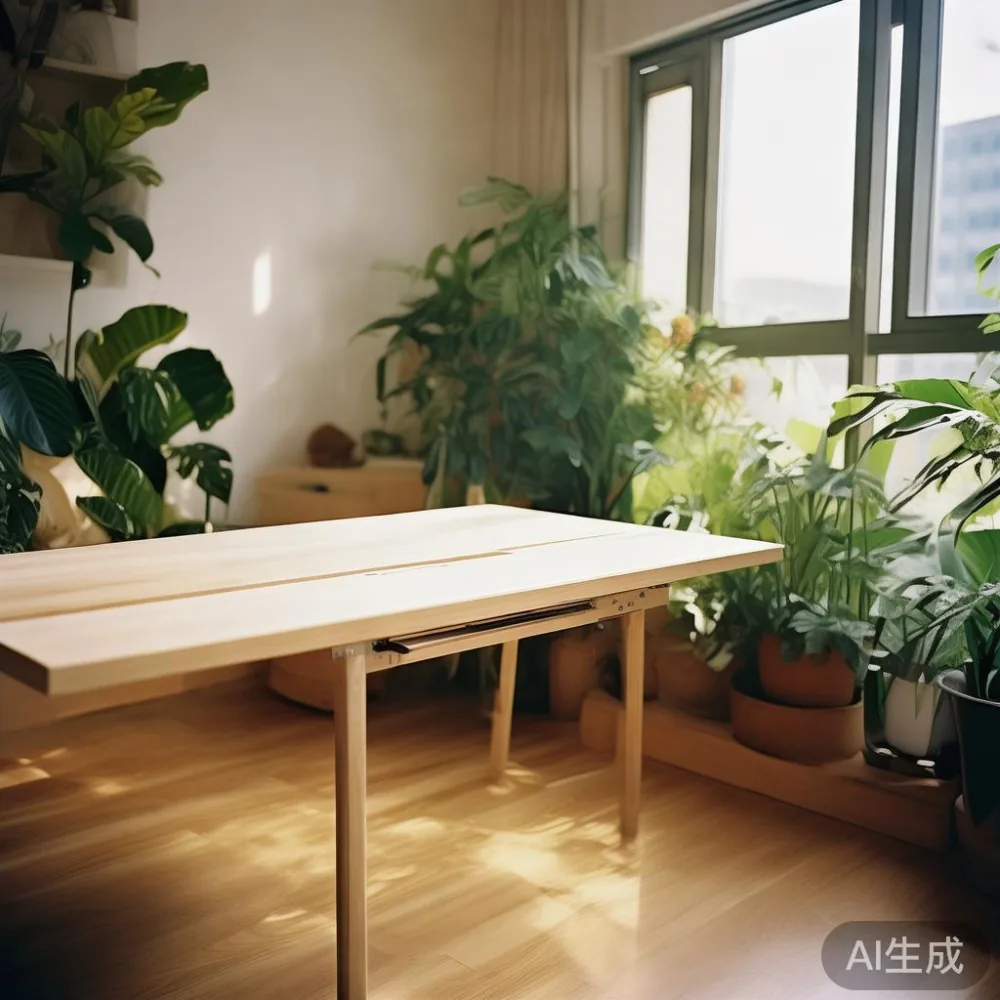
This guide examines delivery and assembly realities for households in Tampines, Bedok, Punggol, and other Singapore districts. It covers lift access, corridor widths, GST, assembly time, damage checks, and the small details that determine whether an extendable table can be moved into the dining area without being dismantled unnecessarily.
MIDHILL is a Foshan solid wood furniture maker established in 2008, exporting to more than 15 countries and providing a 10-year structural warranty, lifetime refinishing, free shipping above US$350, and 14-day returns. Its furniture can suit clients comparing wholesale French provincial furniture or asking where to find for sale American furniture, but local delivery arrangements still need confirmation because Singapore is an export market rather than a domestic showroom purchase.
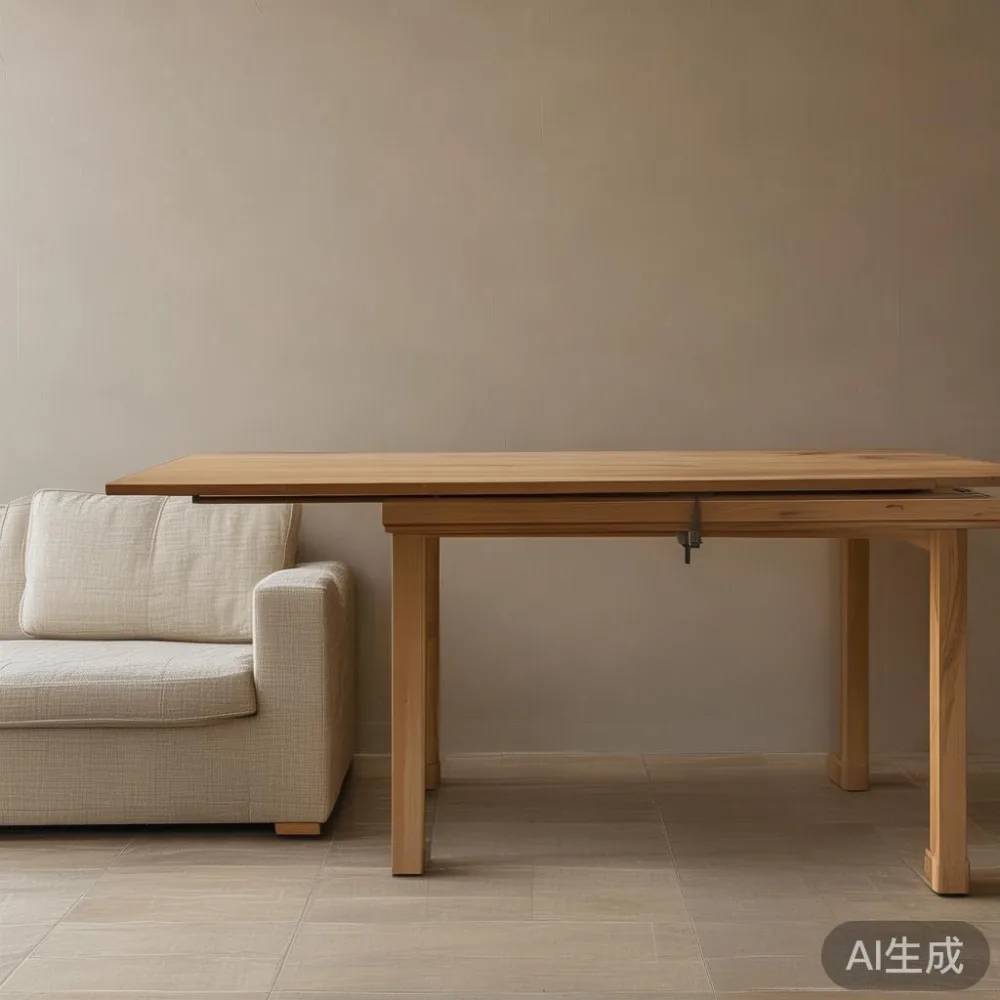
Will an extendable table fit through my HDB lift and corridor?
Most extendable tables are wider when closed than an ordinary dining table, and the closed width may not represent the widest rigid component. A 160 cm table might expand to 220 cm, while its separate centre leaf could measure 60 cm. The legs, aprons, and table top may also travel in different cartons. Request the packed dimensions of every carton, not only the assembled dimensions, before the order is dispatched.
For a typical HDB block, a service lift with an internal door width of approximately 90 cm may accommodate a 140-160 cm table top only if it is turned carefully and if the lift car is deep enough. The lift car itself might be around 140 cm wide by 140 cm deep, though measurements vary by block and lift model. A 220 cm assembled extendable table generally cannot be carried into a 90 cm lift as one rigid piece. If the table arrives with removable legs, that is a meaningful advantage; if the top is factory-fixed, the courier may need to route it through a service entrance or ask whether the resident permits a protected lift-floor installation.
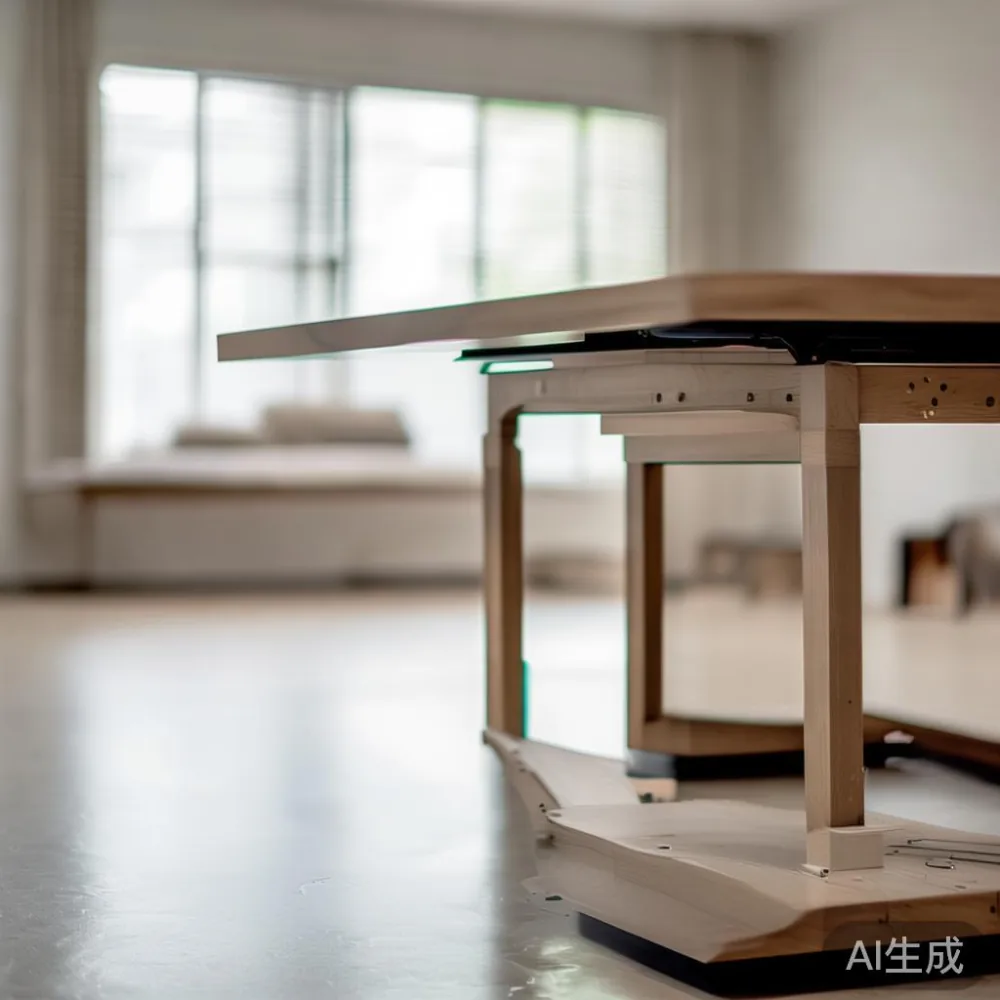
Corridor widths deserve the same attention. A 110-120 cm corridor can accommodate a table top turned on edge, provided the piece has a manageable thickness and the courier is not also carrying another box. A 90 cm corridor may work for a disassembled top, but a 160 cm rigid panel carried diagonally can still strike walls, fire hose reels, or recessed light fittings. At turns, measure the landing depth and the distance between the corridor wall and the opposite door.
Do not rely on a phone photo taken from a distance. Ask the building management for the lift’s internal dimensions and whether there is a service lift booking fee, loading-hour restriction, or requirement for a mover’s certificate. If a table must be carried up a stairwell, obtain the flight width, landing dimensions, and number of turns before accepting delivery.
For condos, especially newer estates in Punggol, the loading bay may be reserved for short-term use, while the homeowner’s association may require a protective floor covering, lift reservation, or insurance certificate from the delivery company. Confirm these requirements in writing. A driver who reaches the lobby successfully has not necessarily completed the delivery.
How much does delivery and assembly cost in Singapore?
The online price should separate the furniture, GST, local freight, lift booking, and assembly. Singapore’s standard GST is 9%. For example, a table listed at SGD 1,000 becomes SGD 1,090 before delivery and assembly charges. Local delivery to most addresses may be quoted at SGD 40-SGD 120 for a normal carton or SGD 100-SGD 250 when several large cartons and a two-person crew are required. These figures are planning estimates; the exact fee depends on access, distance, and the destination.
Some sellers include curbside delivery but not room placement. Others provide delivery into the unit, assembly, and packaging removal. Clarify whether the fee includes carrying the table to the dining room, removing all cartons, levelling the legs, tightening the extension hardware, and testing the extendable table. “Free delivery” can also mean free only above a certain order value or only to the ground-floor loading area.
MIDHILL offers free shipping above US$350, but Singapore buyers should request the landed quotation, including GST and any local handling. It is sensible to compare the final payable amount rather than the catalogue price alone. For instance, an extendable table at SGD 850 plus 9% GST and SGD 95 in-room delivery totals SGD 1,021.50, excluding assembly if that service is quoted separately.
Assembly may cost around SGD 60-SGD 150 for a dining table with extension leaves, while a complicated apartment move could require more. A handwritten note stating “no unboxing,” “no assembly,” or “curbside only” may not match the order you assumed you placed. Keep the product page, quotation, delivery invoice, and written service terms together until the installation is checked.
How long should delivery and assembly take?
A realistic Singapore delivery window for a made-to-order solid wood dining table is often 4-8 weeks, although stock availability, finish selection, and production queues can extend the period to 10-12 weeks. Transit after dispatch may take another 5-14 days, and a scheduled appointment can add 1-7 days depending on the courier’s route. A stated “delivery in 15 days” may begin after the item leaves the factory rather than after the order is placed.
Ask for five dates: order confirmation, production completion, dispatch, estimated arrival, and the actual delivery appointment. Confirm whether the courier contacts the recipient, and what happens if the recipient is absent. Some drivers need 30-60 minutes’ notice, while warehouse deliveries can use a wider 2-4 hour window. Avoid booking time-sensitive meals or events until the table has been installed and checked.
Seasonal congestion can affect air freight and road delivery, particularly around major promotions and public holidays. The 14-day returns policy provides a defined opportunity to report a problem, but damage should be photographed before the cartons are discarded. Under Singapore consumer law, consumers are generally protected against goods that are not of acceptable quality, although the remedy depends on the circumstances and how quickly the issue is raised.
What arrives in the boxes, and how much assembly is required?
A well-designed extendable table should arrive with the components clearly identified and hardware packed in a labelled bag. A 6-8 person table commonly includes a top, 2-4 legs or leg frames, 2 aprons, 1-2 centre leaves, dowels, bolts, screws, cam locks, and an allen key. The carton count may range from 2 to 5, with individual packed weights of roughly 18-45 kg for the top and another 5-15 kg for each leg or frame.
Expect 45-90 minutes for assembly if the instructions are clear and the parts are complete. Allow 2-3 hours if the table has a lift-off top, concealed extension rails, or alignment issues. Put the packaging on the floor and protect it with a 2-3 mm plastic sheet or a large blanket. Do not unpack every carton at once in a narrow HDB corridor; carry the largest pieces in first, following the sequence shown in the manual.
Check the table for cracks, splits, dents, loose joints, chipped corners, and finish defects before assembly. Photograph all sides and retain the shipping label. If a leaf is missing or damaged, record the box condition before accepting it. Refuse the affected carton only when the seller’s delivery terms permit it and the damage is visible at handover; concealed damage should be reported promptly after opening.
Extension hardware needs particular attention. Extend and retract the leaf 3 times, then loosen and retighten each fixing to confirm that it holds. The top should sit flush, with no rocking or gap wider than about 2 mm. Check after 24 hours because wood and humidity can produce slight movement. If the extension mechanism binds, do not force it; contact the supplier with photographs and measurements.
What questions should I ask before ordering an extendable table?
Ask for a dimensioned drawing showing the closed length, extended length, width, height, top thickness, apron clearance, and packed carton sizes. A standard dining height is approximately 75-76 cm, while a table with 4-6 seats may measure 140-160 cm closed and expand to 200-240 cm. The number of extension leaves affects both weight and installation method.
Ask whether the top is solid wood throughout or uses veneer, MDF, or another core, and whether the listed finish applies to all faces and edges. A solid wood dining table can weigh 45-90 kg depending on dimensions and construction. If the product page calls it solid wood, the specification should clarify the frame, leaf construction, back panel, drawer materials, and any plywood components.
Ask whether extension leaves are stored separately or supplied with the table. Two 50 cm leaves may need a cabinet 100 cm wide, while one 60 cm leaf can be stored under the table if the apron and frame allow sufficient clearance. At 75 cm table height, a typical sideboard or console gives only about 65 cm of internal height, so a leaf often will not fit underneath. Confirm the required storage space instead of assuming it will disappear when closed.
For design references, an extendable table with rounded corners and a pale oak or warm walnut finish may suit French light luxury styling. A straight-edged black ash or stained oak version can fit American light luxury interiors. Post-modern light luxury often combines restrained geometry with warmer natural materials, which works well for a mixed dining area.
Online searches for a French provincial coffee table or a Post-modern sofa may be useful for judging scale, but furniture bought as part of a coordinated scheme still needs the same access and specification checks. Searches for how to style European sofa in apartment can help with visual planning, while a request such as “best European light luxury sofa for 2026” concerns selection rather than delivery. Any comparison of a best Post-modern sofa for 2026 should also consider whether its packed components can pass a 90 cm lift door.
Other categories require different assembly logic. A solid wood sofa may arrive as a frame, cushions, and legs; a MIDHILL bed may arrive as a slatted or solid base with separate headboard pieces; a wardrobe may weigh 80-150 kg and need sectional carrying; a nightstand may fit in 1 carton; and a marble table is especially sensitive because its top can weigh 60-140 kg and may need a separate lifting appointment. These examples are relevant because shoppers often add several pieces to one order, then discover that the lift booking covers only one delivery window.
How can I protect the furniture and the apartment during installation?
Protect both the table and the route. Use 4 corner protectors, 2 moving blankets, 8-10 furniture sliders for a lightweight assembled frame, and a 2-3 mm floor mat. Cardboard alone is insufficient against a 45-90 kg table. Keep people out of the lifting path, remove rugs, open all relevant doors, and move dining chairs before the top enters the room.
Singapore’s humidity is commonly around 70-90%, so solid wood can react to moisture and temperature changes. Keep new furniture away from air-conditioning vents, kitchen steam, and direct sunlight during the first few weeks. Wipe spills promptly, use coasters and trivets, and avoid placing a hot dish directly on the surface. A 2 mm gap at a leaf joint may change slightly during humid weather, so report manufacturing defects rather than attempting major adjustments yourself.
The 10-year structural warranty and lifetime refinishing service are useful long-term assurances, but warranty scope should be confirmed in the purchase documents. Ask whether refinishing includes labour, return freight, and colour matching, and whether the service applies after the initial ownership period. The lifetime refinishing policy does not normally replace accidental damage, delivery damage, or misuse, so the damage-reporting process remains important.
What should happen on the delivery day?
The courier should confirm the number of cartons, compare them with the invoice, and record visible damage. Walk the route before heavy pieces are moved. The crew should remove packaging only after reaching the final room, assemble the table in the intended position, fit the extension leaf or leaves, tighten all fixings, and demonstrate the mechanism.
Before signing, inspect the finished extendable table from standing height and at tabletop level. Check that the top is level, the legs do not rock, the apron is square, and the extension runs without force. Confirm that all cartons and protective wrapping are removed. A typical acceptable defect report should include the order number, a 30-60 second video showing the issue, close photographs, and a description of when the fault appeared.
Singapore homes are compact, so the final decision is rarely about room size alone. It is about whether the packed pieces can pass the lift, whether the corridor has enough turning room, and whether the assembly team can work without damaging common areas. Measuring before ordering prevents most disappointing delivery days and gives an extendable table a much better chance of arriving in the condition shown in the product photographs.