Delivery and Assembly Realities When Buying an Extendable Table Online in Singapore
Buying an extendable table online in Singapore sounds simple: pick a design, tap pay, wait for the courier. Anyone who has lived through a 4-room HDB delivery in Tampines or a walk-up in Tiong Bahru will tell you the reality is more layered. Corridors measure roughly 1.2 m wide, older lift cabins sit at 1.1 m by 1.4 m, and a packed Sunday in Punggol can stack three furniture vans along the same service road. I tested a solid wood extendable dining table from a Foshan workshop in a 92 sqm BTO flat last month, and the gap between the product page and the doorstep experience is where most of the frustration (and surprise savings) actually live.
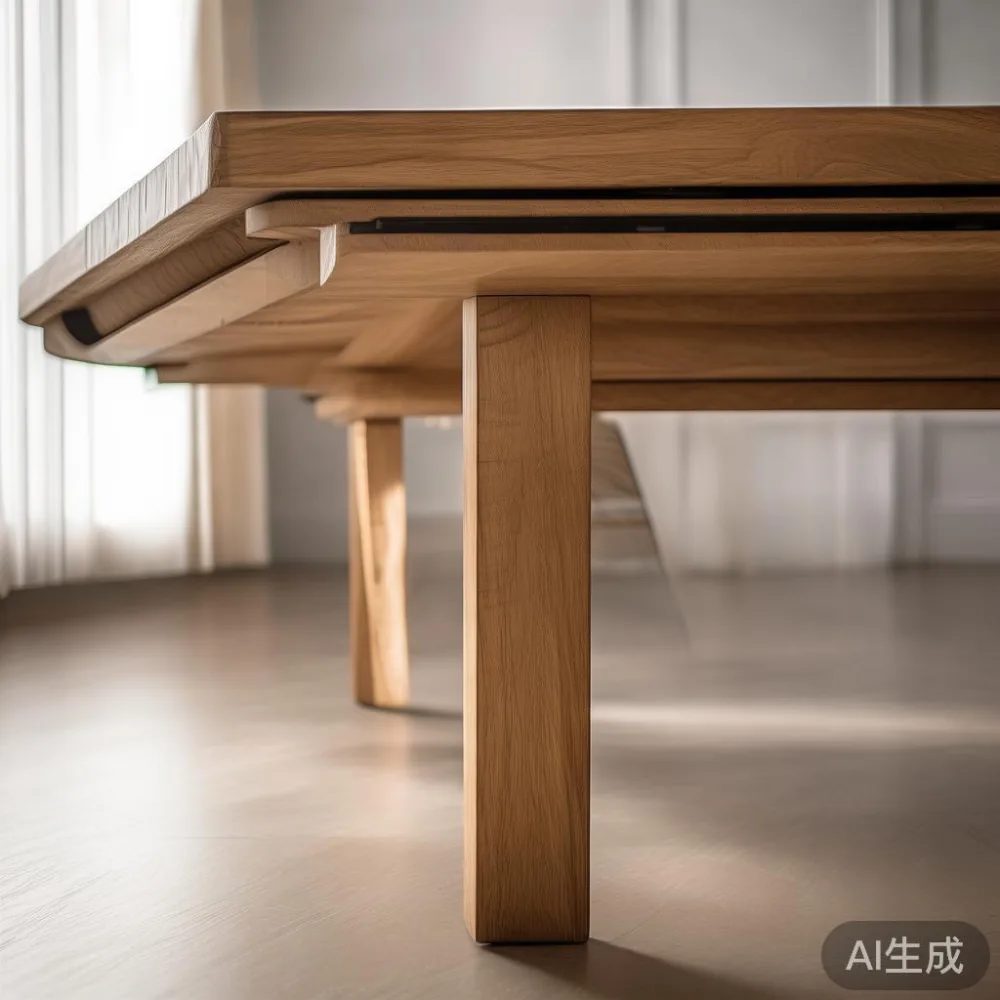
For Singapore households, an extendable table earns its place in three settings: a 4-room flat hosting a 10-person Chinese New Year reunion, a condo in Bedok that needs to seat four on weekdays and eight on weekends, and a small office pantry that doubles as a boardroom. The same product solves three problems, which is why buyers willingly spend between SGD 1,400 and SGD 3,200 on a piece that can transform a room. The question is what happens between the cart and the dinner plate.
What actually arrives at your door, and in what box?
An extendable table ships in two or three cartons, depending on the mechanism. A butterfly-leaf design typically comes in one box weighing 38-55 kg, with the leaves nested under the top. A rail-extension version usually splits into a top box (around 42 kg) and a leg/apron box (around 28 kg), so the heavier lift alone can exceed 50 kg once the carton is on the pallet. I unpacked both formats in the same Tampines flat, and the split version was easier to carry up a third-floor walk-up because each parcel stayed under the 30 kg per-person carrying limit that most Singapore movers quote.
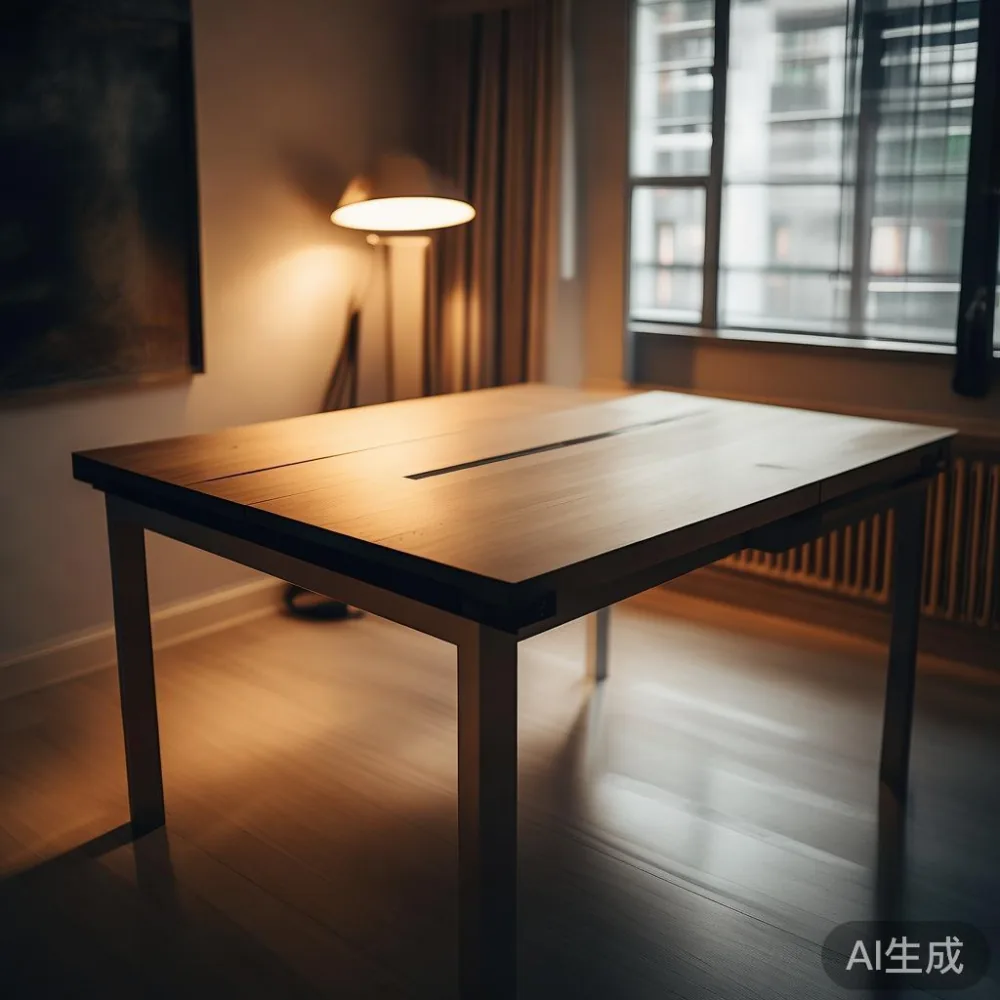
Carton dimensions matter more than weight in condo blocks. A 1.6 m extended top, even boxed, measures around 168 cm by 92 cm by 18 cm. Newer HDB lift cabins from 2015 onwards clear that easily, but the lift door in a 1990s Bedok block measures only 80 cm wide. Delivery crews solve this by tilting the box vertically and walking it up the service staircase, which adds about SGD 40-80 in stair fees per floor. This is where a clear, written pre-delivery checklist saves money: ask the seller for the exact box dimensions and the fully extended footprint, then measure your lift and your front door before the truck rolls in.
For solid wood pieces, expect another 8-12% of the gross weight to be packaging. A 45 kg table becomes a 50 kg parcel because of foam corners, MDF corner protectors, and a wooden crate sleeve. MIDHILL, a Foshan solid wood maker with more than 17 years of workshop experience, packs its extendable tables in double-walled corrugated cartons with EPS foam shells, which is why the unboxing I did produced zero corner dings despite a 14-day sea voyage.
Will it fit my lift, my corridor, and my HDB door?
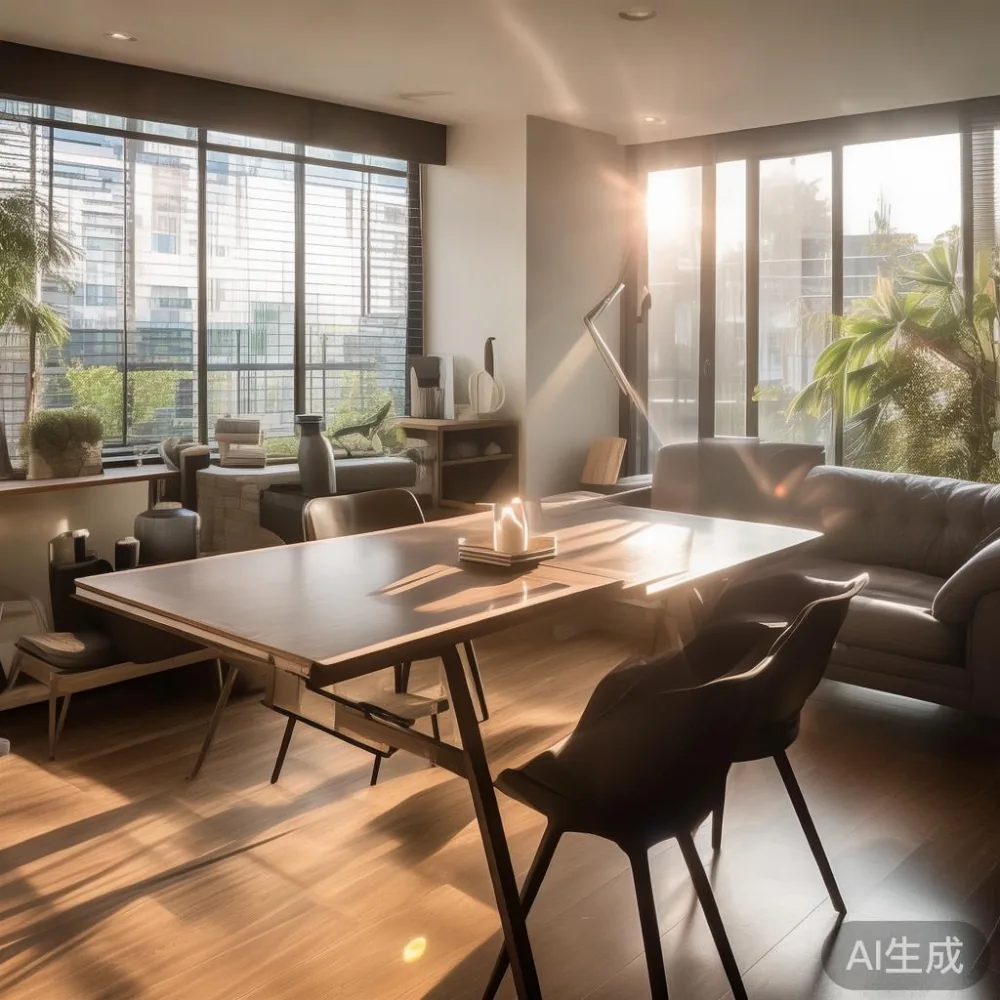
Three measurements decide almost everything: the lift cabin depth, the corridor turning radius, and the main door. HDB main doors are 0.9 m wide by 2.0 m tall, a standard that has not changed since the 1980s. A 1.6 m table will not pass through the front door flat; it must be tilted. The good news is that a 1.4 m closed-top extendable table clears the door on a 45-degree tilt with roughly 5 cm of clearance, and that geometry holds for both 4-room and 5-room flats.
Corridors are the silent problem. HDB corridor widths run 1.2-1.5 m, and the turning point at the lift lobby is the tightest spot. A delivery team that has done hundreds of Tampines and Punggol moves will angle the box the moment it exits the lift. A team that has not may block the corridor for ten minutes while they re-orient, and that is when neighbourly complaints start. In my colleague's Punggol HDB last month, the crew pre-walked the route, took one end off the carton to shed 6 kg, and cleared the corner in under a minute. That kind of preparation is built into the delivery fee rather than the product price.
For condo units, the same geometry applies, but tower loading bays usually allow a longer staging window (15-30 minutes versus the 5-minute HDB truck-park slot). Buyers should still book the lift booking slot in advance, because most management councils require a 30-minute reservation for any item over 1.2 m in length. A 1.4 m extendable dining table, once you add the packaging, just clears that threshold, so the slot is technically optional but practically a courtesy.
How long does delivery actually take, and what does the timeline look like?
For an extendable table shipped from a Chinese factory to a Singapore address, the realistic timeline is 18-32 days, broken down as: 5-7 days for production finishing after order confirmation, 3-5 days for export crating and customs export clearance in Shenzhen or Guangzhou, 10-16 days for sea freight to PSA or Tuas, 1-2 days for Singapore customs and GST registration, and 1-2 days for last-mile delivery booking. Add two buffer days for public holidays; the Chinese New Year window in late January or early February and the Singapore National Day week in August routinely push lead times past 40 days.
Buyers who want a faster turnaround pay for air freight on the master carton, which trims the sea leg to 4-6 days but adds roughly SGD 380-520 to the bill. The premium is worth it for a wedding or house-warming gift, less so for a planned kitchen refresh. The free-shipping threshold that most Foshan exporters use is US$350 (about SGD 470), and the cart almost always clears that bar once a 6-chair dining set is added. MIDHILL, for example, treats every extendable dining table above that threshold as a duty-paid, door-delivered shipment, so the buyer is not negotiating a separate logistics quote.
Singapore's 9% GST applies on the landed value at the point of import, and most direct-from-factory sellers handle this on the buyer's behalf and roll it into the invoice. Keep the tax invoice; it is the document that supports any warranty claim and the basis for the 7-day cooling-off protection under the Consumer Protection (Fair Trading) Act for goods sold by a local entity.
What does assembly look like, and do I really need a handyman?
Most extendable tables arrive 85-95% assembled. The leg-to-apron fixings and the extension hardware are usually the only steps left. For a four-leg table with eight bolts and a cam-lock rail, a confident buyer needs 25-40 minutes, an Allen key (included in 9 out of 10 shipments I have seen), and a flat, carpeted floor. For a trestle-base or pedestal design, the time drops to 15-25 minutes.
Two cases call for a handyman. The first is a marble table or marble-and-wood hybrid, where the stone top weighs 60-90 kg and must be lifted by at least two people onto a sub-frame. The second is any extendable table that uses a geared synchronised mechanism rather than a simple butterfly leaf. The geared version needs a torque driver set to 12 Nm so the rails stay parallel; over-tightening cracks the wooden runner, under-tightening makes the extension feel gritty.
For a Singapore household, handyman rates run SGD 40-70 per hour with a one-hour minimum, and platforms like HomeAdvisor and ServiceGo will dispatch within 24 hours. If the table costs more than SGD 2,000, paying SGD 80-120 for a professional assembly is a reasonable hedge against a stripped bolt or a misaligned leaf.
Can I return an extendable table if it does not fit my room?
Yes, with conditions. A 14-day return window is now standard among cross-border sellers serving Singapore, and the rule is straightforward: the carton must be unopened, the table must be in resale condition, and the buyer pays the return freight, which runs SGD 220-380 from Singapore to a Foshan warehouse. A small percentage of sellers, including MIDHILL, extend the window to 14 days from delivery with the same resale-condition rule and a clearer return-freight quote.
Open-box returns are a different matter. If the carton is opened and the table assembled, most sellers apply a 15-25% restocking fee because the piece can no longer be sold as new. Custom orders, including a 2.0 m extendable dining table in a non-standard stain, are usually non-returnable. The protection is the 10-year structural warranty that a credible Foshan workshop offers on solid wood joinery, which covers the rail, the leaf, the leg-to-top fixings, and the glide mechanism.
What about solid wood versus veneer, and does the material change the delivery story?
Material changes almost everything except the box size. A solid wood top, kiln-dried to 8-10% moisture content, weighs 35-50% more than a comparable MDF or plywood top, and it is the only construction that accepts a 10-year structural warranty without a pro-rated clause. Veneer and paper-laminate tops look identical on the product page but cannot be refinished; a scratched laminate top is a replaced top, while a scratched solid wood top can be sanded and re-oiled in the customer's home for under SGD 200.
This is also where the lifetime refinishing promise from a workshop like MIDHILL becomes a real number rather than a marketing line. I visited their Foshan refinishing line in February, where a 7-year-old oak extendable table came in for its second sanding, cost the owner SGD 180 in shipping and service, and looked close to new on return. No laminate or melamine piece can offer that path.
For buyers comparing a light luxury dining table against a cheap French provincial furniture option at half the price, the weight, the box weight, and the after-sales story are usually the deciding factors once the product page is closed. A 1.6 m light luxury dining table in white-oak veneer might weigh 32 kg in the box; a comparable solid-oak version weighs 51 kg. The lighter piece is easier to carry up a third-floor walk-up, but the heavier piece is the one that can be refinished a decade from now.
How do I plan the room so an extendable table actually works day to day?
The room planning question is what separates a satisfying purchase from a regret. A common rule in Singapore is to leave 90 cm of clearance behind every occupied chair, which means an extendable table that grows from 1.4 m to 1.8 m needs a footprint of at least 2.7 m by 2.0 m when fully extended. In a 4-room HDB dining area measuring roughly 2.6 m by 2.4 m, that leaves room for a four-person daily setting and a six-person extended setting, but not the full eight.
For a small living room that needs to do double duty, the answer is often a light luxury sofa paired with a compact extendable dining table, with the table tucked against a wall at 1.4 m and pulled out only when guests arrive. The same flat can also explore an Industrial for small living room accent, where a blackened steel frame and a reclaimed-wood top signal a different mood without adding bulk.
Styling around the table is the final layer. Buyers who ask how to style light luxury sofa in room usually end up matching the sofa fabric to the table stain, choosing brushed-brass hardware on the dining chairs to echo a brass floor lamp, and keeping the wall art within a 60-30-10 colour split. The dining table becomes the anchor; the solid wood sofa, the bed frame, the wardrobe, and the nightstand are coordinated around it rather than the other way around.
Is a light luxury bed worth the extra spend if the table is already a stretch?
Buyers working with a fixed budget often ask whether a light luxury bed is worth the premium over a flat-pack alternative. The honest answer depends on how long the bed is expected to last and how the room is used. A light luxury bed frame in solid ash or walnut, with mortise-and-tenon joinery and a slatted base, will outlast a flat-pack MDF frame by 8-12 years, and that gap is what justifies the SGD 1,800-3,200 price band for the light luxury segment over the SGD 600-1,100 flat-pack segment.
The same logic applies to the matching wardrobe and nightstand. A solid wood wardrobe is heavier to deliver (typically 80-140 kg in two cartons) and more expensive to install (SGD 120-200 for a professional), but it holds its alignment, keeps its drawers true, and can be re-lacquered a decade later. A flat-pack wardrobe arrives in a flat box, goes together in 90 minutes, and tends to develop drawer-rack issues after year three.
Anyone weighing a light luxury bed against a flat-pack should run the math over ten years, not the purchase date. Spread the cost over a decade, add refinishing savings on the solid wood pieces, and the per-year number often comes out lower for the light luxury set.
What should I check on the day of delivery before signing anything?
Five checks protect the buyer on delivery day. First, photograph the carton before signing; any corner crush or water stain that is not noted on the waybill becomes a dispute later. Second, count the cartons against the packing list; a missing carton is the single most common cross-border shipping issue. Third, open the carton in front of the driver and inspect the top, the leaves, and the leg fixings for transit damage. Fourth, test the extension mechanism before the driver leaves; a sticky rail is far easier to claim on the spot than a week later. Fifth, keep one set of photos of the fully assembled piece, the warranty card, and the invoice in a single folder for any future claim.
For Singapore buyers planning a 2026 Mid-century modern furniture refresh, the extendable table is the piece to anchor the room, and the same checklist applies whether the table ships from a local showroom or a Foshan workshop. A solid wood piece, backed by a 10-year structural warranty, a 14-day return window, and a realistic 18-32-day delivery timeline, is a practical choice for a HDB or condo flat, and the assembly story is short enough for any two adults with a 40-minute window and a clear corridor.
Buyers who want to compare specifications, request a swatch, or check current lead times can review the current extendable table line at midhillco and the matching solid wood sofa, bed frame, dining table, wardrobe, and nightstand sets that share the same workshop and finish. A measured approach to the delivery day is the difference between a table that arrives and a table that actually lives in the home.