Extendable Table Costs in Singapore: Veneer vs Solid Wood Over 5 Years
An extendable table looks like a simple dining solution in a Singapore HDB flat, but its real value appears over time. A veneer table may cost S$1,290 and use a particleboard core, while a solid wood extendable table may cost S$2,490 and weigh 68 kg. Over 5 years, that difference can involve repairs, refinishing, replacement parts, and the inconvenience of sending a heavy table up a narrow corridor. For owners in Tampines, Bedok, and Punggol, the purchase should be assessed as a long-term furnishing decision rather than a one-day price comparison.
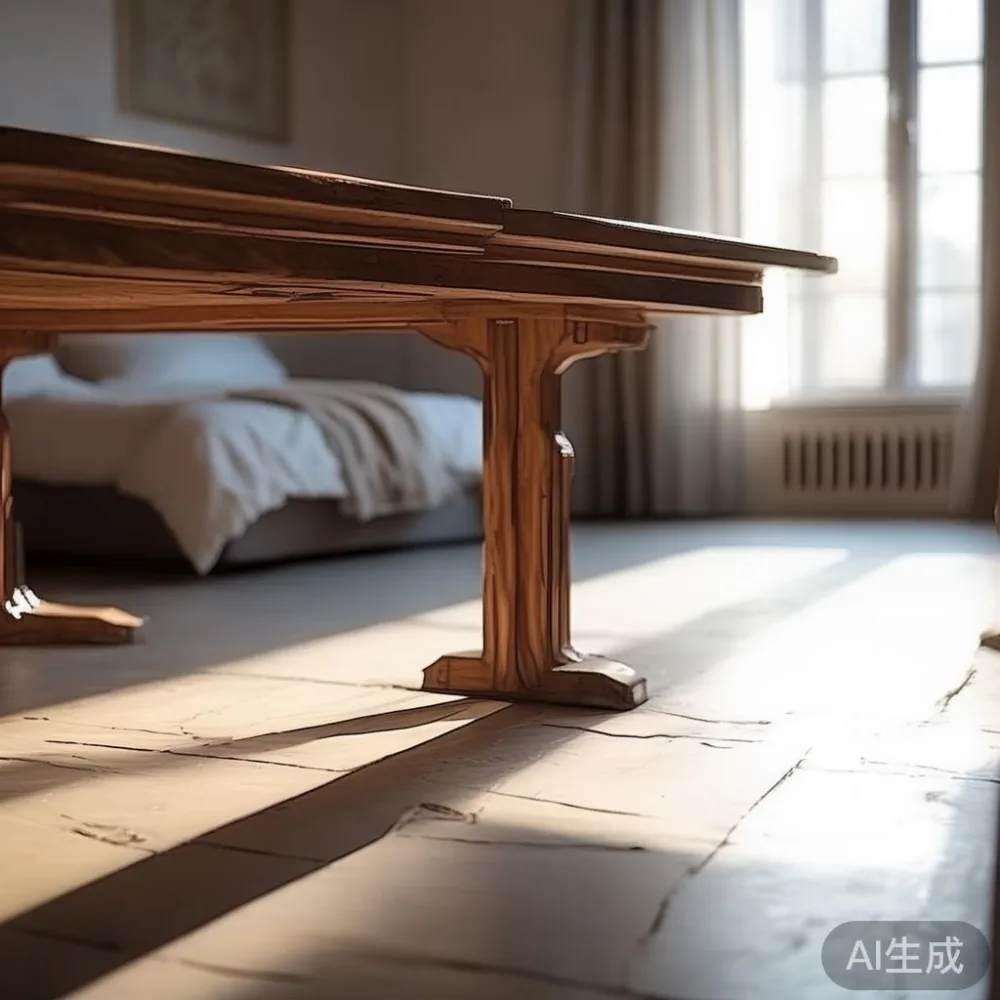
This comparison examines 2 extendable tables in practical use: a 160 cm veneer model with 2 sliding leaves and a 180 cm solid wood model with 2 removable leaves. Both are designed for compact dining rooms, but their material costs develop differently. Prices below include 9% GST and a Singapore delivery estimate. They exclude floor protectors, candles, decorative runners, and replacement table settings.
What is the real 5-year cost of a veneer extendable table?
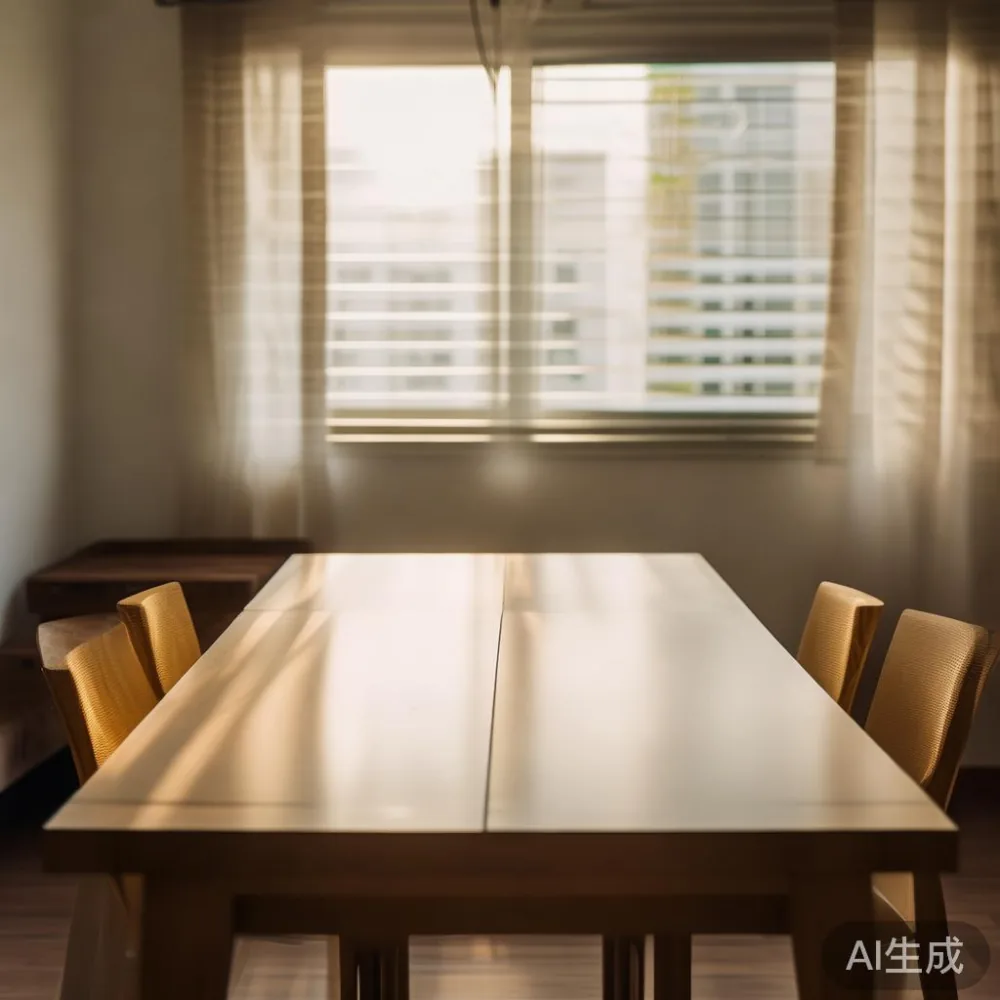
Assume a veneer extendable table costs S$1,290, including GST. Its particleboard core is covered with 0.6 mm oak-effect veneer, while the edges use 2 mm PVC strips. A typical dining table is set 5 times per week, with 4 people seated for about 1.5 hours on each occasion. That is roughly 390 meals across 5 years.
The purchase is only the first cost. Budget S$45 for delivery and assembly, S$29 for 2 felt floor protectors, and S$39 for a 160 cm cotton runner. A modest repair allowance of S$90 may cover one damaged edge strip and a replacement runner. At month 18, the runners may need laundering, although this normally does not affect the furniture budget.
Veneer is relatively stable in an air-conditioned HDB home. Direct sunlight through an east-facing window can cause fading, particularly with dark oak rather than pale oak. A table placed within 2 metres of an unfiltered window should receive a UV filter and be rotated every 6 months. Water should be wiped away within 10 minutes because moisture can lift the veneer seam.
At year 5, the veneer table may require 1 edge repair costing S$70, replacement runners at S$39, and a partial respray of S$60. The final ownership total is therefore S$1,290 + S$45 + S$29 + S$39 + S$70 + S$39 + S$60 = S$1,572. This is S$314.40 per year over 5 years.
The figure is not automatic. A low-use table in a Punggol condo may finish near S$1,430, while one exposed to cooking oils and heavy sunlight may finish near S$1,700. Veneer can perform acceptably when the owner protects it, but the finish is usually harder to repair than exposed solid wood.
What does a solid wood extendable table cost after 5 years?
The solid wood example costs S$2,490 including GST. It uses 4 cm kiln-dried solid rubberwood legs, a 3.2 cm solid ash top, 2 hardwood leaves, and mortise-and-tenon joints. At 68 kg, it is 22 kg heavier than the 46 kg veneer model. That difference matters in a lift or corridor: 2 people should carry the top in its fitted carton, while individual leaves can be moved separately.
Delivery to a Singapore address is estimated at S$80, with 5 to 8 delivery days after production. A standard HDB lift interior of about 110 cm by 140 cm may accept the packaged tabletop on its edge, but a 70 cm corridor turn can require the carton to be angled. Owners should measure the route before confirming delivery. For a narrow corridor under 90 cm, MIDHILL can check the packed dimensions before dispatch as part of the order conversation.
Accessories add another S$188 over 5 years: S$68 for a protective mat, S$40 for 4 replacement felt glides, and S$80 for refinishing materials. The table may also need 2 contractor visits to Singapore at S$60 each if the leaves or runners are replaced. A realistic repair allowance is S$140 for minor joint inspection, sanding, and tightening.
The solid wood surface can usually be repaired more successfully. Scratches can be filled, while a damaged leaf edge can be eased and refinished. With 2 careful refinishing cycles at S$150 each, the 5-year total becomes S$2,490 + S$80 + S$68 + S$40 + S$80 + S$140 + S$300 = S$3,198, or S$639.60 per year. Even without a second refinishing cycle, the total is S$3,048.
Its residual value also deserves attention. The solid wood table retains more usable material at the end of 5 years. It may be resold for S$1,200 to S$1,600 in Singapore, compared with S$220 to S$500 for a used veneer table with an intact mechanism. From a retained-value perspective, the net 5-year cost can be closer to S$1,600 to S$2,000 rather than S$3,198.
Is veneer or solid wood cheaper for an extendable table in the long run?
On the day of purchase, the veneer table is S$1,200 less expensive. That gap is substantial in a condo renovation. Yet cash outlay and ownership cost should be kept separate.
For the assumptions used here:
- Veneer extendable table: S$1,572 after 5 years, before resale.
- Solid wood extendable table: S$3,198 after 5 years, before resale.
- Gross 5-year spending gap: S$1,626.
- Estimated resale range: S$1,720 to S$2,100 combined for the 2 tables.
- Potential net gap after resale: approximately S$474, assuming mid-range resale figures.
The annual figures are S$314.40 for veneer and S$639.60 for solid wood. If the solid wood table remains in use for 10 years, its cost per year can fall below the veneer table because the purchase cost is spread over more meals and years.
There is another type of cost: time and physical effort. A 46 kg veneer table is easier for 2 adults to manoeuvre into a Bedok lift. A 68 kg solid wood table needs more planning, especially when the home has 90 cm corridors, a staircase at a HDB block, or a parking-garage turning route of less than 1.1 m. Owners should reserve 20 minutes for unpacking and another 30 minutes for assembly.
For a short 3-year tenancy, the veneer option can be financially sensible. For a 5-year or longer horizon, solid wood becomes more persuasive if the table will be moved less than twice, protected from direct sun, and maintained. Buyers should also check the warranty terms. MIDHILL provides a 10-year structural warranty, a distinction that applies to construction rather than ordinary surface wear.
How do leaves, mechanisms, and dimensions affect the comparison?
The extendable mechanism can cost more than the visible top. The veneer example uses 2 steel rails and 2 sliding leaves. Its closed size is 120 by 80 cm and open size is 220 by 80 cm. The solid wood example is 140 by 85 cm when closed and reaches 240 by 85 cm when open.
A 240 cm table seats about 10 diners, but that does not mean every seat should be occupied. A 180 cm by 90 cm arrangement may be more comfortable for 6 adults and leave 60 cm of walking space along the wall. In a compact HDB dining zone, a table that expands only when needed can be more useful than one that stays open all day.
Sliding leaves consume less floor space when stored, but they place more stress on the rail and runners. Removable leaves reduce slide friction, though they need 4 to 6 alignment checks per year. Both examples use 4 brass alignment dowels on each leaf. The solid wood version should also have 8 steel dowel screws and 2 locking bolts under the apron.
Owners should tighten the mechanism every 12 months. A loose leaf can develop a 1 to 2 mm wobble, which transfers into the table edge. No oil should be poured into a particleboard rail; a dry silicone lubricant applied sparingly at the manufacturer’s points is safer.
Care products matter over 5 years. Use a pH-neutral wood cleaner for solid wood, applied with a cloth and tested on an inconspicuous 10 cm section. Avoid silicone-based sprays on veneer because they can create a shine that becomes patchy. Place a felt protector under every hot dish, and use coasters with a minimum 3 cm diameter.
Can solid wood fit through a Singapore HDB lift and corridor?
It can, but measurement is part of the purchase. A common HDB lift door is about 90 cm wide, with an internal depth near 140 cm. The solid wood tabletop may be packed in a carton measuring 152 by 98 by 18 cm. Because the table is only 18 cm thick, the carton can often stand on its edge and pass through the opening, subject to lift dimensions and the building manager’s rules.
A Punggol or Tampines condo can have narrower service corridors or a longer lobby route than the public entrance suggests. The buyer should record 4 measurements: the lift door width, the lift depth, the narrowest corridor, and the corner radius after the lift. Any measurement below 80 cm requires the packed size to be checked before delivery.
My colleague and I visited a Tampines HDB flat last month to test a 68 kg ash extendable table with 2 removable leaves. The packed top passed through a 90 cm lift door, and the 2 leaves fitted in a separate carton. We assembled the table in 26 minutes with 2 people and 8 hex keys. The only awkward point was the 82 cm corridor outside the flat: the carton had to be turned diagonally. That visit showed why delivery staff need route information rather than merely a postcode.
Delivery is estimated at 5 to 8 days for in-stock Singapore orders, while made-to-order pieces can take 25 to 40 days. The solid wood table should arrive after the floor and walls are complete. For a new condo, allow another 7 days for access arrangements and lift bookings.
Which material suits light-luxury interiors?
Light luxury is not limited to glossy surfaces or oversized rooms. French light luxury often uses pale oak, restrained profiles, and natural fabrics. American light luxury tends toward cream upholstery, warm timber, and generous proportions. Post-modern light luxury may pair clean geometry with visible joints or a contrasting extension mechanism. In each case, the material should feel deliberate rather than imitative.
A pale solid wood extendable table can support a French or Scandinavian setting without making a small dining area look heavy. Its grain provides variation that printed veneer cannot fully reproduce. That benefit is visual, although it should not be confused with a guaranteed higher resale price.
The surrounding furniture affects the result. A solid wood sofa in oatmeal or warm beige may balance the table without competing with it. A solid wood bed frame with 4 slim legs can keep a bedroom visually open. A marble table works well in an entry area, but using solid timber for the main dining surface avoids turning every flat surface into stone. A solid wood wardrobe should have matching grain direction on its doors, while a compact nightstand can repeat the table’s timber tone.
For another room, the question of how to style Japandi sofa in apartment is less about adding more objects than controlling scale. The sofa should sit with a 40 cm table gap, and a low side table can echo the extendable table’s material without matching every detail.
Material decisions also extend beyond the dining room. European bed vs Japandi bed is partly a question of visual weight, while the search for the best Modern bed for 2026 should include clear under-bed measurements, stable joints, and mattress support. Similarly, is Italian light luxury wardrobe worth it depends on internal fittings and door alignment, not only its name. Anyone comparing options for how to choose light luxury sofa should check seat density, frame construction, and the actual depth needed in a narrow living room.
For a sleeping area, is European light luxury bed worth it comes down to the same practical concerns: slat spacing, centre support, and dimensions. An upholstered headboard may add 8 cm of depth, so it should be measured against a bed frame’s external width and the HDB bedroom doorway.
What is the most economical 5-year ownership plan?
For the veneer table, keep the purchase near S$1,290, use 2 washable place mats, maintain the edges, and control sunlight. Such care can keep the 5-year total around S$1,500 to S$1,650. The lower number is not a promise; repairs and replacement runners depend on actual use.
For the solid wood table, choose 1 refinishing cycle within the first 3 years if the finish is already handled carefully. That can hold the 5-year cost near S$2,850 rather than S$3,198. MIDHILL offers lifetime refinishing, so owners should confirm the service scope and current location requirements before purchase.
The warranty comparison should be read line by line. A 10-year structural warranty may cover failures in the table’s main frame, but surface scratches, heat marks, and leaf movement caused by transport can sit outside structural cover. This is normal in furniture warranties. Keep the receipt, product photos, and delivery condition record for at least 5 years.
Singapore buyers also have 14 days to return an eligible item. Before delivery, inspect packaging, dimensions, mechanism operation, and finish in daylight. Keep the table for 7 days before extending it permanently, then check the rail alignment and leaf locks weekly during the first month.
The practical choice is clear enough. A veneer extendable table gives up roughly S$1,200 at purchase and is easier to move. A solid wood extendable table uses more space, demands greater care in transit, and can offer lower net cost over 5 years because it can be maintained and resold. For an owner planning to keep the table through several leases or family meals, solid wood is the more future-minded investment; for a short stay and light use, veneer may suit the budget better.