How Southeast Asian Humidity Affects Solid Wood Extendable Tables
Singapore’s warm, humid climate can make a beautiful solid wood dining table feel less stable than it did in a showroom. Wood naturally responds to moisture in the air, and relative humidity above roughly 60% can cause expansion, shrinking, bowing, or joint movement. In many HDB flats and condos across Tampines, Bedok, and Punggol, the practical solution is an extendable table: a dining table designed to change length without losing the appearance of a carefully proportioned timber piece.
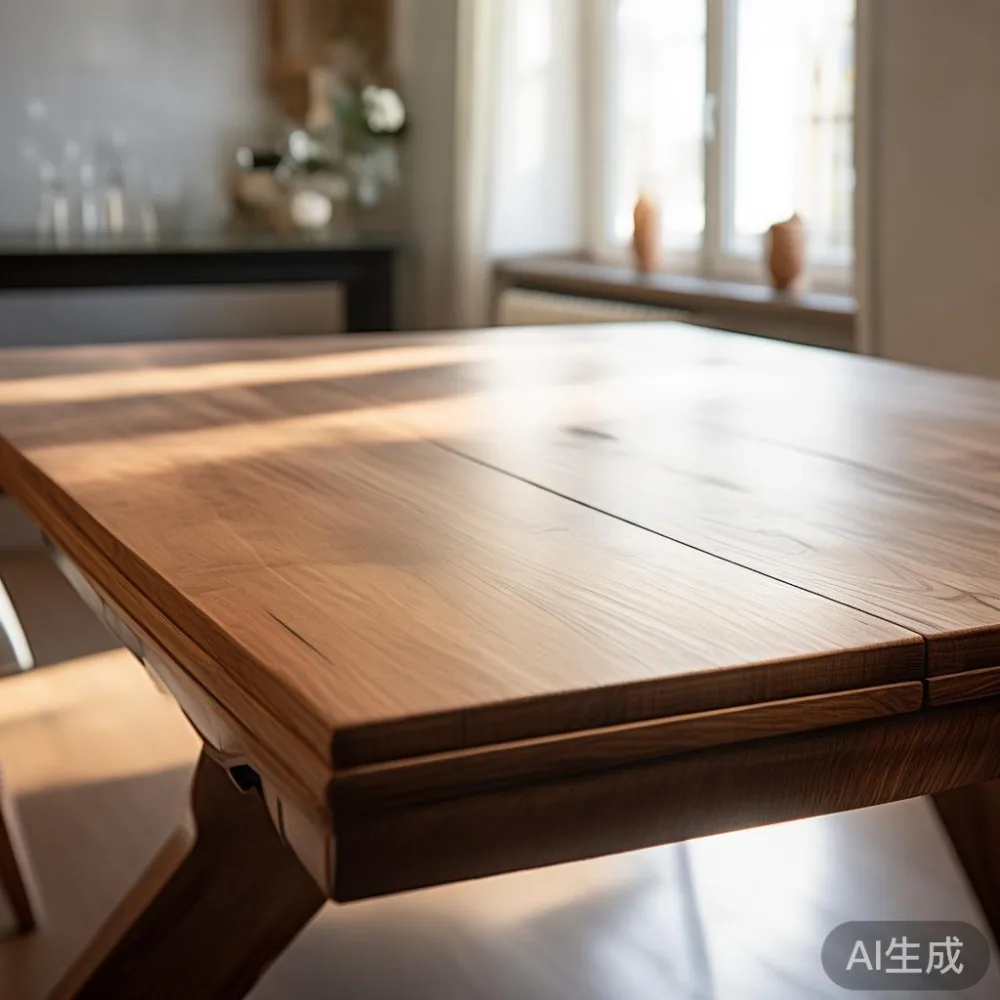
At MIDHILL, we build solid wood dining furniture with practical movement in mind. Our extendable table designs use properly joined timber components, measured extension systems, and finishes selected for humid interiors. The goal is not to pretend that wood never moves. It is to make movement controlled, predictable, and visually tidy.
Why does humidity change the size of an extendable table?
Wood is hygroscopic, which means it absorbs or releases moisture depending on the surrounding air. When the relative humidity rises, the cells in timber gain moisture and expand. Along the grain, this change can be noticeable; across the grain, it can be less obvious. Seasonal changes in Singapore often sit around 65–80% relative humidity outdoors, while air-conditioned interiors may remain closer to 50–65%.
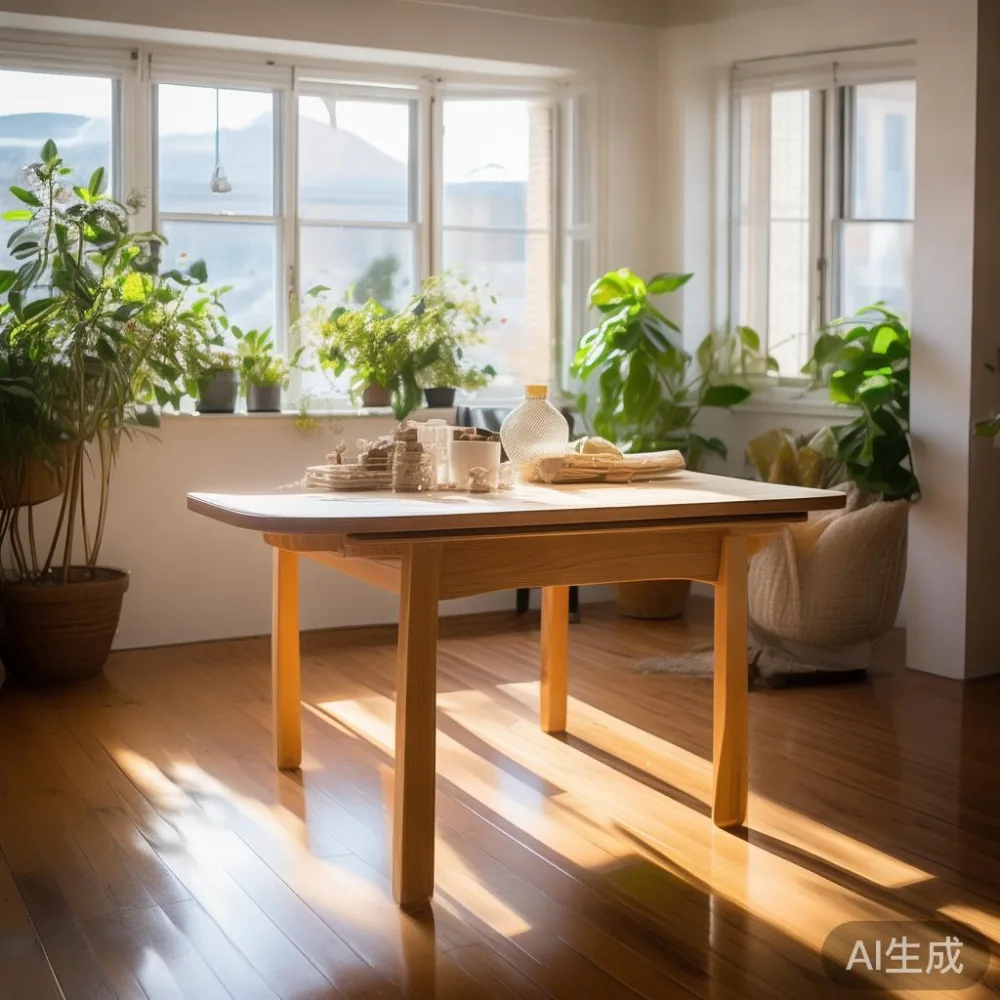
For a dining table, the main risks are uneven expansion between the top, rails, and legs, plus gaps around extension leaves. A table placed beside a balcony door, next to a west-facing window, or directly in an air-conditioning draught can experience different conditions on each side. A dining room with a constant temperature near 23°C and relative humidity around 50–60% is easier on the timber than a room exposed to afternoon sun and sudden ventilation changes.
This is why an extendable table needs more than a loose leaf and a pair of brackets. The top should be supported at the correct points, the extension should align with the grain and joinery, and the hardware should allow controlled movement without forcing the wood apart. A well-designed mechanism can accommodate normal dimensional change while keeping the extended surface flat.
Which Singapore homes are most difficult for solid wood?
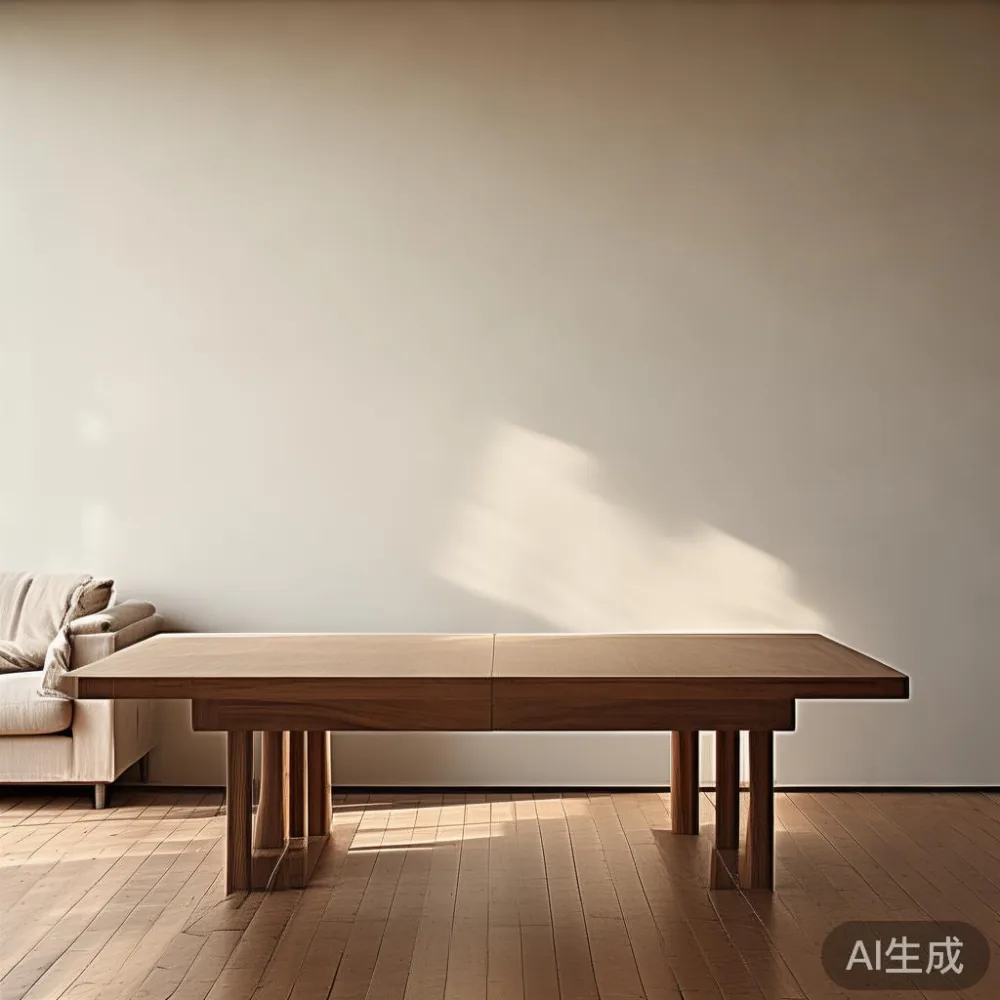
HDB flats often have compact dining zones, so an extendable table can serve two people on weekdays and six or eight people when relatives visit. The difficulty is that many older HDB units have narrow corridors, common lift lobbies, and compact stairwells. A boxed dining table may be difficult to manoeuvre even when its dimensions fit the kitchen.
Before delivery, measure the route rather than only the dining position. For example, a lift car measuring 110 cm wide and 140 cm deep may accept a table with a 90 cm top, but the top must usually be turned on its side. Corridors can narrow to 90–100 cm, and a right-angle turn at a stair landing may reduce the usable width to about 85 cm. A packed table that cannot pass through the corridor will create more problems than humidity itself.
Condo owners in Punggol or Tampines may have wider private corridors, yet the lift booking and service elevator dimensions still matter. In Bedok, ground-floor dining areas may be affected by moisture carried in through sliding glass doors. In tower blocks, the air-conditioning system may create dry air in the dining zone while the balcony remains humid. That contrast is manageable if the table is placed away from the doorway and not pressed against a damp wall.
Use a simple rule: leave at least 5 cm of space between the table and a wall, and keep the table at least 30 cm away from a frequently opened balcony door. If the floor is visibly damp, use a moisture-resistant mat beneath the legs and correct the source of moisture before placing the furniture.
How much should I worry about a solid wood dining table warping?
Some movement is natural in solid timber. A 180 cm solid wood dining table might change by several millimetres over a wet season, depending on the species, thickness, finish, and construction. The important question is whether the change is controlled and symmetrical. A good extendable table should remain level, with leaves that seat without forcing and extension seams that do not open excessively.
Machine-made components help because the timber is dried and machined to consistent dimensions before assembly. Solid wood is still solid wood, but the manufacturing process determines how evenly moisture is distributed. Avoid sudden wetting of the surface. Wipe spills promptly, use a damp cloth rather than a soaked one, and never leave a hot cooking pot or wet vase sitting directly on the tabletop.
For light-luxury interiors, the finish matters as much as the structure. A matte oil or low-sheen water-based coating gives warmth without making every fingerprint and water ring obvious. A high-gloss lacquer can look refined in an American light luxury dining room, but it requires more care around seams and edges. The finish should be selected for the household’s habits, not simply for a dramatic showroom photograph.
How do I care for an extendable table in Singapore?
Check the table every 3–6 months, particularly at the start of the monsoon period. Look along the front edge for lifting, check that the extension leaf seats fully, and inspect the underside around the brackets. A table should be used on a level floor. If one leg sits on a slightly raised tile, the top may rock and place uneven stress on the extension system.
Maintain indoor conditions where possible. A hygrometer placed near the dining table should ideally read between 45% and 60% relative humidity. Singapore households can use a dehumidifier in persistently damp rooms, but avoid directing cold, dry air straight at the tabletop for several hours each day. Gradual adjustment is better than rapid cycling between wet and dry conditions.
Clean with a soft cloth and mild soap diluted in water. If the table has an oil finish, apply a suitable maintenance product every 12–24 months, following the finish supplier’s instructions. If it has a lacquer finish, avoid solvents and abrasive pads. Between meals, remove crumbs and liquids rather than waiting until the end of the day. This simple routine protects the surface and makes the next seasonal check easier.
When extending the table, remove objects from the opposite end, pull out the supports only as instructed, and lift the leaf rather than dragging it across the top. Do not extend the table while it is being used as a work surface for heavy objects. A separate office desk or writing table is a better option for prolonged computer work.
Can I fit an extendable table into a small HDB flat?
Yes, if the closed dimensions and delivery route are measured carefully. A compact 120 cm extendable table may expand to 180 cm, while a 140 cm model may reach 200 cm or more. Check the seated clearance as well: allow about 60 cm behind each chair for movement, and at least 90 cm between the table edge and a nearby wall when people need to pass behind seated diners.
In a smaller kitchen, an extendable table can function as a breakfast table and later become a larger family dining surface. In a condo dining room, a rectangular extension can add length without requiring the permanent footprint of a large fixed table. Round and oval extendable tables can improve circulation in square rooms, but their extension leaves and supports need equally careful inspection.
For customers comparing furniture styles, the question of Japanese sofa vs Japandi sofa is useful in a living room, although the comparison should not distract from the dining table’s dimensions. Likewise, French provincial for apartment is a style direction rather than a measurement plan. An extendable table should be chosen after the room, route, and extension range are understood.
What delivery details should I check before ordering?
Delivery days, packaging, and access should be confirmed before the table leaves the workshop. A packed dining table may be separated into top, frame, and leaves to fit a service lift. For a typical Singapore order, allow roughly 7–14 delivery days after production and transit arrangements are confirmed, with longer timing during peak periods or for custom sizes.
Ask the supplier for the packed dimensions and the recommended orientation in the lift. For example, a 160 cm top packed at 85 × 45 cm may fit a 90 cm-wide service lift more easily than a larger carton. If the residence has a narrow corridor, measure the narrowest point, including door handles and lift doors. It is also useful to confirm whether the building requires a loading booking or protective floor covering.
Customers should understand the warranty and after-sales process. MIDHILL provides a 10-year structural warranty and lifetime refinishing support for qualifying products. Returns are accepted within 14 days under the applicable policy, and delivery over US$350 is free under the stated shipping terms. For a Singapore purchase, GST should be included clearly in the quoted SGD total so there is no confusion at checkout.
How do light-luxury finishes behave in a humid climate?
Light luxury works well in Southeast Asian homes because pale woods, restrained profiles, and carefully proportioned rooms can feel calm without requiring a large apartment. French light luxury often uses creamy upholstery, carved details, and polished surfaces. A French provincial for apartment approach can be softened with simple linen, clean geometry, and a compact dining arrangement.
American light luxury tends toward clean lines, generous spacing, and durable finishes. Post-modern light luxury can combine a traditional silhouette with a practical extension mechanism. In every case, the material needs to remain believable: a solid wood dining table should show its construction, while a marble table should be treated as a separate surface with its own sealing and handling requirements.
Some shoppers ask about related categories while planning a whole apartment. The best Japandi wardrobe for 2026 depends on the available wall space, door clearance, and internal layout, just as the dining table depends on its own room. A solid wood sofa or solid wood bed frame may complement the dining zone, but it should not be pushed against a wall that collects condensation. A wardrobe needs ventilation, and a nightstand should be positioned away from a humid window ledge.
For a separate work area, Modern light luxury for office requires good lighting, cable management, and a desk that does not obstruct the dining route. The phrase is Italian light luxury sofa worth it can help frame a living-room budget, but a sofa cannot compensate for a dining table that is badly sized or poorly maintained.
Owners planning a coordinated home can also consider how to style Japandi bed in apartment. Low-profile furniture and neutral textiles may make a compact flat feel more open, but the dining table’s clearance and environmental stability should still come first. In a furnished bedroom, keep the bed frame and wardrobe dry, and avoid placing an extendable table near a heavily used air vent if the temperature swings are frequent.
What should I look for in a supplier making solid wood furniture?
Look for specific construction information rather than broad lifestyle claims. Ask whether the extension uses solid timber leaves, dowels, mortise-and-tenon joints, or metal guides. Check whether the table is supplied with a fitted extension mechanism, whether the leaf matches the grain direction, and whether the finish can be renewed. A supplier that can explain tolerances, moisture control, and after-sales care is more useful than one that only lists decorative features.
Production experience is also relevant. MIDHILL has operated since 2008 and exports to more than 15 countries, giving the company experience with different climates and delivery conditions. International experience does not remove humidity from an apartment, but it can inform better packaging, hardware choices, and finish maintenance. The company’s Foshan background also matters to buyers researching Foshan Lingzhan, because the quality of timber selection, kiln drying, machining, and final assembly affects how the extendable table behaves after it reaches a Singapore home.
Finally, check the practical promises. A clear 10-year structural warranty, lifetime refinishing support, 14-day returns, and transparent shipping terms are easier to evaluate than vague promises about perfection. Solid wood furniture can last for decades when its movement is respected, its surface is maintained, and the pieces are placed in stable indoor conditions.
How can I keep my dining room comfortable for both people and timber?
Start with placement, then control moisture, then maintain the finish. Keep the extendable table away from exterior doors, roof leaks, dripping air-conditioning units, and cooking steam. Use blinds or curtains to reduce direct sun, maintain reasonable indoor humidity, and allow air to circulate around the furniture. Clean spills promptly and inspect the extension seams twice a year.
For a Singapore household, the best solution is usually a measured piece that works in a real space. Choose an extendable table whose closed length suits the dining zone, whose maximum length matches the family’s needs, and whose packed components can pass through the lift and corridor. Solid wood provides warmth and longevity, but thoughtful room conditions and regular care determine how gracefully it ages.