How Southeast Asian Humidity Affects Solid Wood Furniture—and How to Protect Your Extendable Table
Singapore’s tropical climate can change the dimensions, finish and daily behaviour of solid wood furniture more than many owners expect. Relative humidity commonly ranges from about 65% to 85% during wet periods, while air-conditioned interiors may sit closer to 50% to 60%. Across HDB flats in Tampines, Bedok and Punggol, an extendable table may move between a humid corridor, a windowed dining area and a cooler bedroom. Those shifts matter because wood absorbs and releases moisture as the surrounding air changes.
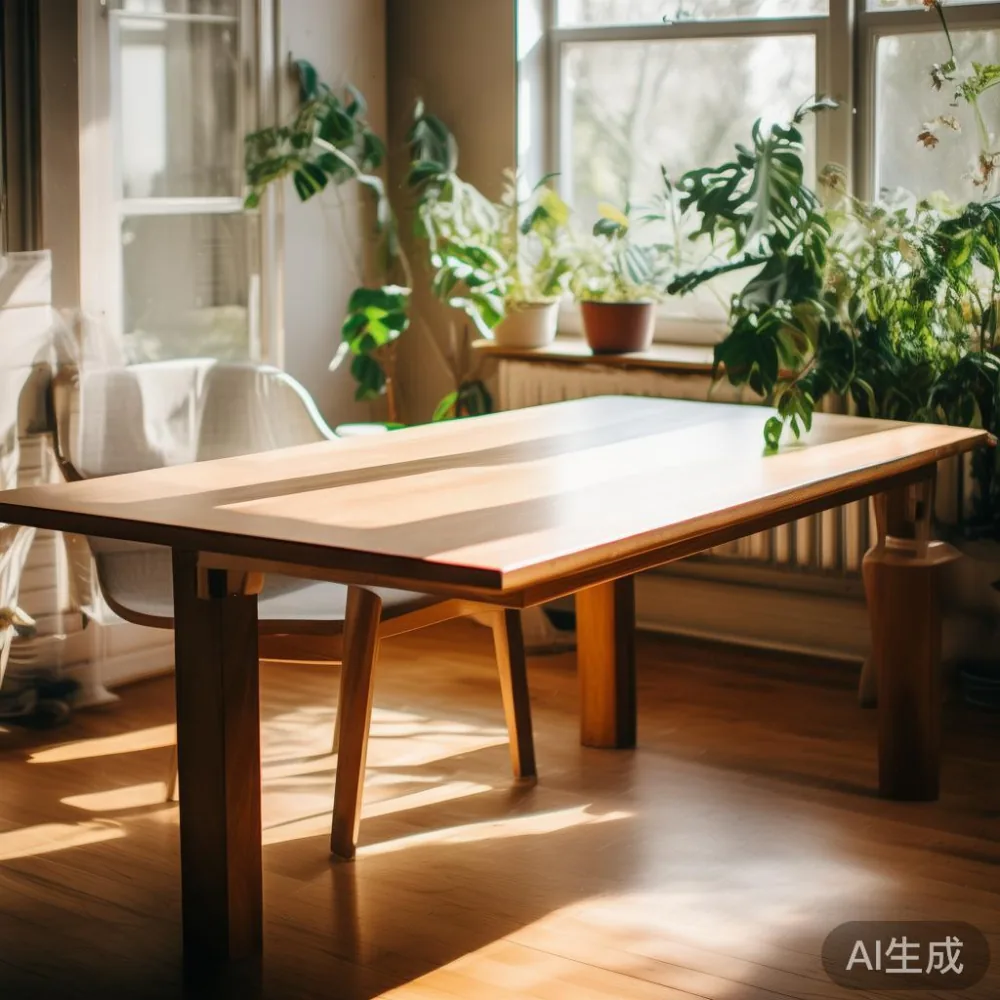
MIDHILL designs solid wood pieces for homes where humidity is part of everyday life, including extendable tables with 10-year structural coverage, lifetime refinishing support and delivery across Singapore. The aim is not to suggest that wood is immune to environmental change. It is to explain how movement occurs, which problems indicate a manufacturing fault, and how owners can protect furniture while respecting HDB lift limits, narrow corridors and Singaporean household routines.
Why does tropical humidity make solid wood furniture move?
Solid wood is hygroscopic: it takes in moisture when relative humidity rises and releases it when the air dries. The movement is concentrated along the grain rather than equally in every direction. A dining table may expand by roughly 1 to 3 mm across its width over a seasonal cycle, while a long extension leaf can show several millimetres of end movement. Small movement is normal. Larger changes, including visible gaps, uneven alignment or a persistently sticky door, deserve inspection.
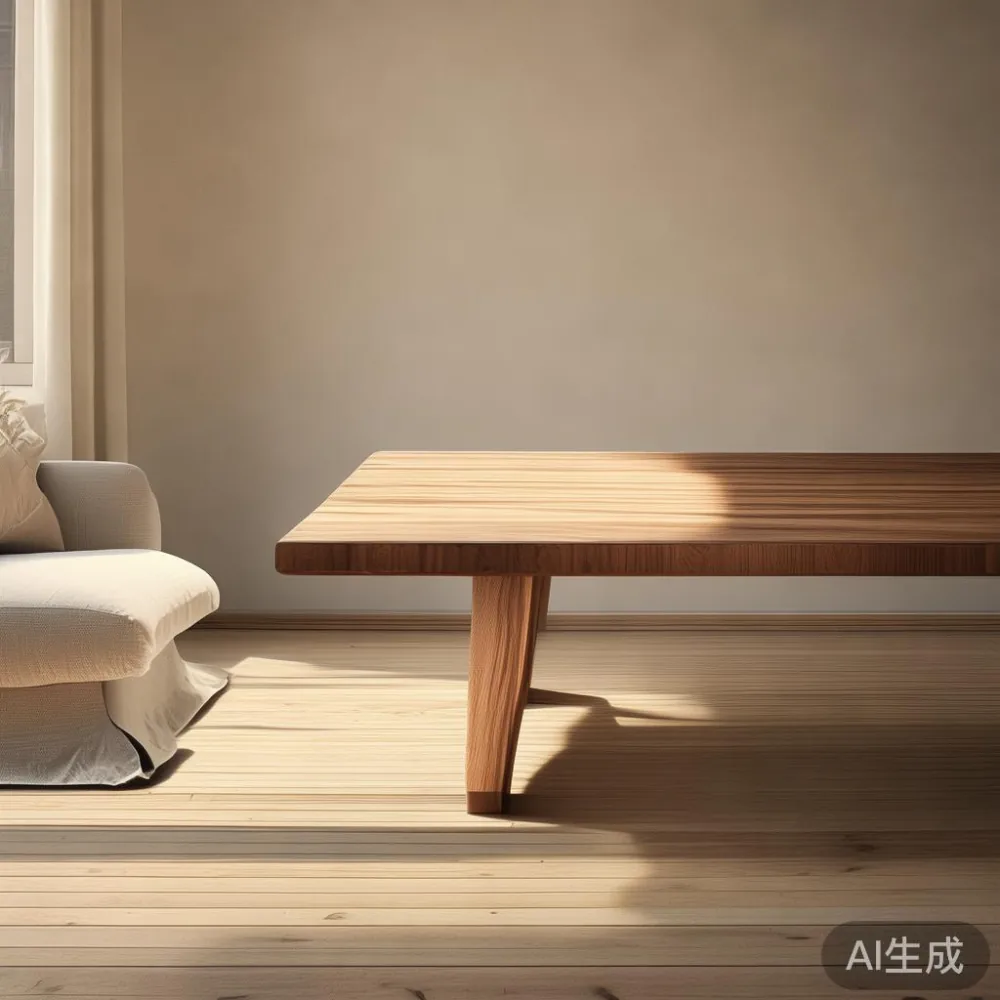
The rate of change matters as much as the total amount. A table beside an open window can react within 24 hours as a rain shower arrives. Furniture in a stable interior generally changes more slowly. As Singapore homes increasingly combine air-conditioned bedrooms with naturally ventilated living spaces, a piece may spend part of the day at 55% humidity and part of it near 80%. Repeated but gradual movement is less damaging than rapid repeated swelling and drying.
Humidity also affects finishes. Water-based coatings are generally more permeable and may look slightly hazier on dense wood, while harder films can reduce absorption but may eventually show fine cracks if the timber moves repeatedly. Cleaning with a soaked cloth, placing a hot bowl directly on the surface or positioning a table against an air-conditioning vent can create a different kind of stress.
What changes should I expect in an extendable table?
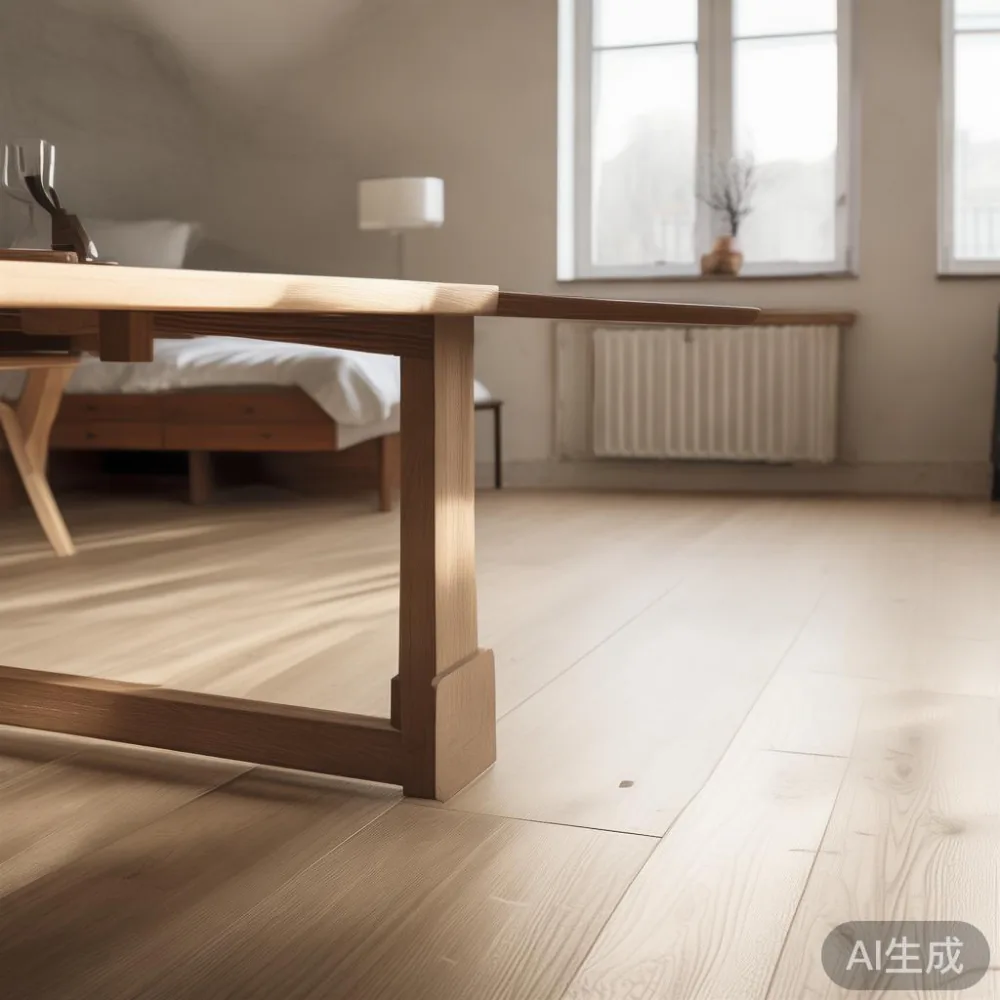
A well-made extendable table should accommodate seasonal movement in its joints and extension system. The tabletop may gain or lose a small amount of width, and the runners should remain able to slide without forcing. The legs can move fractionally relative to the top as moisture gradients pass through the timber. This is why a fine gap of about 0.5 to 1 mm may appear temporarily even when the construction is sound.
Colour change is another normal response. Cherry, walnut and other darker tropical hardwoods often lighten under filtered daylight, while lighter woods can pick up warm yellow tones. Test any maintenance product on a concealed 10 cm by 10 cm area for 24 to 48 hours. A damp fingerprint that appears within minutes means the finish is not being cleaned correctly; a slight tonal difference after 48 hours is usually less concerning.
Pay attention to the way the extension is stored. If leaves are folded while damp and then enclosed for 12 hours, trapped moisture can encourage mildew around end-grain surfaces. Keep unused leaves flat, dry and slightly separated from the outer faces of the table. Allow warm, humid air to circulate around the table rather than sliding it flush against a wall.
Can humidity-related movement be prevented?
Owners can reduce movement, though they cannot make solid wood behave like an inert mineral surface in Singapore. Aim for stable indoor conditions where practical. Relative humidity between 45% and 65% is a sensible working range for timber furniture, and a hygrometer costs about SGD 25 to SGD 60. Place it near, rather than directly against, an extendable table and check readings at about 8:00 a.m. and 9:00 p.m. over 7 days.
Keep the table at least 30 cm from an open window, 60 cm from a bathroom doorway and 1 metre from a kitchen heat source. A dishwasher used twice daily can raise local humidity and heat. In a compact HDB dining area, this may mean using the table’s extension only for larger gatherings and closing nearby windows during intense afternoon rain. In a Tampines HDB flat with corridor widths of roughly 1.1 to 1.4 metres, furniture should be carried in by the body rather than turned sideways through the entrance; a removable top and separate leaves make this easier.
Use a damp microfibre cloth, wrung out thoroughly, and wipe the surface immediately. Never leave a wet ring for 5 minutes or leave a damp cloth overnight. If the finish feels tacky, move the table away from the damp zone, improve airflow and allow it to acclimatise for 24 to 48 hours. Abrading the finish before the timber has stabilised can create repair work that was not necessary.
How should I move an extendable table through a Singapore home?
Measure before delivery day. Common HDB lift cars measure about 1.0 to 1.4 metres at the door and can be only 0.9 metres wide internally in older blocks. Corridors and bends may provide less clearance than the lift itself. A standard residential lift often has a practical depth of about 1.2 to 1.6 metres, but the usable diagonal and space needed for two handlers must be checked.
Remove the table leaves first, then carry each component with a second person. A solid timber top may weigh 35 to 80 kg, and a complete extendable table can reach 90 to 160 kg depending on size and timber density. Folded lifting straps help, but they must not pinch the grain or place concentrated pressure on a joint. Protect corners with blankets during the approximately 10-minute corridor and lift journey. Do not drag the table across a tiled threshold, because the grit trapped underneath can scratch the finish.
For an HDB home, choose an extendable table that can be delivered in separate sections rather than a single oversized slab. Confirm the package dimensions, lift dimensions and turning radius before the courier arrives. If the building’s service lift cannot handle the boxed table, MIDHILL can discuss a suitable arrangement before dispatch. Singapore’s 9% GST should appear on the final local invoice, and lift or difficult-access charges should be confirmed in writing.
Can humidity damage an extension mechanism?
The mechanism can suffer if timber and hardware are forced against each other. As the top swells, a runner should slide rather than bind; as it contracts, a poorly adjusted slide may create a gap. A waxed wooden runner benefits from occasional care, but metal components should be cleaned with a dry cloth. Silicone-based lubricant may protect some metal tracks, while petroleum-based oils can stain adjacent timber and should not be applied unless the material supplier approves them.
During an extended Singapore monsoon period, inspect runners every 3 months. Remove crumbs with a soft brush, then wipe along the channel with a nearly dry cloth. If the table cannot extend without force, do not push it. Extend it by hand to its first stop, withdraw it, and check for grit or a swollen leaf. Persistent resistance after cleaning may indicate seasonal swelling or an assembly issue requiring service, not an invitation to apply more pressure.
Environmentally stable storage matters too. Keep spare leaves indoors at a relative humidity near 50% to 60%, away from floor-level dampness. A storage rack with at least 10 cm of airflow underneath is more suitable than a closed plastic sheet, which can trap condensation. In a condo, air-conditioning can dry a table faster than expected. Avoid pointing a vent directly at it for more than 8 hours a day.
Is condensation a furniture problem or a building problem?
Condensation requires a warm, moisture-laden surface meeting a cool one. A chilled drink glass leaves a ring; a cabinet near a chilled balcony wall can develop damp patches. The building or household habits may be the source even when the furniture is sound. In Singapore, an air-conditioned room adjacent to a wet corridor can show local effects during heavy rain, particularly in the evening.
Check whether the dampness appears on several materials. If timber, wall paint and metal hardware all show moisture at the same location, ventilation and building maintenance need attention. If one small table area is affected while the rest of the room remains dry, a cold glass or damp cloth is more likely. Photograph the affected area, note the date, relative humidity and room temperature, and contact the building manager where repeated condensation is evident.
For lightly used pieces, a reversible dehumidifier in the affected room may maintain around 50% to 60% humidity. Do not aim at a domestic dehumidifier to achieve 40% humidity in a tropical home; that can cause the wood to contract faster than normal. A moderate setting and periodic readings are safer. For valuable or irreplaceable furniture, professional diagnosis is sensible when moisture marks persist for more than 72 hours.
How does humidity fit into a light-luxury dining room?
Humidity control works best when it supports the room’s design rather than becoming a collection of visible devices. Place the extendable table where it is not trapped between a sideboard and a wall. Use 15 to 20 cm gaps around larger dining settings where circulation permits, and keep vents clear. Natural materials such as rattan can complement solid wood, but they should not remain damp against a tabletop.
For a French light luxury dining room, pale woods, linen curtains and restrained ceramics can create an airy atmosphere without making the timber feel exposed. Keep curtains 10 cm away from the table and air the room after heavy rain. In an American light luxury scheme, leather seating, warm metal details and wider aisles are useful, yet the same moisture principles apply. A solid wood sofa should stand at least 30 cm from an open balcony door.
For ideas about how to style light luxury sofa in room, coordinate the table finish with the room’s light and leave practical breathing space. The phrase “Industrial for dining room” can mean dark metal frames, brick or concrete tones, but an industrial setting still needs stable furniture placement. Use a Vintage for dining room approach with recovered or aged-look timber? Genuine reclaimed wood may carry old moisture damage, so solid wood with a controlled finish is often easier to maintain. French light luxury, American light luxury and post-modern light luxury can all work in HDB and condo interiors, provided material care is built into the layout.
How do other solid wood pieces react to the same conditions?
The same principles apply across the home, although movement differs by construction. A solid wood sofa may include solid timber arms and legs, but its cushions and frame joints can reveal changes differently. A bed frame may show seasonal movement around its slats or a faint gap where a headboard meets a side rail. Inspect after a 12-hour period of unusually humid weather, then compare again after 48 hours of stable indoor conditions.
For those considering how to style Japanese wardrobe in room, allow larger clearances around sliding panels and keep the interior ventilated. Avoid using the bottom 10 cm of a wardrobe as a damp storage zone for laundry. A nightstand near a bathroom or balcony should have its back kept 20 cm from the wall. If you want light luxury with storage, combine closed cabinetry with solid wood accents, but do not compress too tightly around a table extension or wardrobe door.
A marble table has different moisture behaviour from timber. Marble is less affected by relative humidity, although condensation and acidic spills can mark its surface. Keep marble and wood separate from damp cleaning equipment, and use pH-neutral stone cleaner. A dining table in solid wood still benefits from coasters, trivets and stable humidity. A nightstand should not be loaded with damp skincare bottles for days at a time; use a tray with a 5 cm lip.
For anyone working out how to style American bed in apartment, the frame should sit away from an open window and be checked for movement at the joints. A solid wood bed frame can remain stable in Singapore when cared for, but a bed placed directly beside a frequently opened balcony door will experience wider humidity swings. The goal is a practical balance between ventilation and protection.
When should an owner contact a furniture maker?
Contact a maker when the issue exceeds normal seasonal movement: a crack runs more than 20 cm, a tabletop has warped beyond about 3 mm, a joint separates, or an extension runner remains stuck after cleaning and a 48-hour acclimatisation period. Water exposure also warrants early advice. Do not apply oil, wax or a new lacquer over a damp surface because the coating may trap moisture.
Document the table’s condition with 6 photographs: the full piece, extension rails, end grain, joints and the room’s hygrometer reading. Note when the problem began, how long the table has been in the home, whether it has been near an open window and whether the finish was recently renewed. These details help distinguish a one-off wet incident from a construction or environmental issue.
MIDHILL’s 10-year structural warranty provides a clear route for qualifying structural concerns, while lifetime refinishing supports appropriate surface renewal over the product’s working life. Warranty and refinishing terms should be read alongside care instructions; moisture exposure from standing water, improper storage or deliberate chemical treatment may affect coverage. Singapore customers should retain the invoice and delivery record, and report an issue within a reasonable period rather than after several humid seasons.
Across Singapore, successful solid wood ownership comes down to measured restraint. Keep relative humidity in a sensible band, wipe water away within 2 minutes, leave airflow around extendable table leaves and move furniture rather than drag it. Used consistently, these habits preserve the warmth and character of solid wood without pretending that tropical humidity can be ignored.