How Should You Choose an Extendable Table for a Singapore Home?
A practical guide to extendable table sizes, materials, prices, delivery, assembly and humidity care for HDB and condo homes in Singapore.
- What size extendable dining table should I buy for an HDB or condo?
- How much legroom do you actually need under a dining table?
- Does humidity ruin solid wood extendable tables in Singapore?
- Which extension mechanism is easiest to use every day?
- What should an extendable dining table cost in Singapore?
- How will an extendable table be delivered and assembled in Singapore?
- Which Singapore districts and home layouts suit extendable tables best?
- How do I know an extendable table is built to last?
What size extendable dining table should I buy for an HDB or condo?
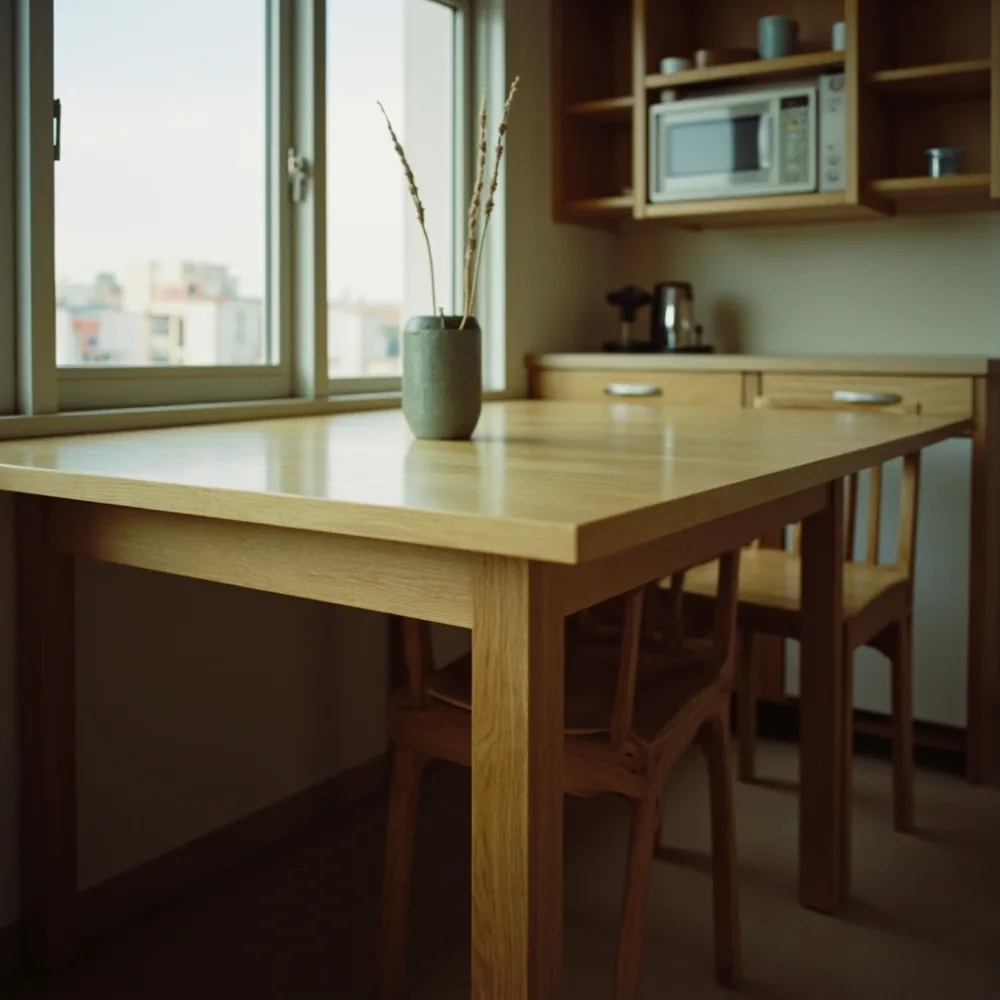
Measure the room before the table length
Compare compact and fully extended sizes
I start with the table’s smallest and largest dimensions, not the size of the room on the property listing. A 120 cm table may suit an HDB dining area, while a 150 cm model can work better in an open-plan condo. The useful question is whether the table can remain extended without blocking a walkway.
- Allow at least 90 cm between the table edge and a wall or furniture for chair movement.
- Keep at least 60 cm of circulation space around a table used daily.
- For open-plan living and dining rooms, leave a clear route to the kitchen or balcony.
- Check where the table will sit at night, when the extension is not in use.
Measure the narrowest part of the dining area with a tape measure. Include skirting boards, sockets and any projecting columns. In a typical Singapore HDB home, a 120–140 cm extendable table often provides a better balance than an oversized fixed table. Condo owners may have more width, but the table still needs to leave room to pull chairs out and serve food.
My preferred approach is to buy for the smaller daily arrangement and extend only for guests. That reduces visual clutter, improves circulation and makes the table easier to use in a compact kitchen or dining corner.
| Typical use | Minimum table width | Useful extension | Seating guidance |
|---|---|---|---|
| HDB dining nook | 120 cm | 40–60 cm | 4–6 people |
| Condo dining room | 150 cm | 50–80 cm | 6–8 people |
| Open-plan living area | 160–180 cm | 40–60 cm | 6–8 people |
How much legroom do you actually need under a dining table?
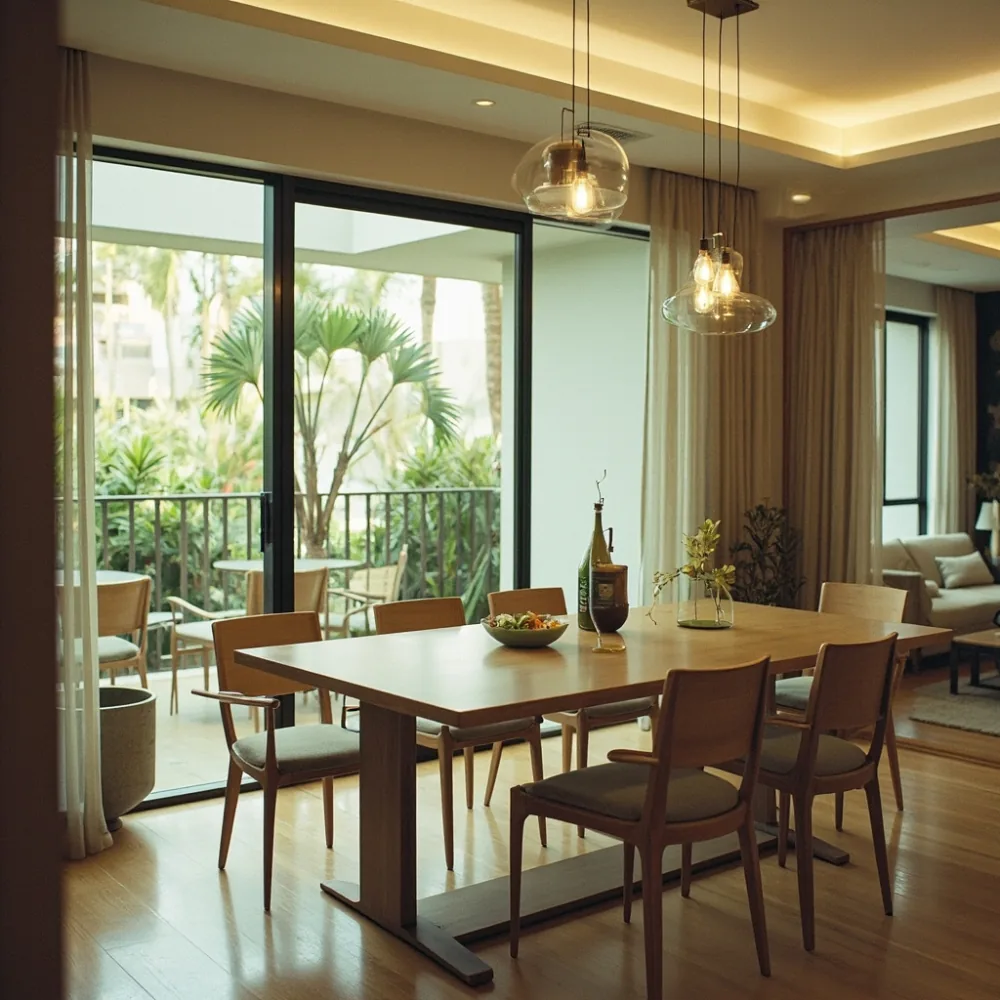
Check seated clearance
Match the table to chair style
Legroom matters more than many shoppers expect. I would look for at least 60 cm of clearance beneath the table when chairs are tucked in, with closer to 75–90 cm if people will walk behind seated diners. The exact requirement depends on the chair height and whether the table has an apron, drawer or central support.
- A low apron can make a small dining area feel more open.
- Pedestal legs provide better knee space than two bulky end supports.
- Check that the extension leaf does not create a sharp central obstruction.
- Test the table with the chairs you already own before ordering.
For Singapore homes, I often recommend solid wood furniture with tapered legs when the priority is visual lightness and useful knee space. A dark, heavy frame can make a 120 cm table feel smaller, while a slim profile makes the same table look less crowded. The finish should also be considered: a matte surface hides fingerprints better than a highly glossy one.
Sliding or drop-leaf mechanisms can improve flexibility, but they may reduce the width of the useful extension or make it harder to place dishes across the centre. If you expect to seat six people regularly, a single-statement table with a stable leaf is usually easier to use than a complicated folding model.
Does humidity ruin solid wood extendable tables in Singapore?
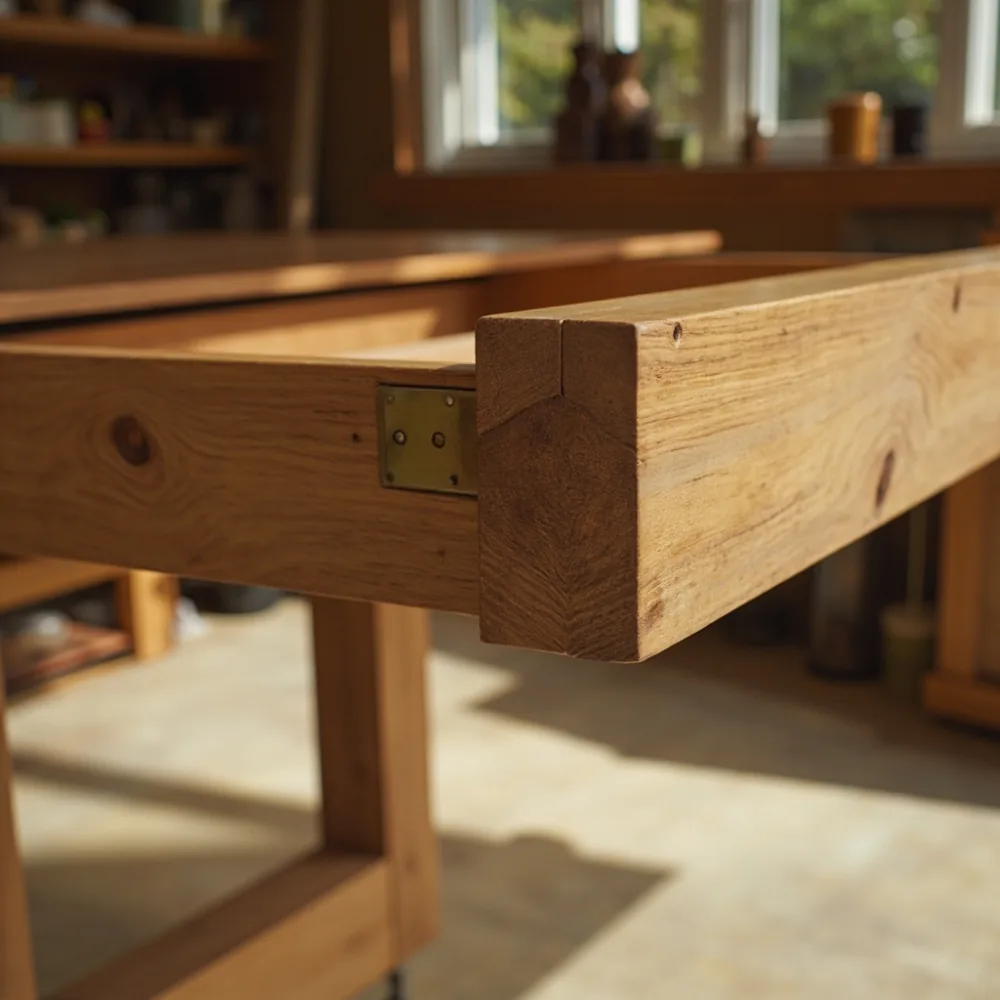
Understand normal movement
Use a simple maintenance routine
Humidity does not automatically ruin a solid wood dining table. Wood naturally expands and contracts as relative humidity changes, and Singapore’s humid conditions can produce small changes in width or surface appearance. The concern is prolonged moisture exposure, such as standing water near a sink, frequent condensation from air-conditioning, or a table stored in an uncovered balcony area.
- Keep the table away from direct water and long periods of direct sunlight.
- Wipe spills promptly with a soft, slightly damp cloth.
- Do not place a damp glass or hot pot directly on the surface.
- Use coasters, placemats and felt pads under heavy items.
- Check the extension mechanism for tightness every few months.
I would avoid describing solid wood furniture as completely maintenance-free. A good manufacturer should explain how the boards, leaf and mechanism are finished. Ask whether the table uses a moisture-resistant coating and whether the warranty covers structural defects such as joint failure or a defective extension system.
For a balcony or semi-outdoor dining position, I would choose a powder-coated metal frame or a reputable outdoor-rated table instead. Indoor solid wood can handle normal Singapore humidity when cared for sensibly. Air-conditioning helps because it lowers both temperature and moisture in the room.
Which extension mechanism is easiest to use every day?
Compare common mechanisms
Think about who will operate it
The easiest mechanism is the one that a family member can open without instructions. A single leaf that slides into the centre is straightforward, but the table must have enough space for the leaf and the operator. A butterfly or fold-out design may save floor space when closed, although it can be more awkward when the table is full.
- Single-leaf extension: usually the simplest daily option.
- Two-leaf extension: convenient for larger tables but needs more room to open.
- Butterfly fold: compact when closed, with leaves that rotate into position.
- Slide-and-separate top: flexible, but two halves may separate visually when extended.
- Pedestal or trestle base: often easier to seat than a four-leg frame.
I recommend testing the extension in the showroom with the actual table, not judging it from a photograph. Open it fully, check that the leaf locks securely and push gently on the extended section. It should not wobble, scrape or require excessive force.
For small space furniture, I also ask whether the closed table can be moved by one person. A light enough top is useful during cleaning, but a flimsy mechanism is not worth the convenience. Look for robust runners, positive catches and smooth movement rather than choosing the cheapest-looking option.
What should an extendable dining table cost in Singapore?
Compare realistic price bands
Include delivery and assembly
Price depends more on material, engineering and finish than on the word “extendable.” In Singapore, I would use these broad bands as a starting point, then verify the current quotation because timber prices, freight and promotions can change.
| Table type | Typical size range | Indicative price | Expected service life |
|---|---|---|---|
| Particleboard or MDF with veneer | 120–160 cm extended | SGD 250–700 | 5–10 years with careful use |
| Solid wood, simple design | 140–180 cm extended | SGD 700–2,000 | 15–25 years |
| Premium solid wood or custom finish | 160–220 cm extended | SGD 2,000–5,000+ | 20–30+ years |
| Engineered wood with metal frame | 140–200 cm extended | SGD 500–1,800 | 10–20 years |
These are comparison ranges, not fixed market prices. A durable table is not simply the most expensive one. Check the thickness of the top, the quality of the extension hardware, the stability of the base and the clarity of the warranty. MIDHILL is a Foshan solid-wood furniture maker established in 2008 and offers a 10-year structural warranty, which is useful when comparing custom furniture from an overseas manufacturing source.
Include delivery and assembly in the budget. A SGD 1,200 table with a difficult staircase delivery may cost more overall than a SGD 900 table delivered flat-pack to the door. Get the final dimensions, packaging and service terms in writing before paying.
How will an extendable table be delivered and assembled in Singapore?
Check the access route first
Decide whether assembly is included
Singapore delivery is not just about the postcode. HDB blocks, older walk-ups and condo service lifts can create very different handling conditions. I would ask the seller for the packed dimensions and weight before confirming the order.
- Measure the lift door, lift interior, stairs and the route to the dining area.
- Confirm whether the table arrives assembled, flat-packed or in separate sections.
- Check whether the delivery team carries it inside and places it in the dining position.
- Add a second-person service for an upper-floor HDB unit or a large solid wood top.
- Inspect the carton for damage immediately, before the team leaves.
A typical delivery window may be 7–14 days for a stock Singapore model, while a made-to-order or custom finish can take 4–10 weeks. Peak moving periods, holidays and renovation schedules can add several days. If the table is made to order, the quote should state whether the lead time begins after deposit, after material selection or after design approval.
In my experience, professional assembly is worth paying for when the table has a pedestal, a complicated leaf or a narrow access route. It reduces the risk of tightening the wrong fitting, damaging the floor and discovering that the table needs to be moved again. Request photographs or a time slot for the delivery team, especially if access is through a landed property or a busy commercial district.
Which Singapore districts and home layouts suit extendable tables best?
Match the table to the surrounding space
Think about lighting and circulation
The district itself matters less than the layout of the home, but properties in areas such as Woodlands, Yishun, Jurong East and Tampines commonly include compact HDB dining areas where a smaller closed size is valuable. In central areas such as Orchard, Novena or River Valley, condos may have open-plan living rooms and larger dining zones, but often narrower service routes or more complex building access.
- HDB dining nook: choose a narrow base and consider a 120–140 cm closed length.
- Condo open-plan area: select a table that does not block the kitchen island or television viewing.
- Kitchen-adjacent dining space: leave room for a serving trolley and chair access.
- Balcony or semi-outdoor zone: choose furniture explicitly rated for outdoor use.
Daylight can change the appearance of a table more than many people anticipate. A pale top can look yellow under warm bulbs, while darker timber can show dust and water marks. Ask for samples of the finish and view them under both daylight and evening lighting if the table will sit near a window.
For an open-plan condo, I like a table whose closed footprint leaves a clear 75–90 cm path between the dining and living zones. The extension should be temporary rather than permanent. That is the difference between furniture that improves the home and furniture that makes it feel crowded.
How do I know an extendable table is built to last?
Inspect the joints and hardware
Ask for clear warranty terms
I judge durability by the details that are visible during inspection. Look for solid-wood edges where the material is specified, clean joints, even gaps and a mechanism that locks positively. The table should not twist when the extension is open. If the top has a veneer, check that the edges are sealed and that the substrate is not vulnerable to swelling from spills.
- Check the top thickness and the straightness of the edges.
- Open and close the extension several times.
- Look for metal runners or well-finished wooden runners that move smoothly.
- Confirm that the base supports the extended section without flexing.
- Review the structural warranty separately from a general “wear and tear” exclusion.
For buyers who want a long-term piece, durable furniture means fewer repairs, stable hardware and a finish that can be renewed. A supplier such as MIDHILL, with its 10-year structural warranty, gives buyers something concrete to compare against other solid-wood makers, but warranty terms still need to be read carefully. Ask what is covered, how a claim is assessed and whether replacement parts are supplied.
Solid wood furniture can last for decades when it is treated as a maintained household item. The best extendable table is not necessarily the heaviest or the most expensive. It is the one that fits its room, opens without fuss, locks securely and remains comfortable to use every day.
Frequently asked questions
What is the best extendable table size for a small Singapore dining area?
For a compact HDB dining nook, I usually look at a table that is 120–140 cm when closed and extends to 160–180 cm. The closed size should leave enough room to pull chairs out and walk behind diners. Measure the actual space, including skirting boards and the route from the lift before ordering.
Is solid wood suitable for Singapore’s humid climate?
Yes, when it is kept away from standing water, direct balcony exposure and long periods of dampness. Solid wood naturally moves slightly with humidity changes. Wipe spills promptly, use coasters and placemats, and check the extension hardware periodically. A moisture-resistant finish and sensible indoor placement make a solid wood table practical in Singapore.
How much does an extendable dining table cost in Singapore?
Indicative prices range from about SGD 250–700 for veneer or engineered wood, SGD 700–2,000 for a good solid-wood table and SGD 2,000–5,000 or more for premium or custom work. Compare the material, extension mechanism, warranty, delivery and assembly, rather than using price alone to judge quality.
Should I choose a single-leaf or butterfly extension table?
A single-leaf extension is usually simpler for daily use and leaves the table centre relatively unobstructed. A butterfly design stores more compactly but can be awkward when rotating the leaves into place. Test both in person, checking that the extension locks firmly and that the mechanism can be operated without excessive force.
Questions about sizing, fabric or delivery?
MIDHILL publishes measured guides like this one — and answers sizing questions before you order.
See the collection